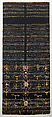
Umbhaco wrap skirt
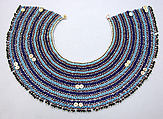
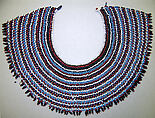
Beadwork traditions in southern Africa have undergone rapid changes in the last 150 years. When glass beads were first imported in small numbers to the region from Europe during the late eighteenth and early nineteenth centuries, they remained the exclusive domain of the ruling elite and a mark of their prestigious status. By the end of the nineteenth century, this region was the world's largest consumer of beads exported from Europe. Subsequently, the number and type of ornaments fashioned from beads increased significantly. Beadwork was, and remains, a women's art form. While beaded garments and items were used differently by various ethnic groups, in each society they played a key role in communicating aspects of the wearer's identity. Social and marital status, number of children, and a person's home region and ethnic subgroup were, and often still are, communicated through items of dress.
Traditional dress is still valued and worn as a sign of respect to the ancestors. In earlier times, missionaries insisted that converts to Christianity abandon indigenous fashions, so those who maintained it could easily be distinguished from converts. Traditionalists were often given a special name. The Xhosa term for traditionalist was amaQaba, the "Red People," because they continued to apply red ocher to their clothes and bodies.
Some beadwork and clothing, such as the long dress, beaded bags, and lacy-looking collars worn by some Xhosa-speaking peoples, were influenced be white settlers. It was the artists themselves, however, who invented most conventional designs, patterns, and techniques used in beadwork. Every beaded work expresses the creativity, careful planning, and expert execution of the person who made it.
Artwork Details
- Title: Umbhaco wrap skirt
- Artist: Xhosa or Mfengu artist
- Date: mid-20th century
- Geography: South Africa
- Culture: Xhosa or Mfengu peoples
- Medium: Cotton, wool, glass beads, shell, ocher pigment
- Dimensions: W. 75 1/2 × L. 37 1/4 in. (191.8 × 94.6 cm)
- Classification: Textiles-Beadwork
- Credit Line: Purchase, Gilbert and Roda Graham Gift, 1993
- Object Number: 1993.373
- Curatorial Department: The Michael C. Rockefeller Wing
More Artwork
Related Content
Research Resources
The Met provides unparalleled resources for research and welcomes an international community of students and scholars. The Met's Open Access API is where creators and researchers can connect to the The Met collection. Open Access data and public domain images are available for unrestricted commercial and noncommercial use without permission or fee.
To request images under copyright and other restrictions, please use this Image Request form.
Feedback
We continue to research and examine historical and cultural context for objects in The Met collection. If you have comments or questions about this object record, please contact us using the form below. The Museum looks forward to receiving your comments.
Content Notice
The Metropolitan Museum of Art presents over 5,000 years of art from around the world, and our online collection reflects ongoing work conducted over the course of our more than 150-year history. You may encounter objects or images that may be inappropriate for some viewers or information that may be outdated.