Magna Britannia: Her Colonies Reduced
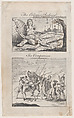
Temple Franklin noted that his famous forebear, while serving as Pennsylvania's colonial agent in London, had this image printed on cards to distribute as he lobbied for the repeal of the Stamp Act in the winter of 1765-66. That law required American colonists to purchase government stamps for legal documents, newspapers, and paper goods like playing cards. Resulting colonial resentment sparked broad resistance and made the measure difficult to enforce. It also encouraged boycotts that harmed British merchants. In response, Parliament repealed the act in March 1766 but then turned to alternative funding sources. Tax collectors began to enforce existing duties on molasses and sugar imported into the colonies from the Caribbean, and the Towsend Acts of 1767 imposed fees on glass, lead, paint, paper, and tea imported into America. Franklin's unsigned design soon inspired copies, an early example appearing in London's "Political Register" in December 1768 (MMA 24.90.1432). Only one 1766 original is known to survive, now in the collection of the Library Company of Philadelphia.
Artwork Details
- Title: Magna Britannia: Her Colonies Reduced
- Designer: Benjamin Franklin (American, Boston 1706–1790 Philadelphia)
- Engraver: Anonymous, British, 19th century
- Date: 1833 [based on 1766 print]
- Medium: Etching and engraving
- Dimensions: Plate: 2 15/16 × 4 1/2 in. (7.5 × 11.5 cm)
Sheet: 5 1/8 × 8 1/2 in. (13 × 21.6 cm) - Classification: Prints
- Credit Line: Gift of William H. Huntington, 1883
- Object Number: 83.2.759
- Curatorial Department: Drawings and Prints
More Artwork
Related Content

Research Resources
The Met provides unparalleled resources for research and welcomes an international community of students and scholars. The Met's Open Access API is where creators and researchers can connect to the The Met collection. Open Access data and public domain images are available for unrestricted commercial and noncommercial use without permission or fee.
To request images under copyright and other restrictions, please use this Image Request form.
Feedback
We continue to research and examine historical and cultural context for objects in The Met collection. If you have comments or questions about this object record, please contact us using the form below. The Museum looks forward to receiving your comments.
Content Notice
The Metropolitan Museum of Art presents over 5,000 years of art from around the world, and our online collection reflects ongoing work conducted over the course of our more than 150-year history. You may encounter objects or images that may be inappropriate for some viewers or information that may be outdated.