Search the collection

Filter By

Object Type / Material
Geographic Location
Department
Date
Show Only:
  • As part of the Met's Open Access policy, you can freely copy, modify and distribute this image, even for commercial purposes.
    APIPublic domain data for this object can also be accessed using the Met's Open Access API
  • Objects with changed or unknown ownership in continental Europe between 1933-1945. Learn more
Showing 1,107 results for Yamada School
Sort by:
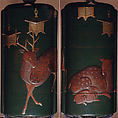
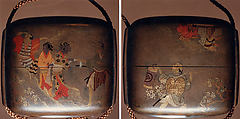
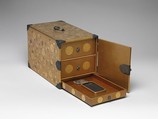
Case (Inrō) with Design of Deer and Lanterns at Kasuga Shrine, Yamada School, Gold and silver maki-e and pewter on dark green lacquer<br/>Ojime: Coral bead<br/>Netsuke: Carved wood in shape of mouse on mushroom, Japan
Yamada School
ca. 1800
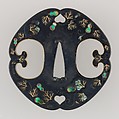
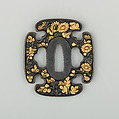
Sword Guard (Tsuba), Hirata School  Japanese, Copper-gold alloy (shakudō), gold, enameled cloisonné (shippō), copper, Japanese
Hirata School
ca. 1615–1868
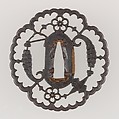
Sword Guard (Tsuba), Kyōsukashi School  Japanese, Iron, copper, Japanese
Kyōsukashi School
late 16th century
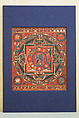
Hevajra Mandala, Sakya School, Ink and distemper on cloth, Tibet
Sakya School
16th century
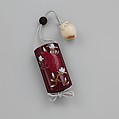
Inrō with Cockatoo and Magnolia, Yamada Jōkasai  Japanese, Red lacquer ground with gold maki-e, carved red lacquer, and mother-of-pearl inlay<br/>Netsuke: poppy; ivory<br/>Ojime: roundels; red and green lacquer in wood, Japan
Yamada Jōkasai
19th century
Monk Ippen Giving a Warrior the Tonsure after His Wife Took Vows as a Lay Buddhist Nun, Yamada Shinzan  Japanese, Pair of hanging scrolls; ink, color, and gold on silk, Japan
Yamada Shinzan
mid-20th century
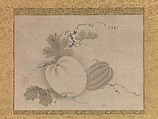
Melons, Yamada Dōan  Japanese, Hanging scroll; ink on paper, Japan
Yamada Dōan
late 16th century
Black pottery screen (kokutō no sukuriin), Yamada Hikaru  Japanese, Smoke-infused stoneware, Japan
Yamada Hikaru
1982
Fragments with Gold Glaze (Kinsai no tōhen), Yamada Hikaru  Japanese, Gold-glazed stoneware, iron, vinyl line, Japan
Yamada Hikaru
1989
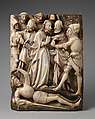
The Betrayal of Christ, School of Nottingham  British, Alabaster with paint and gilding, British
School of Nottingham
15th century
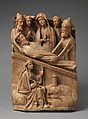
The Entombment, School of Nottingham  British, Alabaster, British
School of Nottingham
15th century
Yamada Genshō
18th century
Yamada Hikaru
1976
Yamada Hikaru
1973
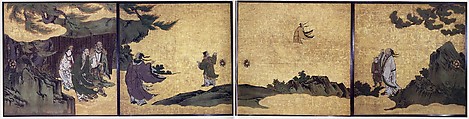
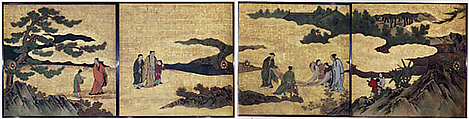
The Daoist Immortal Liezi 

, Kano School  Japanese, Set of four sliding-door panels; ink, color, gold, and gold leaf on paper, Japan
Kano School
ca. 1606
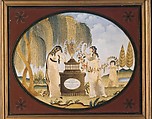
Memorial Picture, Folwell School  American, Silk with embroidered silk and metallic threads, paper, sequins, and painted, American
Folwell School
1803
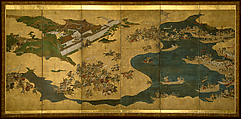
The Battle of Yashima, from The Tale of the Heike (Heike monogatari), Tosa School  Japanese, One of a pair of six-panel folding screens; ink, color, gold, and gold leaf on paper, Japan
Tosa School
17th century
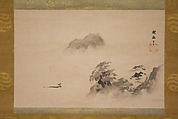
Misty Landscape, Kano School  Japanese, Hanging scroll; ink on paper, Japan
Kano School
early 19th century
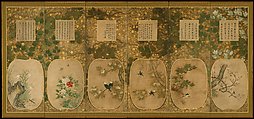
Birds and Flowers of the Twelve Months with Chinese Calligraphy, Kano School  Japanese, Pair of six-panel folding screens; ink and color and gold leaf on paper, Japan
Kano School
16th century; sheets of poetry, one dated 1553
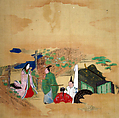
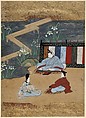
Scene from The Tale of Genji: Chapter 4, "Evening Face" (Yūgao), Tosa School  Japanese, Matted painting; ink and color on silk, Japan
Tosa School
17th century
Rain God Riding in Clouds on a Horse, Kano School  Japanese, Hanging scroll; ink on paper, Japan
Kano School
Blackbird on Wave-Swept Rock, Kano School  Japanese, Hanging scroll; ink on silk, Japan
Kano School
Tiger, Hokusai School, Unmounted painting; india ink on paper, Japan
Hokusai School
19th century
Bellflower, Hokusai School, Unmounted painting; ink on paper, Japan
Hokusai School
19th century
Bellflower, Hokusai School, Unmounted painting; ink and watercolor on paper, Japan
Hokusai School
19th century
Two Cranes, Hokusai School, Unmounted painting; ink and watercolor on paper, Japan
Hokusai School
19th century
Toad and Flowers, Hokusai School, Unmounted painting; ink and color on paper, Japan
Hokusai School
19th century
Chrysanthemums, Hokusai School, Unmounted painting; watercolor on paper, Japan
Hokusai School
19th century
Monkey and Bee, Hokusai School, Unmounted painting; ink and watercolor on paper, Japan
Hokusai School
19th century
Pekingese, Hokusai School, Unmounted painting; ink and watercolor on paper, Japan
Hokusai School
19th century
Man with Broken Umbrella, Hokusai School, Unmounted painting; ink and watercolor on paper, Japan
Hokusai School
19th century
Rooster and Chick, Hokusai School, Unmounted painting; ink on paper, Japan
Hokusai School
19th century
Case (Inrō) with Design of Maple Leaves beside Inscriptions, Kajikawa School, Lacquer, cherry bark, gold hiramakie; Interior: plain and roiro, Japan
Kajikawa School
19th century
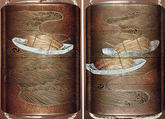
Case (Inrō) with Design of Sheaves of Rice in Boats, Koma School  Japanese, Gold maki-e with mother-of-pearl inlay and black lacquer <br/>Ojime: ivory <br/>Netsuke: carved bone with moon and goose, Japan
Koma School
19th century
Scenes from the Tales of Ise (Ise monogatari), Tosa School  Japanese, Set of album leaf paintings; ink and color on paper (shikishi), Japan
Tosa School
late 18th century
Scenes from Tales of Ise (Ise monogatari), Tosa School  Japanese, Set of album leaf paintings; ink and color on paper (shikishi), Japan
Tosa School
late 18th century
Case (Inrō) with Design of Imperial Cart and Flying Herons (obverse); Court Carriage and Flying Herons (reverse), Kajikawa School, Gold and silver maki-e with mother-of-pearl inlay and black lacquer; Ojime: agate bead; Netsuke: metal king of hell, Japan
Kajikawa School
19th century
Case (Inrō) with Design of Six Immortal Poets, Kajikawa School, Gold and silver maki-e with black and red lacquer relief and mother-of-pearl inlay; Ojime: bronze Bodhidharma; Netsuke: carved lacquer Chinese children and auspicious symbols, Japan
Kajikawa School
19th century
Case (Inrō) with Design of Cherry-Blossom Viewing, Kajikawa School, Lacquer decorated with togidashi sprinkled and polished lacquer; Ojime: stone bead with silver bird inlay; Netsuke: metal button engraved with figure of Fukurokuju, Japan
Kajikawa School
late 18th–19th century
Pine Tree (obverse); Landscape (reverse), Kano School  Japanese, Two-panel folding screen; ink, color, and gold on paper (obverse); ink and color on paper (reverse side), Japan
Kano School
17th century