Ugolino und seine Söhne
Artwork Details
- Titel: Ugolino und seine Söhne
- Künstler: Jean-Baptiste Carpeaux, Franzose, 1827–1875
- Datum: 1865–67
- Medium: Marmor
- Dimensionen: H: 197,5 cm
- Anerkennung: Neuerwerb, Schenkung von Josephine Bay Paul and C. Michael Paul Foundation Inc. und Charles Ulrick und der Josephine Bay Foundation Inc. und Fletcher Fund, 1967
- Akzession Nr.: 67.25
- Curatorial Department: European Sculpture and Decorative Arts
Audio
90. Ugolino and His Sons
Body Language
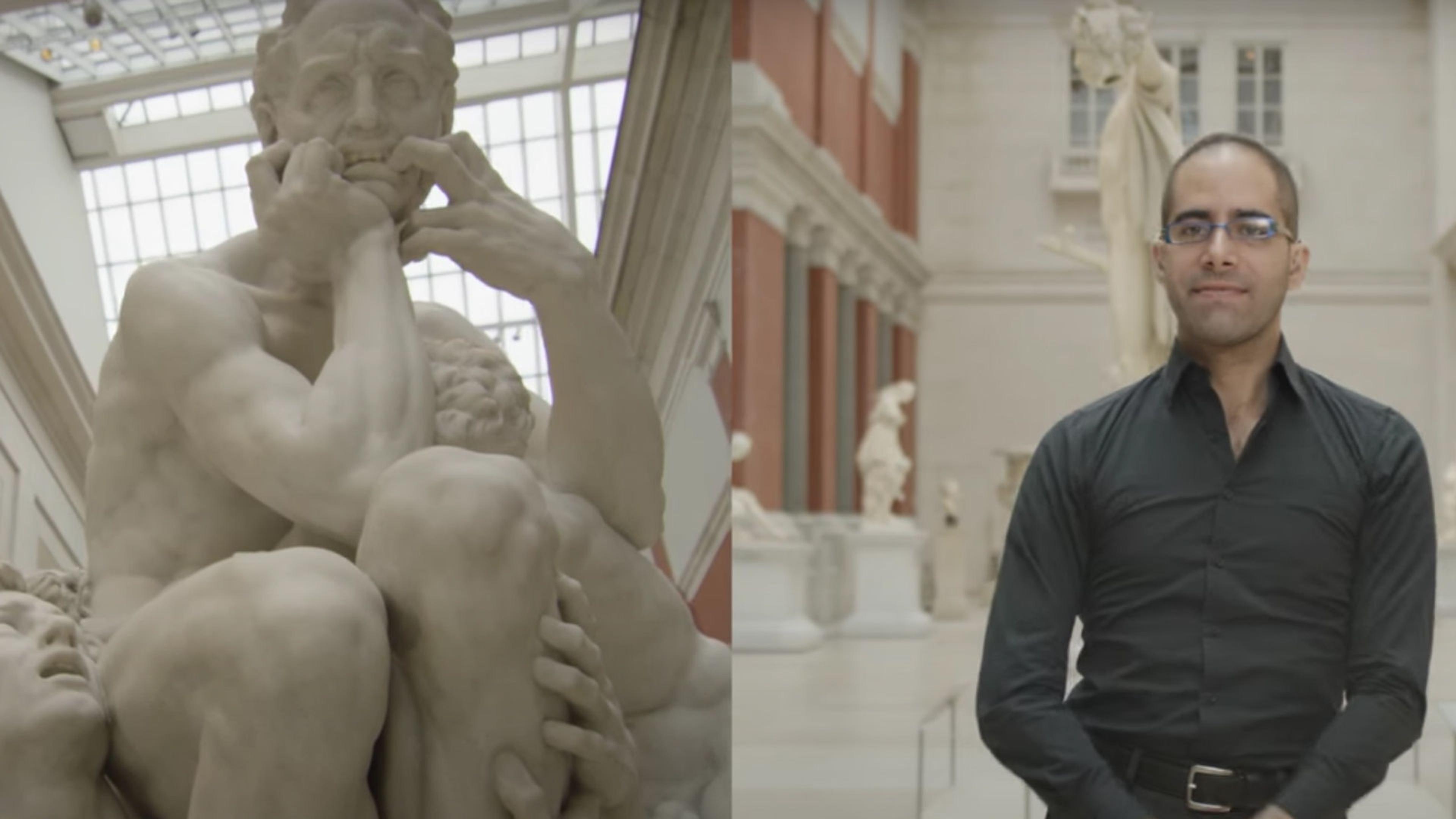
JIM DRAPER: This big marble is by Jean-Baptiste Carpeaux, after he had won the Rome prize that was the goal of every ambitious French sculptor, which took a young artist to Rome to study from the antique. The energy and study that Carpeaux put into this is absolutely extraordinary. This evolved over about five years, and so he had many occasions to consult human bodies to get them into this writhing mass.
We know until the very last minute, he was hiring new models. He even put up a family of Roman models at his own expense, feeding and housing them, to help him work this through. The precise nature of every single muscle—and, boy, does he know about muscles and bones—the clenched feet of Ugolino, and the tendons just practically ripping in the bent legs. So real study of human beings, but total respect for the past. It's this kind of dense research into the subject that makes this the masterpiece that it is.
More Artwork


Related Content

Research Resources
The Met provides unparalleled resources for research and welcomes an international community of students and scholars. The Met's Open Access API is where creators and researchers can connect to the The Met collection. Open Access data and public domain images are available for unrestricted commercial and noncommercial use without permission or fee.
To request images under copyright and other restrictions, please use this Image Request form.
Feedback
We continue to research and examine historical and cultural context for objects in The Met collection. If you have comments or questions about this object record, please contact us using the form below. The Museum looks forward to receiving your comments.
Content Notice
The Metropolitan Museum of Art presents over 5,000 years of art from around the world, and our online collection reflects ongoing work conducted over the course of our more than 150-year history. You may encounter objects or images that may be inappropriate for some viewers or information that may be outdated.