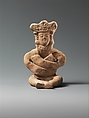
Head of a Figurine with an Elaborate Headdress
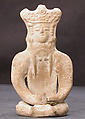
This object belongs to a group of similar objects excavated at several sites, including Susa and Gurgan, in Iran, and Wasit, in modern Iraq. They are made of molded earthenware and are unglazed, and sometimes show the addition of modeled parts, such as arms and legs. Scholars have suggested that they may have been used as toys for children, decorative objects, gifts for festive occasions, or even decorative elements for architecture. At Wasit about four hundred such figurines were found together in a pottery workshop, which speaks to their fabrication in large numbers and their accessibility far beyond an elite group of customers.
Musicians are widely represented, some playing flutes, others beating drums. Some figurines hold a jug and a round basin, as though to serve food and drink or to wash guests’ hands. Others are depicted with both hands raised, most likely to indicate dancing. Several figurines are shown holding a small doll or baby. Many figurines, as this one, wear heavily ornamented headdresses, a seeming anomaly that is explained by their prevalent engagement in convivial activities.
Artwork Details
- Title: Head of a Figurine with an Elaborate Headdress
- Date: 12th–13th century
- Geography: Attributed to Iran or Iraq
- Medium: Earthenware; unglazed
- Dimensions: H. 2 1/6 in. (5.2 cm)
W. 1 3/8 in. (3.5 cm) - Classification: Ceramics
- Credit Line: Gift of J. Lionberger Davis, 1967
- Object Number: 67.146.1
- Curatorial Department: Islamic Art
More Artwork
Research Resources
The Met provides unparalleled resources for research and welcomes an international community of students and scholars. The Met's Open Access API is where creators and researchers can connect to the The Met collection. Open Access data and public domain images are available for unrestricted commercial and noncommercial use without permission or fee.
To request images under copyright and other restrictions, please use this Image Request form.
Feedback
We continue to research and examine historical and cultural context for objects in The Met collection. If you have comments or questions about this object record, please contact us using the form below. The Museum looks forward to receiving your comments.
Content Notice
The Metropolitan Museum of Art presents over 5,000 years of art from around the world, and our online collection reflects ongoing work conducted over the course of our more than 150-year history. You may encounter objects or images that may be inappropriate for some viewers or information that may be outdated.