Der antiochische „Kelch"
Artwork Details
- Titel: Der antiochische „Kelch"
- Datum: ca. 500–550
- Kultur: Byzantinisch
- Medium: Silber, vergoldetes Silber
- Dimensionen: 19,6 x 18 x 15,2 cm
- Anerkennung: The Cloisters Collection, 1950
- Akzession Nr.: 50.4
- Curatorial Department: Medieval Art and The Cloisters
Audio
2705. The Antioch "Chalice"
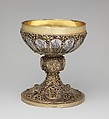
This elaborate, two-part silver object is said to have been found in the ancient city of Antioch. It’s gilded and decorated with a scrolling grape vine, with animals and birds, including an eagle, inhabiting its branches. It has 12 figures, seated in high back chairs, holding scrolls. Look for the two most youthful figures. They are thought to be images of Christ. The others may be apostles or possibly classical philosophers, thought to have foretold Christ’s coming.
At first the inner cup was claimed to be ‘The Holy Grail,’ the cup Christ used at the Last Supper. Its owner showed it as ‘The Holy Grail’ at the 1933 Chicago World Fair, but this claim has never been substantiated. Although the complete vessel was once believed to have been used as a chalice for the Eucharist, its shape is now recognized as being like that of standing oil lamps of the period. It’s also been argued recently that the vessel came from the smaller Syrian city, Kaper Koraon, rather than Antioch.
More Artwork
Related Content

Research Resources
The Met provides unparalleled resources for research and welcomes an international community of students and scholars. The Met's Open Access API is where creators and researchers can connect to the The Met collection. Open Access data and public domain images are available for unrestricted commercial and noncommercial use without permission or fee.
To request images under copyright and other restrictions, please use this Image Request form.
Feedback
We continue to research and examine historical and cultural context for objects in The Met collection. If you have comments or questions about this object record, please contact us using the form below. The Museum looks forward to receiving your comments.
Content Notice
The Metropolitan Museum of Art presents over 5,000 years of art from around the world, and our online collection reflects ongoing work conducted over the course of our more than 150-year history. You may encounter objects or images that may be inappropriate for some viewers or information that may be outdated.