Hardanger Fiddle
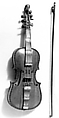
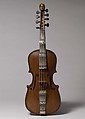
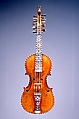
Hardanger fiddles generally have four bowed strings and an additional four sympathetic strings beneath the bridge; the latter are not played directly but are excited into vibration by the bowed strings above, adding a subtle richness to the sound. These often ornately inlaid instruments first appeared in the 1650s, and their short, straight necks and fingerboards recall those of the violin during the Baroque period. The prolific eighteenth-century fiddle makers Isak Nielsen (Skaar) Botnen and his son, Trond Isaksen Flatebø, popularized the instrument and are responsible for the tradition that continues today.
Description: scroll is a carved fanciful animal head with gilded crest; fingerboard and tailpiece are of bone with decorative ebony and mother-of-pearl inlays; both top and back have elaborate inked decorations; four playing strings and four sympathetic strings.
Artwork Details
- Title: Hardanger Fiddle
- Date: 1786
- Geography: Norway
- Culture: Norwegian
- Medium: Wood, mother-of-pearl, ebony, bone
- Dimensions: 25 1/2 × 7 1/2 × 3 1/2 in. (64.8 × 19.1 × 8.9 cm)
- Classification: Chordophone-Lute-bowed-unfretted
- Credit Line: Purchase, Frederick M. Lehman Bequest, 2008
- Object Number: 2008.268
- Curatorial Department: Musical Instruments
More Artwork
Related Content
Research Resources
The Met provides unparalleled resources for research and welcomes an international community of students and scholars. The Met's Open Access API is where creators and researchers can connect to the The Met collection. Open Access data and public domain images are available for unrestricted commercial and noncommercial use without permission or fee.
To request images under copyright and other restrictions, please use this Image Request form.
Feedback
We continue to research and examine historical and cultural context for objects in The Met collection. If you have comments or questions about this object record, please contact us using the form below. The Museum looks forward to receiving your comments.
Content Notice
The Metropolitan Museum of Art presents over 5,000 years of art from around the world, and our online collection reflects ongoing work conducted over the course of our more than 150-year history. You may encounter objects or images that may be inappropriate for some viewers or information that may be outdated.