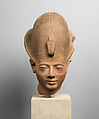
Head of a goddess
The sculpture was carved from quartzite, a material in which, through the ages, Egyptian artists created their most sensitive portrayals of humans and gods. The Museum owns several masterpieces in this stone, most notably heads of Senwosret III (26.7.1394), Amenhotep III (56.138) and his principal wife, Queen Tiye (11.150.26). This head joins the group with the distinction of being impeccably preserved, as even the delicately aquiline nose is complete. Stylistically, the piece represnts the later—Ramesside—stage of post-Amarna art at its very best. While a somewhat melancholy sweetness characterizes earlier post-Amarna heads, such as, for instance, those of Tutankhamen (50.6), this sculpture expresses benign serenity, communicating the ancient Egyptian belief that the gods are supremely aloof from mortal concerns.
Artwork Details
- Title: Head of a goddess
- Period: New Kingdom, Ramesside
- Dynasty: Dynasty 19
- Reign: reign of Seti I–Ramesses II
- Date: ca. 1299–1224 BCE
- Geography: From Egypt
- Medium: quartzite
- Dimensions: H. 16 × W. 11.3 × D. 8 cm (6 5/16 × 4 7/16 × 3 1/8 in.)
- Credit Line: Purchase, Lila Acheson Wallace Gift, 2000
- Object Number: 2000.62
- Curatorial Department: Egyptian Art
More Artwork
Related Content
 Free to download
Research Resources
The Met provides unparalleled resources for research and welcomes an international community of students and scholars. The Met's Open Access API is where creators and researchers can connect to the The Met collection. Open Access data and public domain images are available for unrestricted commercial and noncommercial use without permission or fee.
To request images under copyright and other restrictions, please use this Image Request form.
Feedback
We continue to research and examine historical and cultural context for objects in The Met collection. If you have comments or questions about this object record, please contact us using the form below. The Museum looks forward to receiving your comments.
Content Notice
The Metropolitan Museum of Art presents over 5,000 years of art from around the world, and our online collection reflects ongoing work conducted over the course of our more than 150-year history. You may encounter objects or images that may be inappropriate for some viewers or information that may be outdated.