English
DonateMembershipTickets

Dish

Manufacturer Possibly Smith Pottery
ca. 1825–55
Not on view
This slip-decorated red earthenware dish was probably made at the Smith Pottery in Norwalk, Connecticut. It is decorated with haphazard cursive script reading: "This in the middle is rote ill/ Martin Luther Reformer/ For this dish it cannot fill." Smith Pottery was one of the most successful in Norwalk, an area with a notable thriving pottery industry. Dishes with writing in slip-script like this one began as souvenirs made by Absalom Day (1770-1843) and were continued by his nephew Asa E. Smith (1798-1880). Slip-script decorated redware was more ornamental and commemorative than utilitarian. Two other examples of this technique can be found in the Met’s collection: a plate bearing the name "Lafayette" (34.100.223) and the other "New York City" (48.124). The religious reference on this dish, "Martin Luther Reformer," was not uncommon for Smith Pottery, indicating a market for religious wares in Norwalk and possibly a connection to Absalom Day’s work as a Methodist preacher. More unusual is the text around the central inscription which reads "This in the middle is rote ill/for this dish it cannot fill." This could be a playful note from the potter suggesting that they were unhappy with their work on the central inscription. It also demonstrates in a charming way the technical difficulties, as it appears the decorator did not leave room for the "t" in "cannot" and had to make it a superscript.

Artwork Details

Object Information
  • Title: Dish
  • Manufacturer: Possibly Smith Pottery (1825–87)
  • Date: ca. 1825–55
  • Geography: Possibly made in Norwalk, Connecticut, United States
  • Culture: American
  • Medium: Red earthenware, slab molded with hand-applied slip decoration; lead glaze
  • Dimensions: 10 3/4 × 15 5/8 × 1 7/8 in. (27.3 × 39.7 × 4.8 cm)
  • Credit Line: Gift of Robert A. Ellison Jr., 2021
  • Object Number: 2022.404.6
  • Curatorial Department: The American Wing
More Artwork
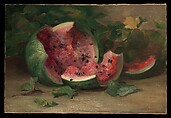
Untitled (Cracked Watermelon), Charles Ethan Porter  American, Oil on canvas, American
Charles Ethan Porter
ca. 1890
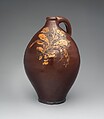
Jug, Nathaniel Seymour  American, Red earthenware with incised decoration of floral spray filled in with slip; lead glaze, American
Nathaniel Seymour
ca. 1790–1820
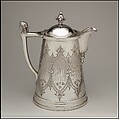
Pitcher, Meriden Britannia Company  American, Silver plate, American
On loan to The Met
Meriden Britannia Company
ca. 1868
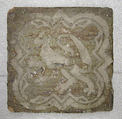
Tile, Red clay inlaid with white clay under a lead glaze ("Cistercian ware"), British
On loan to The Met
British
14th century
Stove Tile with Saint John the Evangelist and Samson, Buda Castle Workshop, Earthenware, lead glaze, Hungarian
Buda Castle Workshop
late 15th century

Research Resources

The Met provides unparalleled resources for research and welcomes an international community of students and scholars. The Met's Open Access API is where creators and researchers can connect to the The Met collection. Open Access data and public domain images are available for unrestricted commercial and noncommercial use without permission or fee.

To request images under copyright and other restrictions, please use this Image Request form.

Feedback

We continue to research and examine historical and cultural context for objects in The Met collection. If you have comments or questions about this object record, please contact us using the form below. The Museum looks forward to receiving your comments.

Send feedback

Content Notice

The Metropolitan Museum of Art presents over 5,000 years of art from around the world, and our online collection reflects ongoing work conducted over the course of our more than 150-year history. You may encounter objects or images that may be inappropriate for some viewers or information that may be outdated.