English
DonateMembershipTickets

Eight Faces

2023
Not on view
Hatakeyama Kōji’s studio is in his native Takaoka, a long-established Japanese metalworking center famous for bronze casting. He grew up in Takaoka and graduated from Kanazawa College of Art in 1980, where he studied metal casting. He employs bronze techniques developed in ancient Mesopotamia and refers to bronze as “a material with memories of a thousand years.” Hatakeyama used earthen tones on the exterior surface of this bronze vessel to create an abstract surface. The artist applied miso paste and vinegar to produce vivid tones and an expressive texture while using precisely applied gold foil to line the interior. The patterns and colors that appear on the surfaces of his works result from various chemical reactions and can be read as stylized landscapes. His use of gold foil on the interior expresses a radiant inner world without darkness. Most of Hatakeyama’s works are functional containers traditionally used in formal tea gatherings or for storing incense. Bronze has always been his chosen medium, and the lidded box is his favored format. Unequivocally modernistic in appearance, Hatakeyama’s boxes also resonate with many of the characteristics found in historical Japanese works of art.

Artwork Details

Object Information
  • 畠山耕治 「八つの面」
  • Title: Eight Faces
  • Artist: Hatakeyama Kōji (Japanese, born 1956)
  • Period: Reiwa period (2019–present)
  • Date: 2023
  • Culture: Japan
  • Medium: Cast bronze, gold leaf
  • Dimensions: H. 10 1/16 in (25.5 cm); W. 9 5/8 in. (24.5 cm)
  • Classification: Metalwork
  • Credit Line: Gift of Victor F. (Trey) Trahan III, 2024
  • Object Number: 2024.397a, b
  • Curatorial Department: Asian Art
More Artwork
Shō, Bamboo wood, metal, Japanese
Japanese
19th century
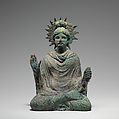
Seated Buddha, Bronze with traces of gold leaf, Pakistan (ancient region of Gandhara)
Pakistan (ancient region of Gandhara)
1st to mid-2nd century
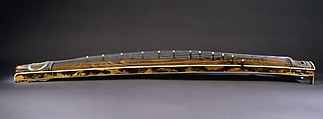
Koto (箏), Various woods, ivory, metal, nylon, tortoiseshell, abalone, lacquerwork, Japanese
Japanese
20th century
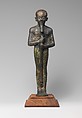
Statue of the God Ptah, Bronze, gold leaf, glass
ca. 1080–721 BCE
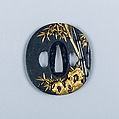
Sword Guard (Tsuba), Ishiguro Masayoshi  Japanese, Copper-gold alloy (shakudō), gold, copper-silver alloy (shibuichi), copper, Japanese
Fittings maker Inscribed by Ishiguro Masayoshi
19th century

Research Resources

The Met provides unparalleled resources for research and welcomes an international community of students and scholars. The Met's Open Access API is where creators and researchers can connect to the The Met collection. Open Access data and public domain images are available for unrestricted commercial and noncommercial use without permission or fee.

To request images under copyright and other restrictions, please use this Image Request form.

Feedback

We continue to research and examine historical and cultural context for objects in The Met collection. If you have comments or questions about this object record, please contact us using the form below. The Museum looks forward to receiving your comments.

Send feedback

Content Notice

The Metropolitan Museum of Art presents over 5,000 years of art from around the world, and our online collection reflects ongoing work conducted over the course of our more than 150-year history. You may encounter objects or images that may be inappropriate for some viewers or information that may be outdated.