English
DonateMembershipTickets

First-Phase Chief’s Blanket

ca. 1800–1860
On view at The Met Fifth Avenue in Gallery 746
Woven on a loom, this wearing blanket is made from dyed and undyed handspun churro wool. The alternating blue, cream, and chocolate-brown horizontal bands exemplify the harmonic expressions for which Diné weavers of the mid-nineteenth century were renowned. Textiles like these are called Chief’s blankets because, it was said, only prominent and wealthy individuals could afford them. For members of neighboring Indigenous Nations, including the Arapaho, Cheyenne, Ute, Kiowa and Lakota, these Diné artworks were symbols of prestige worn by leaders and their families. First-Phase Chief’s blankets woven before 1860, prior to the establishment of reservations, were traded many hundreds of miles beyond Diné territory. Later, non-Native settlers and tourists also sought them as works of art and souvenirs. This dynamic weaving tradition—a deeply rooted art form integral to Diné culture—continues to flourish today through the efforts of new generations of innovative artists.

Artwork Details

Object Information
  • Title: First-Phase Chief’s Blanket
  • Artist: Unidentified Diné (Navajo) Artist
  • Date: ca. 1800–1860
  • Culture: Navajo
  • Medium: Wool, dyed and undyed
  • Dimensions: 55 × 68 in. (139.7 × 172.7 cm)
  • Credit Line: Gift of John Ernst, in memory of Margot Ernst, 2026
  • Object Number: 2026.547
  • Curatorial Department: The American Wing
More Artwork
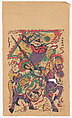
New Year picture of door god Qin Shubao, Unidentified artist(s), Chinese, early 20th century, Woodblock print; ink and color on paper, China
Unidentified
early 20th century
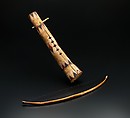
Tsii' Edo' Ai (Apache fiddle), Athabascan Family  Native American (Apache), Agave flower stalk, wood, paint, horsehair, Native American (Apache)
Athabascan Family
ca. 1900
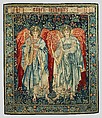
Angels Praising (Angeli Laudantes), Sir Edward Burne-Jones (figures) British, Dyed wool and silk on undyed cotton warp (15 warps per inch; 5-6 per cm.), British, Merton Abbey
Multiple artists/makers
1898
Women's Acoma Cape or Dress, Handspun undyed and indigo-dyed Churro fleece and cochineal-dyed raveled bayeta, Acoma, Native American
Acoma, Native American
ca. 1850
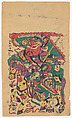
New Year picture of door god Yuchi Gong, Unidentified artist(s), Chinese, early 20th century, Woodblock print; ink and color on paper, China
Unidentified
early 20th century

Research Resources

The Met provides unparalleled resources for research and welcomes an international community of students and scholars. The Met's Open Access API is where creators and researchers can connect to the The Met collection. Open Access data and public domain images are available for unrestricted commercial and noncommercial use without permission or fee.

To request images under copyright and other restrictions, please use this Image Request form.

Feedback

We continue to research and examine historical and cultural context for objects in The Met collection. If you have comments or questions about this object record, please contact us using the form below. The Museum looks forward to receiving your comments.

Send feedback

Content Notice

The Metropolitan Museum of Art presents over 5,000 years of art from around the world, and our online collection reflects ongoing work conducted over the course of our more than 150-year history. You may encounter objects or images that may be inappropriate for some viewers or information that may be outdated.