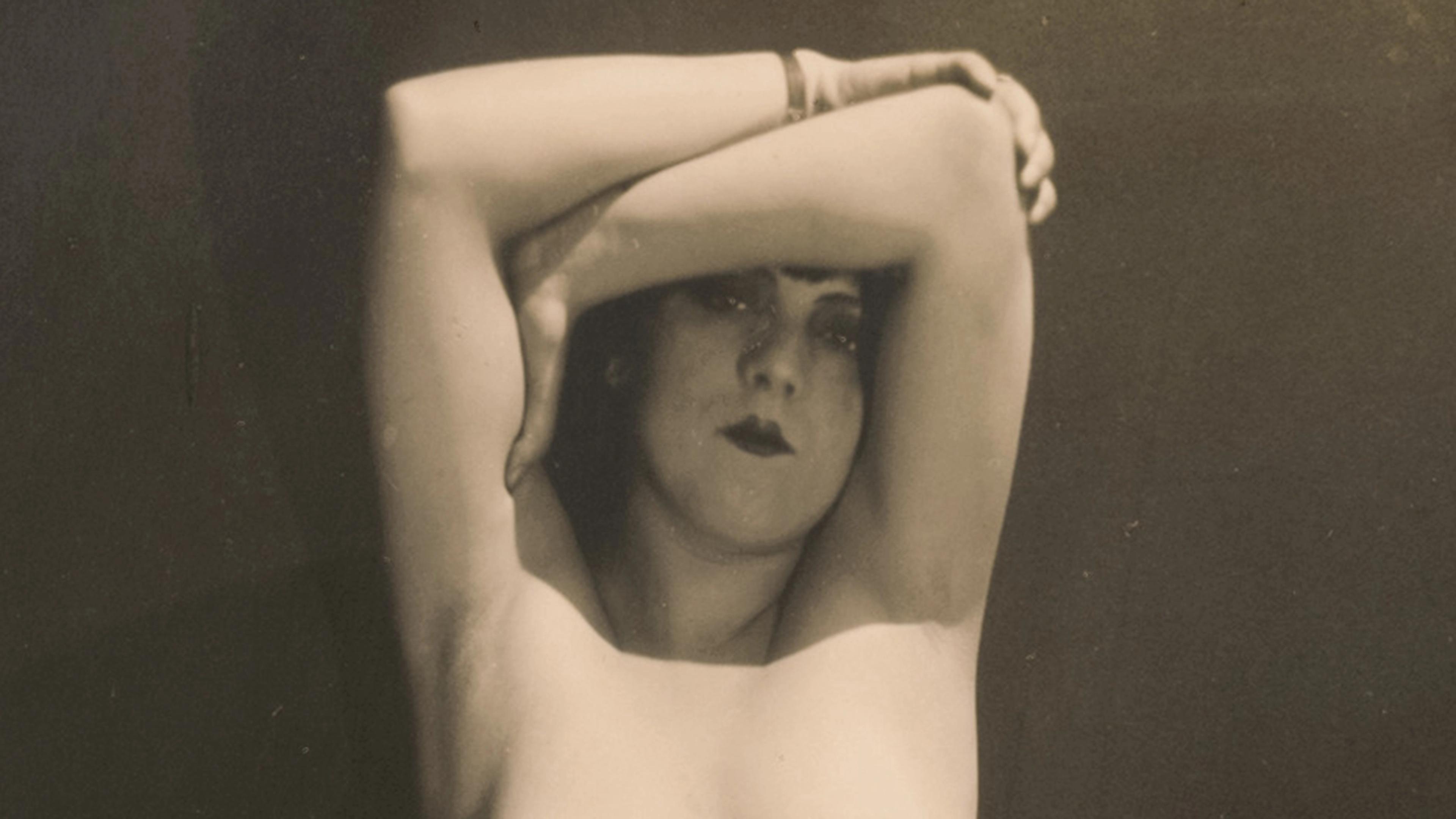
Part of the wonder of Man Ray’s photographs is the mystery behind them. His works bend and distort photographic reality through their play of light and chemistry, but the processes behind their mind-warping transformations remain obscured. The sequence of four prints of Kiki de Montparnasse from 1924 (figs. 1–4), in which Kiki’s body metamorphoses from classical nude to blurred abstraction, charts an iterative process of experimentation that occurred during printing rather than through the camera. With little information on Man Ray’s printing practices available in the literature, I attempted to re-create the photographs in the darkroom at The Met. This exercise not only exposed the limitations of historical reconstruction due to differences in materials and equipment but also yielded valuable insights into Man Ray’s practice and the many experimental techniques he may have employed in the darkroom.
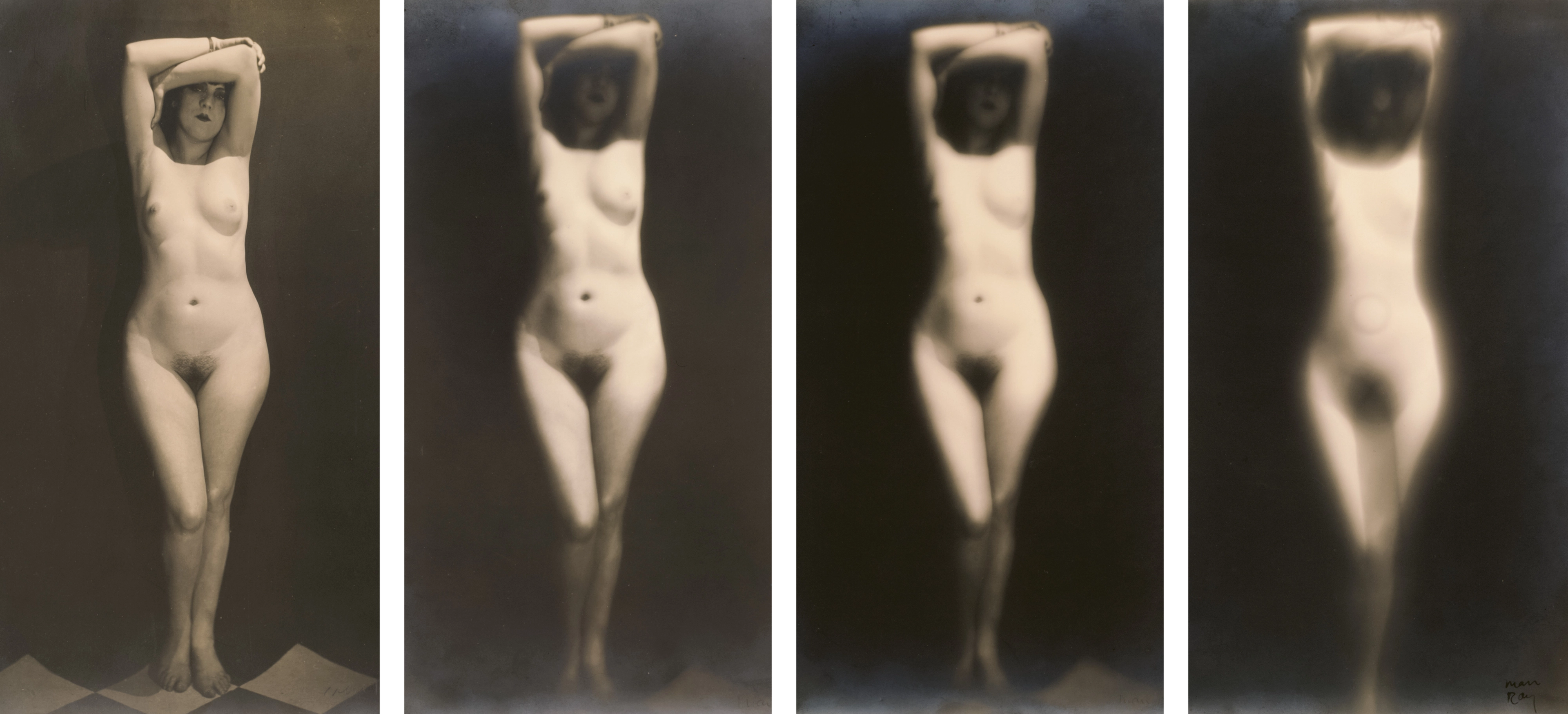
Figs. 1–4. Man Ray, Kiki de Montparnasse, 1924. Gelatin silver print, 8 7/8 x 6 5/8 in. (22.5 x 16.8 cm); Kiki de Montparnasse, 1924. Gelatin silver print, 11 1/8 x 7 3/8 in. (28.3 x 18.7 cm); Kiki de Montparnasse, 1924. Gelatin silver print, 11 1/8 x 7 3/8 in. (28.3 x 18.7 cm); Kiki de Montparnasse, 1924. Gelatin silver print, 10 3/8 x 6 13/16 in. (26.4 x. 17.3 cm). The Metropolitan Museum of Art, New York, The Bluff Collection, Promised Gift of John A. Pritzker. © Man Ray Trust / 2026 Artists Rights Society (ARS), New York
To reconstruct Man Ray’s prints, I began with a negative. While Man Ray would have used a glass or film negative, I opted for a digital negative made from the first print in the sequence. Of the four prints, the first is a possible starting point for the subsequent images. The smallest and most detailed of the three, it shows the figure in sharp focus; her body and the space that she occupies are clearly legible, suggesting that Man Ray re-created the scene in front of the camera by producing a print directly from a negative with minimal intervention. This straightforward photographic approach may have extended to the darkroom, where Man Ray could have made the image through contact printing. In this foundational technique, the negative is placed in direct contact with the paper, creating a print that has the same size, focus, and detail. During the early twentieth century, the photographic field increasingly moved away from view cameras that produced large negatives toward nimble, handheld cameras that produced small negatives, making enlargement increasingly necessary; by the 1920s, enlargers were a mainstay in most darkrooms. While it is unclear if the first print in Man Ray’s series was enlarged or contact printed, it is certain that he used the enlarger to manipulate and transform the subsequent three images.
In an enlarger, the negative is placed between a light source and a lens, and the image is projected onto the paper for printing. The image is enlarged by increasing the distance between the image (i.e., the negative) and the projection surface (i.e., the photographic paper). Changing the size of the projection also necessitates a change in the focus by adjusting the distance between the negative and the lens (fig. 5). Man Ray utilized the enlarger’s two optical relationships to create the increasing blur and halo effect around the edges of Kiki’s body. I found that as the print became less detailed, the figure became stretched and distorted, the tile floor disappeared, and the subtle tonal differences that signify three dimensionality blended and flattened. The figure was removed from any sense of three-dimensional space inherent in the initial photographic act and the image instead reflected the most basic material of photography itself: light.
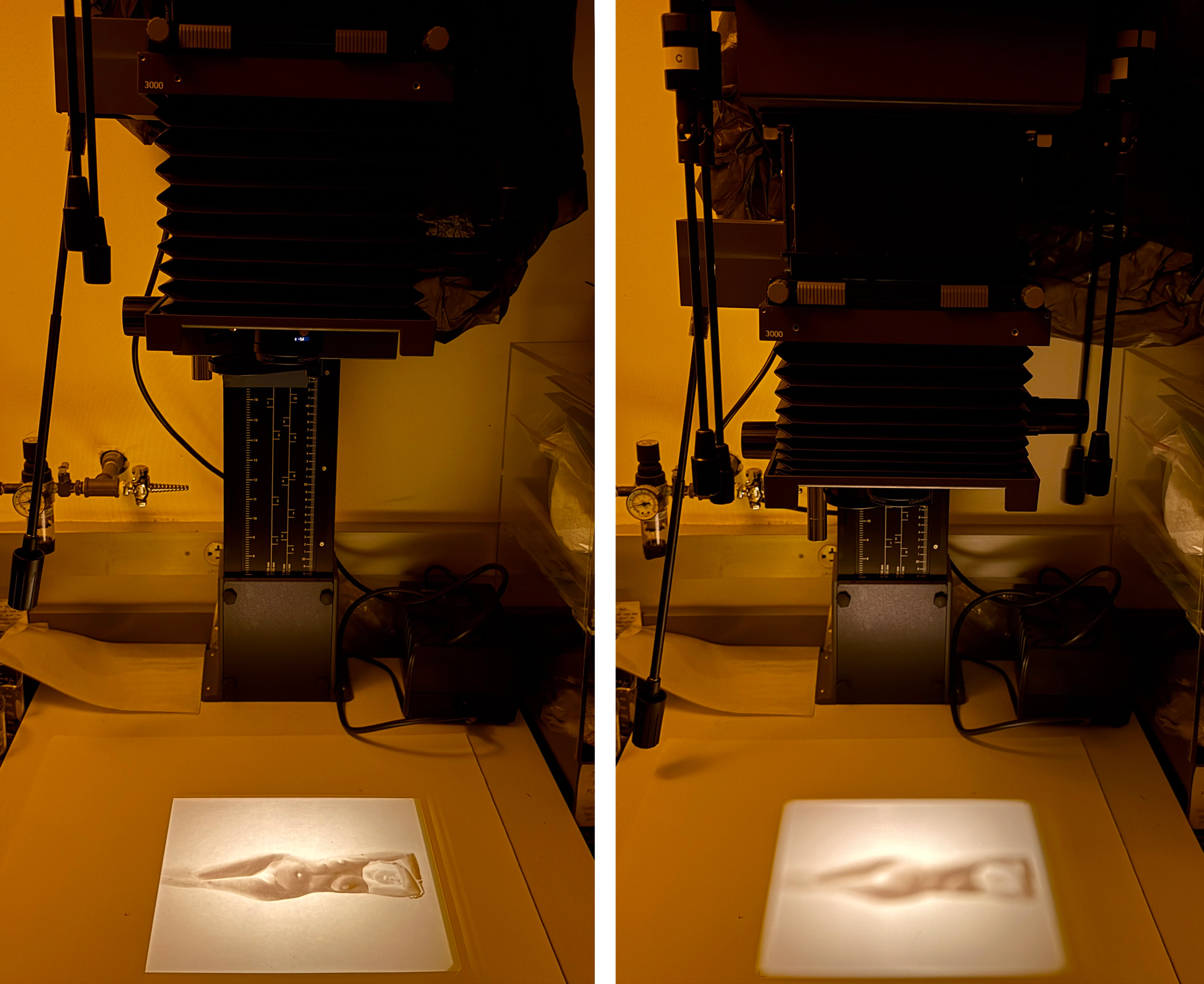
Fig. 5. Changing the focus of the enlarger
The final print of the sequence shows the most dramatic abstraction and was the most difficult to re-create. During my initial attempts, I could not adequately distort the legs and navel using the enlarger alone, even when it was positioned as far out of focus as possible with the aperture of the lens wide open to minimize depth of field. This led me to consider chemical and physical manipulations that Man Ray may have employed during exposure and development.
Chemical manipulation, like selective development and bleaching, are not uncommon in Man Ray's rayographs and portraits, and I was able to achieve similar darkening of the legs with brush-applied concentrated developer during processing. Reproducing the navel was a more complex puzzle, but I found two methods that yielded visually similar results: first, the placement of a drop of water on the print before exposure to prevent a latent image from forming where the gelatin had swollen; and second, the brush application of fix halfway through development to selectively stop the process (fig. 6). Both techniques removed the navel and caused a dark ring to form around the bleached area. However, these steps also lightened the overall image tone in the center of the ring, whereas in the original print Man Ray only removed the dark spot of the navel without lightening the surrounding midtones.
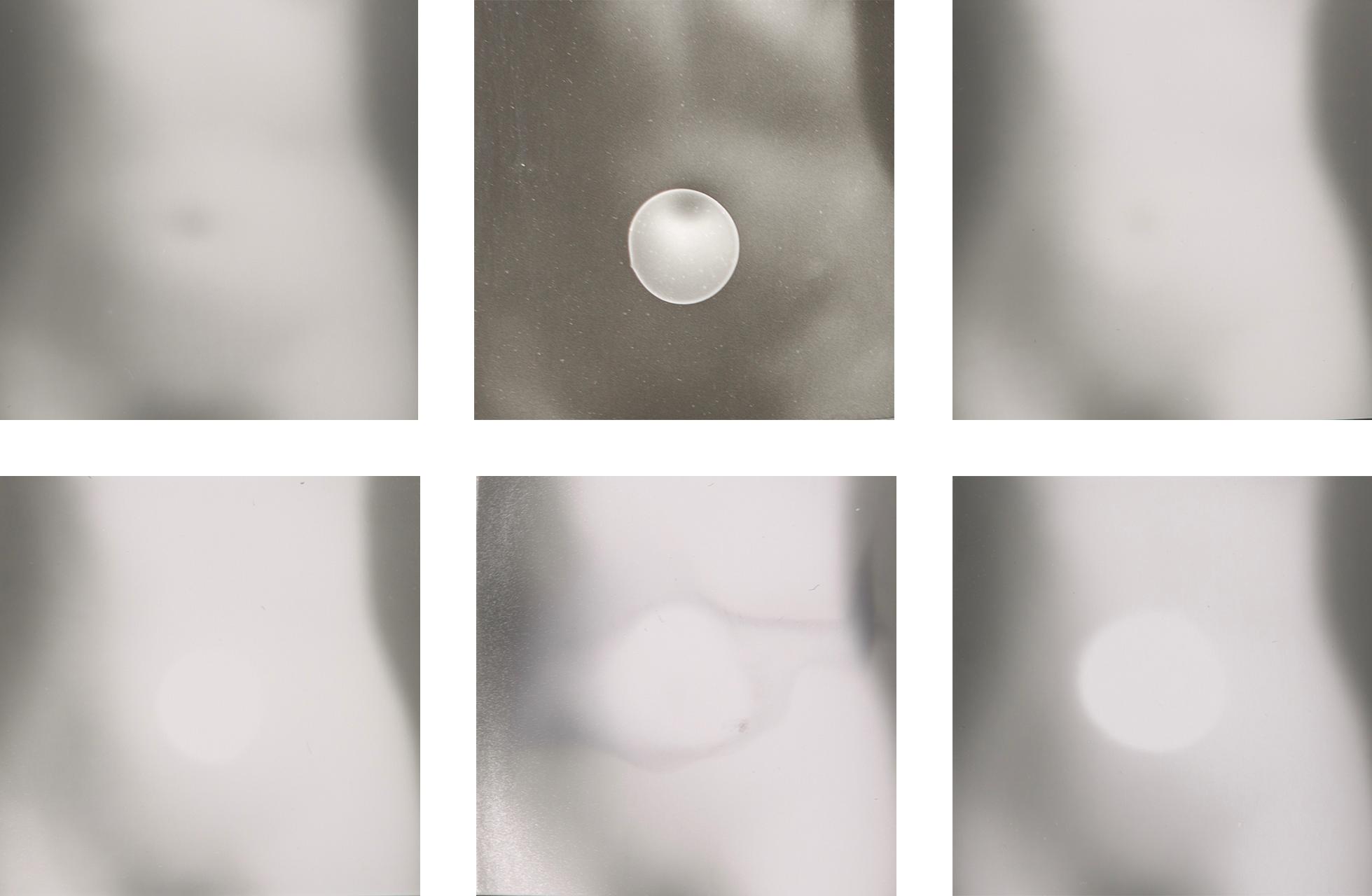
Fig. 6. Experiments in chemical manipulation to remove Kiki’s navel. Top, left to right: control; water droplet before exposure; water droplet after exposure. Bottom, left to right: glycerine before exposure; fixer halfway through development; glycerine after exposure
While these techniques were compelling, further experimentation revealed another alternative. I discovered that the ring around Kiki's navel and the merging of her legs could be attained through the enlarger alone, but not with my contemporary equipment. Based on my study of historical product catalogues, I knew that enlargers relied on either a condenser or a diffuser to ensure that the light from the lamp evenly illuminated the negative. A condenser is a set of lenses between the lamp and the negative that serves to make the rays of light parallel and evenly distributed over the surface, creating sharp, high-contrast images. Conversely, a diffuser is made of a semiopaque material that scatters the light, creating softer focus and lower contrast. Despite working with a diffusing enlarger, I could not produce the same level of blur. I experimented with various ways to further the effect, including placing filters below the lens and moving the paper carrier during exposure. After replacing my enlarger’s mixing box with a makeshift diffusion screen, I was finally able to distort the focus of the negative enough to achieve the desired transformation. Two prints made with the same height, f-stop, and bellows extension but with the diffusion type switched out reveal an optical difference: the out-of-focus image made with the standard mixing box widens Kiki’s body, reduces tonal range, and removes detail (fig. 7), while the image made with the homemade diffuser (fig. 8) tapers Kiki’s body and generates the soft yet distinct lines around her navel, legs, and arms that are visible in Man Ray’s final print (see fig. 4).
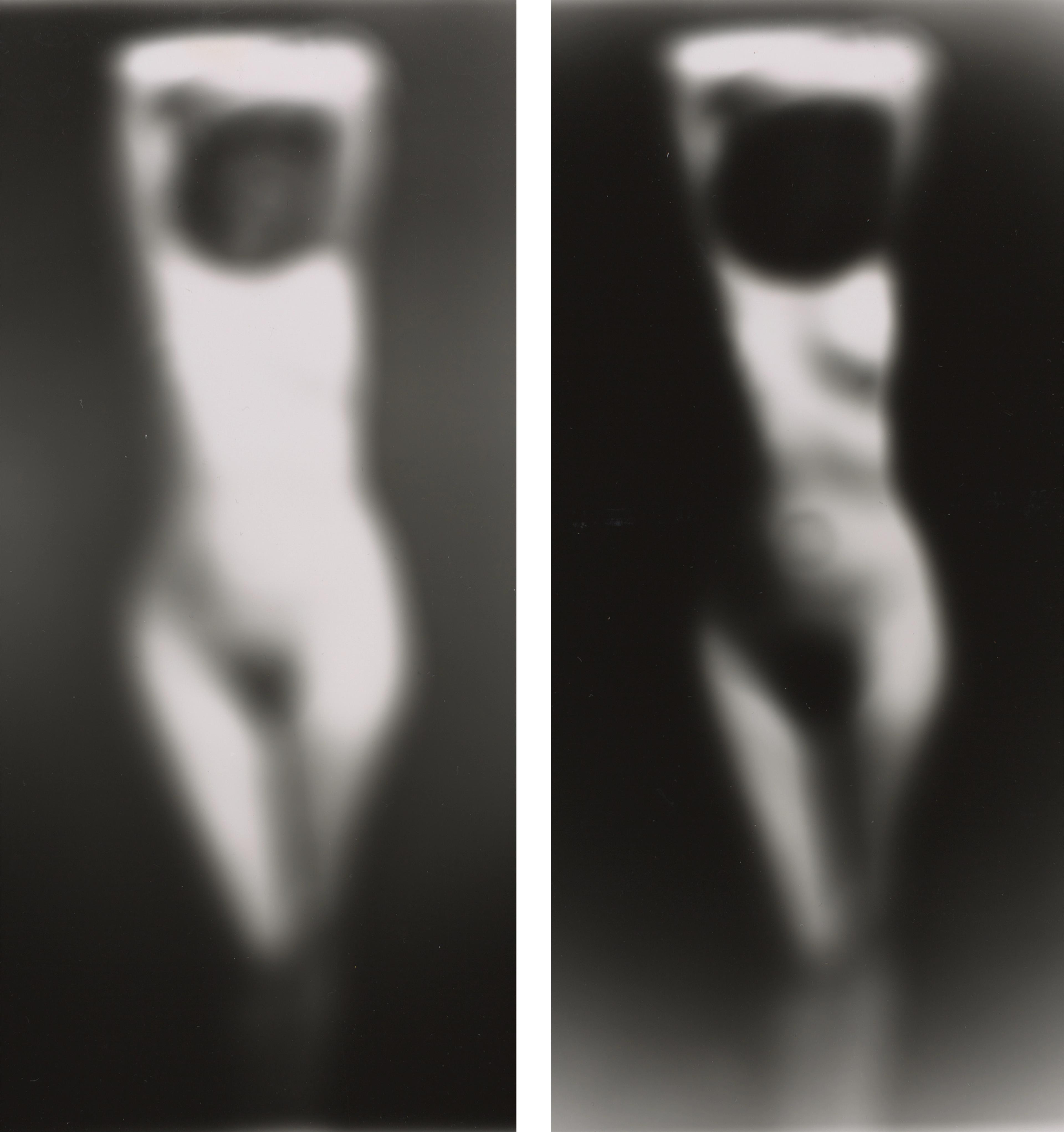
Figs. 7, 8. Experiments with the enlarger using a standard mixing box (left) and a modified diffuser (right)
Any attempt to re-create a photographer's work is always limited by many factors, including changes in technology, availability of materials, and differences in experience and knowledge. Man Ray’s images of Kiki de Montparnasse demonstrate that he used his skill and control of technique, as well as a clear engagement with the primary tool available to him, the enlarger, to push the limits of his subject’s body as she metamorphosed from “real” to “surreal.” My experiments are a reminder that, in looking at Man Ray's photographs, it is instructive to see his process—the intermediary steps, experimental failures, and technical missteps that might have ended up on the darkroom floor. These tests demonstrate how a single negative can be used to create drastically different prints through iterative darkroom manipulations (fig. 9) and may prompt future researchers to further investigate Man Ray’s approach to printing processes.
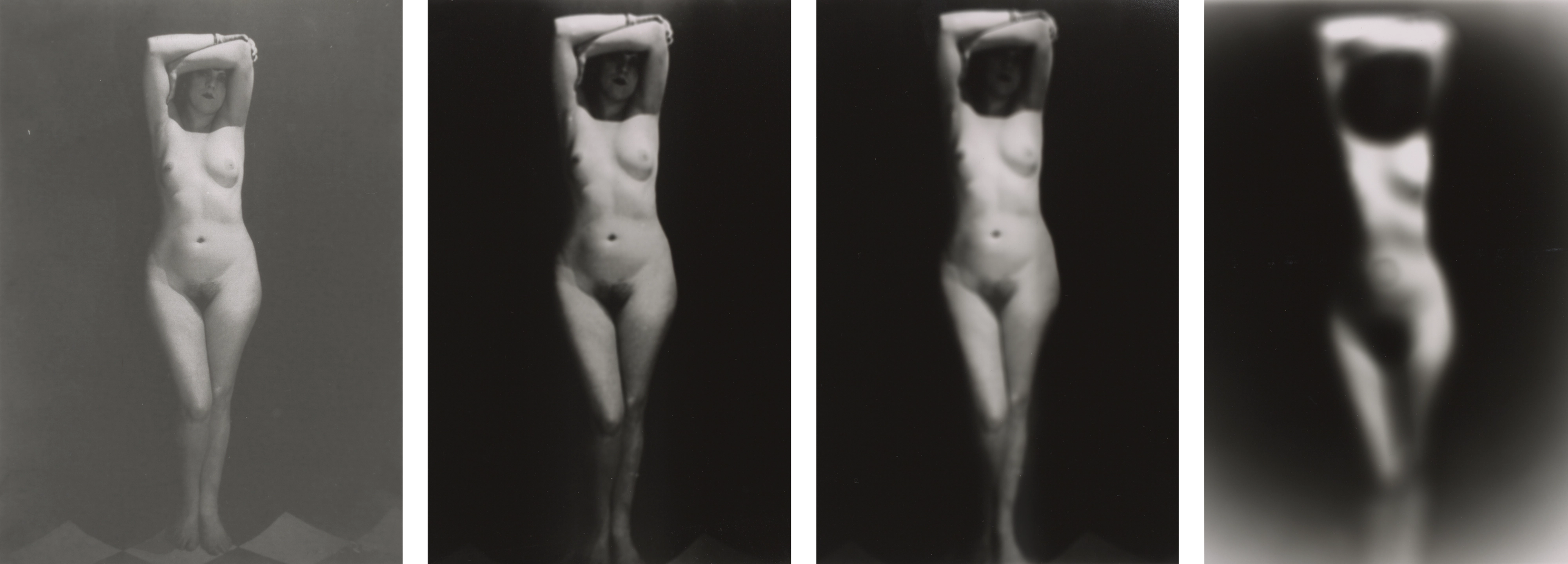
Fig. 9. Reconstruction of Kiki de Montparnasse (1924), with printing notes. Left to right: standard mixing box, contact print, f/11, grade 0, 13 seconds; standard mixing box, enlargement, f/22, grade 4, 10 seconds, +5 second burn background, +5 second burn face; standard mixing box, enlargement, f/32, grade 4, 24 seconds, +10 seconds burn face, -12 seconds dodge body; makeshift diffuser, enlargement, f/5.6, grade 4.5, 1.4 seconds, +2.8 second burn top edge
