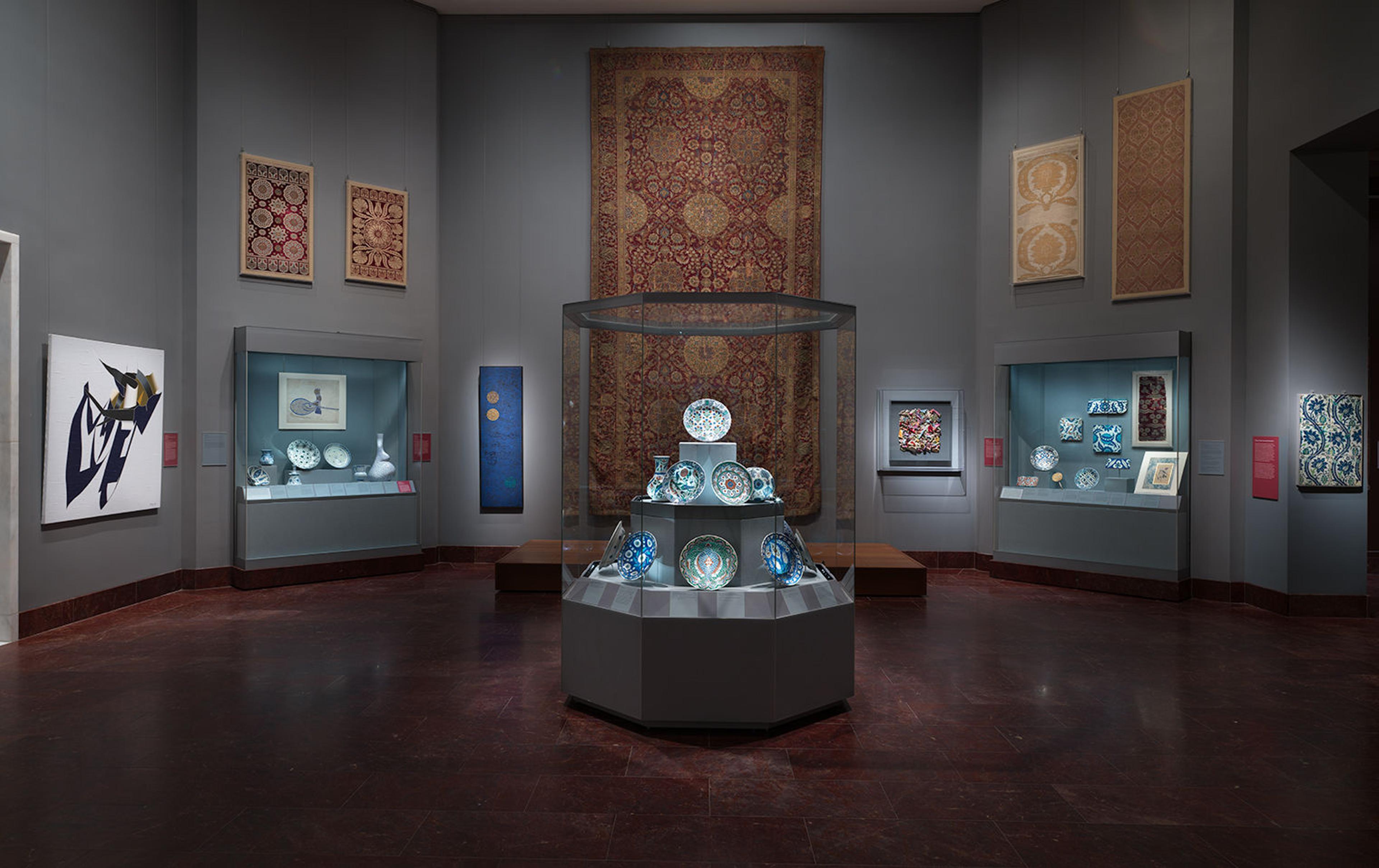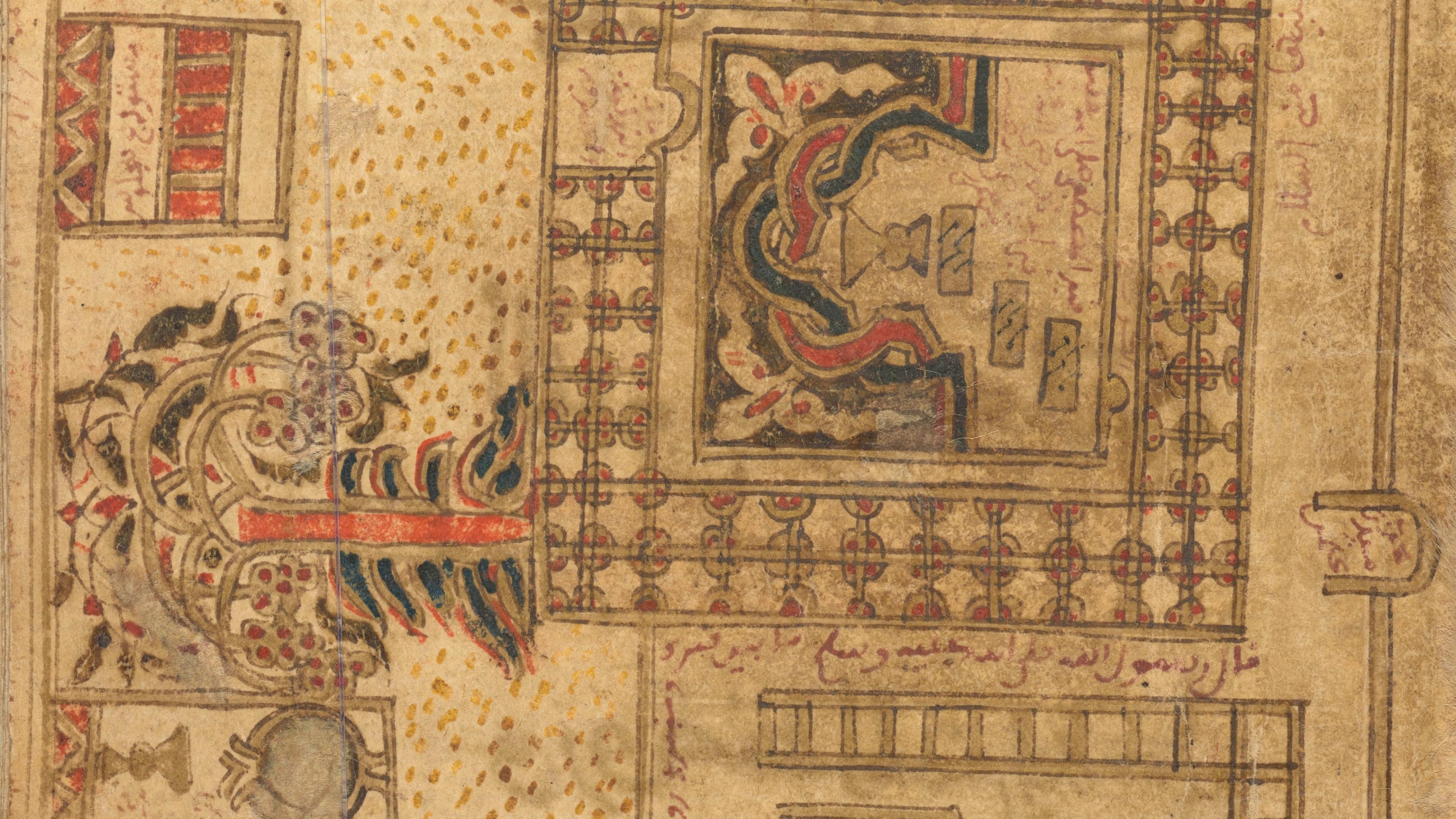
Works of art from the Islamic world are often decorated with calligraphic inscriptions—mostly in the Arabic script—which can be the key to the meaning and function of the object. They bear Qur’anic verses or other religious texts, witty proverbs, mystical poetry and metaphors, visual puzzles, and inventive phrases sometimes referring to the object itself in the first person. Inscribed objects often contain important information about their makers, patrons, beholders, and date of creation. Deciphering and interpreting inscriptions on objects provide a window into the meaning of such works of art within their own historical, cultural, and experiential contexts.
Speaking Objects From the World of Islam is intended to give voice to inscriptions on objects and make them accessible to museum audiences, scholars, students, and researchers. This method works by highlighting each word in a specific color as it is read aloud by a reciter and simultaneously translated. Through short videos and digital applications such as AR and VR, readers and viewers can hear the object speak, recite, or sing!
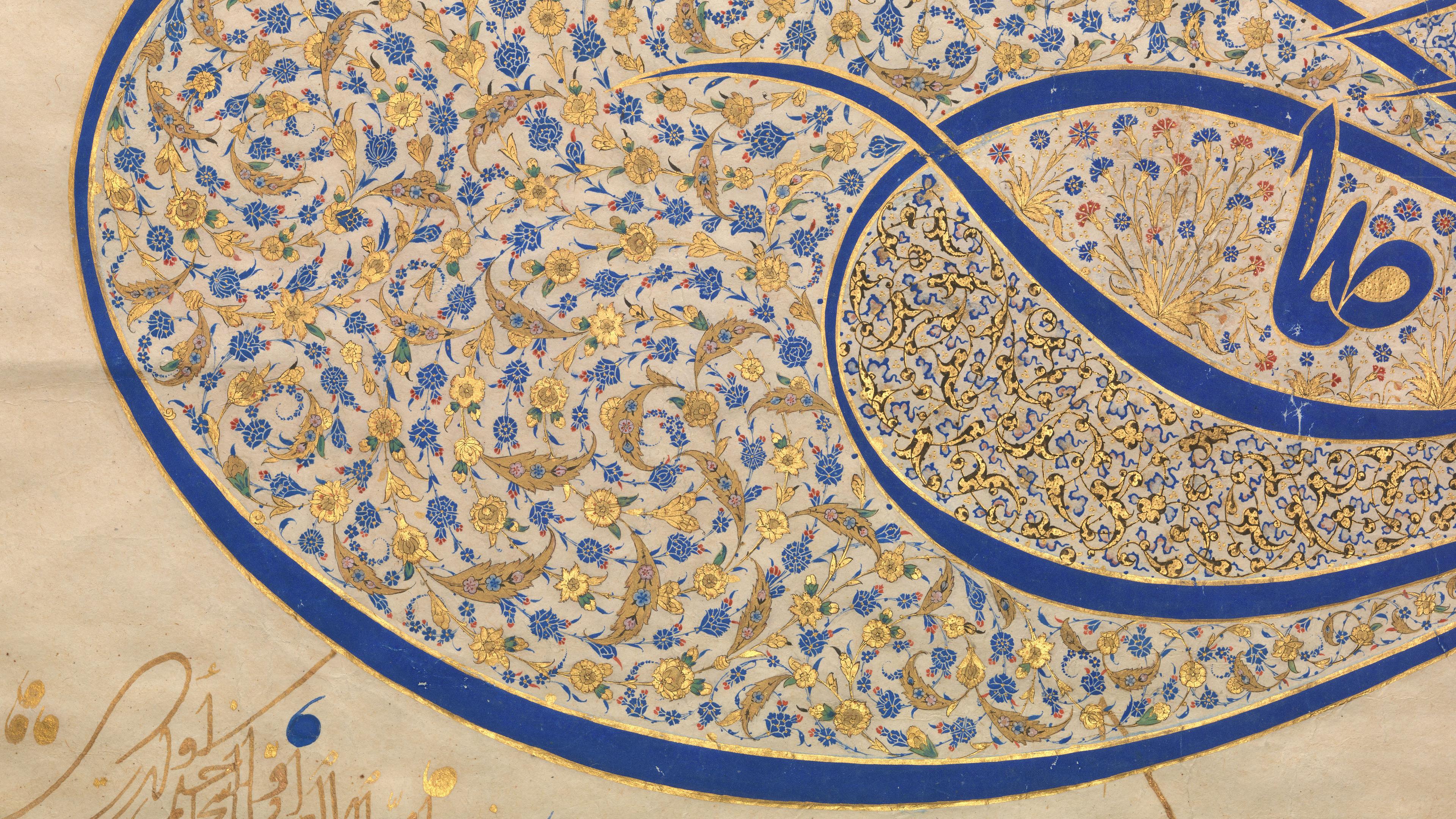
Listen to the words on these four objects: an inlaid metal pen box from fourteenth century Iran, an epigraphic slip-painted bowl from tenth-century Iran or Central Asia, a medieval tile panel in the form of an architectural niche, and a tughra or insignia of Ottoman Sultan Süleiman the Magnificent.
Inscribed Pen Box
Read by Abdullah Ghouchani
Bowl with Arabic Inscription
Read by Abdullah Ghouchani
Tile Panel in the form of an Architectural Niche
Recited by the late Mahmoud Khalil al-Hussary
Tughra (Insignia) of Sultan Süleiman the Magnificent (r. 1520–66)
Read by Mohammad Farsimadan
The foundations of this project in the Islamic Department were first laid by Dr. Abdullah Ghouchani who sadly passed away in 2020. It ultimately came to fruition in a further collaboration between Met/American Institute of Iranian Studies Fellow Dr. Mohammad Farsimadan and the Departments of Islamic Art, Imaging, and Digital Media at The Metropolitan Museum of Art.