This essay is part of La Fin du monde: A Modernist Book, a research project from the Leonard A. Lauder Research Center for Modern Art.
A note on the translation
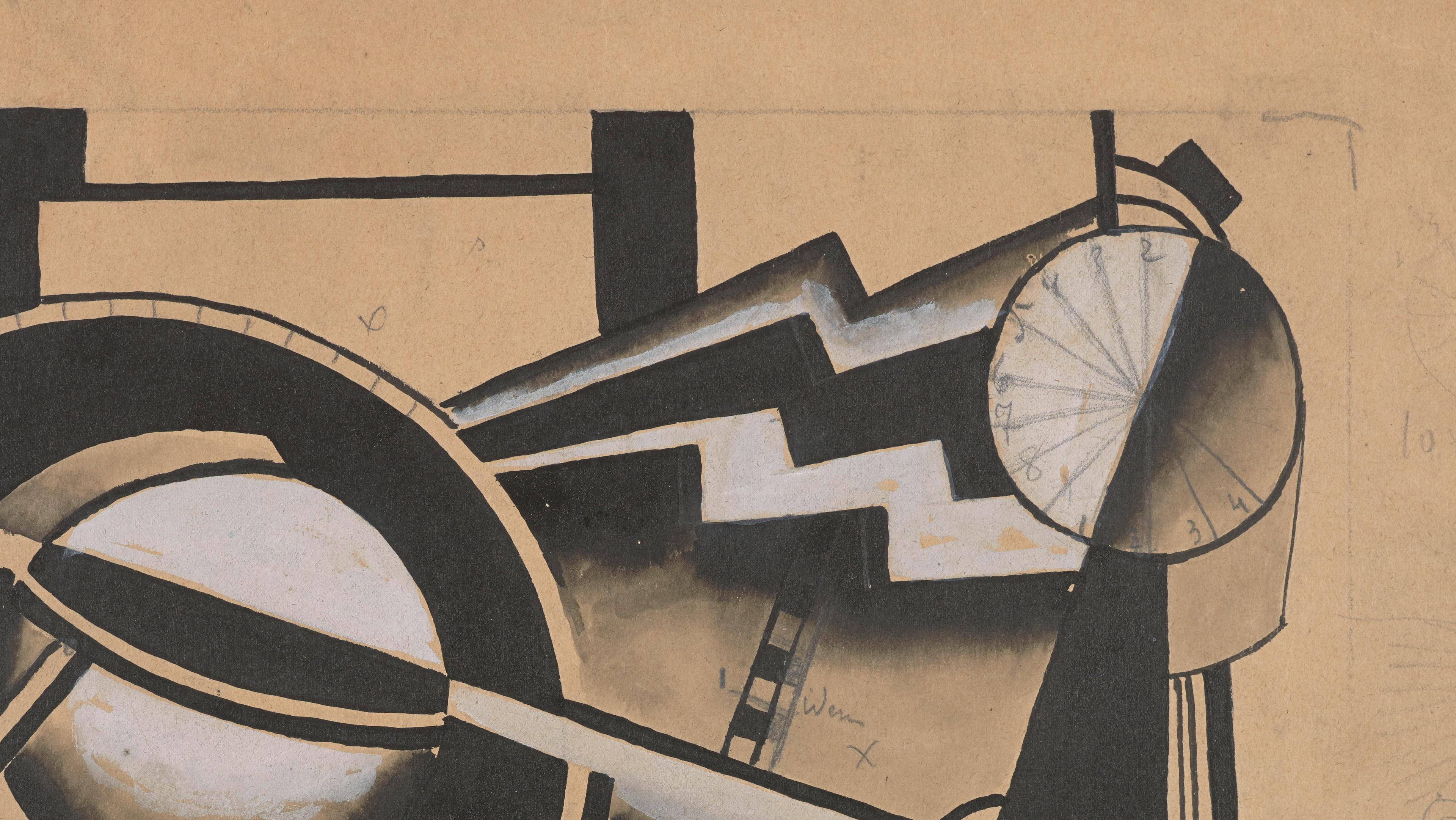
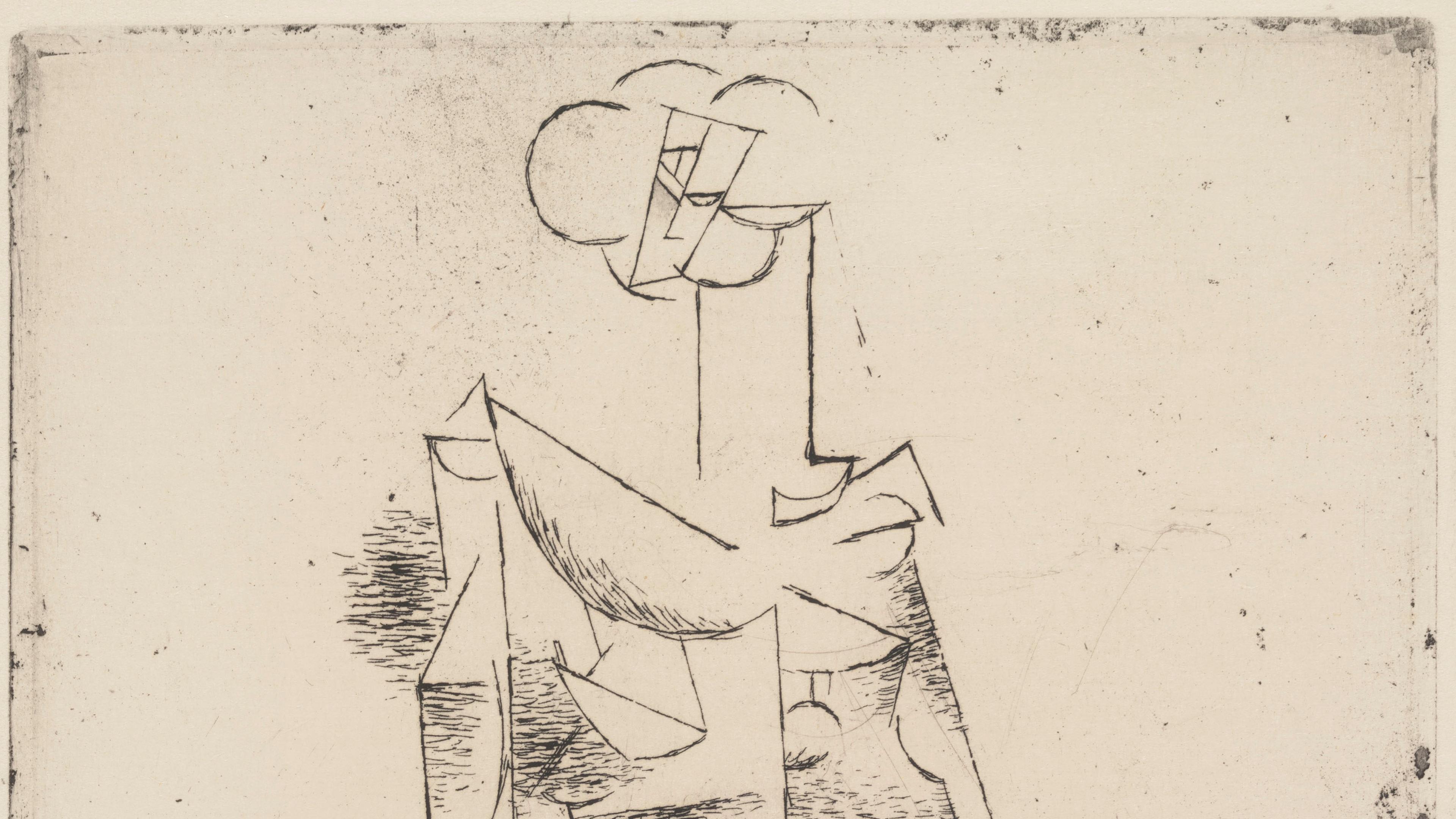
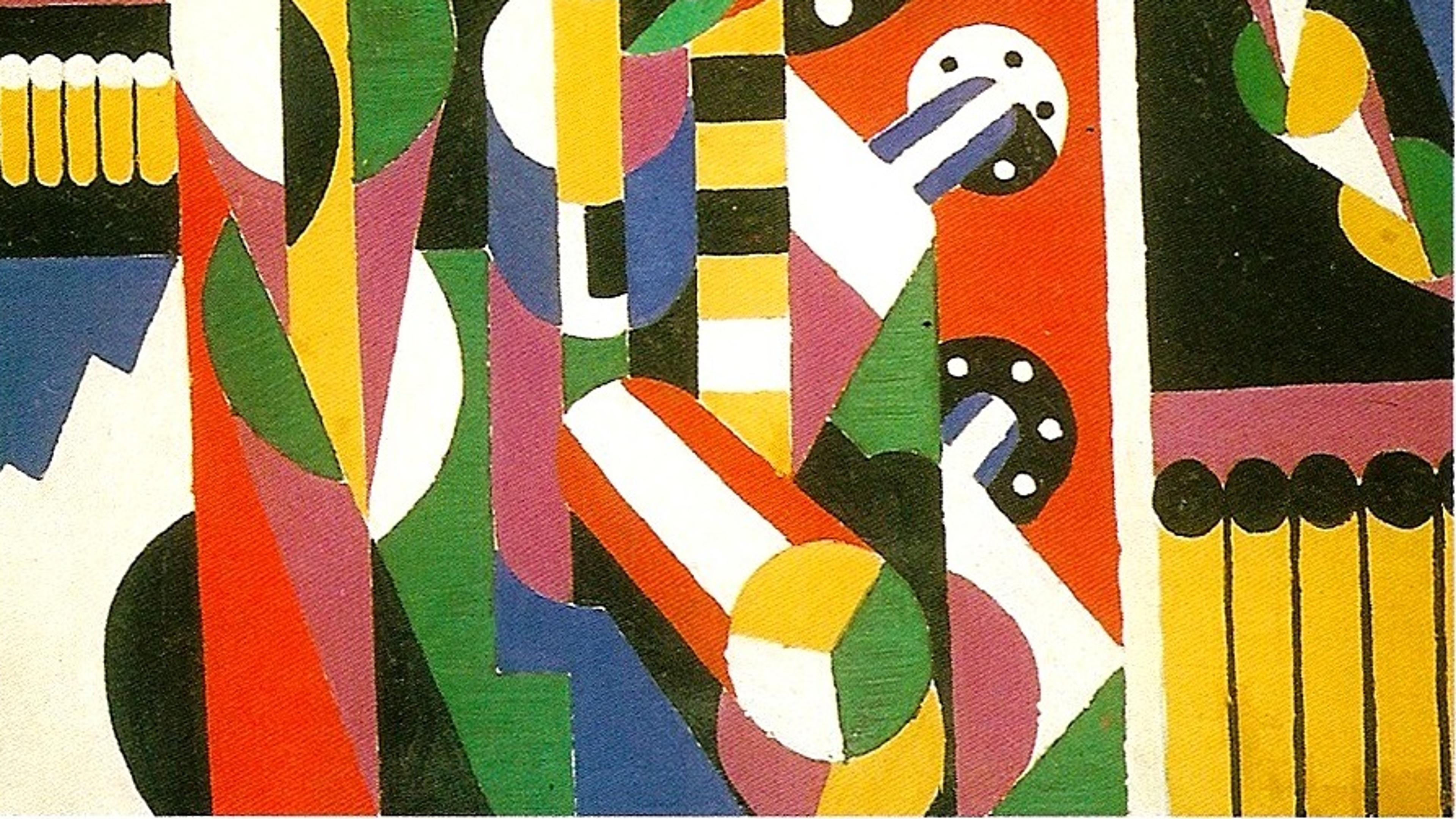
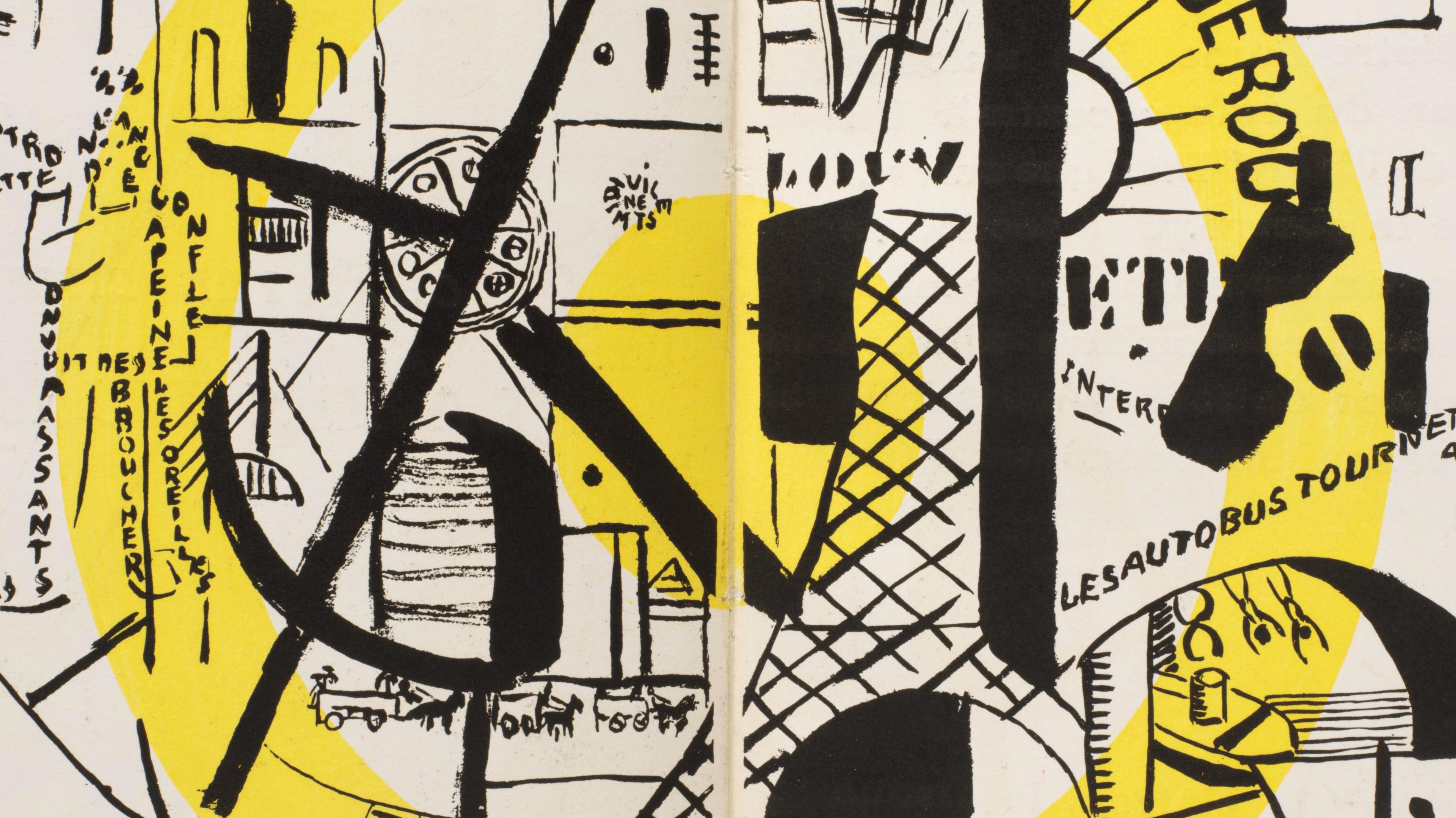
That Blaise Cendrars’s The End of the World takes the form of a screenplay is apposite, given that it was originally meant to be filmed: it was only after financial backing for the project fell through that Cendrars converted his scenario into an illustrated book. The DNA persists, however, as both the text and Fernand Léger’s typographic layout (based in part on silent-movie intertitles) retain the frenetic, herky-jerky style of early cinema, at a time when the movies were just emerging as a popular art form and French society was still recovering from the potentially world-ending butchery of the First World War. While the narrative is presented as a farce, the fact that civilization as we know it here meets a fast-motion end, and that God the Father comes off as a cigar-chomping, profit-obsessed capitalist, indifferent to human suffering, might not have seemed so fanciful when the work was published in October 1919, less than a year after the Armistice.
Although La Fin du monde filmée par l'ange N.-D. dates from more than a century ago, this is the first English translation of the book (which is not to be confused with To the End of the World [Le Monde en entier], Cendrars’s final novel, from 1956). In making it available to English-speaking readers, I tried above all to preserve the shorthand syntax, jump-cut aesthetic, Cubist sensibility, and madcap humor that still give The End of the World its bite all these years later. The fact that Cendrars’s imagined devastation feels relevant even today says more about our current world than we might wish.
—Mark Polizzotti
Chapter One: Neutral God
1.
It’s December 31st. God the Father is seated at his American-style desk. He hastily dispatches mountains of paperwork. He’s in shirtsleeves and sports a green eyeshade over his brow. He stands up, lights a fat cigar, checks his watch, and paces nervously around his office, chomping on his cigar as he comes and goes. He sits back down at his desk, feverishly pushes away the papers he’s just signed, and opens the Grand Register to his right. He consults it for a moment, jots down figures in pencil on a notepad, blows away the cigar ash that has fallen on the pages. He suddenly snatches up the receiver and dials furiously. He summons his department heads.
2.
The department heads enter.
The Pope, the Grand Rabbi, the head of the Holy Synod, the Grand Master of Freemasonry, the Grand Lama, the Great Monk, the Pastor, the Christian Socialist Deputy, Rasputin, etc., etc., enter in single file and line up behind the boss’s chair. They have all donned the insignia of their ministries and are holding their accounts ledgers.
God the Father calls on them one by one. Each one comes up and holds out his ledger, which God countersigns after noting the total in his notebook. Then he abruptly waves them away.
3.
Once alone, God the Father quickly takes stock. It’s been a good year. The Great War has been profitable. So many services for the souls’ eternal rest. A billion dead at 1.25 francs per. Gleefully he rubs his hands together. But it can’t last forever. Everything’s getting more expensive. Have to think up something new. Fortunately . . .
A telegram arrives.
Mars City–P.K.Z. 18-19-43
Come. Presence required. First propaganda parade on Friday 8th. Success guaranteed.
Menelik.
He grabs his hat, gloves, cane, and exits fast.
4.
God the Father climbs into his deluxe automobile.
We see the new workers’ shacks, flat and rectilinear, of the GRIGRI COMMUNION TRUST CO. LTD, whose huge electric sign lights up in the dusk. It’s evening. Thousands of employees emerge from offices. Bustling crowd. Indescribable hubbub. Movement. Traffic jams. Infinite variety of outfits. The monks, Levites, popes, seminarians, clergymen, missionaries, and catechumens are office clerks; young lovelies serve as secretaries.
5.
Interlaken. Mars Station. Huge, brightly lit buildings at the foot of the Jungfrau summit. Factories spangle the mountains. Industrial installations. Poles. Smokestacks. Huge water mains. Rumble of turbines in the valley. The interplanetary train arrives with a great clatter, drops into a magnetic net stretched from peak to peak. Elevators go up and down. Powerful spotlights come on. Lit signals. Colored optical telegraph. The departing train is gripped, then propelled by the sling of giant dynamos. An ultraviolet flash. A spiral unwinds. The train has left. We see its rear light fade into the starry sky. The lit signals redouble in brightness.
Chapter Two: The P.T. Barnum of Religions
6.
Mars City.
God the Father, the P.T. Barnum of religions, has relocated to Mars. The weekly cavalcade emerges from the circus tent and comes together.
7.
From Krishna to Jesus, all the founders of religions since earliest antiquity parade by. Then come General Booth, Herr Rudolf Schreiner, the Sâr Péladan. In huge gilded cars shaped like Gothic cathedrals, pagan temples, pagodas, synagogues, etc., etc., the Christian Scientists, Methodists, Mormons, Anabaptists, etc., etc., all the modern sects celebrate their unparalleled rites. African, Oceanic, and Mexican fetishes. Grimacing masks. Ritual dances and chants. In cages, the evil deities, Asmodeus, Ahriman, etc., or a few freaks, like Ahasuerus, the Visitation nun Margaret Mary Alacoque, J.-K. Huysmans. Along with some tableaux vivants or historical reenactments, such as: the Albigensian Crusade; blue Bacchus, god of the monkeys; the Flight of Mohammad, etc. Dust, banners, votives, canopies, a shower of confetti. Smoke from perfume burners and censers. Harnessed elephants trumpet, leashed leopards howl. Camels, dromedaries, mules with red pompoms. Scattered throughout the cortege, a few mountebanks: Zulu the Fire-eater; the Dog-headed Man; Watchm’calla, the wild woman who devours live chickens; the Little Tramp, mounted on stilts.
8.
The crowd of Martians pressing in to watch the cavalcade. We see them inside the soap bubbles they dwell in, like imponderable fetuses in jars. Like chameleons, they become iridescent, change color following their emotions of the moment.
9.
Spells, blaring advertisements, thundering music, the whole vividly colored production, the gold of the costumes, the violence of the perfumes, the tragic quality, the horror of certain spectacles, certain scenes, certain celebrated sacrifices, all the brutal sensuality exploited in this parade of religions, the stomach-turning exhibition of certain martyrdoms—such as the torture inflicted on animals in the name of Egyptian gods, the frozen terror of African masks, the cruelty of the dances—all of this agitates, upsets, horrifies the crowd of delicate, fragile Martians. God the Father has gone too far. Barnum is too vulgar.
10.
We see the Martians’ soap-bubble dwellings flare in extreme colors. Some turn black, explode, collapse.
The bubbles are seized by a violent trembling. They seem to be boiling. We see them climb atop one another, swell disproportionately, or else shrivel. They run away.
11.
The Martians unleash their police. We see bronze robots, heavy and terrible, charge on the parade. Widespread chaos. Panic. The parade disperses.
God the Father flees into the desert.
Chapter Three: The Prophecy Trick
12.
In Adventurers City, in the human concession on Mars.
God the Father arrives, exhausted, tattered, bald. He’s lost his stiff collar, and his patent leather shoes are a wreck. He rushes to the Grand Hotel, where his faithful Menelik awaits him.
13.
The next morning.
God is in his dressing gown, seated in an armchair. The most influential members of the colony come to express their condolences about the previous day’s events.
God announces that he intends to build a cinema and that he has the finest war movies.
At which, they tell him that the Martians are disenchanted and resolute pacifists. As iodine eaters, they live on the peptonic vapors from human blood, but they cannot stand the least sight of cruelty.
God digs in his heels. He has plans, ideas, has no intention of throwing in the towel. The spectacle of all-out war on earth is too grandiose not to take advantage of it, profit from it.
They’re all full of advice.
When everyone has left, Menelik comes up to God and, like a respectful and admiring valet who takes the liberty of offering his master counsel, he suggests enacting the prophecies. God telegraphically summons a few gnarly rascals from the Old Testament.
He rubs his hands together and smiles.
14.
Here come the Prophets.
God unveils his plan to carry out the prophecies. Immediately they all begin promoting and recommending their own . . . Shouts, arguments, gesticulations. Jews tug on each other’s beards.
Nahum, Amos, Micah, the three little canonical prophets, are especially violent. God shoves them all out the door.
15.
Menelik enters and shows him a photograph of Notre-Dame cathedral in Paris, with the Angel, perched at the top, between the two towers, holding his trumpet in his hand. He explains that this is Thouroulde, the French poet who so valiantly sounded Roland’s olifant. He’d certainly do the trick. God approves. He sends a coded message to the Angel of Notre-Dame.
Chapter Four: The Angel of Notre-Dame, Cameraman
16.
Paris. Overview.
The Ferris Wheel; the Tower; Sacré-Cœur; the Pantheon; the bridges. Upstream and downstream, the Bois de Boulogne and the Bois de Vincennes.
The radiant hillsides of Saint-Cloud and Montmorency. In the background, near Alfortville, the Seine swings upward, luminous. The trains.
17.
Particular scenes in different neighborhoods. Artists in Montparnasse; well-heeled women in the Bois de Boulogne; aperitifs at the Moulin-Rouge.
Les Halles produce market at five a.m. A traffic bottleneck at Châtelet; the Stock Exchange; laborers leaving workshops on Rue de la Paix.
A fashionable tea. Cars at Place de l’Etoile, darting around like pen strokes. A strike at La Villette. Le Matin’s rotary presses; soup kitchens on Boulevard de l’Hôpital; Rue de la Glacière; the Luxembourg Gardens; the Europe neighborhood.
The rag-and-bone men on Quai de Grenelle. An operation in Saint-Louis Hospital; the huge factories in the outskirts, etc.
18.
Intimate Paris interiors and street scenes.
The greengrocer; the street peddler; the poet under the eaves; the gentleman burglar; the great Marcelle. A stroller of the boulevards; the inmate in Cell 11. The sewage worker at his task; the last of the bohemians; yesterday’s bestseller; the deacon of Saint-Séverin. Monsieur Diebler the executioner; the Finance Minister’s office boy, etc.
19.
The cathedral of Notre-Dame from every angle. Precise details of its architecture. The gargoyles. The apostles on the roof. And we see the Angel of Notre-Dame raise his trumpet to his lips.
Chapter Five: The End of the World
20.
Noon. Churchyard of Notre-Dame. Buses circle around the central refuge. A hearse leaves Hôtel-Dieu Hospital, followed by those blinded in the war. A cadre of municipal guards is lined up in front of the barracks across the street. Bustling men crisscross the square in all directions. A student ballyhoo parades by on the Left Bank.
21.
At the first clarion blast, the disk of the sun enlarges slightly and its light dims. All the stars are suddenly visible in the sky. The moon spins noticeably.
22.
The Angel of Notre-Dame barely puffs his cheeks.
23.
We see pedestrians stop up their ears and jerk their heads aside.
24.
All the world’s cities rise in the distance, glide as if on railroad tracks, and crash together in a heap on Notre-Dame’s churchyard.
25.
The sun stands still. It is one minute past noon.
26.
Immediately, everything that had been built by humans collapses onto the living and buries them. Only things that have a semblance of mechanical life last for another two seconds. We see trains cruising to a halt, machines running on empty, airplanes tumbling like dead leaves.
27.
An immense column of dust rises straight into the sky, then forks, splits in two, falls back down, whirls, frays, spreads in every direction; the winds blow like a tempest; the sea opens and shuts; the mountains of Mexico stamp their feet in the sunlight.
Chapter Six: Cinema, Fast-Forward and Slow-Motion
28.
With humanity dead and pets destroyed, the species and genera that had been banished reappear. The oceans are repopulated with whales and the surface of the earth is invaded by outsized vegetation.
29.
We see fallow fields turn green and bloom madly. Audacious vegetation blossoms. Grasses turn ligneous; wild grasses grow tall, strong, and stiff. Hemlock is leguminous. Shrubs emerge and grow. Forests spread, and we see the plains of Europe darken, get uniformly covered in holly.
30.
In the damp air fly countless birds with heavy, sticky plumage. Otters and beavers thrive in waterways. Giant insects spawn in marshes and lay eggs constantly.
31.
The disk of the sun expands and cools some more. Glaciers grow taller and wider. We see vicuñas coming down from the southern mountains, along with vultures and bears. All of them take refuge in the steppes of the Far North, through which a current of warm air blows. Everything adapts to the wide, vast new environment. The vicuña stretches her legs and neck. The vulture’s wings atrophy, and so does its mood. The bear gets fat, swells, peels, grows enormous. We see a giraffe, an ostrich, a mammoth.
32.
Then everything goes stock still.
The ice floes spread; they invade the seas and the sky carries them along. The birds and land animals are dead. On the banks of a narrow channel of lukewarm water—the only one left—damp, apodal creatures with human faces come out to breathe, their external lungs hanging off both sides of their head.
33.
Again the sun grows larger and its heat multiplies, and we see an intense multicolored island appear in the curtain of mist. In a strange, compressed jumble, we see the shapes of all the obliterated creatures: the kangaroos go leaping by; the lemurs fly; the duck-billed platypus advances to the foreground and looks at you through mocking eyes, in agony; the lyrebird executes its sexual dance; the orangutan gives a tubercular cough; an armadillo rolls into a ball.
34.
The desert. Bleached bones and huge eggshells.
35.
It rains and rains. Everything melts. Everything gets diluted. Sky and earth. The sun is drooling. It reclines on the clouds in disarray and tumbles into the mud. We see its rays decompose in droplets of water, and minuscule rainbows seed the earth.
36.
Now the sun is very near. Its disk takes up ¼ of the sky. It looses huge sprays of fire perpendicular to the ground. Then it firms up and rises slightly and condenses into a thick, vaguely ovoid mass.
37.
The glaciers are liquefied. The ground consolidates. Vapors aerate, rising to half-height. It’s hot. Down a mudflow slide peatbogs that agglomerate, merge together, and gradually form a continent. Grasses suddenly spurt to insane heights, immediately wither, and revive. The flora of coal mines emerges and grows, spongelike, single-celled, fleshy and transparent.
38.
We see vascular plants capture the energy of the three elements, transform it, create complex substances that become foodstuffs.
39.
It rains and rains. The water rises. The needles of conifers spread out, become palm-like, open like umbrellas. Mushrooms grow on every branch, float with the tide. Algae, yeasts, black sponges. Various debris accumulate on the lake beds.
40.
The sun has dissolved. A kind of phosphorescent, granular fog on a decomposed sea, in which a few obscene, gigantic, swollen larvae slough heavily along.
41.
A dark eye shuts on everything that was.
42.
A finger extends, lengthens, prods, palps, retracts, retreats back into its shell. Tufts of grassy vegetation awaken, swivel like sunflowers. A stomach travels at the end of a thread and vibrates. Suction, jolts, suckers. All is blind underwater and the light is dim.
43.
Joints petrify. The sated stomach turns to coral. Oxidizes. Pores emit a vitreous sweat. Motion—rare—stiffens in a hinge. Life takes root and drops like a sounding line, takes anchor. In the depths, the darkness is absolute, and only the stones are moving.
44.
We see crystallizations form, six-pointed stars, and every point comes together, crosses over like an X, like a tau, like a Jerusalem cross, a trefoil cross, a papal cross. It’s out of proportion onscreen. Something infinitely small becomes infinitely large. The central fire projects the molecular shadow.
45.
Polyhedrons evolve strategically. Colored gases rush forth. Complete minerals fuse, and we see chemically pure elements gush from the slagheap of matter.
46.
All is black.
We see a veinous network of dark-red fire sketch the earth’s family tree. It is dense as a nervous system.
47.
Circulation gets established, a ferment, radiation. Fragments of darkness come unstuck. Isolated spindles of flame. Cones, cylinders, pyramids. Everything collapses onto the central hearth. Explosion. And the ardent sea gushes forward in frothy torrents.
48.
A ball.
Cracked, dented, desiccated surface scratched by the nail of a cold light. Peeling off it, like flakes, a layer of chalk, plaster, gypsum, then a layer of flint that generates sparks at every impact. Every geological epoch reappears. Craters sink. Pumice lies at the bottom of a cirque. Perpendicular slate. Rock. Granite. Borax. Salt hollow.
49.
Everything spurts. Everything jumbles together. Hurly. Burly. The oily sea, heavy as asphalt. The blackish, blood-soaked earth, liquefying. The flood tides become mountains and the continents crash into the sea.
Whirlpool.
50.
The final ray of light splits chaotic space, a shark fin . . .
Chapter Seven: Rewind
51.
In the booth, Abin the projectionist fires up his machine. A fuse blows. A spring snaps. And the film runs zanily backward.
52.
The last ray of sunlight sets fire to the oily sea. The blackish earth heaves. Blocks of incandescent matter plummet straight down. Underground springs vaporize. Underwater earth explodes. Water, air, and fire clear out. Tall Hercynian mountains surge from the oceans. Chemistries fuse together. Arborescent organs pierce the shadows, rise, grow. An eye opens, ringed with seafoam. The sun is like a helpful plant. Everything that emerges from the waters feeds, swells, is saturated with granular heat. Everything crawls. The yeasts, algae, and mushrooms become active, gleam. Suddenly, giant ferns stand tall. It rains. Vapors condense. Glaciers form. It’s cold. The sun is now very pale. It moves away, rounds out, intensifies. The desert dust revives. A thousand apodal beasts crawl through the sand. Carapaces, shells, rings. Then everything freezes. Ice floe. The sealion screams and squirms. The elephant quits the banks of a polar sea. Inland, the vicuña flees into the mountains. Everything, plants and birds, gently dries out, takes on a soft greenish splendor. The vegetables are succulent. Sheep, cows, horses in the prairies.
53.
We see Paris again. Trains, automobile traffic. The bustling crowd on the churchyard of Notre-Dame. The weary gesture of the Angel of Notre-Dame as he lowers the trumpet from his lips.
54.
A rip, then, after a long pause, God fleeing the Martians, coming out of the desert, rejoining the parade, reentering the circus tent, leaving Mars, arriving at Interlaken, climbing backward into his deluxe automobile, driving backward to the offices of the GRIGRI COMMUNION TRUST CO. LTD. In his office, he removes his gloves, cane, hat.
55.
And, as in the beginning, we see God the Father seated at his American-style desk, furiously chomping on his cigar . . .
ETC.
Total bankruptcy.
Colophon: October 15, 1919.