
It’s understandable that visitors would imagine that the holdings of The Cloisters Library and Archives include the kinds of rare, illuminated manuscripts that dazzle museum visitors in our galleries. But those treasures are guarded and overseen in the same manner as the paintings, sculptures, and decorative arts found in The Met collection. For the most part, The Cloisters Library and Archives hosts research materials from the twentieth and twenty-first centuries.
What we can offer in terms of rare, if not entirely singular items, is a solid collection of facsimiles—very high-quality reproductions—of medieval illuminated books of hours, herbals, and other works originally produced on parchment or paper.
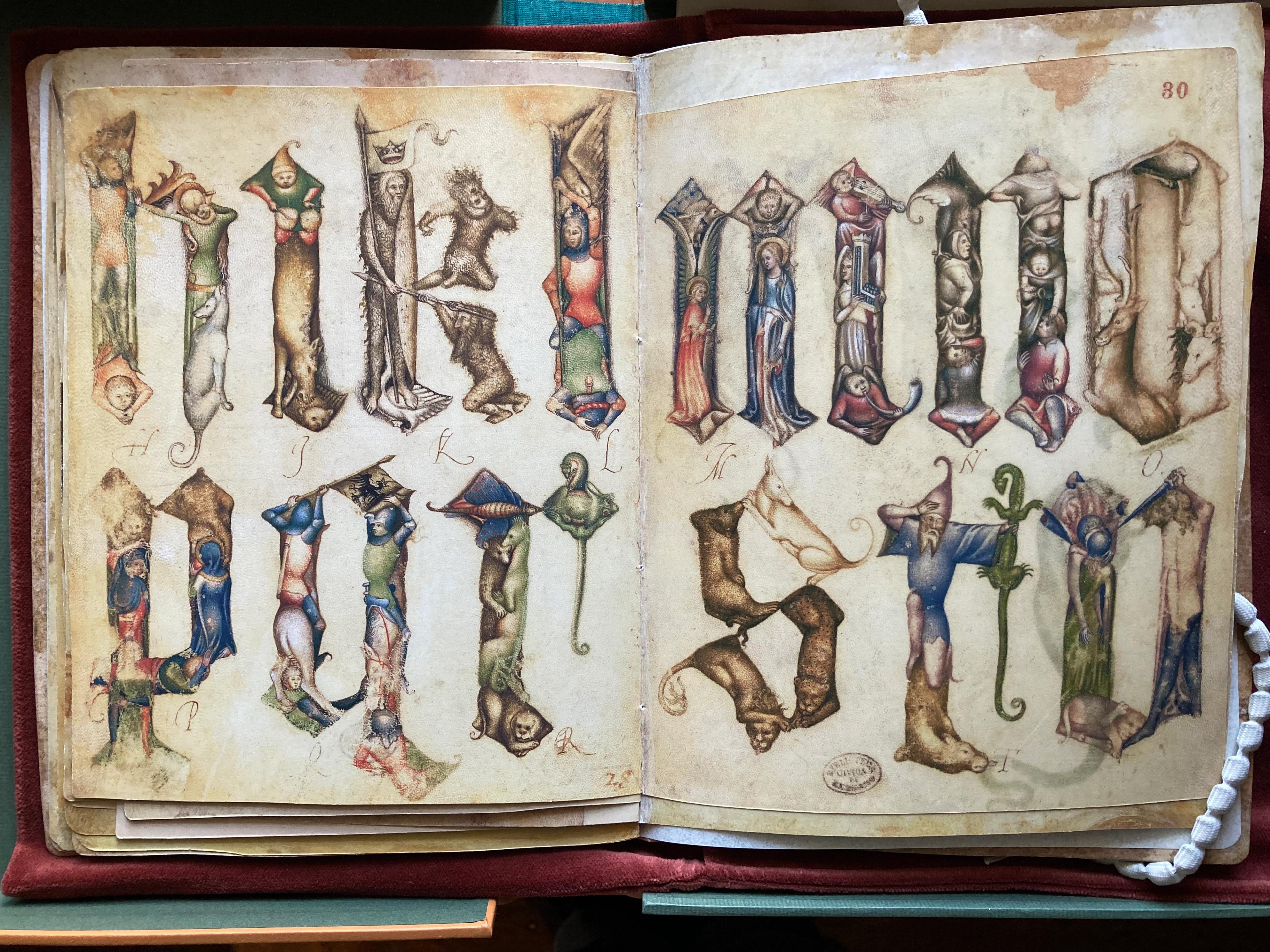
Taccuino di disegni di Giovannino de' Grassi ([Modena]: Il Bulino edizioni d'arte, 1998). All photos by author
A recent generous gift from the Elaine and Alexandre Rosenberg Charitable Foundation has secured our continued acquisition of facsimiles. These objects have been featured in The Cloisters Library since shortly after its founding in 1938.
Certainly the most essential facsimiles in our holdings are reproductions of the illustrated manuscripts in The Cloisters museum collection, such as The Belles Heures of Jean de France, duc de Berry (1405–08/09), or The Hours of Jeanne d’Evreux (ca. 1324–28). The original, unique, hand-produced masterpieces can be viewed in our galleries, but the opportunity to access to a reproduction of excellent quality is quite important. For instance, when a book is displayed in a vitrine, our enjoyment is generally limited to a two-page spread. A facsimile of the work allows a visiting researcher or the audience of a gallery talk to flip through the full contents of the manuscript without sacrificing the integrity of the original.
But it’s also useful to be able to study the reproductions of manuscripts from external collections. For example, when The Cloisters acquired this incredible little book of hours (ca. 1530–35) by Simon Bening, we felt it would be beneficial to acquire facsimiles of other illuminated manuscripts by the artist. Similarly, it’s helpful to compare examples of illustrated renditions of the Book of Revelations comparable to our own Cloisters Apocalypse (ca. 1330), as seen in two recent acquisitions below.
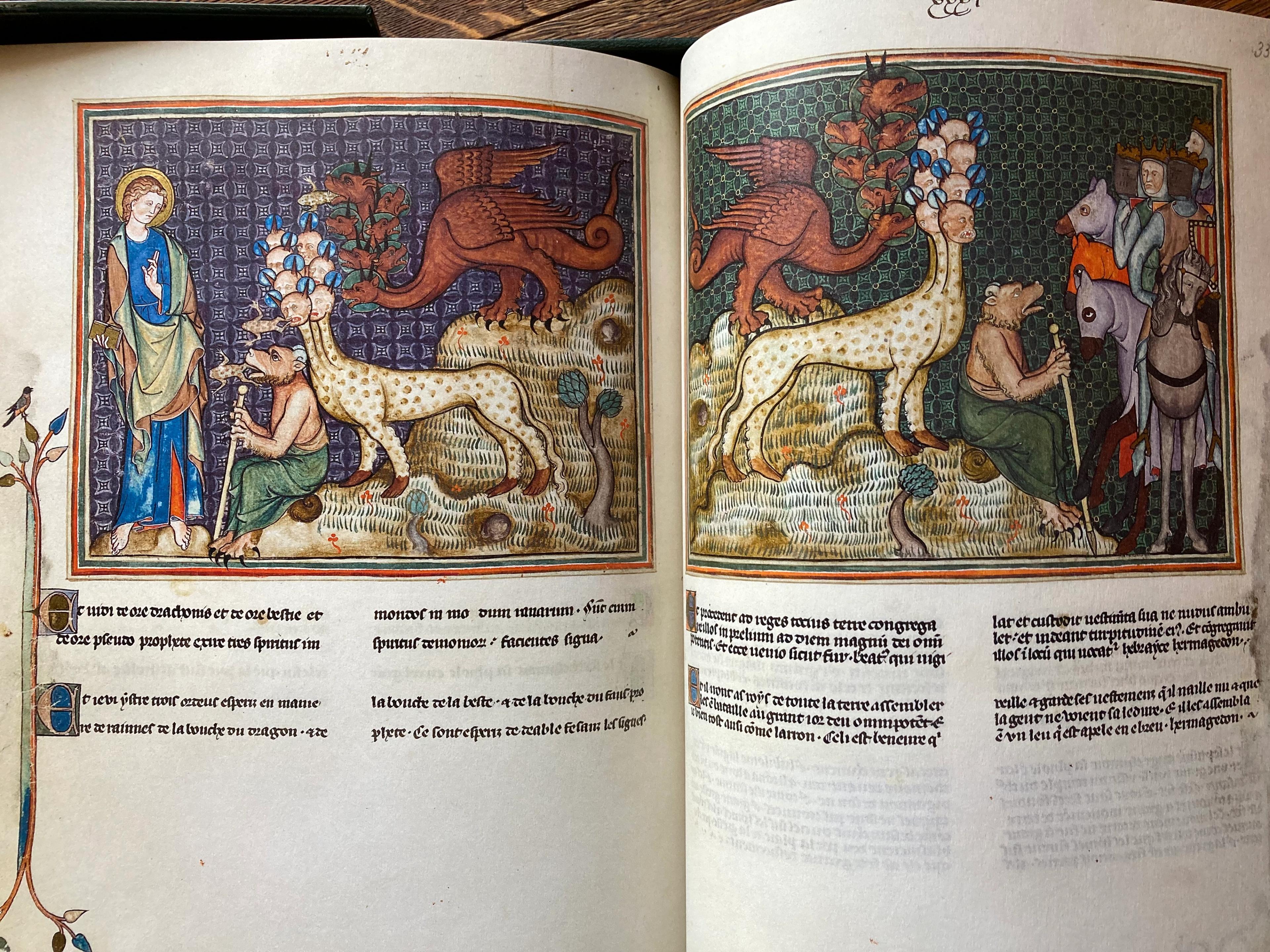
Val-Dieu Apocalypse (Barcelona: M. Moleiro Editor, 2019–2020)
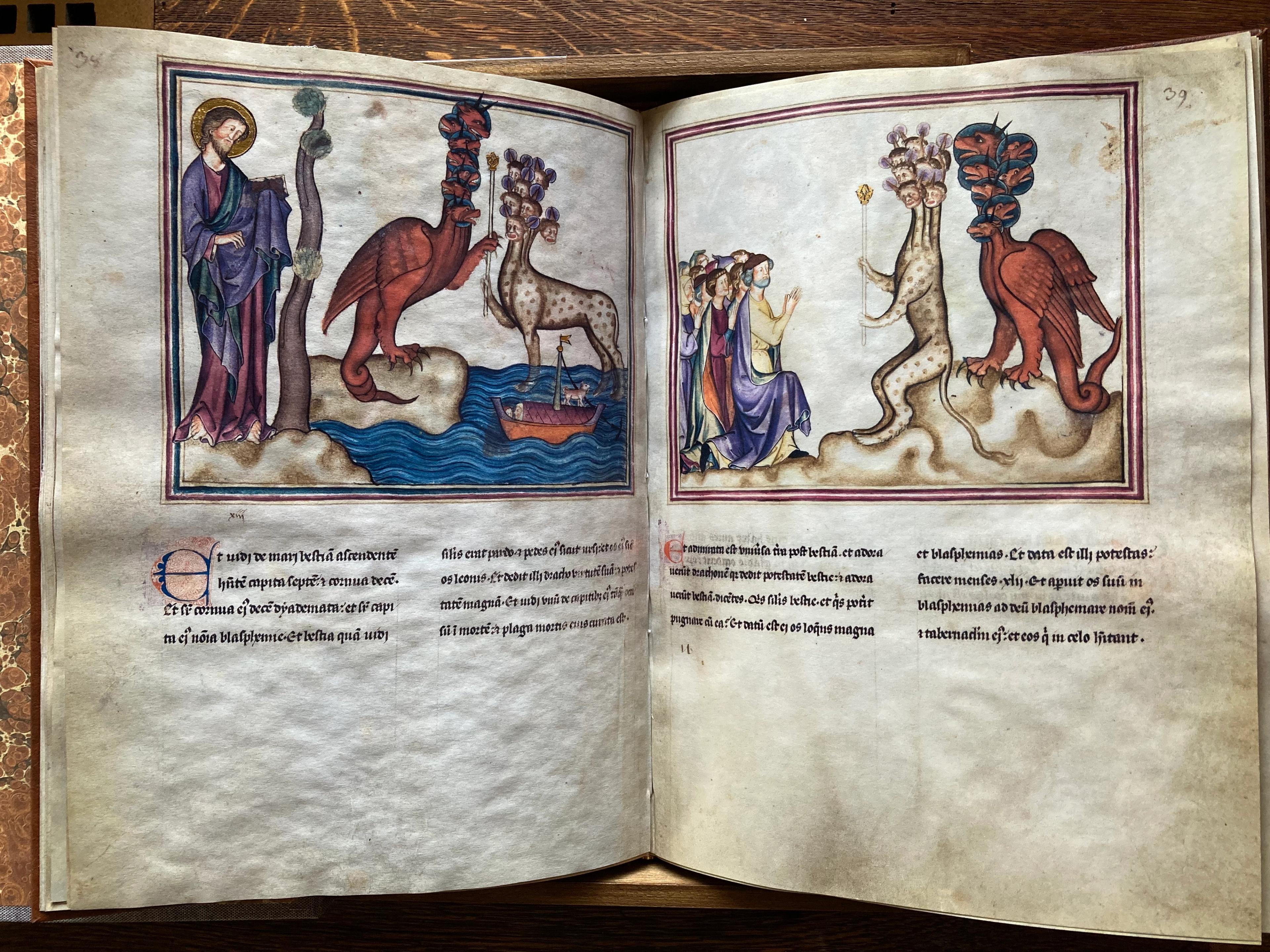
Apocalipsis figurado de la Abadía de San Víctor (Madrid: Orbis Mediaevalis, Editora Internacional de Facsímiles, 2023)
Another category of facsimiles that have bolstered our collection are those acquired in relation to exhibitions at The Cloisters. For example, these sets of medieval playing cards were procured in preparation for our 2016 show The World in Play: Luxury Cards, 1430–1540. In this instance, not only were the contents and accompanying commentaries helpful for the research of the exhibition, but they also provided the show’s curator, Timothy Husband, the opportunity to have in advance high-quality duplicates of original material he had arranged to borrow. He was therefore able to use the facsimiles to plot out the display in a level of detail not usually afforded to a curator or exhibition designer.
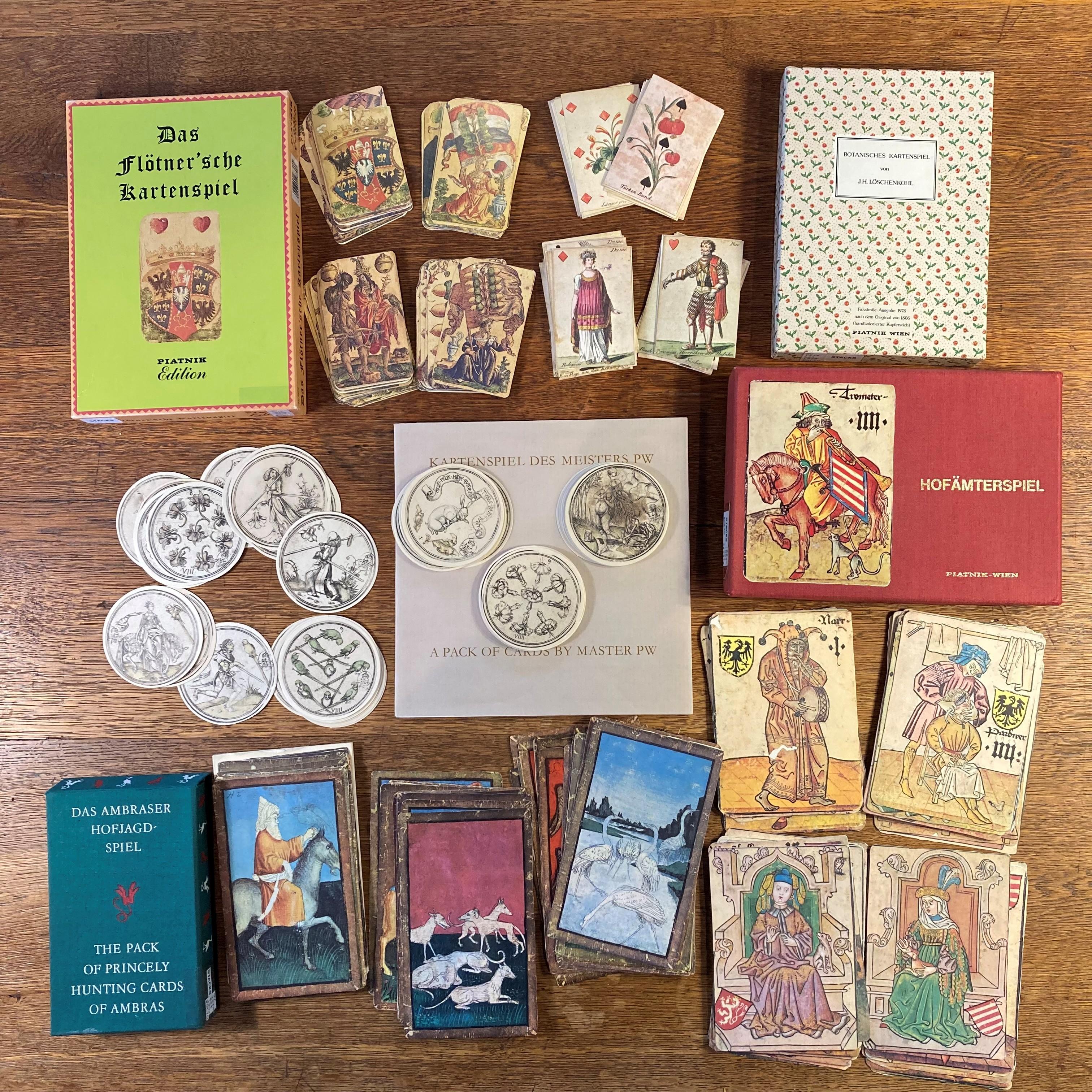
A selection of our facsimile sets of medieval playing cards.
A delightful facsimile of the sketchbook of the Italian artist Giovannino de' Grassi, purchased a few years ago, relates obliquely to The Cloisters’ current exhibition, Creatures of Myth and Imagination: Europe and the Americas. The artist’s captivating drawings are generally of animals, but the choices are a fascinating mélange of those he clearly was able to observe in real life with ones he seemingly referenced from other works or imagined himself.
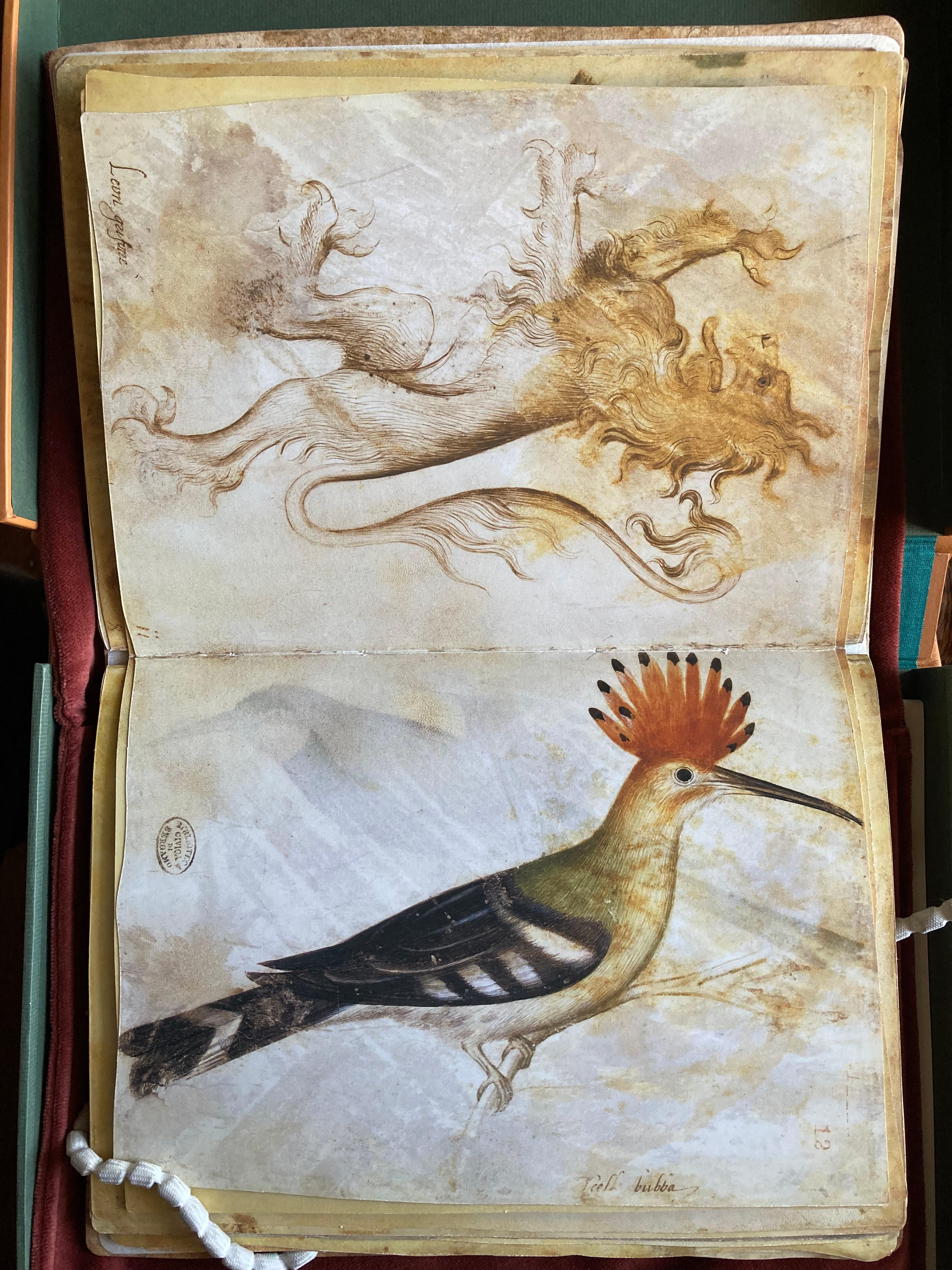
Taccuino di disegni di Giovannino de' Grassi ([Modena]: Il Bulino edizioni d'arte, 1998)
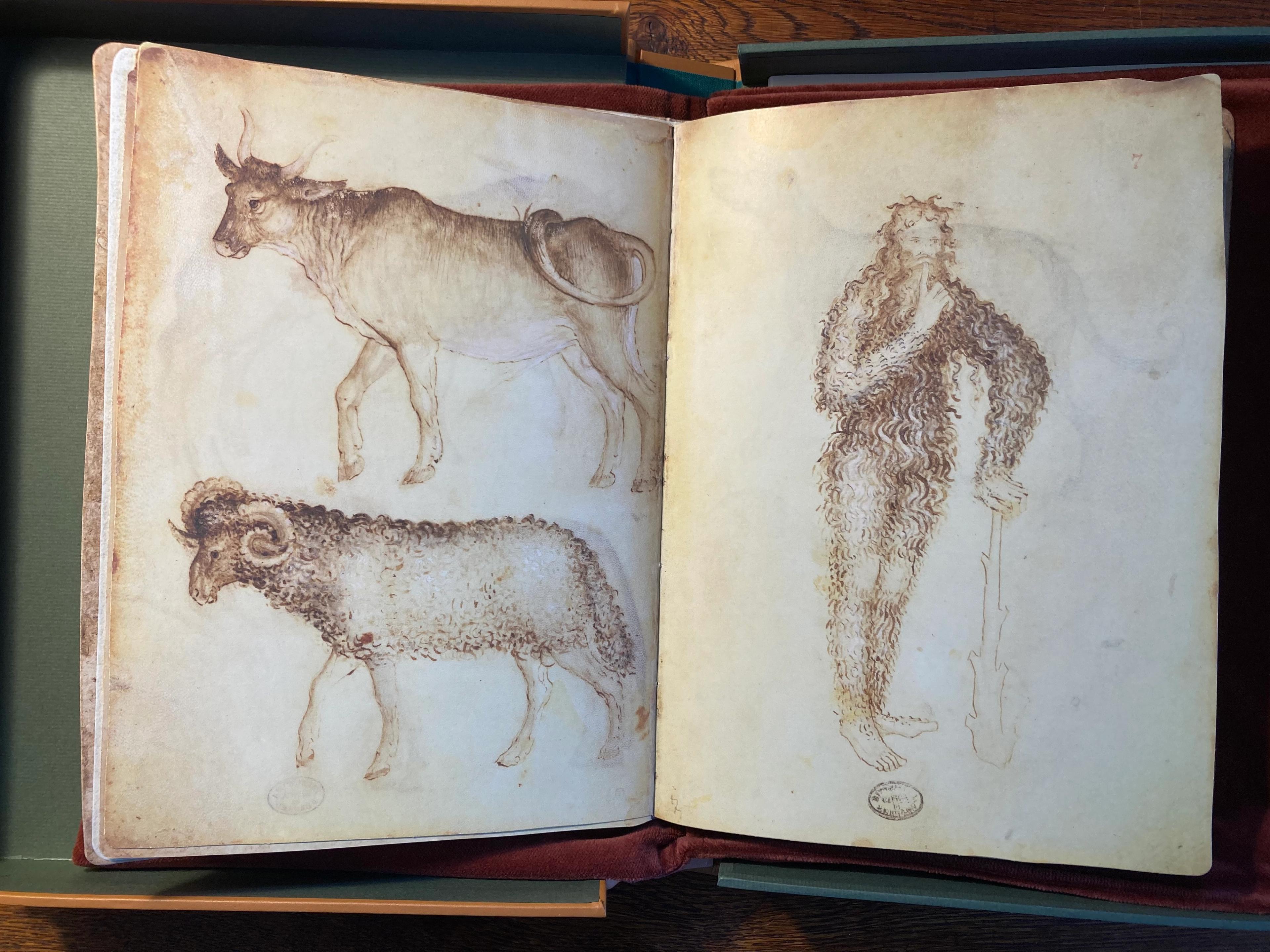
Taccuino di disegni di Giovannino de' Grassi ([Modena]: Il Bulino edizioni d'arte, 1998)
The medieval world was rich with scholarship and appreciation for the study of botany and herbal medicine, and illustrated manuscripts were essential for recording, sharing, and preserving this information. Consultation of horticultural literature of the era was crucial in establishing the gardens at The Cloisters. They continue to influence our gardens programming, so it’s wonderful that publishers have devoted great effort to providing high-quality facsimiles of these illuminated treasures. Two of my favorites are featured below and offer a wonderful contrast. Both are Italian; Tractatus de herbis on the left dates to the mid 1400s, and Mattioli’s Dioscorides on the right follows roughly 130 years later. I especially like how the artist of the later work, Gherardo Cibo, positions human figures is elaborate landscapes. In the example below, two individuals study this not-yet-flowered hellebore, presented in a detailed portrait in the foreground, and consult what may well be the very text this manuscript reproduces.
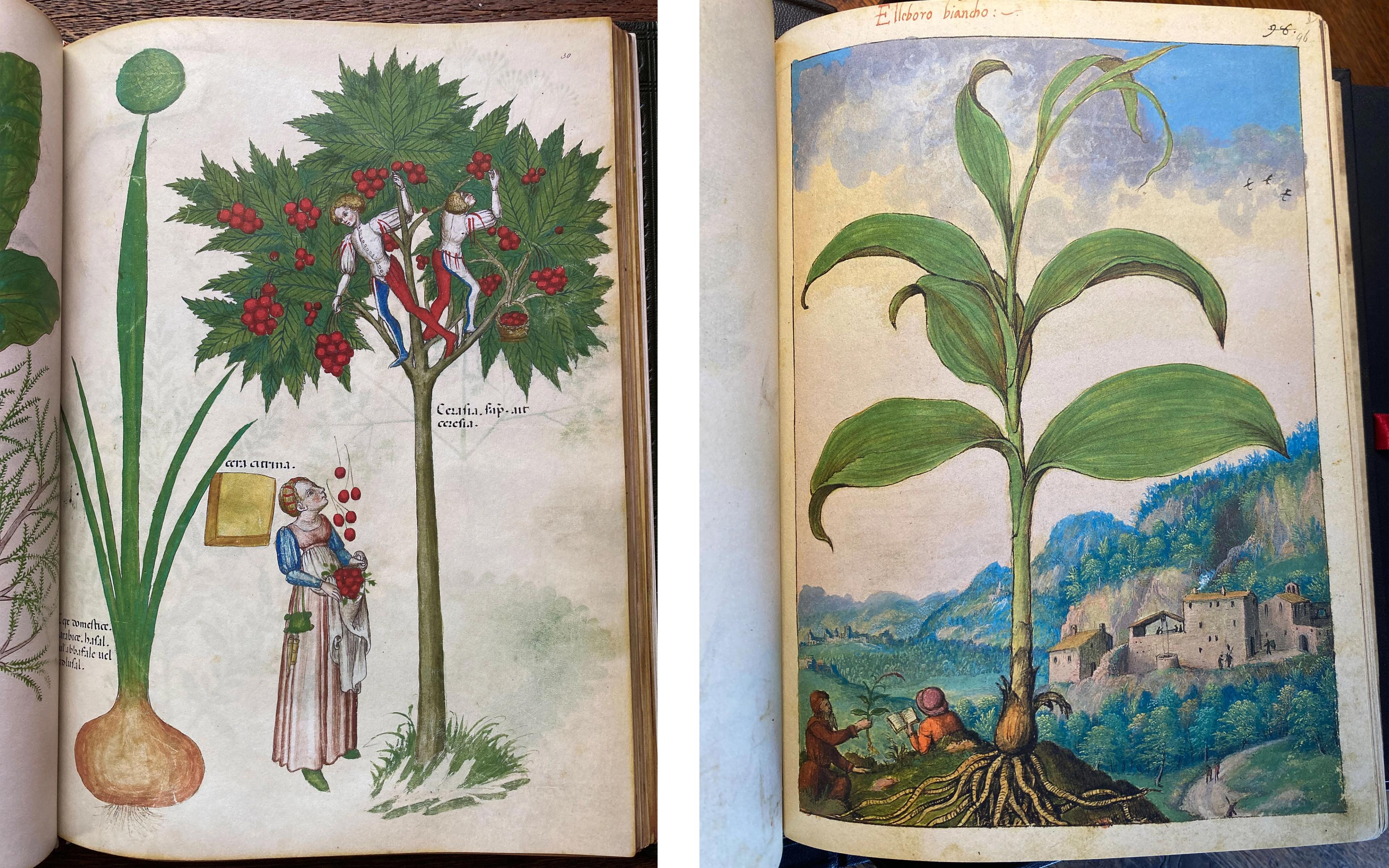
Left: Tractatus de herbis (Barcelona, España: M. Moleiro Editor, 2011–13). Right: Dioscorides (Barcelona: M. Moleiro Editor, S.A., 2021)
Of course, a facsimile doesn’t always have to replicate the standard codex book form. For example, this Genealogia Christi recreates a twelve-foot parchment scroll of a biblical family tree created by Peter of Poitiers.
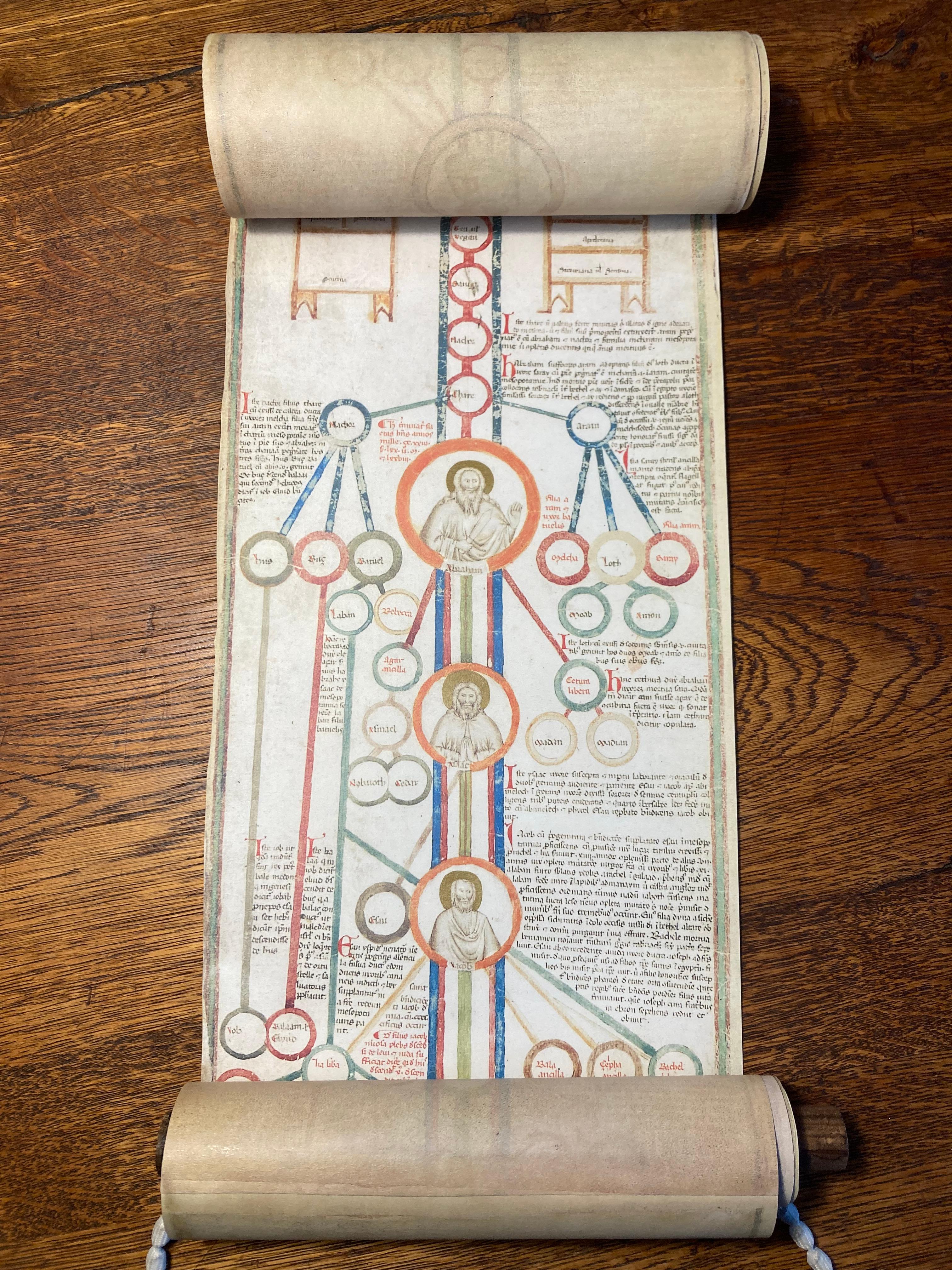
Peter, of Poitiers. Genealogia Christi (Barcelona: M. Moleiro Editor, S.A., 2020)
Another recent acquisition doesn’t actually seek to replicate a work on paper or parchment at all. In fact, in creating something quite new, it may not technically count as a “facsimile.”
In the Palantine Chaple of Germany’s Aachen Cathedral is a chandelier commissioned by the Emperor Frederick I—also known as Barbarossa—in the 1160s. Featured on the chandelier, and undiscernible to the naked eye, are a series of engraved metal panels displaying scenes from the life of Jesus. In the 1850s, the panels were temporarily removed to make a limited series of prints by inking the engravings and treating them as standard printing plates (with the effect of backward text as seen in the page below).
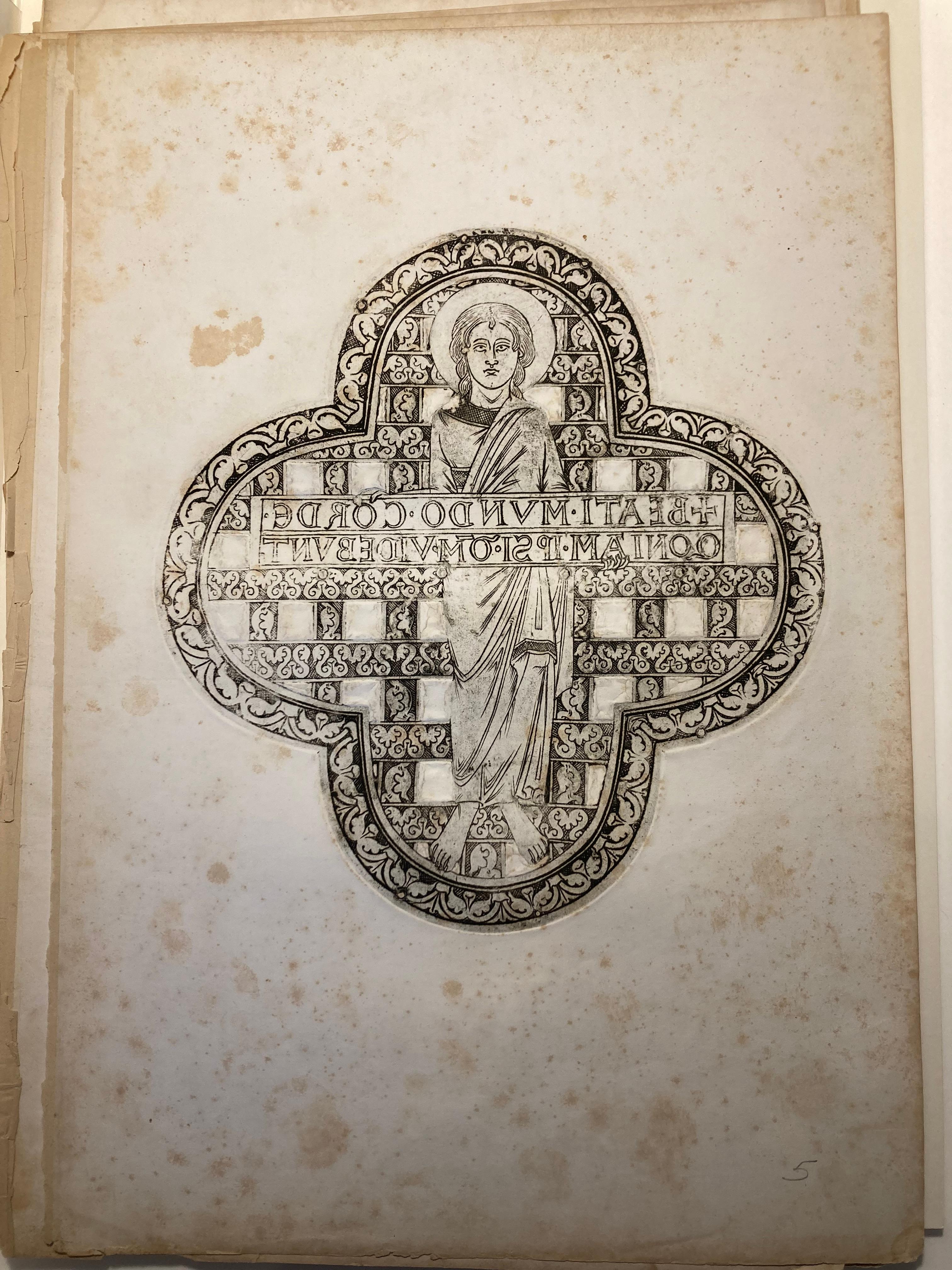
Les seize nielles du grand lustre de la Cathedrale d'Aix-la-Chapelle executes en MCLXV, par ordre de l'Empereur Frédéric Ier & de sa femme l'Impératrice Béatrice de Bourgogne (Paris: Librarie Tross, 1859)
When a rare set of these 1859 prints became available last year, we were able to acquire it for The Cloisters Library and Archives, thanks once again to the Elaine and Alexandre Rosenberg Charitable Foundation.
These, and all of our facsimiles, are available for your enjoyment. Visit The Cloisters Library and Archives to learn more.


