Perminangken (container for magical substances)
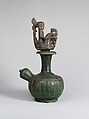
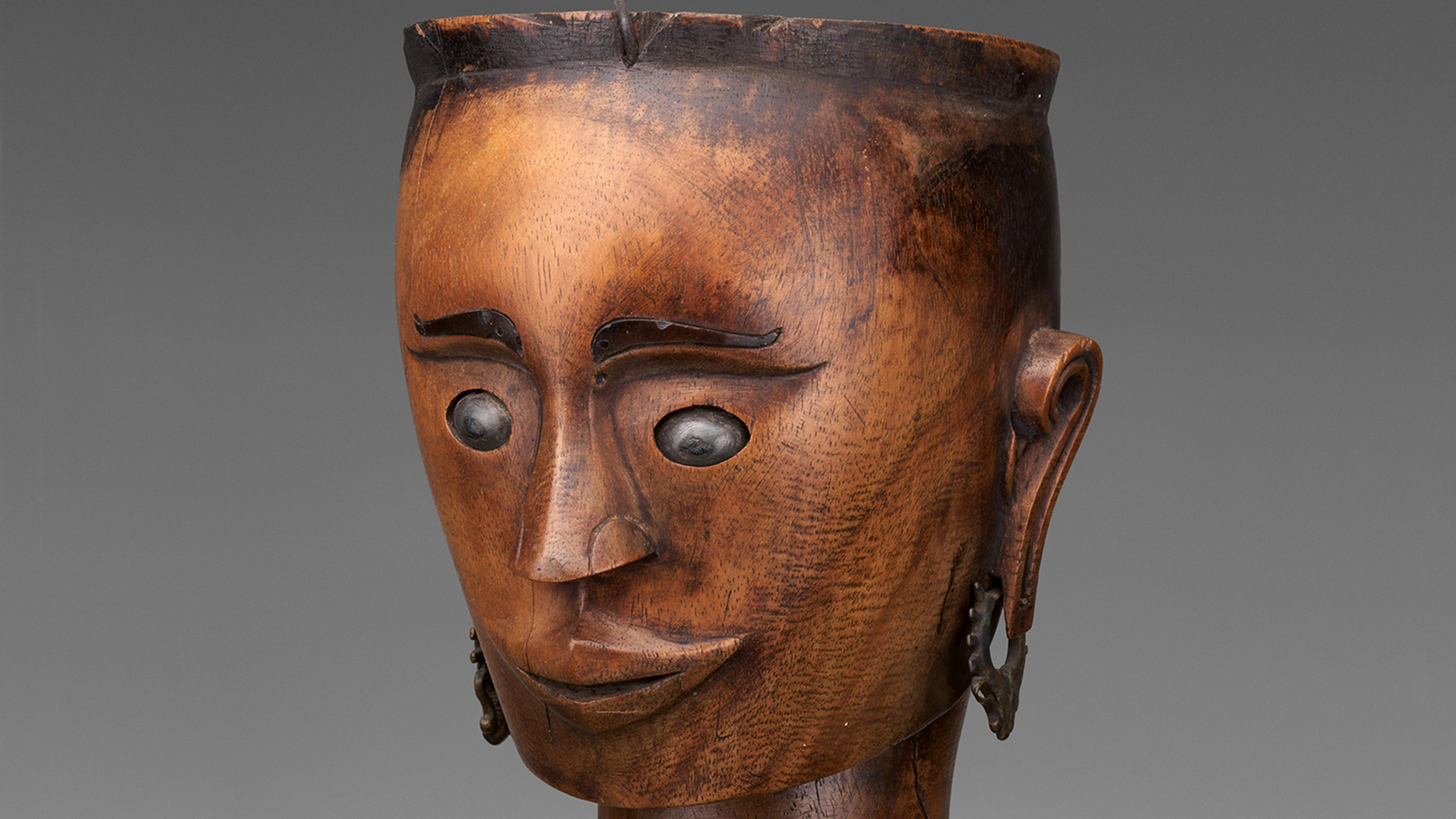
This brown-glazed ceramic container was probably manufactured in southern China or Vietnam between the fourteenth and the sixteenth century. Before the influence of Christianity and Islam, containers for magical substances were a central component of the ritual paraphernalia of Toba Batak religious specialists (datu). Often consisting, as in the work seen here, of imported ceramic vessels sealed with locally carved wood stoppers, such containers were primarily used to hold pukpuk, a powerful substance typically derived from specially prepared human and animal remains. To enliven sacred objects such as ritual staffs and human figures, pukpuk was applied to the surface or inserted into holes in the object that were later plugged, sealing the power within.
The Toba Batak, one of six groups among the Batak peoples of northern Sumatra, live in the mountainous highlands surrounding Lake Toba (the birthplace of the Batak, according to oral histories and myths). The Batak maintained trade relations with their Malay neighbors living on the coast but otherwise remained relatively isolated until the 18th and 19th centuries when Dutch and British traders, along with German missionaries, established operations in Sumatra. Although nearly all Batak today are Christian or Muslim, they formerly recognized diverse supernatural beings, including deities, ancestors, and malevolent spirits. The primary religious figures in Batak society were male ritual specialists, called datu by the Toba Batak, who acted as intermediaries between the human and spiritual worlds. Much of Toba Batak sacred art centered on the creation and adornment of objects that would be used by the datu for divination, curing ceremonies, malevolent magic, and other rituals. Among the most important were ceremonial staffs, books of ritual knowledge, and a variety of containers used to hold magical substances, such as this perminangken.
References
Capistrano-Baker, Florina H. Art of Island Southeast Asia. The Fred and Rita Richman Collection in The Metropolitan Museum of Art. New York: The Metropolitan Museum of Art, 1994, pp. 54, fig. 24
Kjellgren, Eric. How to Read Oceanic Art. New York: Metropolitan Museum of Art, 2014, pp. 107, fig. 50
Sibeth, Achim. The Batak. London: Thames and Hudson, 1991.
Artwork Details
- Title: Perminangken (container for magical substances)
- Artist: Toba Batak artist
- Date: 19th–early 20th century
- Geography: Indonesia, Sumatra
- Culture: Toba Batak
- Medium: Wood, trade ceramic
- Dimensions: H. 12 1/4 × W. 6 1/4 × D. 6 1/4 in. (31.1 × 15.9 × 15.9 cm)
- Classification: Ceramics-Containers
- Credit Line: Gift of Fred and Rita Richman, 1988
- Object Number: 1988.143.37
- Curatorial Department: The Michael C. Rockefeller Wing
More Artwork
Related Content
Research Resources
The Met provides unparalleled resources for research and welcomes an international community of students and scholars. The Met's Open Access API is where creators and researchers can connect to the The Met collection. Open Access data and public domain images are available for unrestricted commercial and noncommercial use without permission or fee.
To request images under copyright and other restrictions, please use this Image Request form.
Feedback
We continue to research and examine historical and cultural context for objects in The Met collection. If you have comments or questions about this object record, please contact us using the form below. The Museum looks forward to receiving your comments.
Content Notice
The Metropolitan Museum of Art presents over 5,000 years of art from around the world, and our online collection reflects ongoing work conducted over the course of our more than 150-year history. You may encounter objects or images that may be inappropriate for some viewers or information that may be outdated.