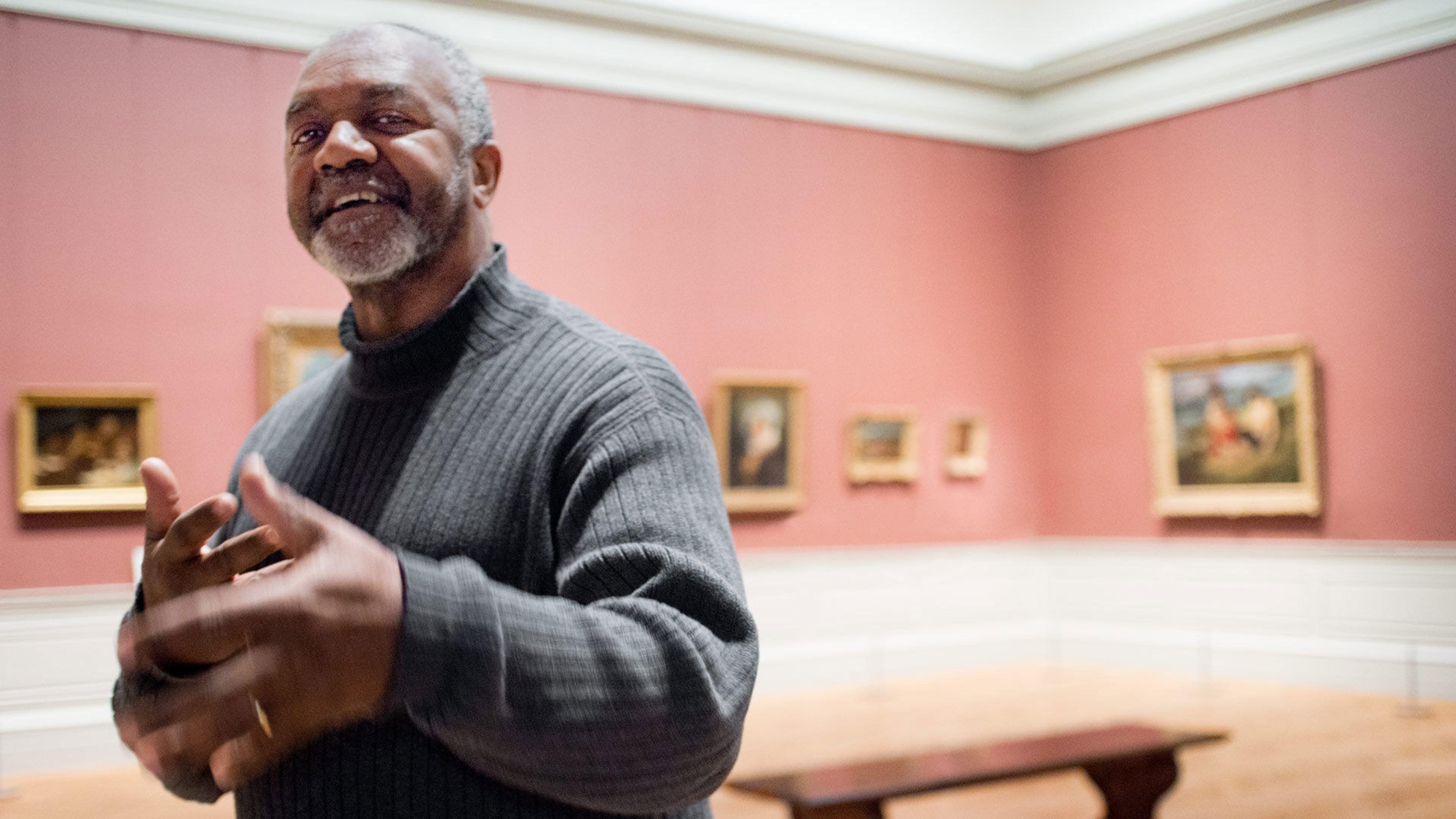
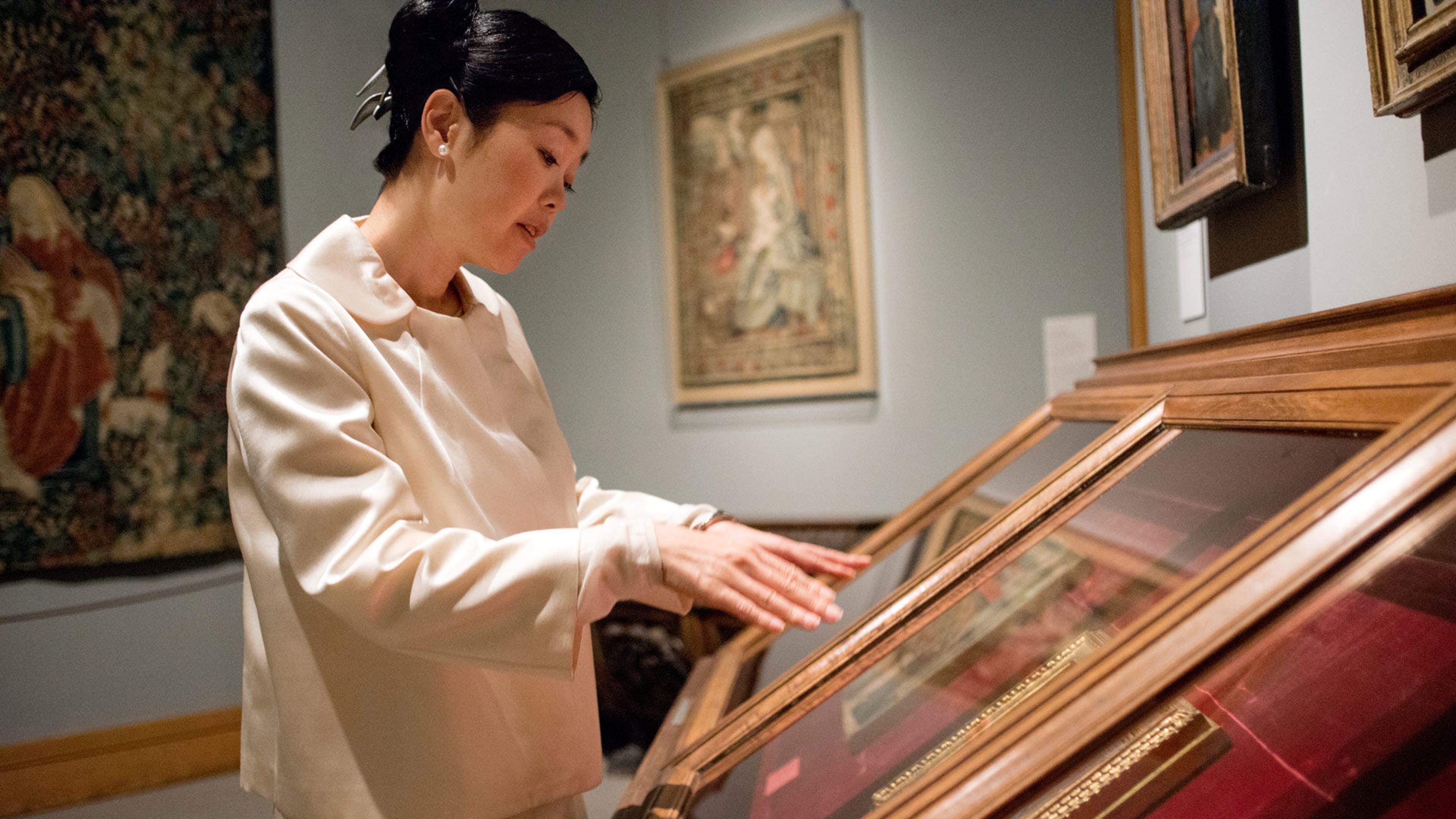
My name is Hiroshi Sugimoto. I'm an artist.
The passage of time is a very important factor in my art as a photographer. Photography seems to stop time, but in my case I capture long time exposures showing the passage of the time, not the moment of the time. That's why I'm very interested in this fifteenth-century bamboo screen painting. I'm concerned about the passage of history.
It's four seasons of bamboo; starting from the far right, it's moving to the left, showing early spring scenes of bamboo with tiny violet flowers. And then moving further left, you see early spring moving to the early summer and the bamboo is growing. And then kind of skipping the mid-summer because Japanese doesn't like hot summer, so it's from the early summer jumping to the fall already, with nice red ivy hanging around the bamboo, and then snow.
The bamboo is a kind of a symbol or signature in Japan to invite the spirit of the gods to descend on this bamboo tree. That's kind of a Shinto idea.
And it's the beauty of the aesthetics. Not just the composition—it's the spirit of the sense of the space, the space between one bamboo to the other bamboo shoots, the very naïve sense of the color. Sometimes paintings get very decorative and very busy, but this is very sensitively composed, which is not very easy.
Any kind of very strong art—doesn't matter whether it's contemporary or classical art—has its own strong concept behind it. To show the time passage in a painting in the fifteenth century: this is a very unique idea. I think it's almost like conceptual art to me, even though it's painted in the fifteenth century. This influenced me how to be a contemporary artist.