(New York, March 23, 2026)—Raphael: Sublime Poetry, on view at The Metropolitan Museum of Art March 29 to June 28, 2026, will be the first comprehensive, international loan exhibition in the United States on Raphael (Raffaello di Giovanni Santi; 1483–1520), considered one of the greatest artists of all time. This landmark exhibition will explore the full breadth of his life and career, from his origins in Urbino to his prolific years in Florence, where he began to emerge as a peer to Leonardo da Vinci and Michelangelo, to his final decade at the papal court in Rome. Bringing together more than 200 works, including over 170 of Raphael’s most important drawings, paintings, tapestries, and decorative arts from public and private collections around the world, the exhibition will offer a fresh perspective on this defining figure of the Italian Renaissance, presenting his renowned masterpieces alongside rarely seen treasures to reveal an extraordinarily creative mind.
The presenting sponsor of the exhibition is Morgan Stanley.
Major funding is provided by Kenneth C. Griffin and Griffin Catalyst, and Jessie and Charles Price.
Significant support is provided by the Richard Riney Family Foundation, the Ing Foundation, and Anthony W. and Lulu C. Wang.
Additional support is provided by Jim Breyer, the Fay Etta and Irving Flax Foundation, Julie and David Tobey, Barbara A. Wolfe, Gilbert and Ildiko Butler, Debra and Leon Black, Mark Gorenberg and Cathrin Stickney, the Robert Lehman Foundation, Dinah Seiver and Thomas E. Foster, Ann M. Spruill and Daniel H. Cantwell, The Coby Foundation, Ltd, and GRoW @ Annenberg Foundation.
This exhibition is supported by an indemnity from the Federal Council on the Arts and the Humanities.
“This unprecedented exhibition will offer a groundbreaking look at the brilliance and legacy of Raphael, a true titan of the Italian Renaissance,” said Max Hollein, The Met’s Marina Kellen French Director and Chief Executive Officer. “Visitors will have an exceptionally rare opportunity to experience the breathtaking range of his creative genius through some of the artist’s most iconic and seldom loaned works from around the globe—many never before shown together.”
Among the highlights will be The Virgin and Child with Infant Saint John the Baptist in a Landscape (The Alba Madonna), from the National Gallery of Art, one of the most emblematic examples of Raphael’s mastery over High Renaissance ideals of harmony and classical beauty, which will be united with his preparatory drawings from the Museum of Fine Arts, Lille, and Portrait of Baldassarre Castiglione, now in the Louvre, widely regarded as one of the greatest portraits of the High Renaissance.
Lenders include the Accademia Carrara (Bergamo), Albertina (Vienna), Ashmolean Museum (Oxford), British Museum (London), Galleria Borghese (Rome), Gallerie Nazionali di Arte Antica di Palazzo Barberini-Corsini (Rome), The Duke of Devonshire and Trustees of the Chatsworth Settlement (Chatsworth), Galleria Nazionale delle Marche (Urbino), Galleria Nazionale dell’Umbria (Perugia), Kupferstichkabinett (Berlin), Louvre (Paris), Fondazione Brescia Musei (Brescia), National Gallery (London), National Gallery of Art (Washington, D.C.), Museo e Real Bosco di Capodimonte, Palais des Beaux-Arts (Lille), Patrimonio Nacional de España (Madrid), Pinacoteca Comunale of Città di Castello, Pinacoteca Nazionale (Bologna), Prado (Madrid), Städel Museum (Frankfurt), Museum of Fine Arts (Budapest), Gallerie degli Uffizi (Florence), and the Vatican Museums, among others.
“The seven-year journey of putting together this exhibition has been an extraordinary chance to reframe my understanding of this monumental artist,” said Carmen Bambach, the Marica F. and Jan T. Vilcek Curator in The Met’s Department of Drawings and Prints. “It is a thrilling opportunity to engage with his unique artistic personality through the visual power, intellectual depth, and tenderness of his imagery.”
Though he lived a mere 37 years, Raphael achieved such profound success as a painter, designer, and architect that he was regarded as the pinnacle of artistic perfection for centuries after his death. The son of a painter and poet, Raphael engaged with the foremost writers and thinkers of his age in Rome, displaying a poetic sensibility that captivated his peers and the generations that followed. Matching ambition with lyricism, he created works with both intellectual heft and emotional depth, a necessary skill in the complex political landscape of Renaissance courts.
The exhibition will unfold roughly chronologically, tracing Raphael’s life and career, with thematic sections focused on the development of his ideas and imagery. Recent scientific discoveries will also be incorporated. By featuring drawings in relationship to paintings and works in other media, the presentation will demonstrate Raphael’s prodigious versatility and creative process. The figural compositions in his paintings, drawings, tapestry designs, and prints reveal him to be an unparalleled storyteller, and this exhibition will pay particular attention to his portrayal of women—from his pioneering use of nude female models to his sensitive portrayals of the Madonna and Child.
Exhibition Overview
The exhibition begins with an exploration of the artist’s roots in Urbino, which, with its refined court life and unique intellectual heritage, played a defining role in his life and career. Raphael was born on April 6, 1483, in Urbino, a hill town set in a spectacular, rugged landscape in the Marche region, in east central Italy. He received his earliest training from his father, Giovanni Santi (ca. 1439–1494), a court painter and prolific poet. During Raphael’s childhood, Giovanni was busy composing an epic poem on Federico III da Montefeltro (1422–1482), the famous ruler who had brought peace, wealth, and fame to the Duchy of Urbino. A formidable general, scholar, and patron of art and architecture, Federico transformed his court into an internationally celebrated center for the arts and humanist learning.
Raphael’s father soon brought his precocious son to study with Pietro Perugino (1446/50–1523), an artist he likely knew through local projects. Perugino’s elegant figures, breathtaking command of technique, and efficient methods for reproducing designs left their mark on the younger artist. Ambitious, studious, and disciplined, the young Raphael first sought to establish himself as an independent professional in Città di Castello, a small, wealthy town near Perugia, where he painted notable church altarpieces. This exhibition gathers paintings and related studies done for confraternities by Perugino and the young Raphael—including the first painting fully in Raphael’s hand, as confirmed by its recent conservation treatment.
The exhibition then examines the period from 1500 to 1507, when the young Raphael endeavored to cultivate patrons by painting both monumental altarpieces and small-scale devotional works in the regions of the Marche, Umbria, and Tuscany. An iconic example is the large, multipart Colonna Altarpiece, made for nuns in Perugia. The full ensemble is reunited here as a complete work for the first time since it was dismembered around 1663 and the individual paintings dispersed. Full-scale drawings for a remarkable altarpiece for the Oddi family chapel in Perugia reveal the workshop practices that Raphael had absorbed during his training and collaboration with Perugino. Dazzling studies on paper also show how he worked in a variety of media—black chalk, pen and ink, and metalpoint on prepared paper—often with a virtuosic command of technique.
Raphael may have been drawn to Florence after hearing fellow painters rave about rival full-scale designs (cartoons) for spectacular murals there by Leonardo and Michelangelo. Related works in this section convey the electrifying novelty and arresting sculptural power of those unrealized projects. While in Florence between 1504 and 1508, Raphael also studied Michelangelo’s sculptures and Leonardo’s paintings and drawings, promptly and seamlessly adapting aspects of their styles and techniques in his work.
The exposure to Leonardo’s and Michelangelo’s art infused Raphael’s compositions with a sense of space, sculptural monumentality, and expressive force. This was the result of an enormous amount of experimentation on paper. Sequences of drawings—from a sheet of sketches to studies of an arrangement based on three-dimensional clay or wax models—reveal Raphael’s increasingly disciplined approach to the design process.
For centuries, Raphael has been widely admired for Madonna and Child paintings that include a display of tenderness. Raphael’s ability to capture a mood of good health and innocent playfulness, especially while maintaining a superior command of anatomical realism, is striking considering the historical realities of childbirth, infancy, and parenthood in his time. Knowledge of gynecology and obstetrics was scarce, pregnancy and childbirth were extremely dangerous, and infant mortality rates were astronomically high. These facts, along with a desire among Renaissance artists to humanize religious subjects, all contributed to the appeal of the tender Madonna and Child as votive figures and subjects in art.
Raphael’s most feasible source of patronage in Florence was among the city’s wealthy merchants, who commissioned portraits and tender devotional paintings, mainly of the Madonna and Child. Raphael sought to bring the lauded ethereal physical beauty of the Madonna into radiant being. He was not immune to the convention, sung by poets both within and beyond his circle, that favored an elegant, aristocratic lady with dainty facial features and golden hair, but he also strove for long-established Christian ideals. He infused his representations with a humanity and psychological presence expressed through gestures and reactions. Raphael’s paintings display an arresting command of light, color, space, and geometry.
The exhibition next delves into how Raphael’s portraits communicate profound empathy and reflect years of exercising his hand in drawings to achieve an intimate, concerted contemplation of the sitter. The elegance of the poses in his portraiture suggests a striving for the cultivated manners of the Italian Renaissance courts and the ideals of beauty celebrated by famous poets. Raphael was an intimate friend of Baldassarre Castiglione (1478–1529), whose book on fashionable behavior at court promoted a model of comportment and grace that prized sprezzatura, a studied nonchalance or insouciance.
In 1508, Raphael arrived in Rome, where he would become the favorite court artist of Popes Julius II (r. 1503–13) and Leo X (r. 1513–21). An intriguing question is how exactly the 25-year-old Raphael managed to supersede an earlier generation of painters working in the Vatican Palace and take control of the fresco decoration of the most important of the rooms, the Stanza della Segnatura. The exhibition gathers Raphael’s studies for those Vatican frescoes: the School of Athens, with its gathering of philosophers, and the Disputa, representing Roman Catholic theology. These works show an artist in full command of the expressive potential of different drawing media.
By about 1510, Raphael was collecting accolades as the most visible and prolific painter at the papal court in Rome; meanwhile, shut away in the Sistine Chapel, the secretive Michelangelo labored to complete his ceiling frescoes, which would deeply influence the younger artist, who snuck in to see them. Drawings in this section relate to projects that occupied Raphael as he concluded his first series of frescoes in the Vatican Palace and began the second, in the Stanza di Eliodoro, which communicate with greater monumentality and dramatic force.
The following section includes paintings that represent the breathtaking visual eloquence of Raphael’s later years. New harmonies of color are transformed by a dark chiaroscuro reminiscent of Leonardo. Sculptural forms seem to project from dense compositions. Charged gazes, poses, and gestures communicate a sense of impending drama. Raphael and his well-organized workshop completed an astonishing number of large-scale projects in his final six years. Executive help freed the artist to concentrate his creative energies on inventing new designs and exploring new forms.
Next, the exhibition presents a digital video showing Raphael’s monumental fresco cycles in four rooms of the Vatican Palace. The display provides a sense of scale and context for the many related drawings in the exhibition. Between 1508 and 1524, the frescoes were painted by Raphael and his workshop in the nearly square rooms now known as the Stanza della Segnatura, Stanza di Eliodoro, and Stanza dell’Incendio and in the gargantuan oblong Sala di Costantino.
Pope Leo X charged Raphael with the daunting task of designing a set of monumental tapestries to hang in the Sistine Chapel during special occasions. Starting in 1515, Raphael began drawing small preliminary studies. Aided by his workshop assistants, he then used color gouaches on paper to paint the enormous full-scale cartoons that would guide the weavers. Woven in Brussels using rich materials, the stratospherically expensive tapestries contributed to the bankruptcy of Leo’s papacy. With their inventive compositions, striking color harmonies, and monumental scale, they were soon the envy of monarchs across Europe. Three rulers—Henry VIII, Francis I, and Charles V—commissioned second editions woven from Raphael’s cartoons, represented in the exhibition by three stunning examples.
Raphael rarely interrupted his projects for Popes Julius II and Leo X to make room for other commissions. The notable exception was for his powerful friend Agostino Chigi (1466–1520). The exhibition displays a variety of Raphael’s preparatory drawings for Chigi’s projects. In chalk studies of nude figures, Michelangelo’s language of contorted poses and powerful muscularity is transformed with an effortless grace and the sensuality of living flesh. The drawings also allude to the legacy of Raphael’s approach to the human figure, which after his death led to the style known as Mannerism.
The exhibition concludes with a meditation on how Rome and its ancient monuments transformed Raphael’s art, and how his work likewise changed the face of Rome. Following his arrival in the Eternal City in 1508, he threw himself into archaeological studies and made drawings of monuments that demonstrate a nearly scientific rigor. Drawings and prints explore Raphael’s career as an architect after he took over the project of designing a new Saint Peter’s Basilica for Pope Julius II. In 1517, Raphael bought the Palazzo Caprini, pictured in two works here, where he lived out his final years in Rome as the “prince of painters.”
Credits and Related Content
Raphael: Sublime Poetry is curated by Carmen C. Bambach, the Marica F. and Jan T. Vilcek Curator in the Department of Drawings and Prints at The Metropolitan Museum of Art.
A fully illustrated catalogue will accompany the exhibition and be available for purchase from The Met Store.
The catalogue is made possible by Katharine Rayner, GRoW @ Annenberg Foundation, and the Wolfgang Ratjen Stiftung, Liechtenstein.
Additional support is provided by the Tavolozza Foundation, Allston Chapman, Katherina Minardo Macht and William Strong Barrett, Matthew and Ann Nimetz, The Schiff Foundation, Christopher Bishop Fine Art, and Robert M. Buxton.
The exhibition is accompanied by an audio guide hosted by Academy Award–nominated actress Isabella Rossellini. The guide will walk the visitor through the life and career of Raphael, illustrated by key works in the exhibition. It will feature the voices of curator Carmen Bambach, research associate Caroline Elenowitz-Hess, and art historian Catherine Whistler.
The Met will host a variety of exhibition-related educational and public programs. On April 18, Raphael Up Close: Perspectives on Research will invite an international group of art historians and conservators for a daylong symposium to hear new discoveries on the artistic process of Raphael. On May 17, Sunday at The Met: Raphael and His Legacy will feature presentations from leading scholars on some of Raphael’s most iconic projects that influenced artists for centuries to come. Teen and family programs will include a Family Afternoon, an educator workshop, art-making activities, and a Community Partnerships event featuring a talk by Carmen Bambach in Spanish.
The exhibition is featured on The Met’s website, as well as on social media using the hashtag #MetRaphael.
###
March 23, 2026
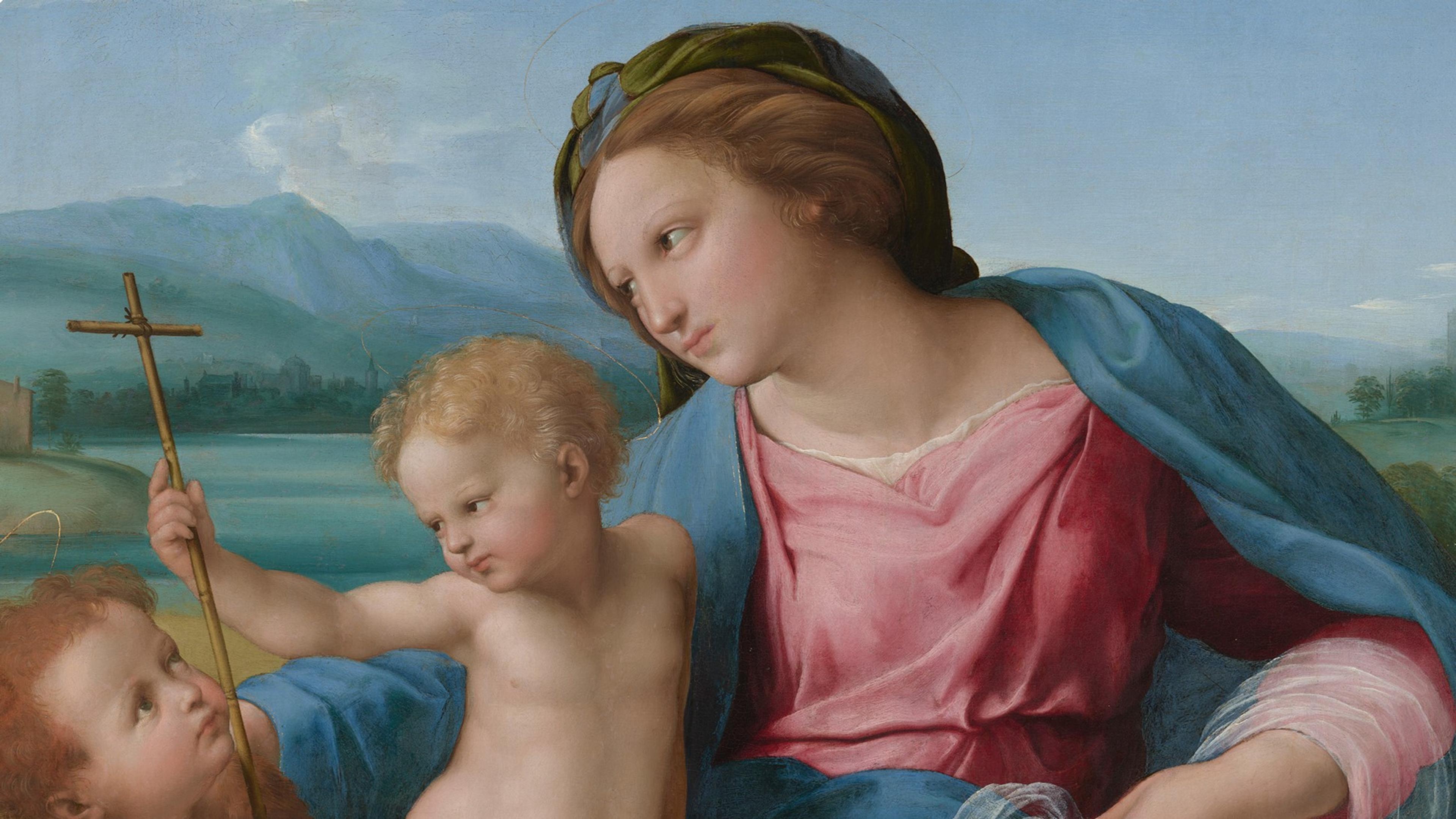
The Met to Showcase One of Art History’s Greatest Figures, Italian Renaissance Genius Raphael, in First Major International Loan Exhibition in the U.S.
Contact: Margaret-Anne Logan
Communications@metmuseum.org