
Introduction
Gothic by Design: The Dawn of Architectural Draftsmanship
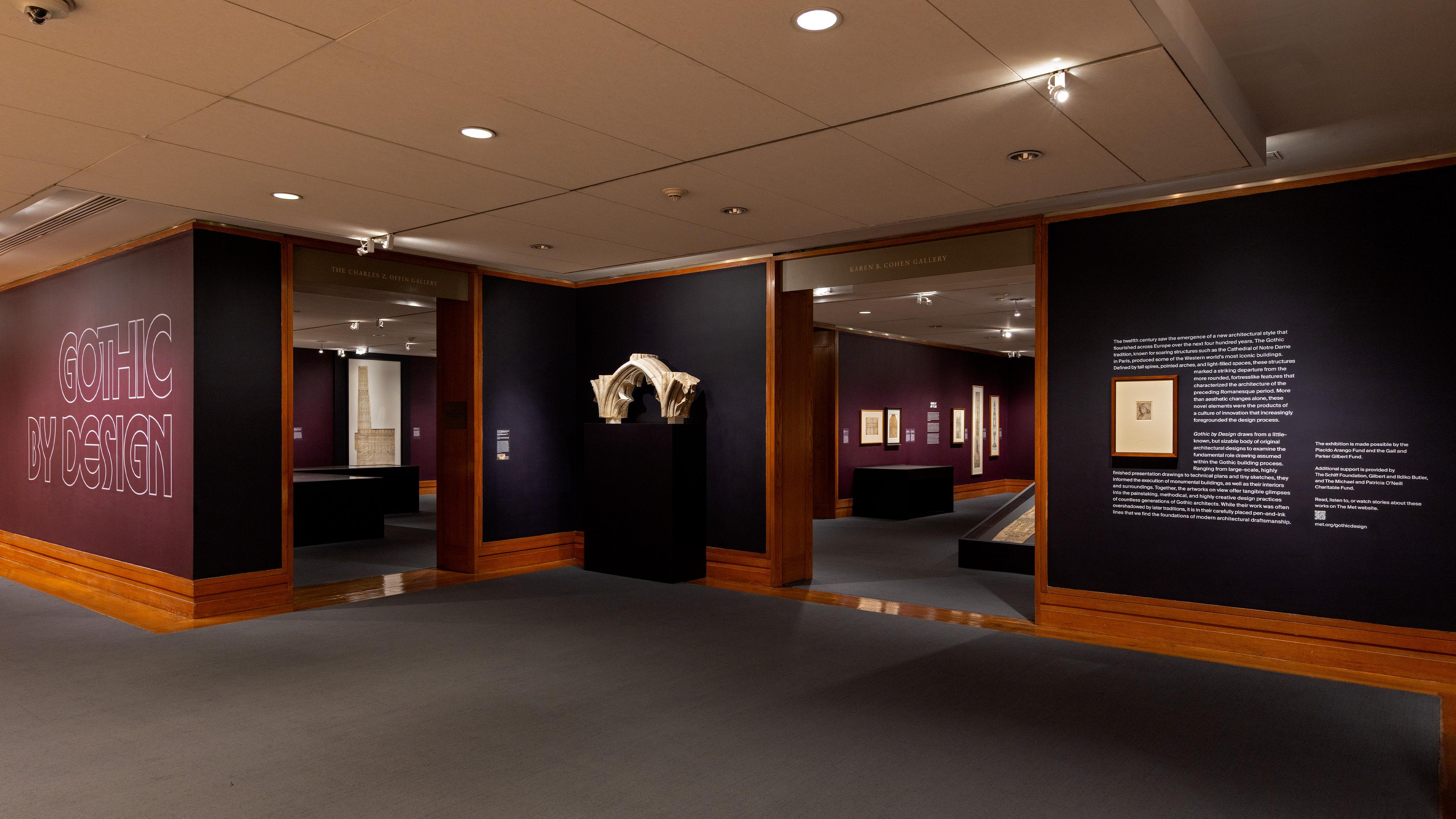
The twelfth century saw the emergence of a new architectural style that flourished across Europe over the next four hundred years. The Gothic tradition, known for soaring structures such as the Cathedral of Notre Dame in Paris, produced some of the Western world’s most iconic buildings. Defined by tall spires, pointed arches, and light-filled spaces, these structures marked a striking departure from the more rounded, fortresslike features that characterized the architecture of the preceding Romanesque period. More than aesthetic changes alone, these novel elements were the products of a culture of innovation that increasingly foregrounded the design process.
Gothic by Design draws from a little-known, but sizable body of original architectural designs to examine the fundamental role drawing assumed within the Gothic building process. Ranging from large-scale, highly finished presentation drawings to technical plans and tiny sketches, they informed the execution of monumental buildings, as well as their interiors and surroundings. Together, the artworks on view offer tangible glimpses into the painstaking, methodical, and highly creative design practices of countless generations of Gothic architects. While their work was often overshadowed by later traditions, it is in their carefully placed pen-and-ink lines that we find the foundations of modern architectural draftsmanship.
Selected Artworks
Drawing Giants
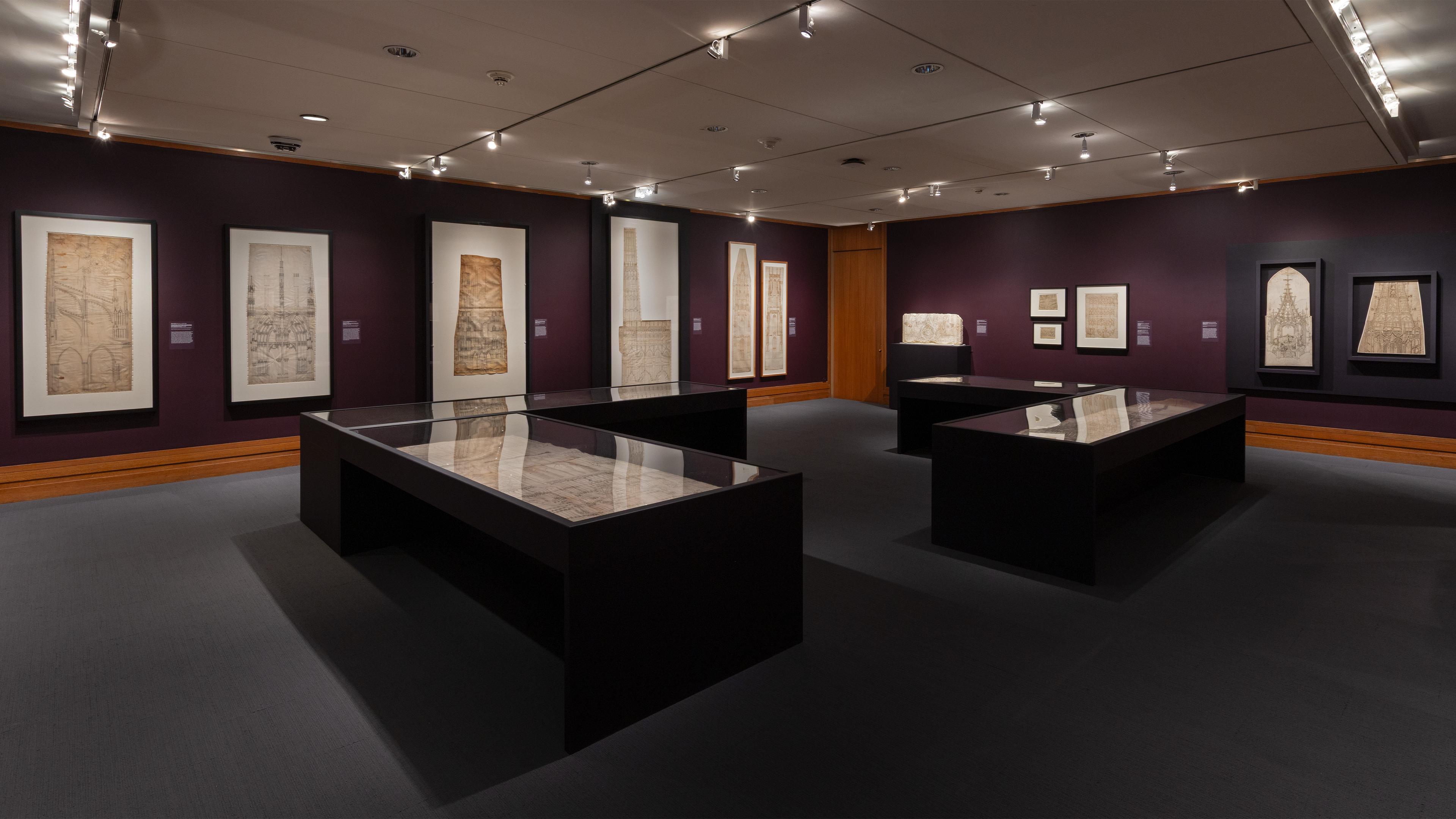
Exactly when architects began making elaborate design drawings on parchment is not known. While the earliest-surviving examples date from around 1250, their sophistication indicates that this form of architectural draftsmanship had existed for quite some time. Indeed, some believe that the inherent complexity of Gothic architecture necessitated clearly drawn plans from the onset, suggesting that the practice developed in tandem with the new style from about 1140.
If architectural drawings were actually made as early as 1140, they were most likely discarded, or their parchment was repurposed once building work was completed. This custom changed after 1250, when certain architectural workshops, predominantly ones that were active along the Rhine and Danube river valleys, began to preserve their designs for posterity. One of the earliest graphic archives was formed at Strasbourg Cathedral, which is now among the best visually documented building projects of the Middle Ages. Other workshops in Cologne, Freiburg, Ulm, and Vienna followed suit.
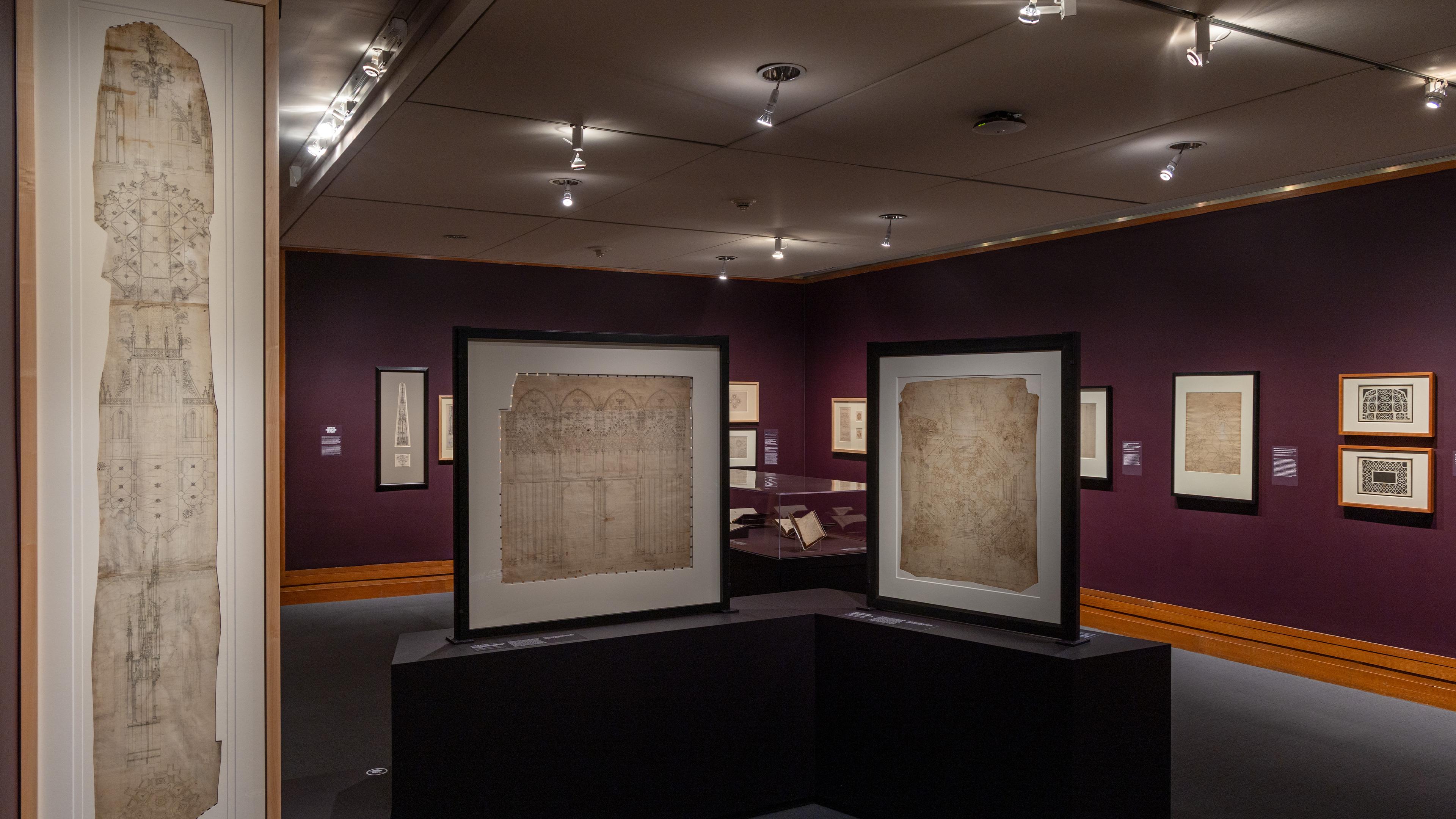
The drawings on display in this gallery introduce the diverse functions that architectural designs served on an active building site, from comprehensive elevation drawings to detailed studies of specific elements. A standout feature of many Gothic architectural designs is their monumental size and, consequently, the level of detail they contain. An impressive number of such oversize drawings survive, likely because the sheets were too unwieldy for frequent consultation.
Selected Artworks
Grand at Any Scale
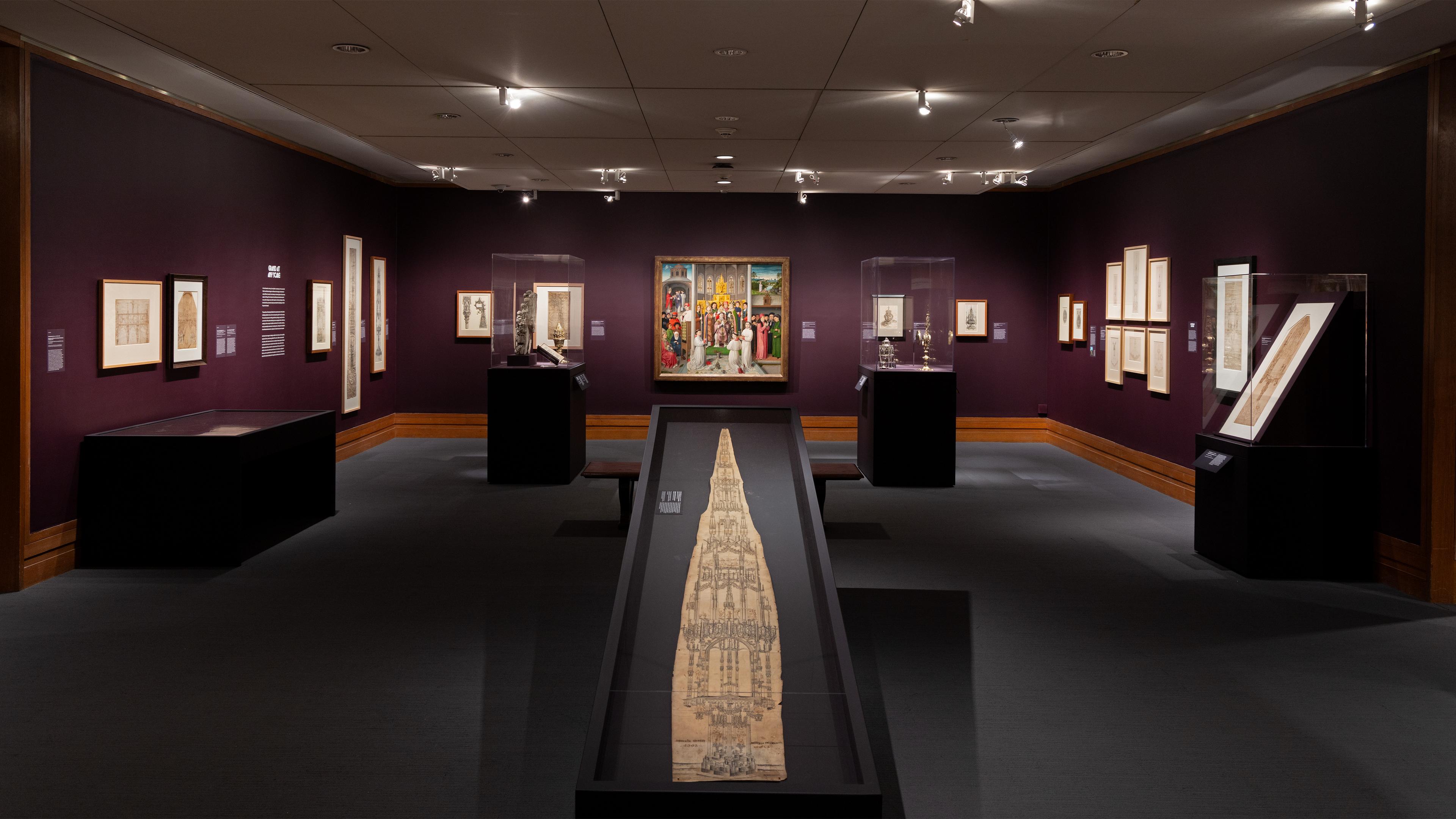
In the thirteenth century, the stylistic vocabulary of monumental Gothic architecture began to influence the design of artworks of vastly different scales, from statuary to stained glass and precious objects. Although the inclusion of architectural elements was not new, earlier designs were often based on older prototypes. Now, for the first time, artworks closely resembled the buildings in which they were housed.
The practice of drawing facilitated the transformation of the Gothic building tradition into an all-encompassing style in various ways. For one, the process of making preliminary designs, away from the commotion of the active building site, encouraged artistic reflection, notably on the concept of stylistic uniformity. For another, drawing was by necessity an exercise in scaling down, making the translation of architectural elements to objects of smaller sizes much easier.
Architects thus began to design smaller structures, such as pulpits, baptismal fonts, and even goldsmith’s work. Unlike monumental churches, which took centuries to complete, these projects offered architects the chance to realize their artistic vision within their lifetime and without need for compromise. At the same time, the ability to draw also allowed practitioners of architecture-adjacent fields, such as goldsmiths and sculptors, to scale up. Some even vied with trained architects for important architectural commissions.
Selected Artworks
Modular Design
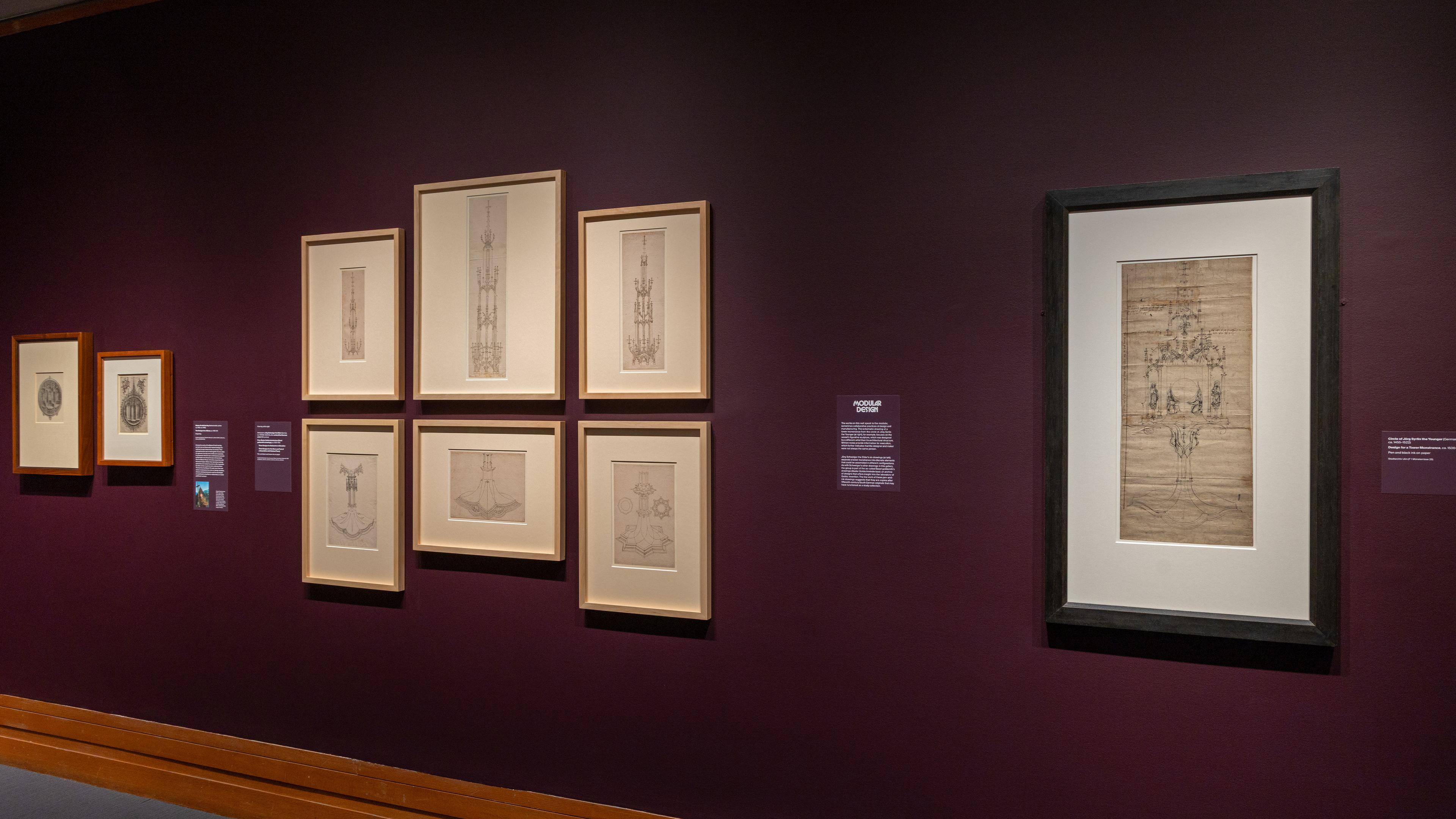
The works on this wall speak to the modular, sometimes collaborative practices of design and manufacturing. The schematic drawing of a tower monstrance from the circle of Jörg Syrlin the Younger (at right), for example, focuses on the vessel’s figurative sculpture, which was designed by a different artist than its architectural structure. Written notes provide information for execution, which further indicates that the designer and maker were not always the same person.
Jörg Schweiger the Elder’s six drawings (at left) separate a tower monstrance into discrete elements that could be assembled in different configurations. As with Schweiger’s other drawings in this gallery, the group is part of the so-called Basel goldsmith’s drawings (Basler Goldschmiederisse): an archive of designs that offers insight into the laboratory of Gothic invention. The line work of these pen-and-ink drawings suggests that they are copies after fifteenth-century South German originals that may have functioned as a study collection.
Selected Artworks
Naturalistic Ornament
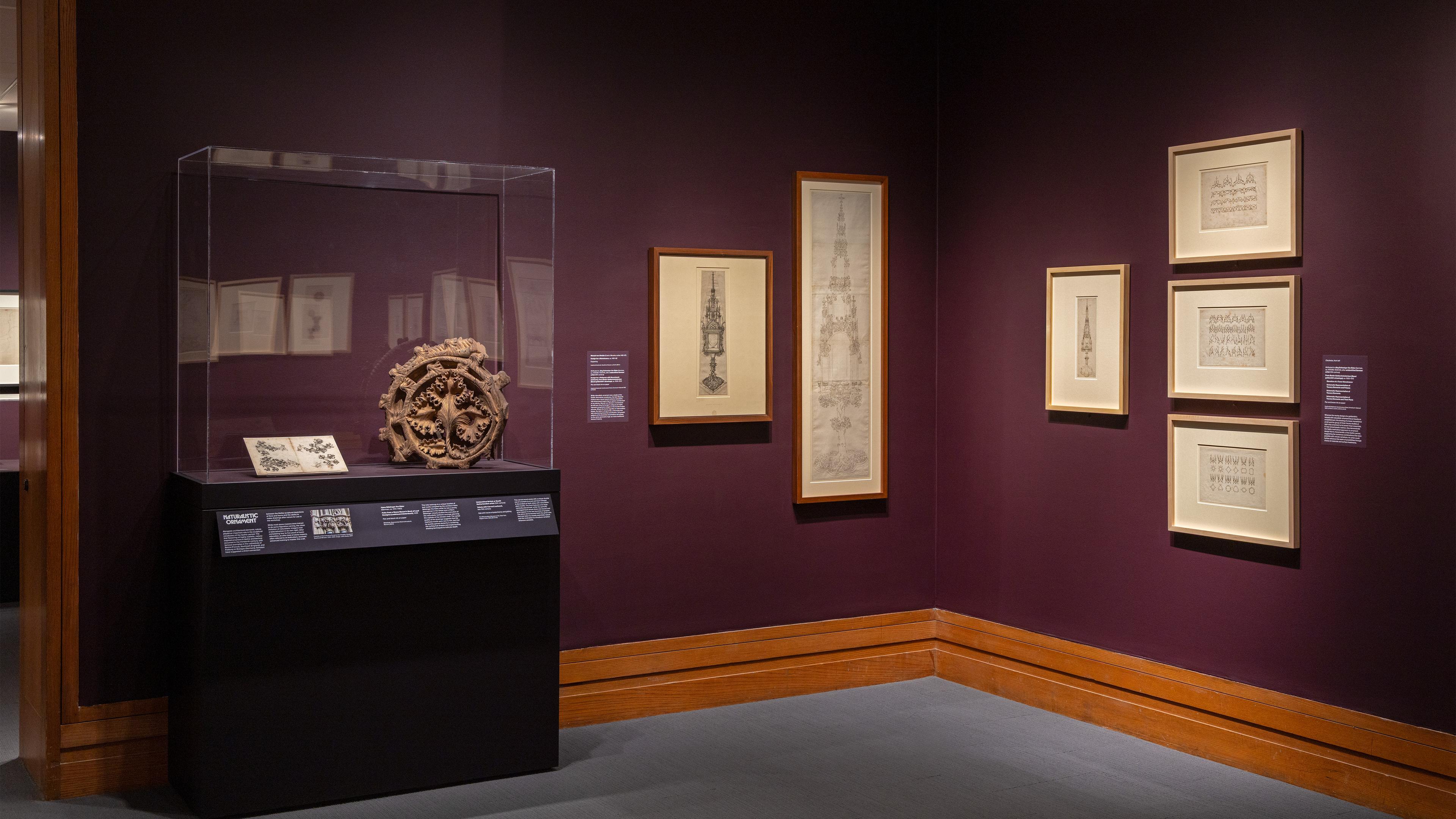
Alongside architectural elements, nature played an important role in the sculptural vocabulary of the Gothic period. The first flowering of highly realistic, nature-inspired ornament in Gothic architecture occurred in the thirteenth century, with famous examples in the cathedrals of Reims (France), Southwell (England), and Freiburg im Breisgau (Germany). Scholars have suggested a direct connection between the lifelike sculptural depictions of flora and fauna and the ability to make drawings after nature for use in the workshop.
While most stone masons were trained to do some figurative carving, the close imitation of naturalistic imagery was a specialization in its own right. After completing four to five years of basic education, an elite class of stone masons, often referred to as leafcutters, received advanced training to master this craft.
Selected Artworks
Permutations of Form
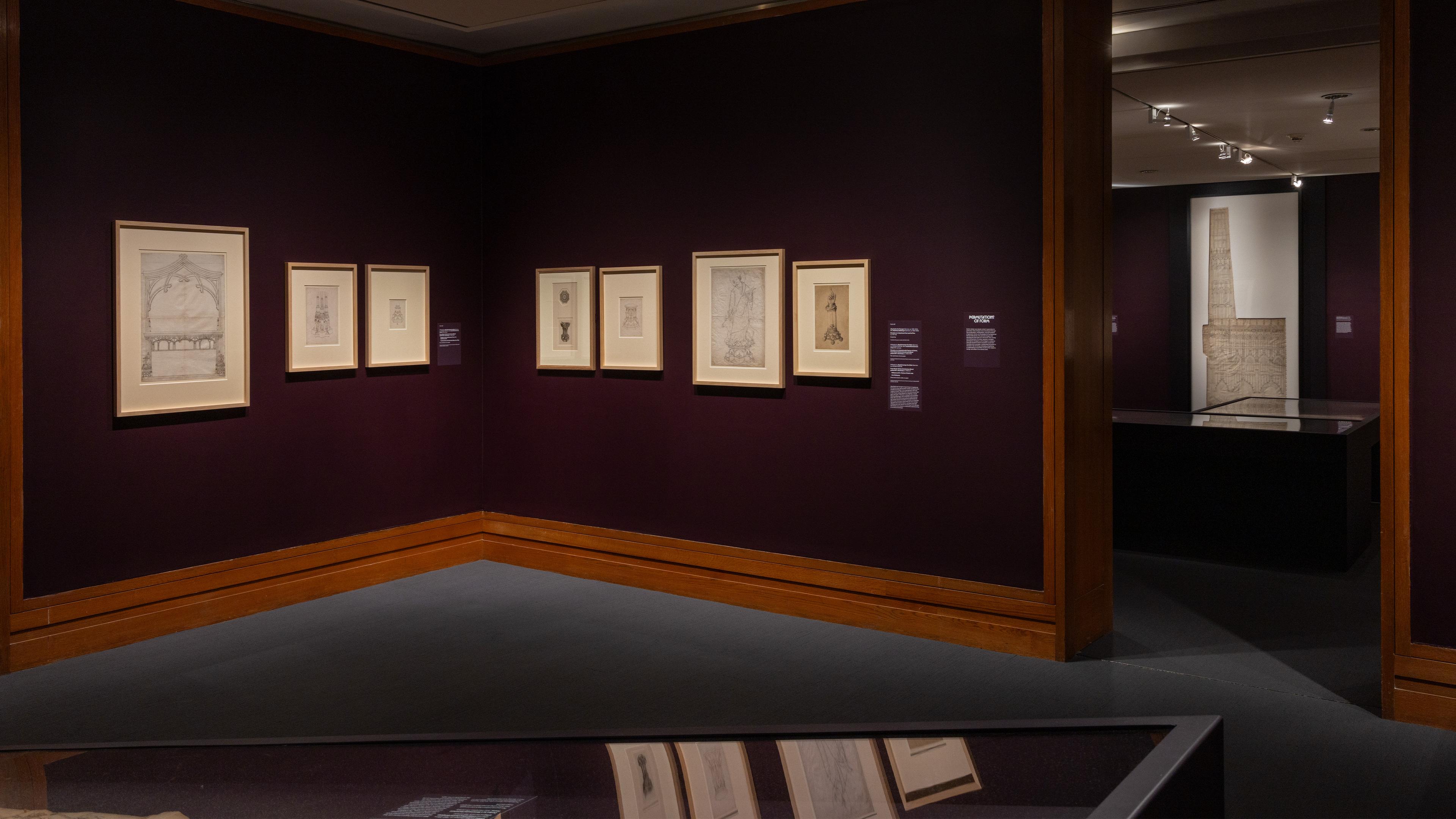
Gothic design was deeply rooted in geometry. In particular, many designs were developed through the combination, manipulation, and permutation of geometric forms. As the design for the baptismal font (at left) shows, this process began with devising the floor plan of a structure. The overlay and intersection of circles, squares, triangles, pentagons, hexagons, and octagons create an intricate blueprint that an architect could then translate into a complex, multifaceted structure in elevation. By shrinking, enlarging, simplifying, or elaborating, an architect could further adjust a design and adapt it for various uses.
Selected Artworks
Gothic Design Principles and Their Legacy
Gothic architects based their designs on a wealth of knowledge and well-established practices that include complex geometric projections and site-specific calculations. For generations, this knowledge was passed down from master to apprentice through oral instruction and practical on-site experience. Without a written record, however, these methods have remained relatively obscure, as compared to the teachings of the classical building tradition, known since antiquity through authoritative treatises.
Technical drawings contain crucial information about the design principles that underlie Gothic architecture. The floor plans, vaulting plans, sections, analytical studies, and assembly drawings in this gallery provide insight into the application of geometry, systems of measurement and proportion, and different means of conveying information to the stone masons, carpenters, and metalsmiths who were responsible for construction. Such drawings survive in fewer numbers than the more readily legible elevations on view nearby, in part because they saw heavy use on the building site, but also because they held little appeal to later generations.
Contrary to common belief, much of this working knowledge carried over to the Renaissance era and beyond. Today, structural engineers have even found that Gothic design principles can contribute to a more sustainable future of architecture.
Selected Artworks
Gothic Principles in Print
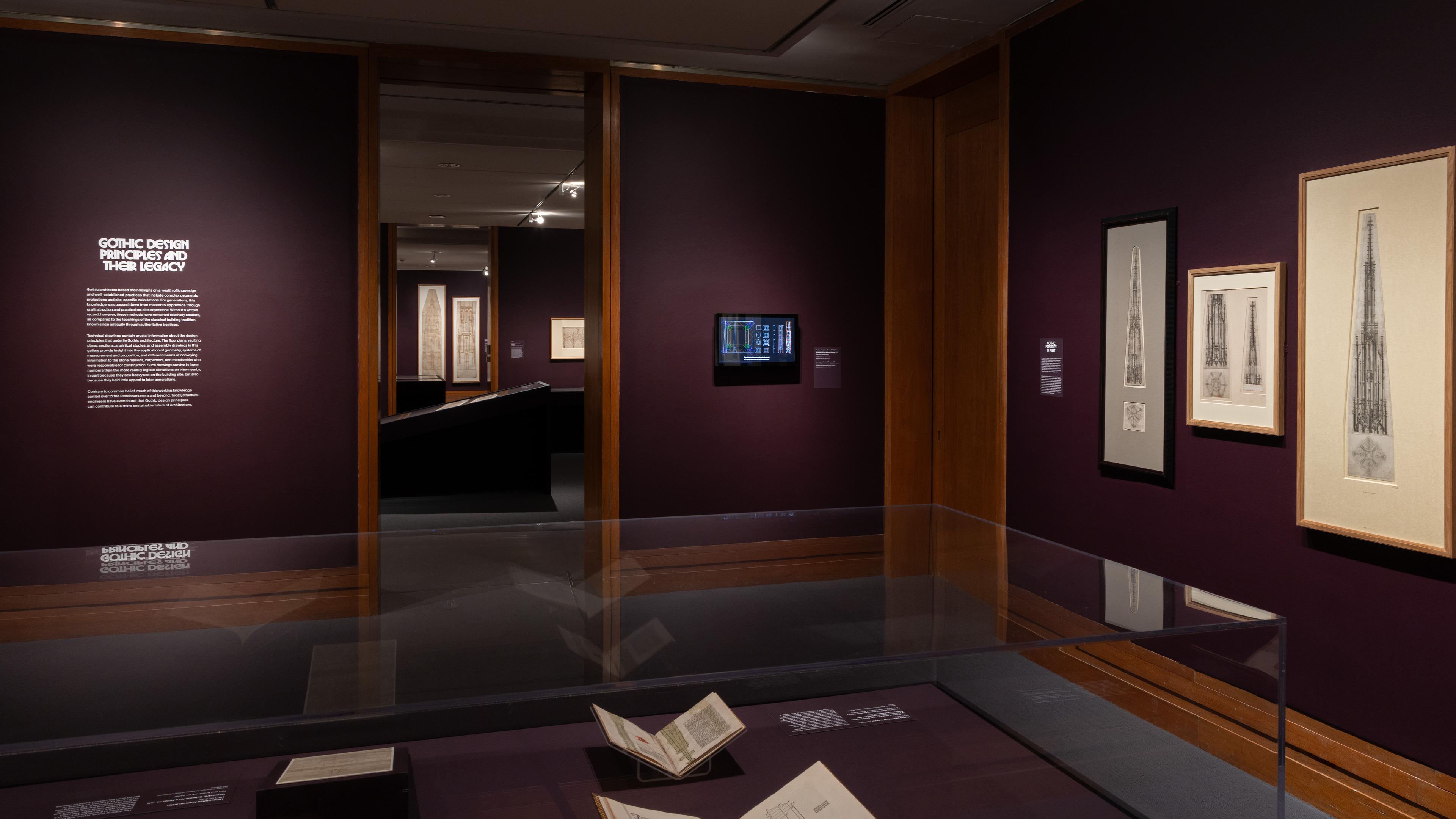
For most of its history, the Gothic architectural tradition was largely self-contained to protect professional standards. Yet, from the 1480s, several artists took to publishing Gothic designs and design theory in print. As products of this trend, the engravings by Wenzel von Olmütz and booklets of Mathes (Matthäus) Roriczer (both on view nearby) provided unprecedented access to trade-specific knowledge that had, until then, been carefully guarded.
Both publications reference a concept known in German-speaking regions as “pulling out” (Auszug), meaning the ability to extrapolate three-dimensional information (proportions and internal relationships) from a two-dimensional floor plan. While Olmütz’s wordless prints were likely meant to inspire practicing architects, Roriczer’s illustrated text describes the method in writing, in the hope of educating young masons. In doing so, he also offered future historians a key to replicating the working methods of Gothic master masons (see video nearby).
Selected Artworks
The Promise of Gothic Geometry
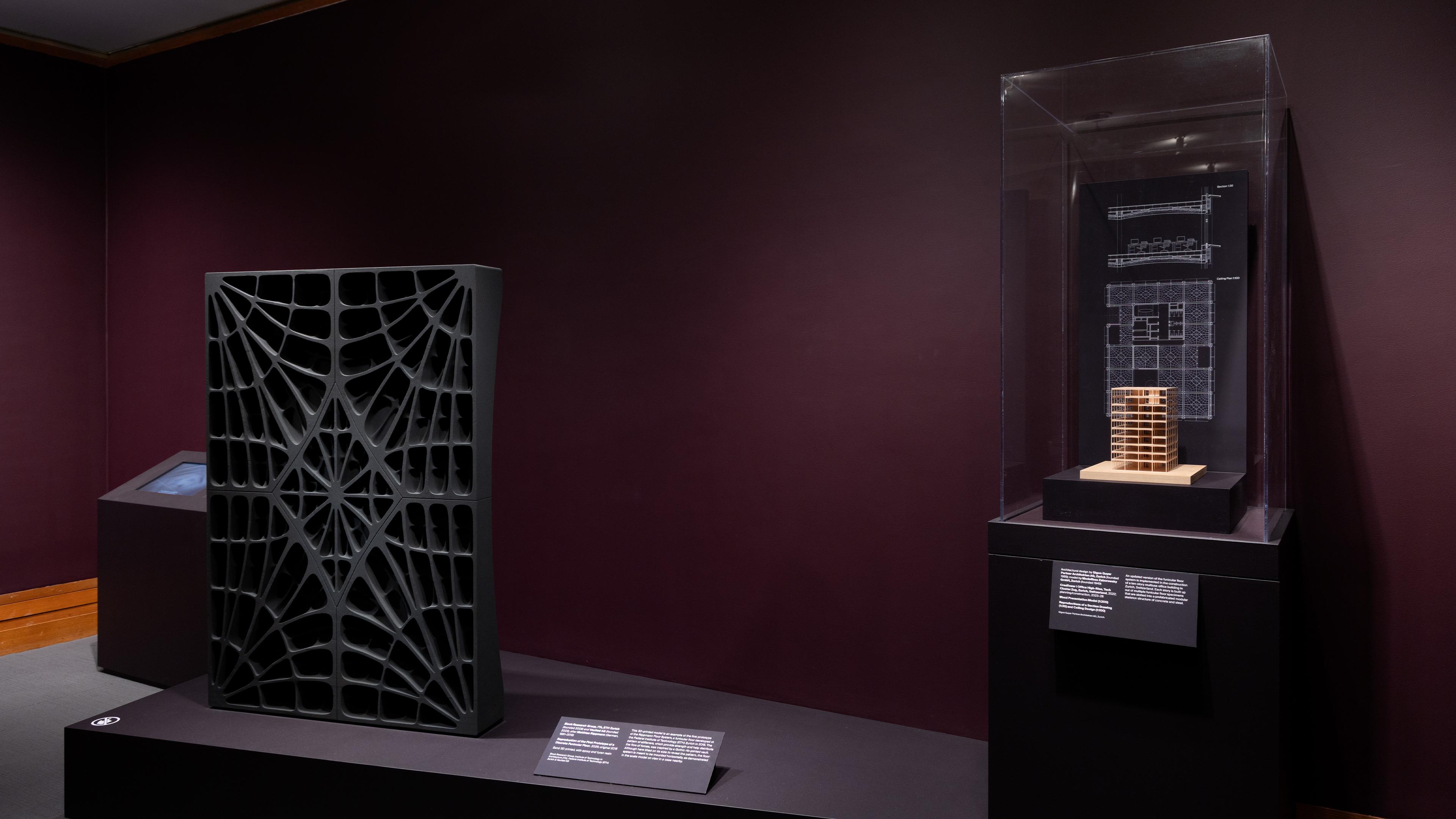
Gothic architecture is generally seen as a historically interesting but outmoded building tradition. Yet, there are certain notable parallels between the design principles of Gothic architects and the objectives of modern-day structural engineers. By reviving and reimagining age-old masonry techniques with modern materials and means of fabrication, they are developing new solutions to pressing societal challenges, including pollution and material consumption.
For example, Gothic masonry vaults can cover large open spaces while elegantly distributing the flow of forces with minimal resources. Structural engineers from the Federal Institute of Technology (ETH) in Zurich have leveraged this geometric potential to design a funicular floor system that optimizes material use and enhances structural performance. Built from unreinforced, rib-stiffened parts held together through compression and tension ties (rather than glue or mechanical connections), the components remain separate so that they can be repurposed at the end of a structure’s life cycle. Moreover, the use of modern materials and smart fabrication significantly lowers material consumption and carbon emissions, helping to reduce the negative impact of our built environment on the planet.