
Introduction
The Face of Life
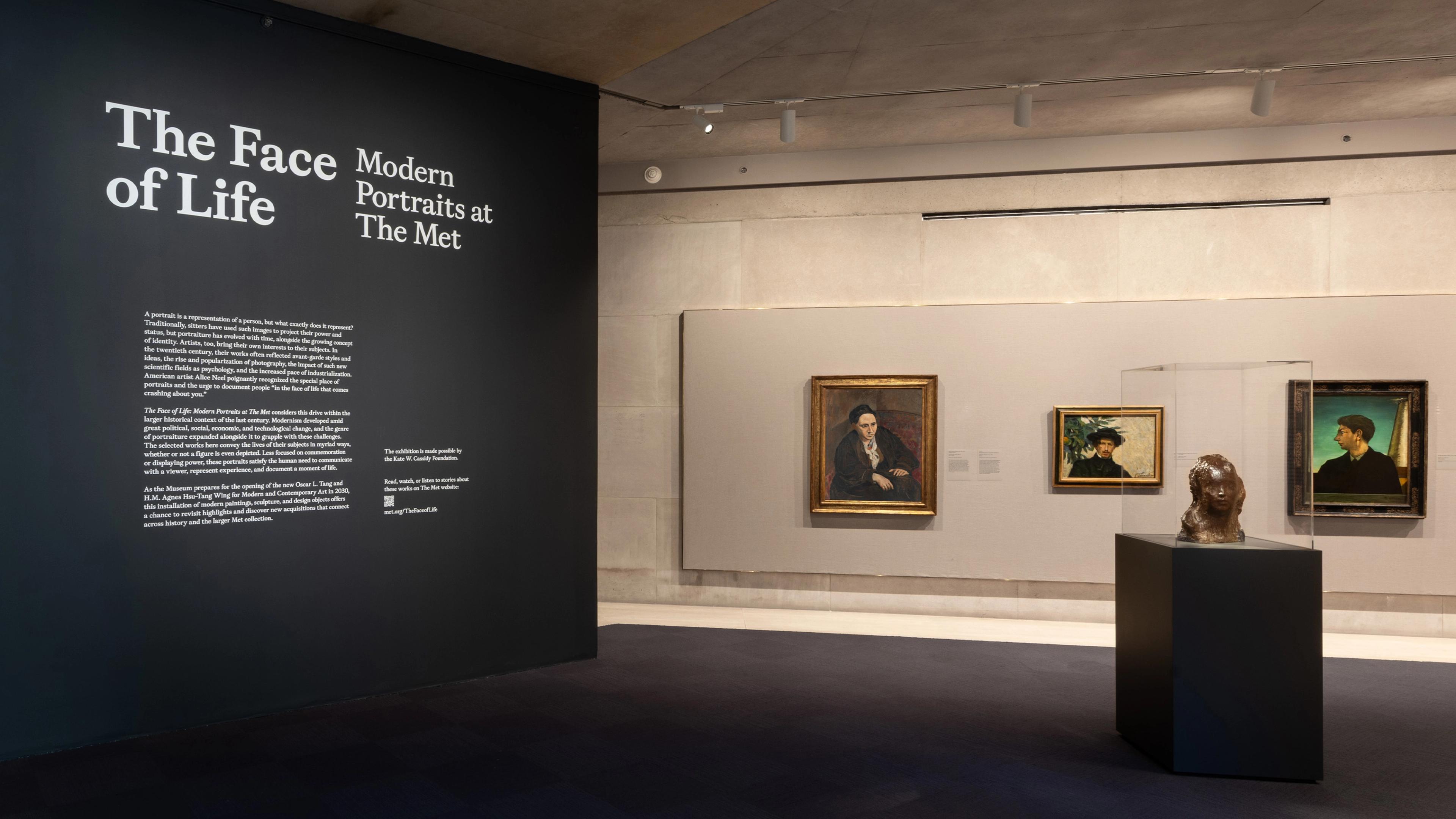
A portrait is a representation of a person, but what exactly does it represent? Traditionally, sitters have used such images to project their power and status, but portraiture has evolved with time, alongside the growing concept of identity. Artists, too, bring their own interests to their subjects. In the twentieth century, their works often reflected avant-garde styles and ideas, the rise and popularization of photography, the impact of such new scientific fields as psychology, and the increased pace of industrialization. American artist Alice Neel poignantly recognized the special place of portraits and the urge to document people “in the face of life that comes crashing about you.”
The Face of Life: Modern Portraits at The Met considers this drive within the larger historical context of the last century. Modernism developed amid great political, social, economic, and technological change, and the genre of portraiture expanded alongside it to grapple with these challenges. The selected works here convey the lives of their subjects in myriad ways, whether or not a figure is even depicted. Less focused on commemoration or displaying power, these portraits satisfy the human need to communicate with a viewer, represent experience, and document a moment of life.
As the Museum prepares for the opening of the new Oscar L. Tang and H.M. Agnes Hsu-Tang Wing for Modern and Contemporary Art in 2030, this installation of modern paintings, sculpture, and design objects offers a chance to revisit highlights and discover new acquisitions that connect across history and the larger Met collection.
Resemblances
Exact resemblance to exact resemblance the exact resemblance as exact resemblance, exactly as resembling, exactly resembling, exactly in resemblance exactly and resemblance. For this is so. Because.
—Gertrude Stein, If I Told Him, A Completed Portrait of Picasso, 1923
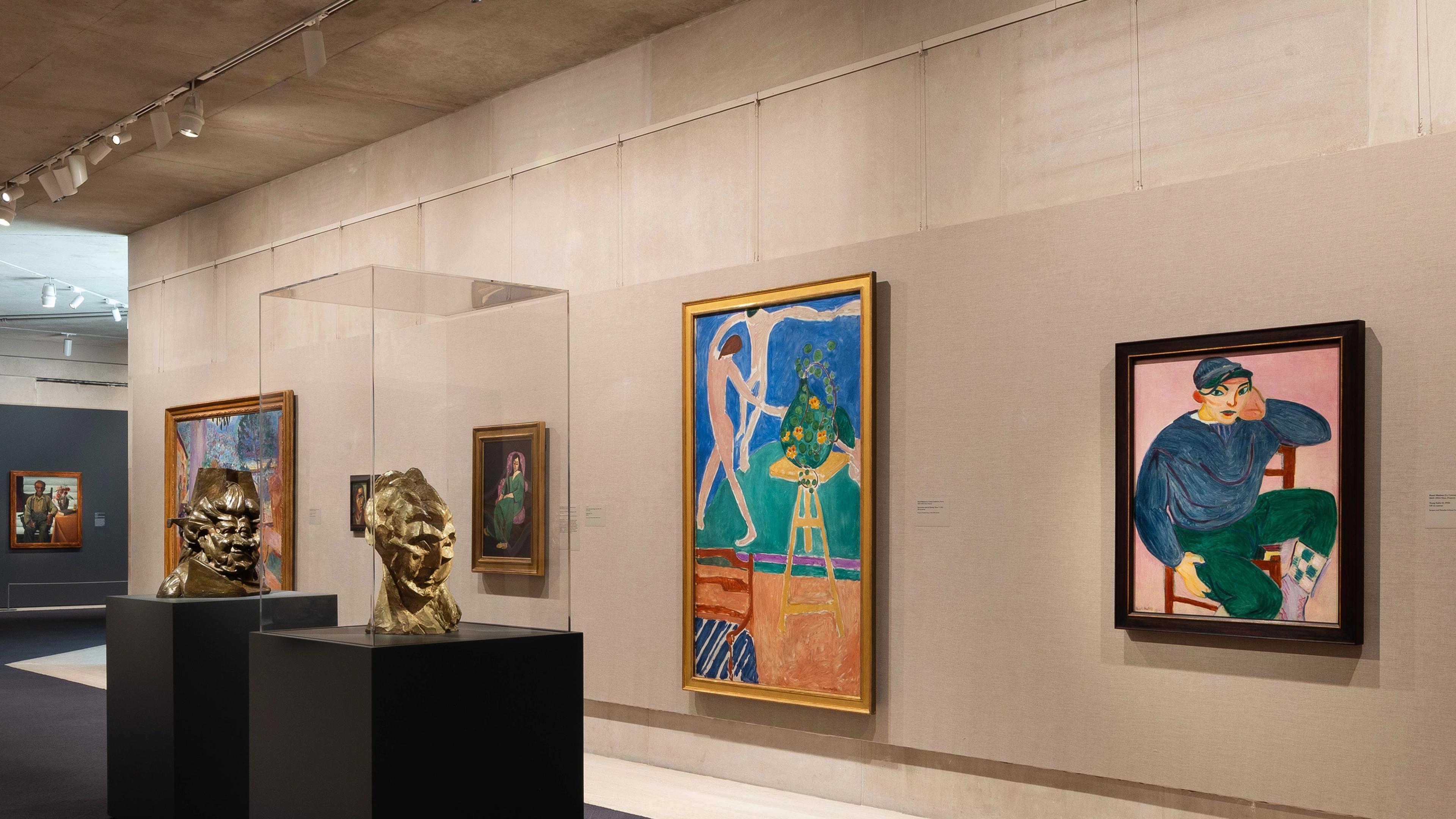
Portraiture is not solely about capturing someone’s physical likeness—it can also present a more intimate, internal impression of a person. When Gertrude Stein described Pablo Picasso in poetry, she focused less on facial features than on a rhythmic and fractured syntax that reflects her friend’s restless essence and Cubist exploration. The same impulse is true for the works on display here. Medardo Rosso rejected naturalistic description in order toproduce a more personal impression of his young sitter’s face. Pierre Bonnard employed a sensorial and mobile vision to evoke the psychological truth of his subjects. Paul Klee’s abstract canvas stands in for his embodied experience and functions as a kind of symbolic self-portrait. Together, these works ask what a true likeness is and suggest that experiences form who we are and how we appear to the world.
Selected Artworks
Allusions
I do not know which to prefer,
The beauty of inflections
Or the beauty of innuendoes.
—Wallace Stevens, Thirteen Ways of Looking at a Blackbird, 1917
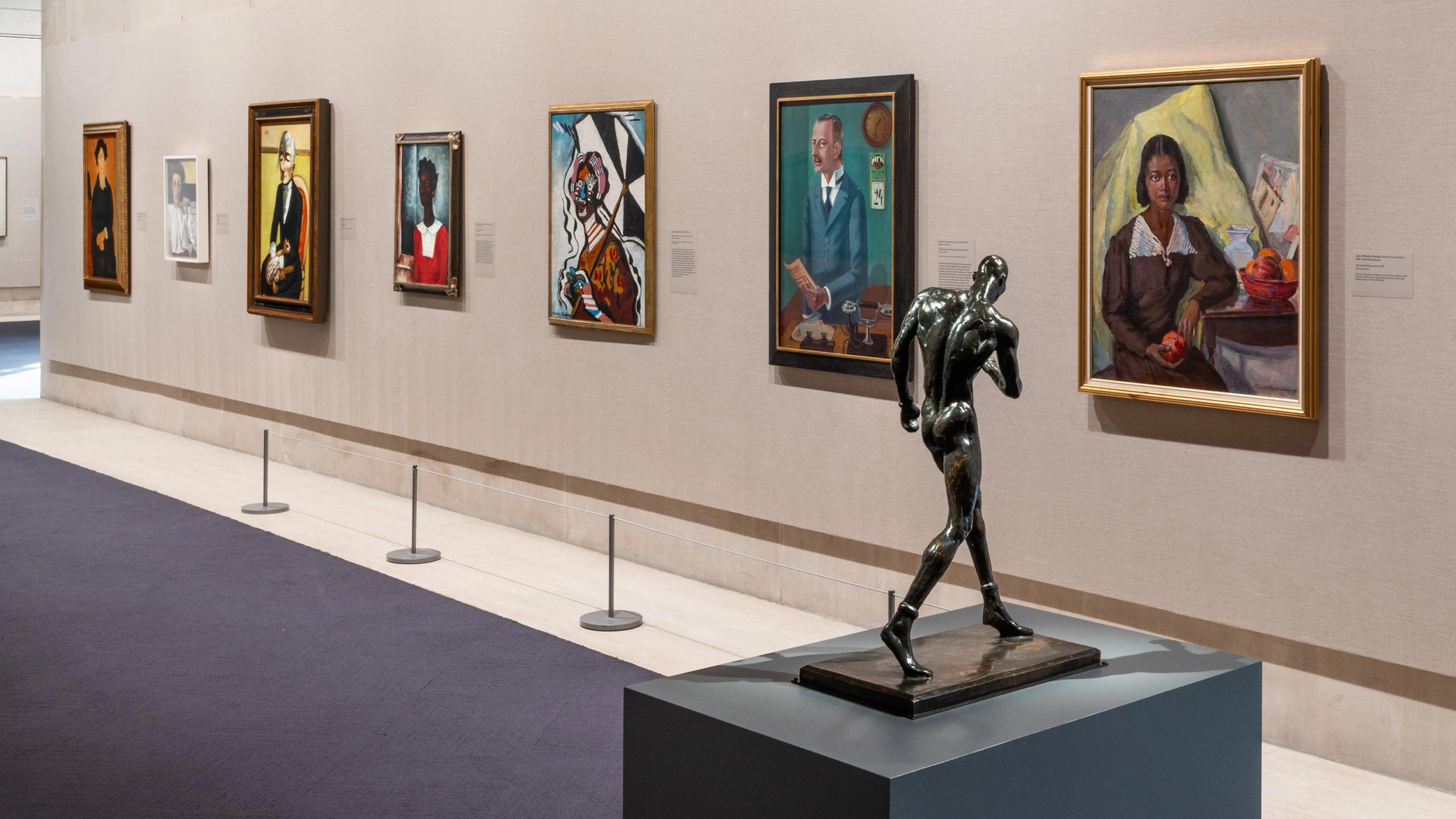
While many of the paintings gathered on this wall share the artistic conventions of seated portraits, they also demonstrate that there can be great variety and individuality even in the most seemingly simple presentation. Just as jazz musicians may take up a familiar piece of music to assert their own distinctive interpretations, the artists here explored their own impressions and stylistic interests. Charles Alston’s sitter appears like a religious icon, imbued with psychological depth inspired by his study of African sculpture, while Otto Dix’s subject seems awkwardly stiff, parodied in the artist’s hyper-attention to detail borrowed from sixteenth-century Northern German art. Elsewhere in this section, works that are abstract in style, such as Joaquín Torres-Garcia’s painting and Isamu Noguchi’s radio, demonstrate elements that are still unique. The poem by Wallace Stevens reminds us of the subjectivity involved in every experience.
Selected Artworks
Proxies
My wife with eyes of water to drink in prison
My wife with eyes of wood always under the axe
My wife with eyes of water and air and earth and fire
—André Breton, Free Union, 1931
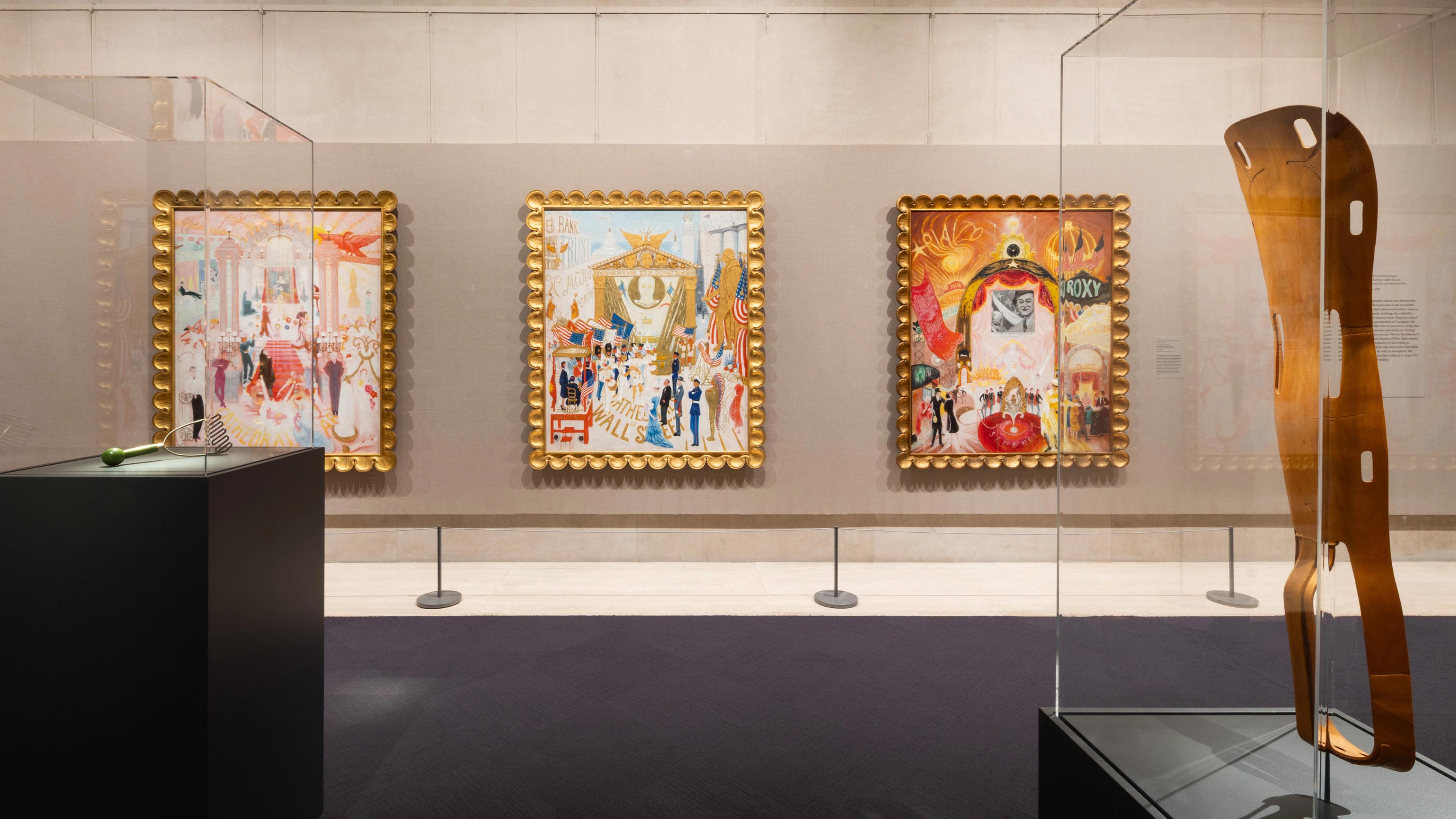
The development of photography added new dimensions to the ways artists approached portraits in the twentieth century. Like Yasuo Kuniyoshi’s self-portrait with a camera, the works in this section openly challenge the reliability of realism and the fallacy of dreams. René Magritte tested the “truth” we attach to his presentation of Georgette, his wife: parts of it look so familiar that we perceive a body, but the artist painted the five canvases separately, at varying distances and perspectives. In contrast, Florine Stettheimer’s paintings appear like fantastical dreams of New York society, but they are also detailed inventories of real events as reported in the newspapers of her day. Just as the Surrealist poet André Breton portrayed his wife in metaphors, the artists here attempted to capture their subjects in ways that reflect their fleeting and elusive reality.
Selected Artworks
Markers
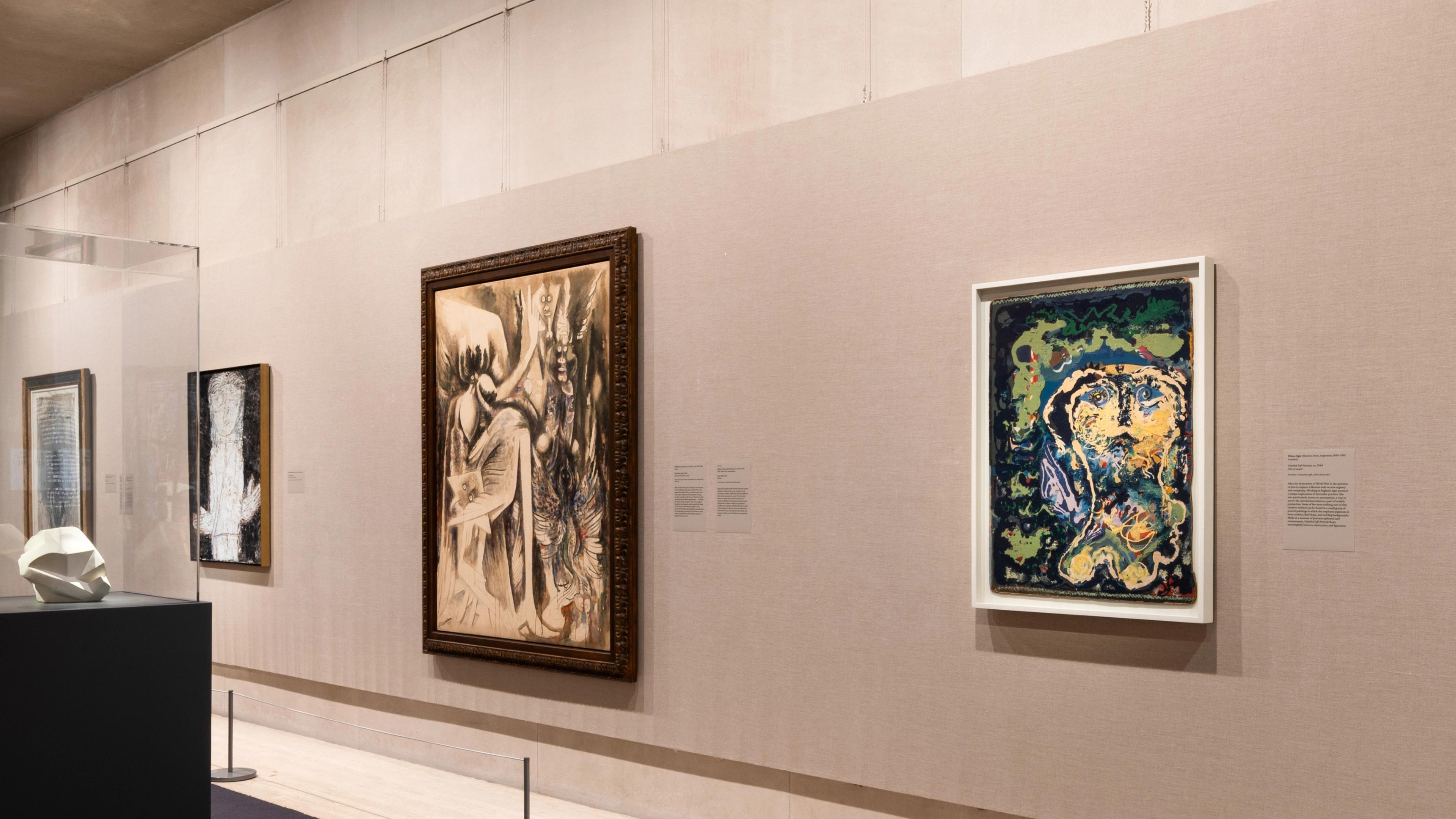
Exhaust the little moment. Soon it dies.
And be it gash or gold it will not come
Again in this identical disguise.
—Gwendolyn Brooks, Annie Allen, 1949
In the wake of war, natural disaster, famine, and persecution—when death and danger are all too present—portraits have a special function. Gwendolyn Brooks’s poem compels us to recognize the transience of life. Similarly, the works here reflect the human impulse to record one’s presence as a means of both grounding and salvation. Alberto Giacometti’s delicate portrait of his wife, Annette, is built from a tangle of brush marks on the canvas, each a response to his own lived perception. Other artists moved away from the present to the past. Max Beckmann found in the history of art a means to portray his life story. Still others, like Eileen Agar, excavated the deep recesses of their minds to record a moment of existence. The urgency and immediacy of such works reflect how portraits can become markers of one’s presence, likenesses in memoriam.