Textile Fragment
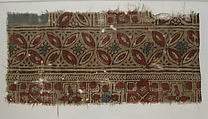
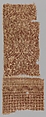
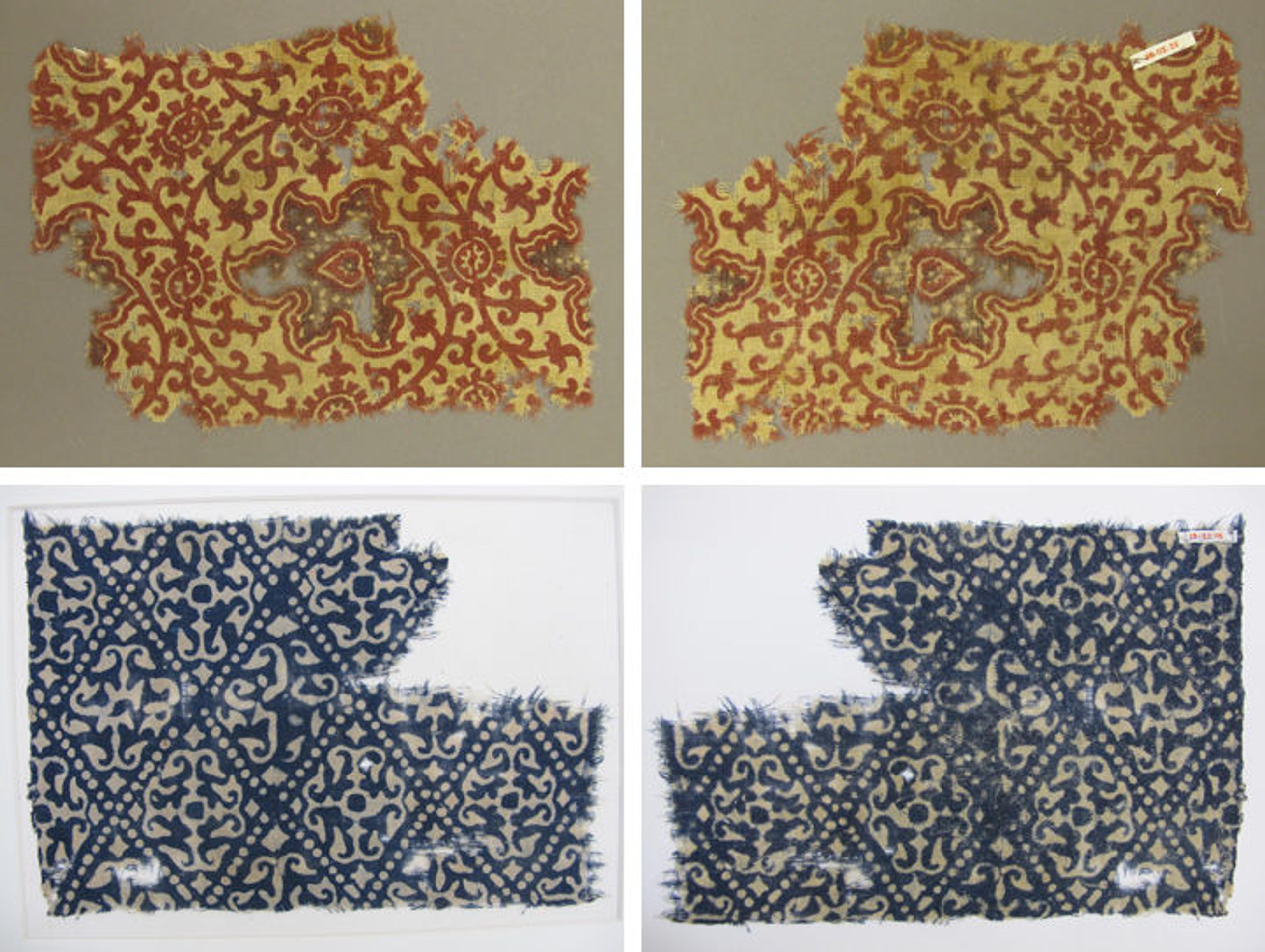
The vibrant red color of the textile, seen on the borders, comes from the organic dye material of the chay root plant indicating that it was likely made near the region of the Coromandel Coast located in Southeast India. Found near the site of Fustat, Egypt, this fragment highlights the maritime relationship of trade and a highly popularized market demand for cotton textiles produced in South Asia that spanned across areas linked by the Red Sea and larger Indian Ocean.
Artwork Details
- Title: Textile Fragment
- Date: 16th century
- Geography: Possibly made in India, the Coromandel Coast. Found Egypt, near Fustat
- Medium: Cotton, plain weave; block-printed and painted, mordant and resist dyed
- Dimensions: L. 10 in. (25.4 cm)
W. 13 1/4 in. (33.7 cm) - Classification: Textiles-Painted and/or Printed
- Credit Line: Purchase, V. Everit Macy Gift, 1930
- Object Number: 30.112.23
- Curatorial Department: Islamic Art
More Artwork
Related Content
Research Resources
The Met provides unparalleled resources for research and welcomes an international community of students and scholars. The Met's Open Access API is where creators and researchers can connect to the The Met collection. Open Access data and public domain images are available for unrestricted commercial and noncommercial use without permission or fee.
To request images under copyright and other restrictions, please use this Image Request form.
Feedback
We continue to research and examine historical and cultural context for objects in The Met collection. If you have comments or questions about this object record, please contact us using the form below. The Museum looks forward to receiving your comments.
Content Notice
The Metropolitan Museum of Art presents over 5,000 years of art from around the world, and our online collection reflects ongoing work conducted over the course of our more than 150-year history. You may encounter objects or images that may be inappropriate for some viewers or information that may be outdated.