Kagawa (Toyohiko Kagawa, Japan, 1888 – 1960)
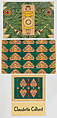
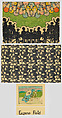
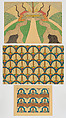
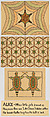
Mary Sully’s striking, self-titled triptych “personality prints” reveal much about the hybrid cultures in which she lived. Sully traveled extensively with her sister Ella Deloria, both during the latter’s fieldwork and residency in New York. Together, they documented, in both written and visual form, aspects of early-20th-century life in the United States as they experienced it. Working without patronage, in near obscurity and largely self-taught, Sully produced more than 130 intricately drawn and vividly colored three-panel drawings—as well as several detailed single-panel “ethnographic” thematic images to accompany her sister’s studies—that captured the culture of her Dakota community and other Native nations. These images, rarely exhibited in her lifetime or posthumously, also represent scenes she likely observed while living in New York City as well as clever vignettes of popular culture in the 1920s and 1930s. Sully primarily drew with colored pencil, graphite, and occasional ink on mid-grade paper. A commitment to creatively exploring her life and times, combined with her Dakota-influenced cultural and artistic sensibilities, resulted in an unconventional body of work unlike anything produced before or since.
Mary Sully, like many of her contemporaries as well as her talented great-grandfather, had a fascination with celebrities. She and her sister were avid entertainment fans and frequented many theaters during their long-term stays in New York. Sully was also exposed to numerous popular publications (such as Time magazine), using stories and images as inspiration for her own art. The public figures who attracted her interest included star athletes (Babe Ruth), stage and film performers (Lunt and Fontaine, Claudette Colbert), authors (Eugene Field), charismatic thinkers (Gertrude Stein), and tastemakers (Walter Winchell). Like her Dakota ancestors who worked with beads and quills, Sully was able to translate what she knew of these personalities into a unique graphic language. The subtlety and poignancy with which she layered her experiences as a Dakota woman and an intensely creative artist offers a fresh and complex lens through which to consider American life in the first half of the 20th century.
Artwork Details
- Title: Kagawa (Toyohiko Kagawa, Japan, 1888 – 1960)
- Artist: Mary Sully (Dakota, 1896–1963)
- Date: ca. 1920s–40s
- Culture: Dakota
- Medium: Colored pencil, black ink, gilt, white paint, pastel crayon, on paper
- Dimensions: 34 3/8 × 19 in. (87.3 × 48.3 cm)
Top panel: 12 7/8 × 18 in.
Center panel: 12 × 19 in.
Bottom panel: 9 1/2 × 12 in. - Credit Line: Purchase, Morris K. Jesup Fund and funds from various donors, 2023
- Object Number: 2023.311
- Curatorial Department: The American Wing
More Artwork
Research Resources
The Met provides unparalleled resources for research and welcomes an international community of students and scholars. The Met's Open Access API is where creators and researchers can connect to the The Met collection. Open Access data and public domain images are available for unrestricted commercial and noncommercial use without permission or fee.
To request images under copyright and other restrictions, please use this Image Request form.
Feedback
We continue to research and examine historical and cultural context for objects in The Met collection. If you have comments or questions about this object record, please contact us using the form below. The Museum looks forward to receiving your comments.
Content Notice
The Metropolitan Museum of Art presents over 5,000 years of art from around the world, and our online collection reflects ongoing work conducted over the course of our more than 150-year history. You may encounter objects or images that may be inappropriate for some viewers or information that may be outdated.