From Jayson Kerr Dobney, Frederick P. Rose Curator in Charge of the Department of Musical Instruments:
In 2012, the Department of Musical Instruments at The Met established a partnership with the National YoungArts Foundation, an organization that nurtures emerging musicians. In this Collection Insights series, we present blogs written by six YoungArts alumni with short clips from concerts they presented on our Patrons Lounge series.
The Met's Patrons Lounge Concerts are made possible by The Dorothy Strelsin Foundation.
Playing "The Francesca" Stradivarius was an incredibly fascinating experience for me. What struck me immediately about this instrument was the incomparably beautiful sound this violin could produce. Frequently, old precious instruments like this have very special tone colors, but "The Francesca" Stradivarius stood out in particular with its depth, warmth, and complexity. I have always been particularly invigorated by different types of sounds, both of specific instruments and of specific instrumentalists. Naturally, it was thrilling to spend hour after hour enjoying this violin.
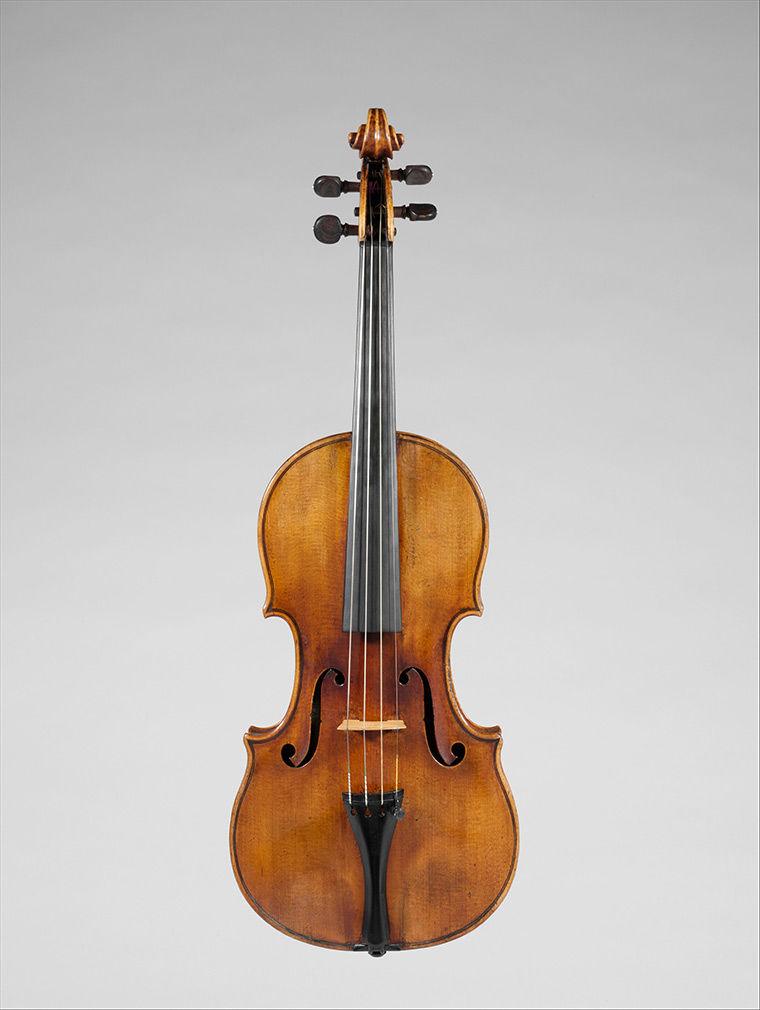
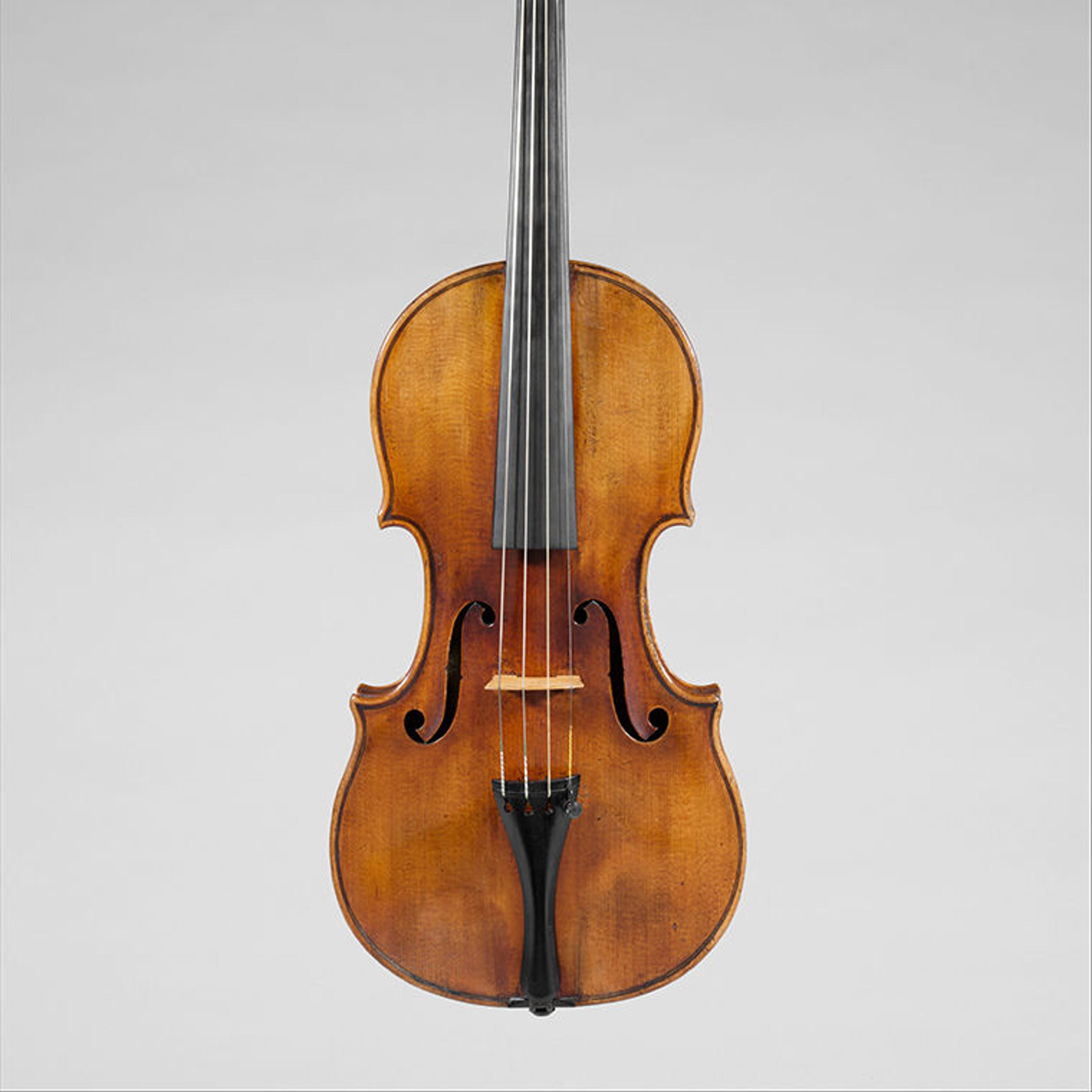
Antonio Stradivari (Italian, Cremona 1644–1737 Cremona), "The Francesca" Violin, 1694. Maple, spruce, ebony, mother of pearl. The Metropolitan Museum of Art, New York, Bequest of Annie Bolton Matthews Bryant, 1933 (34.86.2a)
Every note on "The Francesca" violin can be molded into thousands of different personas. The instrument is incredibly reactive to every little detail the player initiates, be it with bow weight, bow speed, contact point of the bow on the string, the pressure of the left hand fingers on the fingerboard, or changes in vibrato. As a result, everything the player does translates into a wide vocabulary of different emotions, characters and tone colors — quite a luxurious experience for the performer.
As musicians, we always have a vision of the sound we hear in our heads and our ultimate goal is to translate that vision into sound waves. Everything we work on in our technique aims to master this translation, eventually aiming to decrease the gap between our vision and the actual sound that is coming out. The sensitivity of this violin made this a fun and intellectually stimulating experience.
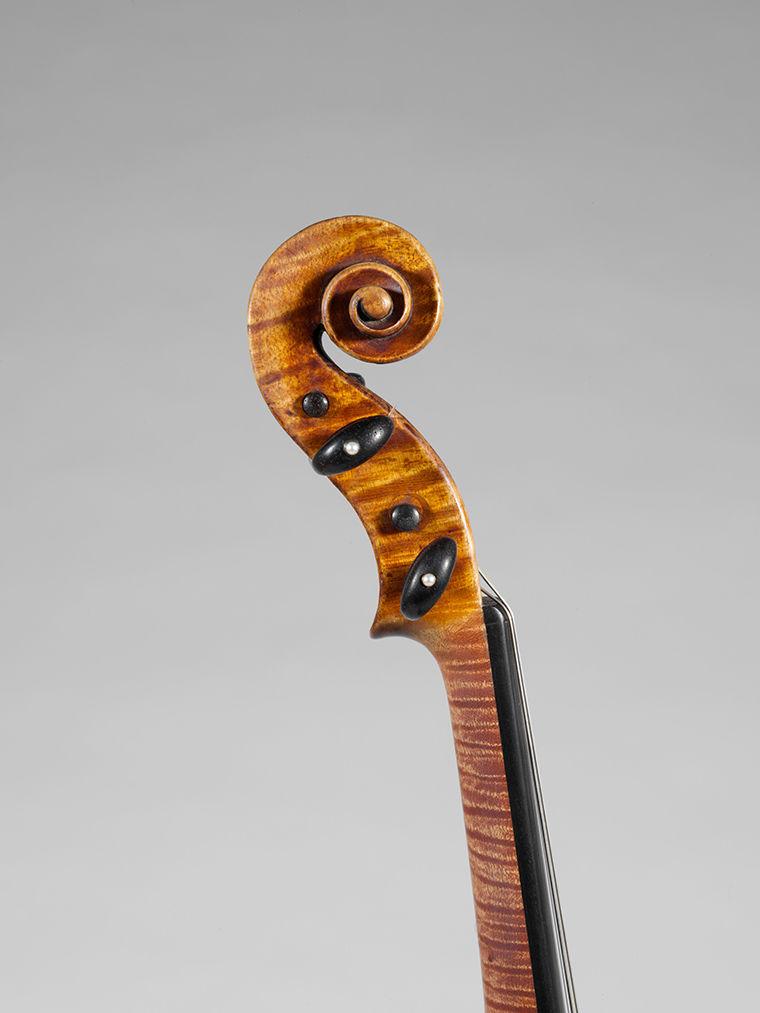
Detail view of the scroll of Stradivari's “Francesca” Violin, (34.86.2a)
Playing "The Francesca" Stradivarius really felt like a dialogue; what stood out to me was the feeling that the instrument is its own entity. With a lot of instruments, performing feels like expressing something with the help of a tool. In other words, the violin becomes the means to an end. However, with this violin, the instrument really felt like a partner — not just the means to an end, but an active participant in the creation and sculpting of the music. One might say going on this journey with "The Francesca" Stradivarius felt like meeting a new person: a warm, intelligent, widely and wildly expressive person.
The Department of Musical Instruments at The Met devoted their entire 2017–18 season of Concerts for Patrons to performances by six YoungArts prizewinners, all of whom performed on historic instruments from The Met collection. The musicians were then asked to write about their experiences. See the full series here.


