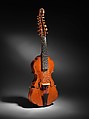
Viola
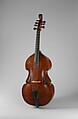
During the 17th century, violas were true tenor instruments with large bodies and often had tall ribs. As repertoire became more demanding, makers built smaller violas and cherished old instruments were cut down. This viola is one of the few surviving from the 17th century that has not been reduced in size.
Artwork Details
- Title: Viola
- Maker: Jacob Stainer (Austrian, Absam ca. 1617–1683 Absam)
- Date: ca. 1660
- Geography: Absam, Austria
- Culture: Austrian
- Medium: Spruce, maple, blackwood
- Dimensions: Height (of body, excluding neck): 17 3/16 in. (43.7 cm)
Width (of body at widest point): 10 3/16 in. (25.8 cm)
Depth (of ribs at widest point): 1 7/8 in. (4.7 cm) - Classification: Chordophone-Lute-bowed-unfretted
- Credit Line: Purchase, Robert Alonzo Lehman Bequest, Fletcher Fund, 2012 Benefit Fund and Beatrice Francais Gift, 2013
- Object Number: 2013.910
- Curatorial Department: Musical Instruments
Audio
"A Set of Tunings" by Thomas Baltzar (1630-1663). Performed by Peter Sheppard Skærved on a viola made by Jacob Stainer, ca. 1660 at The Metropolitan Museum. Recorded in 2022.
Listen to more about this artwork
More Artwork
Related Content
Publications
Books, guides, and catalogues published by The Met.
Research Resources
The Met provides unparalleled resources for research and welcomes an international community of students and scholars. The Met's Open Access API is where creators and researchers can connect to the The Met collection. Open Access data and public domain images are available for unrestricted commercial and noncommercial use without permission or fee.
To request images under copyright and other restrictions, please use this Image Request form.
Feedback
We continue to research and examine historical and cultural context for objects in The Met collection. If you have comments or questions about this object record, please contact us using the form below. The Museum looks forward to receiving your comments.
Content Notice
The Metropolitan Museum of Art presents over 5,000 years of art from around the world, and our online collection reflects ongoing work conducted over the course of our more than 150-year history. You may encounter objects or images that may be inappropriate for some viewers or information that may be outdated.