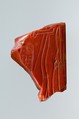
여왕 두상의 파편
Artwork Details
- 제목: 여왕 두상의 파편
- 시대: 신왕국, 제18왕조, 아케나텐 재위기
- 연대: 기원전 1352– 1336년경
- 지리: 아마르나(?)
- 재료: 황벽옥
- 크기: 13 x 12.5 x 12.5cm
- 크레디트 라인: 매입, 에드워드 S. 하크니스 기증, 1926
- 작품 번호: 26.7.1396
- Curatorial Department: Egyptian Art
Audio
809. Kids: Fragment of a Queen's Face, Part 1
Take a careful look at this piece. What you see is all that is left of this sculpture of a head of a queen. We’re not positive who she is, but we’re fairly sure she’s from the time of the pharaoh Akhenaten, who lived more than three thousand years ago. She might be one of his wives or daughters. She could even be his mother, Queen Tiye.
The sculpture is made of a hard, semi-precious stone called jasper. The Egyptians only had hand tools, so a very skillful artist must have carved and polished it. Originally, the head sat on top of a body made out of a different material, like wood or limestone.
Sometimes, it’s almost more interesting to have part of something rather than the whole, because you can imagine what the rest of it looks like. What’s amazing about this Queen is how magical and powerful she is, even though so much of the sculpture is missing. Look at the curve of her cheek, and her lips. When you get home, you might want to draw what the rest of her face would look like. If you’d like to hear information about why the Museum has fragments or objects that are not complete, press the green play button now.
Listen to more about this artwork
More Artwork
Related Content


 Free to download
Research Resources
The Met provides unparalleled resources for research and welcomes an international community of students and scholars. The Met's Open Access API is where creators and researchers can connect to the The Met collection. Open Access data and public domain images are available for unrestricted commercial and noncommercial use without permission or fee.
To request images under copyright and other restrictions, please use this Image Request form.
Feedback
We continue to research and examine historical and cultural context for objects in The Met collection. If you have comments or questions about this object record, please contact us using the form below. The Museum looks forward to receiving your comments.
Content Notice
The Metropolitan Museum of Art presents over 5,000 years of art from around the world, and our online collection reflects ongoing work conducted over the course of our more than 150-year history. You may encounter objects or images that may be inappropriate for some viewers or information that may be outdated.