English
DonateMembershipTickets

The Poet

ca. 1904
Not on view
At the end of the nineteenth century in India, intellectuals and social reformists from the bourgeoisie in Calcutta (now Kolkata) championed a new cultural movement known as the Bengal Renaissance. A nationalist and reformist project, it led to the establishment of the Bengal School, a philosophy of art making that emerged in the first decade of the twentieth century and counted Abanindranath Tagore among its main proponents. The tenets of the School advocated drawing upon aesthetic principles derived from Sanskrit sources, and the adoption of pictorial conventions borrowed from Pahari and Mughal schools of painting. It reclaimed the romantic past of medieval India and sympathized with pan-Asian Buddhist references. Tutored in part by Okakura Kakuzo and other artists visiting from Japan, Tagore developed a new method that was a fusion of both tempera and Japanese wash techniques, an approach that can be discerned in The Poet.

Artwork Details

Object Information
  • Title: The Poet
  • Artist: Abanindranath Tagore (Indian, Kolkata 1871–1951 Kolkata)
  • Date: ca. 1904
  • Medium: Watercolor on paper
  • Dimensions: 12 1/2 × 8 3/8 in. (31.8 × 21.3 cm)
  • Classification: Works on Paper
  • Credit Line: Gift of Virginia and Ravi Akhoury, 2023
  • Object Number: 2023.369.5
  • Curatorial Department: Modern and Contemporary Art
More Artwork
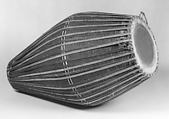
Khol, Wood, leather, tuning paste, Indian
Indian
20th century
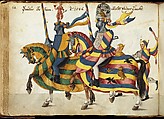
Album of Tournaments and Parades in Nuremberg, Pen and ink, watercolor, gold and silver washes; paper bound in gold-tooled leather, German, Nuremberg
German, Nuremberg
late 16th–mid-17th century
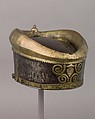
Helmet, Steel, brass, copper, Indian, possibly North Indian
Indian, possibly North Indian
probably 19th century
Shop Girls, William James Glackens  American, Pastel and watercolor on illustration board, American
William James Glackens
ca. 1900
Dagger (Katar) with Sheath, Steel, gold, wood, velvet, Indian
Indian
18th–19th century

Research Resources

The Met provides unparalleled resources for research and welcomes an international community of students and scholars. The Met's Open Access API is where creators and researchers can connect to the The Met collection. Open Access data and public domain images are available for unrestricted commercial and noncommercial use without permission or fee.

To request images under copyright and other restrictions, please use this Image Request form.

Feedback

We continue to research and examine historical and cultural context for objects in The Met collection. If you have comments or questions about this object record, please contact us using the form below. The Museum looks forward to receiving your comments.

Send feedback

Content Notice

The Metropolitan Museum of Art presents over 5,000 years of art from around the world, and our online collection reflects ongoing work conducted over the course of our more than 150-year history. You may encounter objects or images that may be inappropriate for some viewers or information that may be outdated.