«This week, a monumental statue of the Egyptian pharaoh Amenemhat II (ca. 1919–1885 B.C.) was installed in the Met's Great Hall. It is a special loan from the collection of the Ägyptisches Museum und Papyrussammlung, Staatliche Museen zu Berlin – Preussischer Kulturbesitz.»
The statue was found in the early nineteenth century at Tanis in the Nile Delta, among many other prime Middle Kingdom sculptures that had probably been transported there in antiquity from sites closer to present-day Cairo. (Tanis was not founded until the beginning of the first millennium.) Most of the other Tanis statues are now in the Egyptian Museum in Cairo. One—the famous Louvre sphinx—is in Paris; it depicts the same pharaoh: Amenemhat II.
Purchased in 1837, the statue remained in the Berlin museum during World War II, covered by sandbags and thus surviving the destruction of the "Neues Museum" building. Since 1996 it has been positioned in the courtyard of the Pergamon Museum, covered by a protective wooden frame. It will be lent to us for ten years, until the construction on the Berlin Museum Island has been finished and can provide a final place for the colossus.
For the Met, this is an opportunity to show monumental Egyptian art that is barely represented in American collections. Only a statue of Tutankhamun in the Oriental Institute Museum in Chicago is taller. Amenemhat II will remain in the Great Hall for a year; its towering presence will surely inspire many of our visitors to explore the Met's outstanding holdings of Egyptian art.
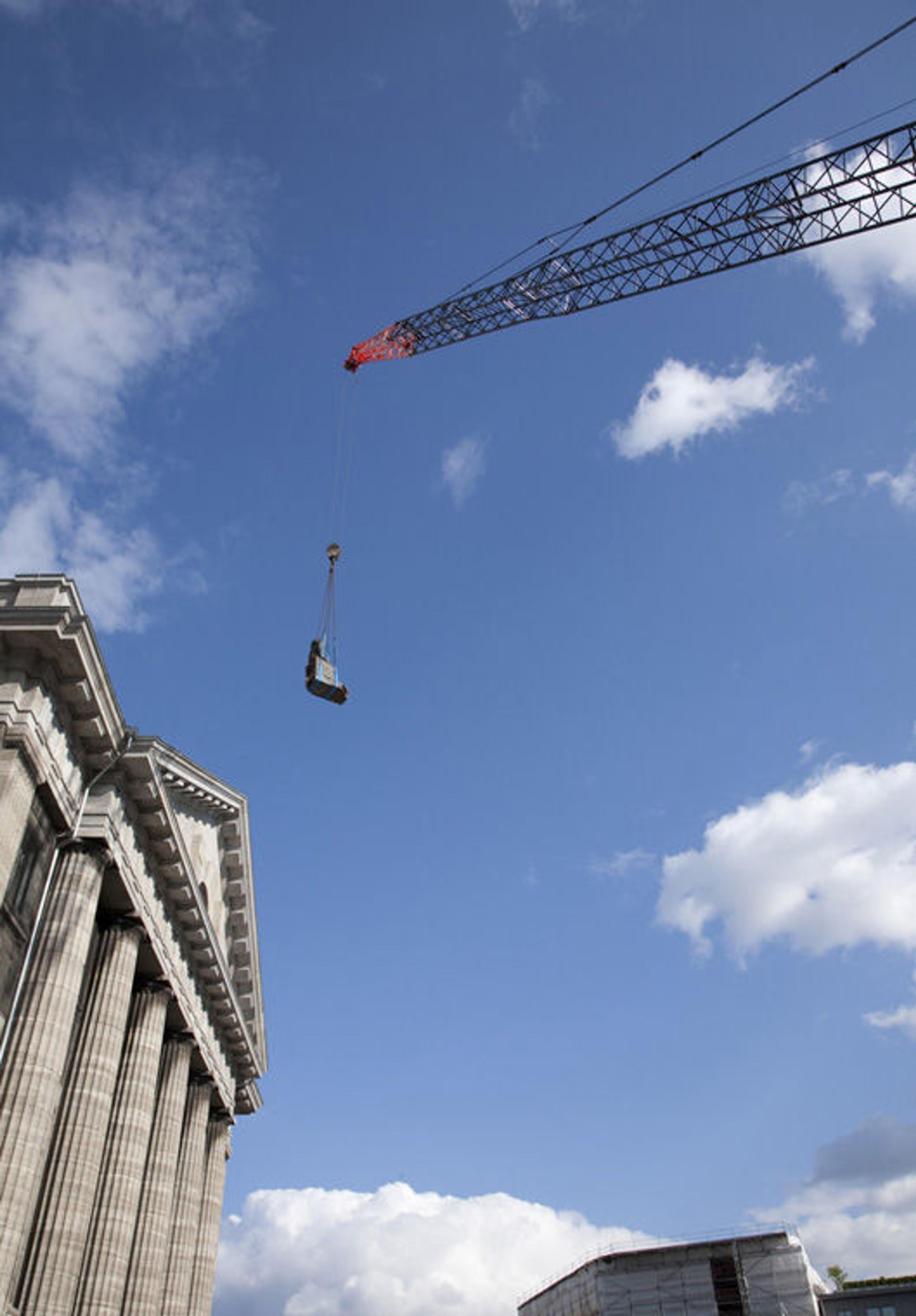
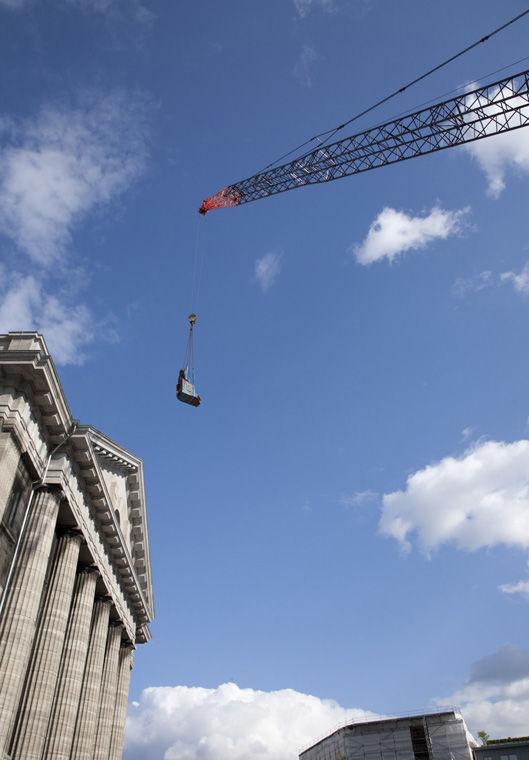
The image above shows the statue being lifted from the Pergamon Museum courtyard over the "Kupfergraben" canal (the bridge was not strong enough to carry the nine-ton weight). The following video documents the statue's daylong installation at the Met.