«Are you an Alfred Hitchcock fan? If so, then you know that he always inserted himself into his movies. There he is struggling to get a double bass onto the train in Strangers on a Train, and milling among the guests in the apartment of a musician in Rear Window, and missing a bus in North by Northwest, and seen through the window of an office in Psycho. What's this about? A tease? An assertion of authorship? A will to insert oneself in the fiction of one's own imagination?»
Rembrandt, too, was famous for inserting himself into his creations. In his case, however, he is an active and conspicuous presence—almost to the point of intrusiveness. Think of his spot-lit presence, dressed in a flashy blue satin outfit, at the Raising of the Cross in the collection of the Alte Pinakothek, Munich.
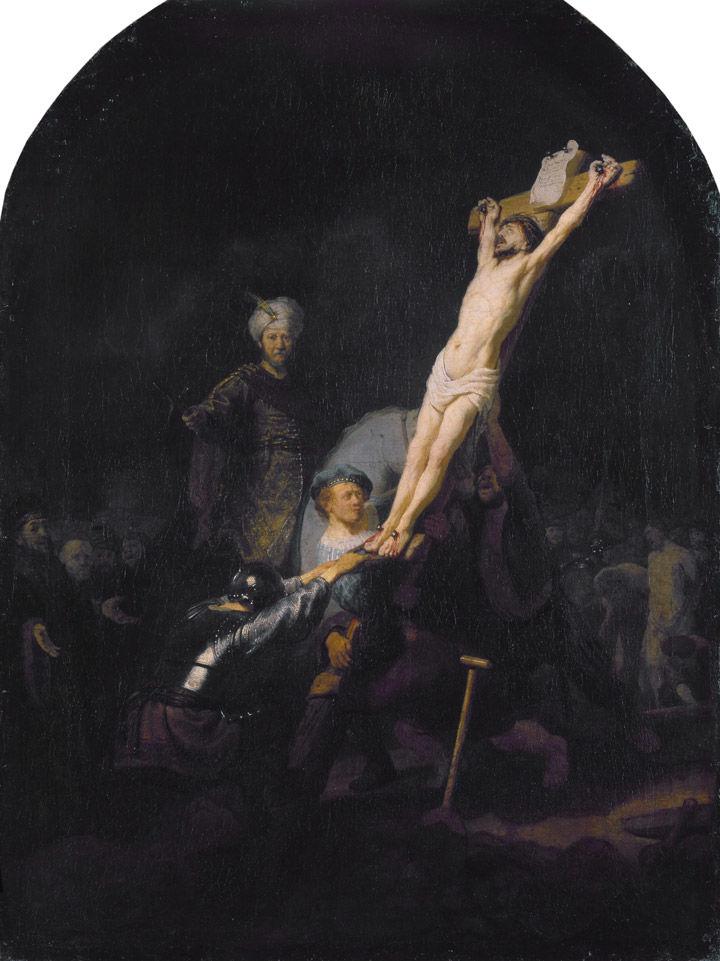
Rembrandt (Rembrandt van Rijn) (Dutch, 1606–1669). The Raising of the Cross, ca. 1633. Oil on canvas, 37.7 in. x 28.4 in. (95.7 cm x 72.2 cm). Alte Pinakothek, Munich, Inv. No. 394. Public-domain image via Wikimedia Commons
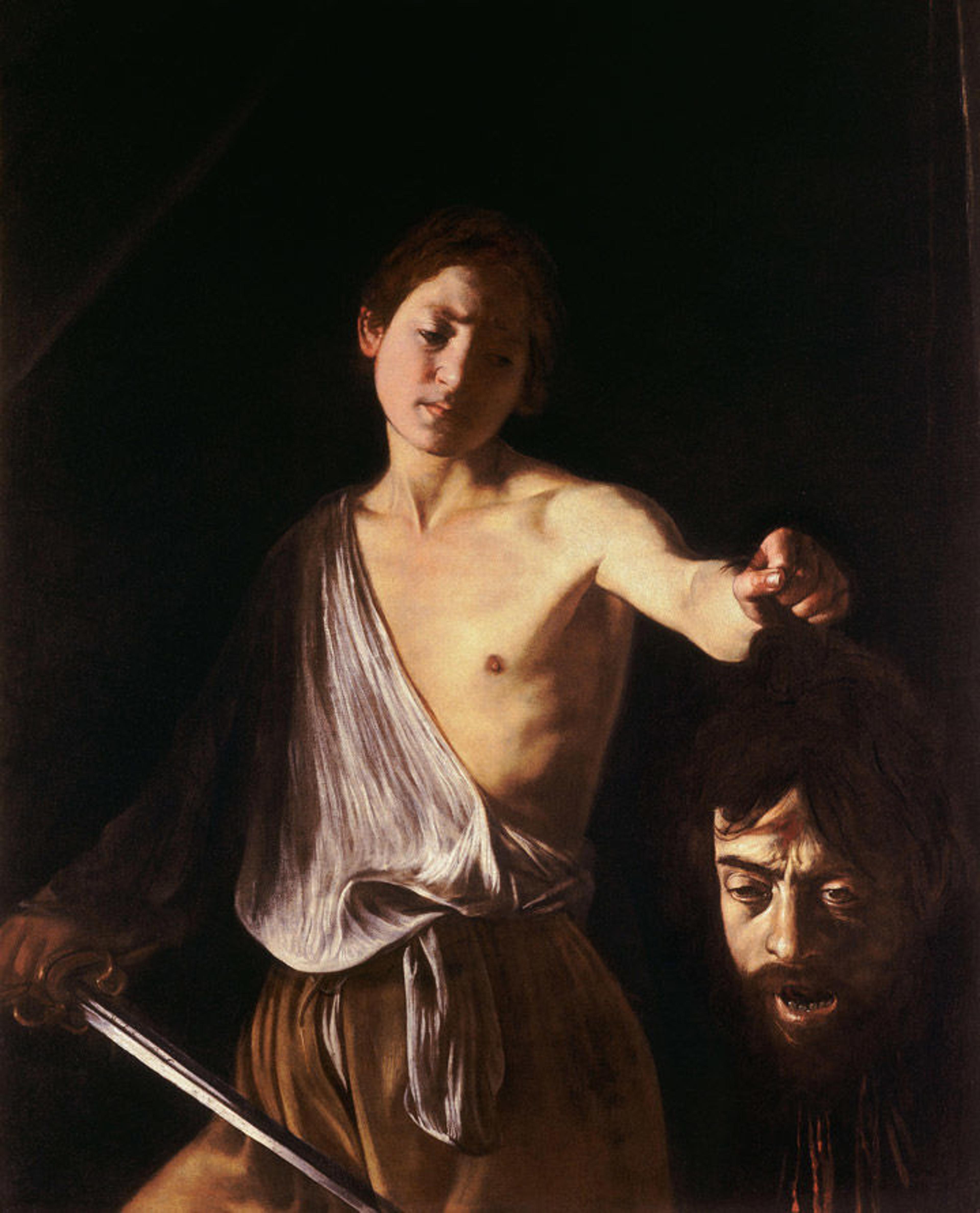
Caravaggio, too, occasionally inserted himself into his paintings. He can be seen fleeing the scene of the Martyrdom of Saint Matthew, at once frightened and unable to resist looking around to see the soldier with drawn sword slay the apostle. His decapitated head appears in the deeply disturbing David with the Head of Goliath, in which he is the victim of the young shepherd boy, whose features, we are told by a credible source, were those of the artist's assistant and lover Cecco del Caravaggio.
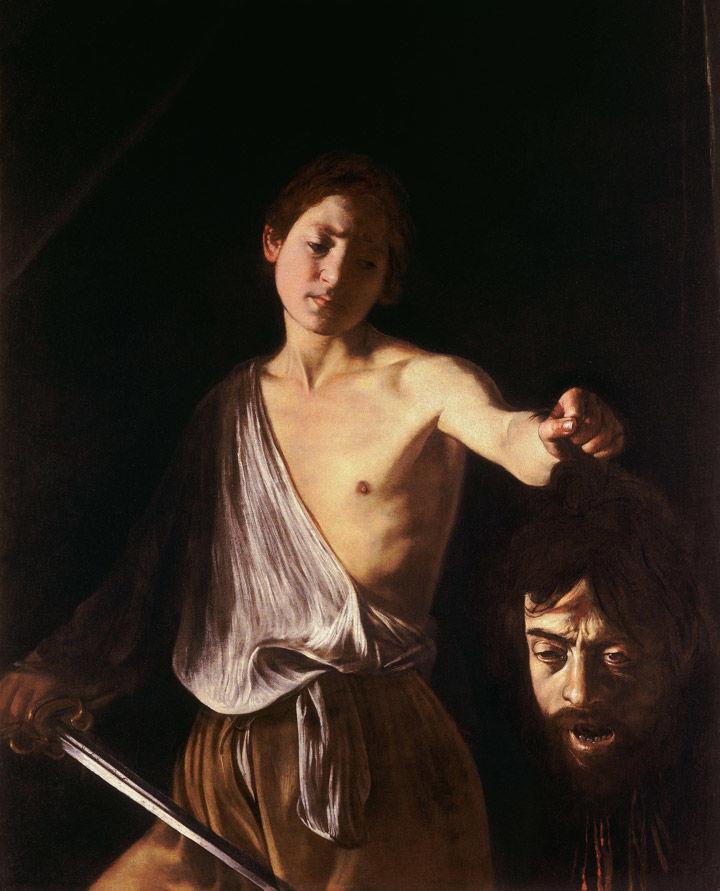
Caravaggio (Michelangelo Merisi) (Italian, 1571–1610). David with the Head of Goliath, 1609–10. Oil on canvas, 49 in. x 40 in. (125 cm x 101 cm). Galleria Borghese, Rome, Inv. No. 455. Public-domain image via Wikimedia Commons
And he reappears again, memorably, in the haunting Matrydom of Saint Ursula—his last documented picture, painted in 1610, on the eve of his hoped-for return to Rome and his premature death at the age of 41. Rather than fleeing the scene of martyrdom as in the Saint Matthew picture, he is the curious spectator straining for a better view of the action: the murder of Saint Ursula by the king of the Huns, who has, at close range, shot an arrow into her breast after she rejected his advances.
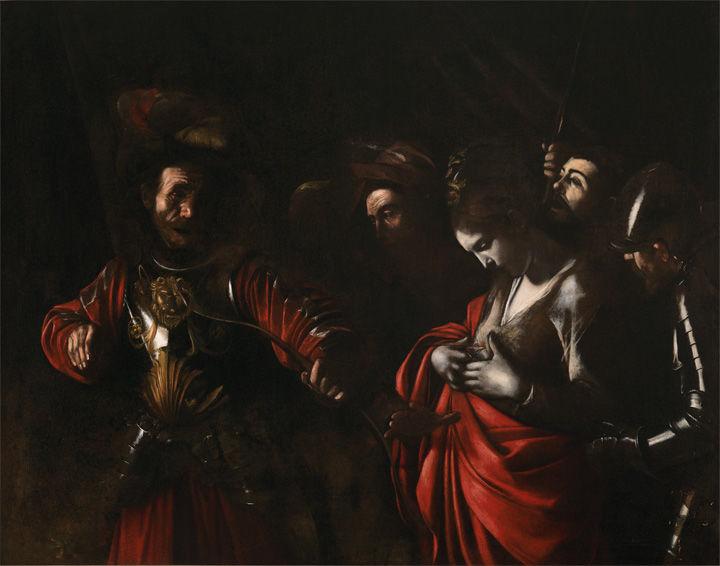
Caravaggio (Michelangelo Merisi) (Italian, 1571–1610). The Martyrdom of Saint Ursula, 1610. Oil on canvas, 56 1/3 x 70 7/8 in. (143 x 180 cm). Intesa Sanpaolo Collection, Gallerie d'Italia—Palazzo Zevallos Stigliano, Naples
The more one reflects on this picture, which was painted for a very prominent patron, and the more one contemplates the possible reasons behind Caravaggio's decision to include himself in it—a surrogate for the viewer?—the more intriguing the picture becomes. See for yourself: it is on loan to The Met through July 9 in the exhibition Caravaggio's Last Two Paintings.


