The Met has been and continues to be deeply committed to provenance research and transparency. In the Department of Ancient West Asian Art, this work has been led for over fifteen years by Anne Dunn-Vaturi, whose research recently led to the repatriation of the vessel stand with ibex, a copper-alloy sculpture produced in ancient Iraq in the mid-third millennium BCE, to the Republic of Iraq. To celebrate this voluntary repatriation and build on recent Met-funded research into ancient Mesopotamian casting technology, staff and leadership at The Met, the State Board of Antiquities and Heritage in Iraq, and the Iraq National Museum joined together with radiographic imaging experts in Germany to answer some lingering questions about how this impressive object was created.
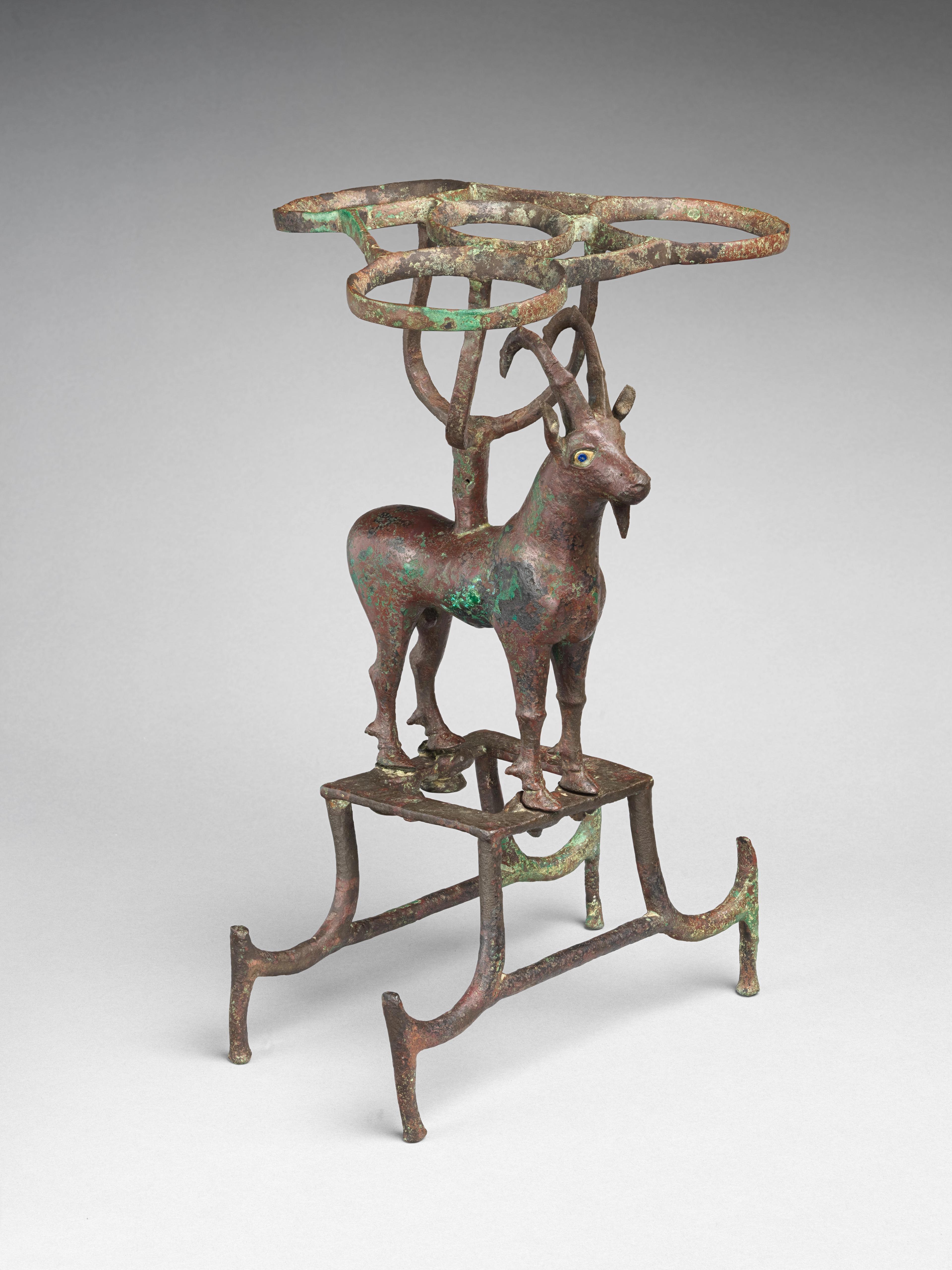
Vessel Stand with Ibex, ca. 2600–2350 BCE. Sumerian. Copper alloy, inlaid with shell (lambis truncata) and lapis lazuli
The vessel features a superstructure with rings that may have held conical vessels in a temple context. As metal objects were often melted down for reuse in the past, its survival virtually intact is remarkable. It is the earliest example of a small group of metal objects produced in the second half of the third millennium BCE using copper with a small amount of impurities that represent some of the earliest known figural metal castings produced in the ancient world. In addition to their beautiful modelling, what makes these sculptures so impressive is that copper is a very difficult material to cast as it does not flow easily through a mold and solidifies quickly. Casting was facilitated by the addition of tin to make bronze alloys when it became more widely available in later centuries.
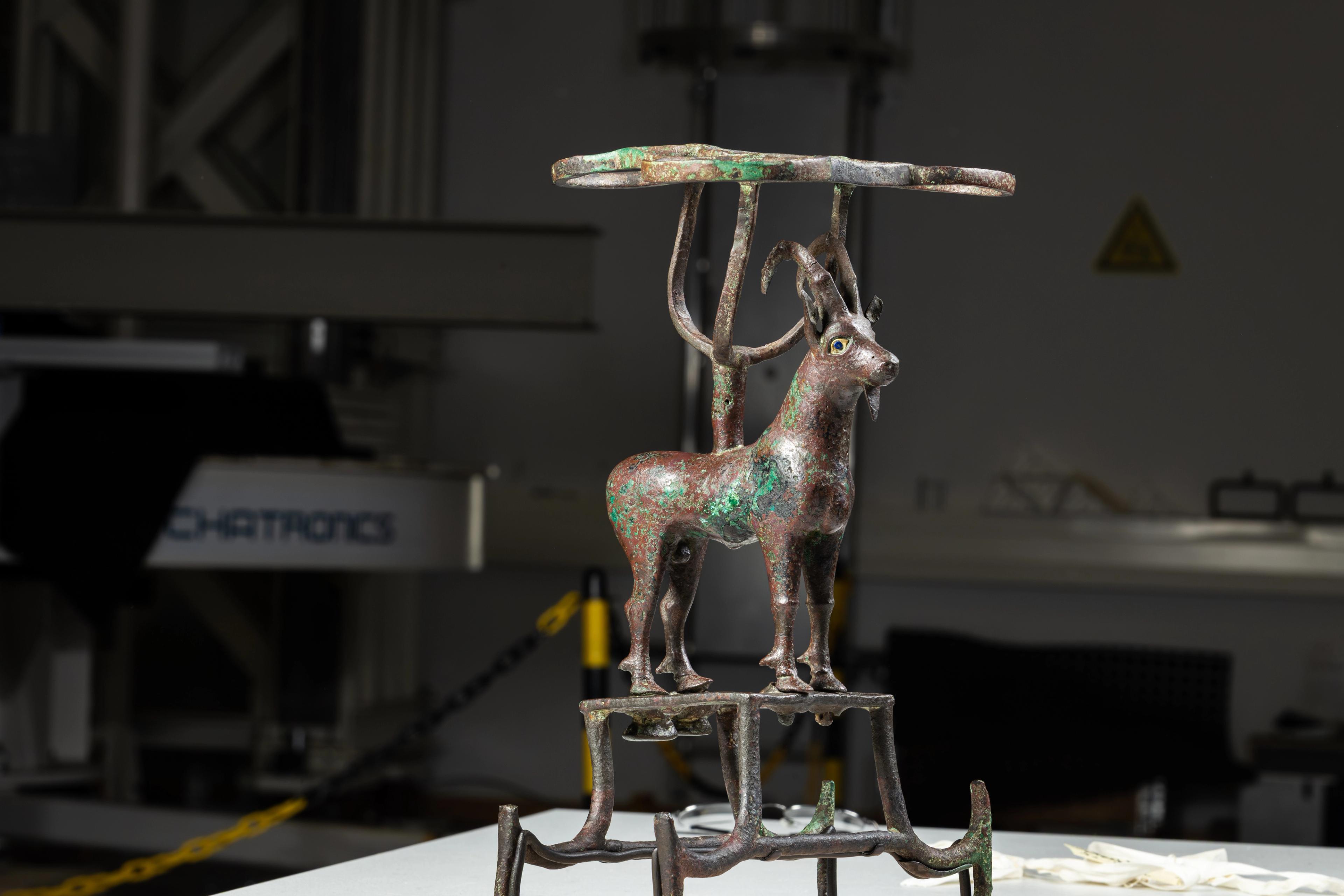
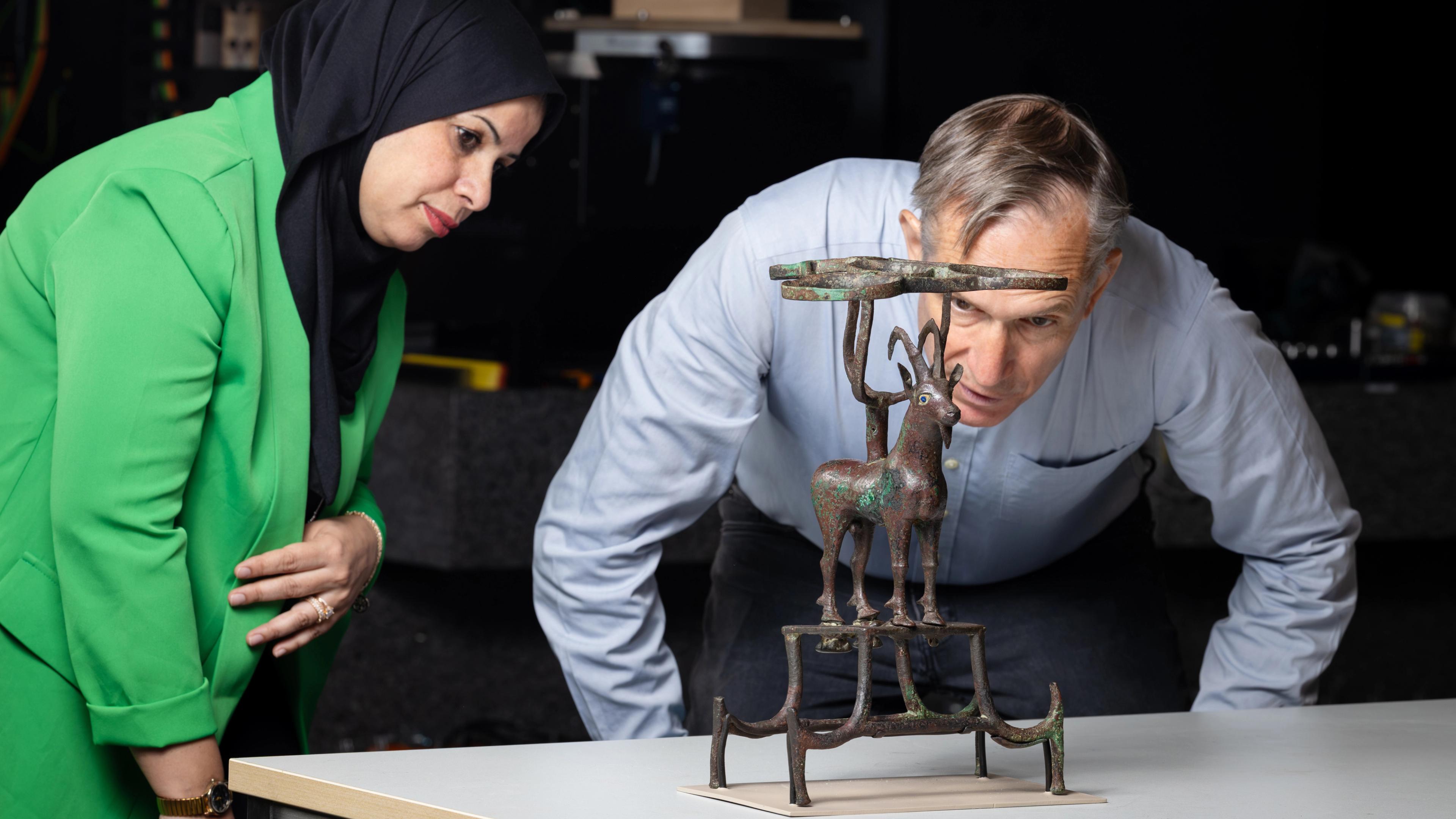
The vessel stand with ibex was taken to Germany for new imaging and research. Photograph by Nico Tavalai
A radiograph taken of the ibex body before acquisition indicated that it was produced by the hollow-core direct lost-wax process but left some questions about the casting process unanswered. The use of the word “hollow” is a bit misleading as this process actually begins with a ceramic shape or core that is covered with a layer of wax that will eventually be replaced by metal. Since wax is easily worked, it allows for very fine details and virtually any shape to be reproduced—ideal for the creation of animal and human figures. After the model is finished and wax channels are attached to allow molten metal to flow in and air to flow out, the model is covered with clay and fired, causing the wax to melt and the clay to harden into a ceramic casting mold. Solid metal sculptures can be manufactured on a small scale by the standard lost-wax process, but larger molds cannot be filled fast enough before the metal starts to solidify. Incorporating a core in the center of the sculpture not only reduces the amount of metal required but also allows large molds to be filled quickly.
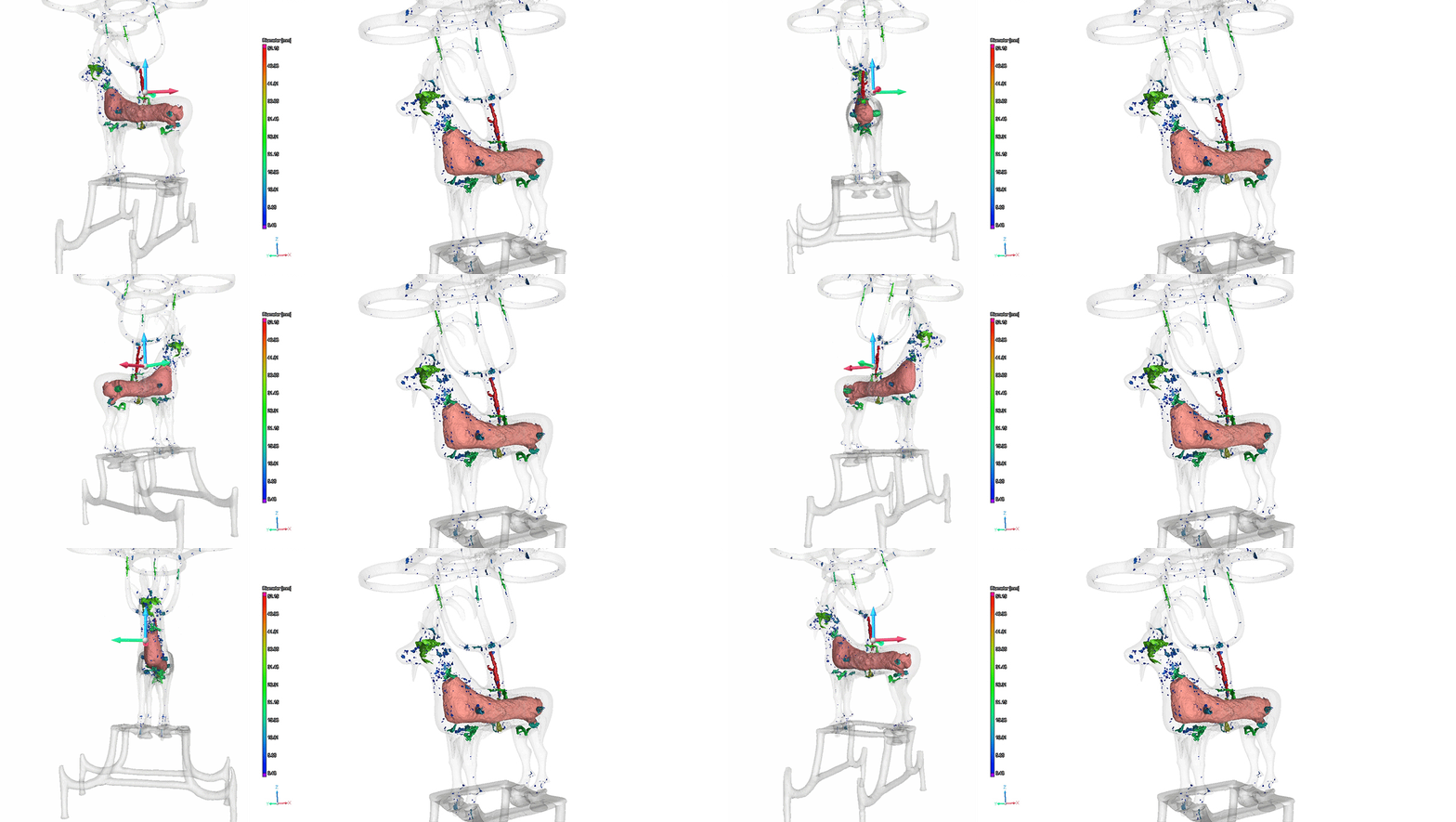
An interactive reconstruction of the ibex based on a CT scan shows the internal core and porosities in graded color according to their size.
The Met’s Conservation and Scientific Research Departments are fortunate in having a wide range of analytical tools that can be used to study the collection. Some techniques, however, are simply too specialized and/or expensive for even the best equipped museum to maintain on a regular basis, making interinstitutional partnerships a necessity. For example, in 2015, when the J. Paul Getty Museum sought to obtain computed tomography (CT) scans of ancient bronze sculptures in their collection, the Getty Conservation Institute collaborated with researchers from the University of Bologna in Italy to build a temporary setup in Los Angeles. In our case, we decided to have a CT scan performed at the Fraunhofer Institute for Integrated Circuits IIS in Nuremberg, Germany, which has experience in CT scanning cultural material and a very secure facility—an important consideration when dealing with a priceless object. The fact that Germany is situated roughly midway between New York and Baghdad also nicely reflected our coming together as American and Iraqi colleagues. Roaa Abbas Kadhim Al Kinani, Archaeologist at The Iraq Museum, traveled to Germany to observe the scanning process and examine the ibex with me.
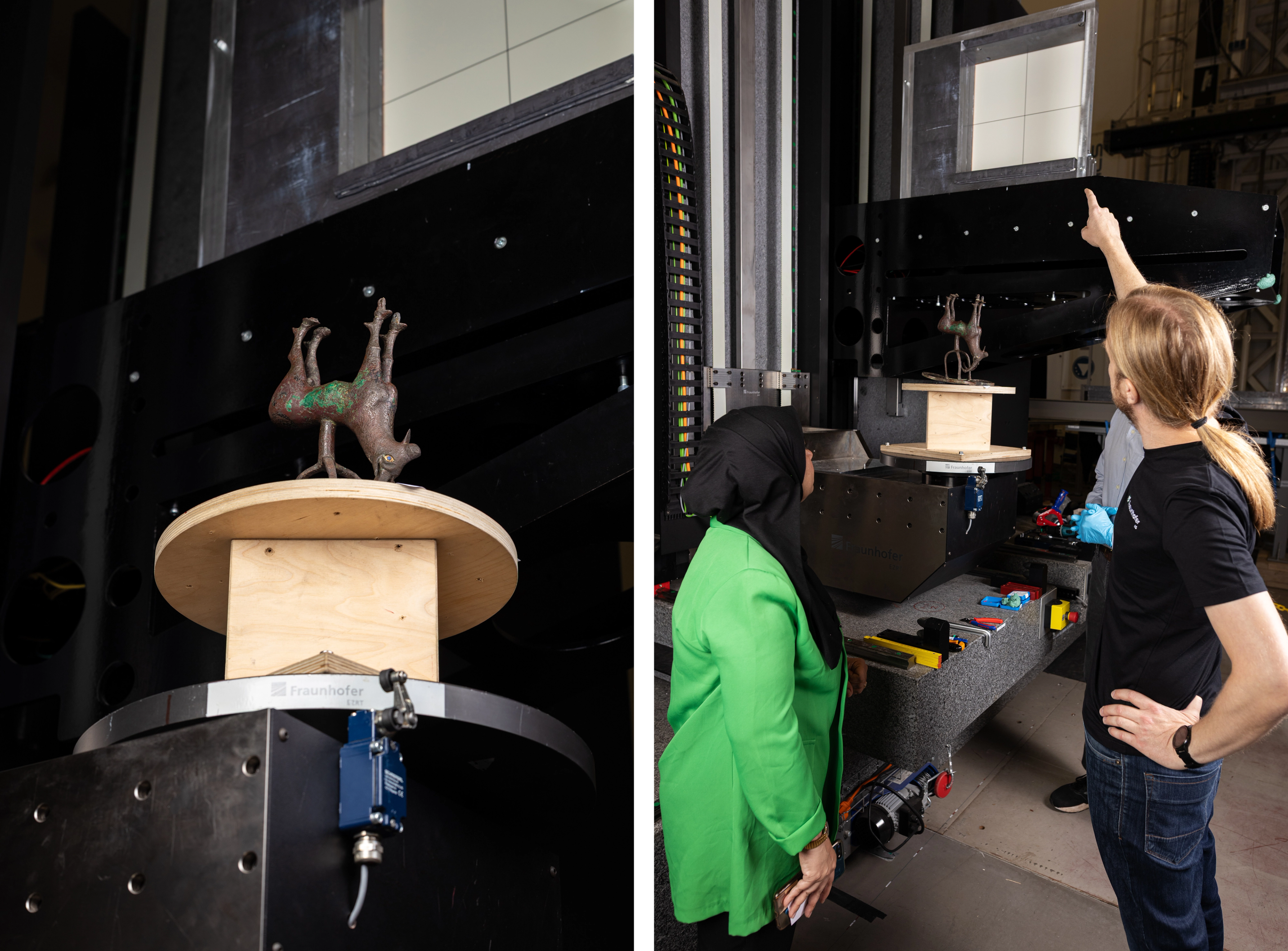
The vessel was scanned using High Energy Computed Tomography (HE-CT) at the Fraunhofer Institute for Integrated Circuits IIS in Germany. Photographs by Nico Tavalai
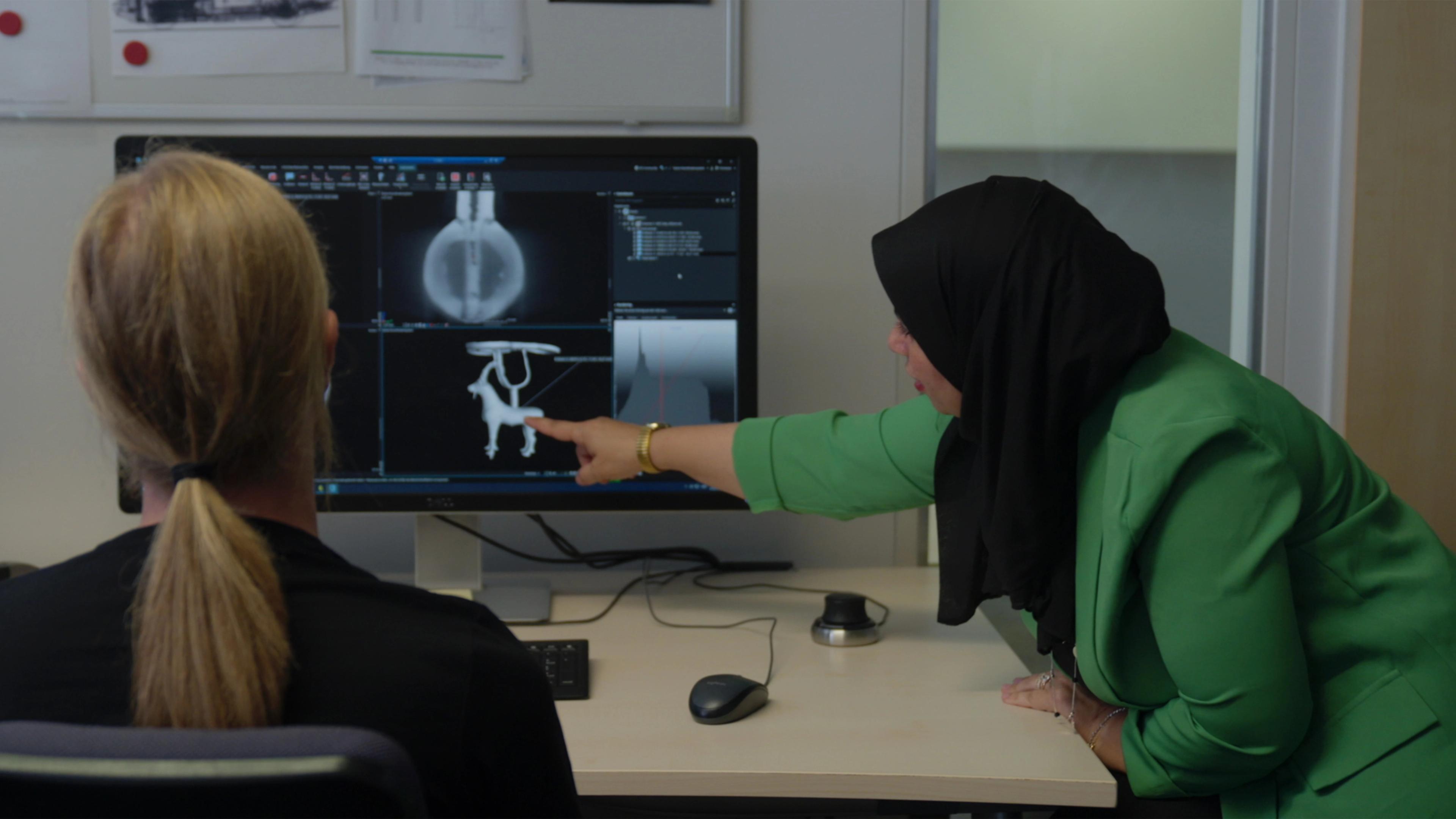
The High Energy Computed Tomography (HE-CT) scan at Fraunhofer was performed by Nils Reims with technical support from Michael Böhnel. We are currently in the process of studying the results of this scan, but a preliminary examination has suggested that there was an order in which sections of the stand were cast indicating considerable sophistication. When examining the scan, the advantages of an interactive 3D digital model over traditional radiography are clearly apparent. Viewers can now slice the sculpture in any direction, trace the flow of the metal, and see how the clay was manipulated to create the core. Delving into the 3D reconstruction is like entering a time machine and traveling back to the creation of the ibex more than 4,500 years ago.
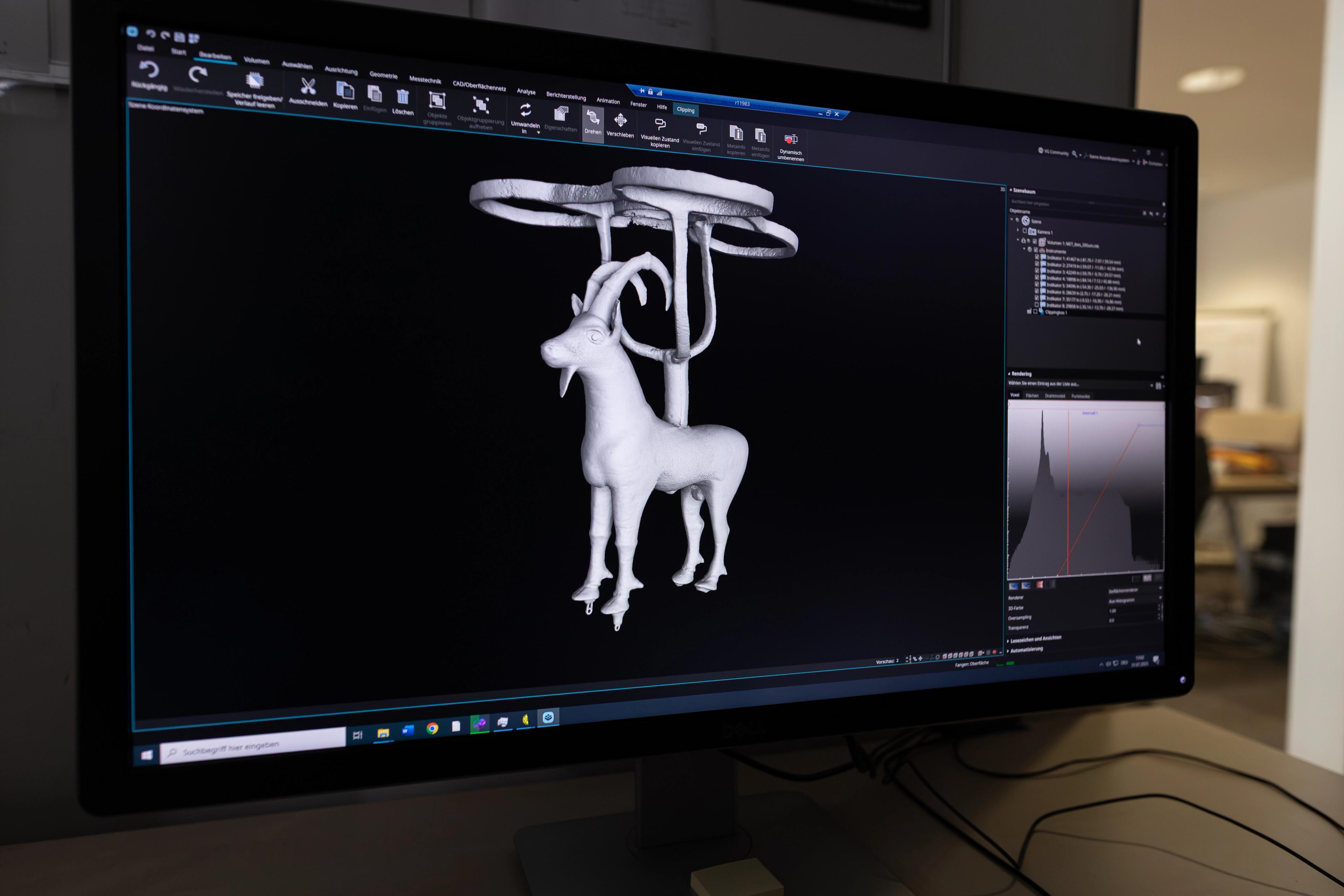
A 3D digital model generated by the scan of the ibex. Photograph by Nico Tavalai
Soon after the scan was completed, the vessel stand with ibex was handed over by Max Hollein, Marina Kellen French Director and Chief Executive Officer of The Met, to His Excellency Nazar Al-Khirullah, Ambassador of the Republic of Iraq to the United States, in a return ceremony at the Museum on September 30, 2025, and the collaborative research project was announced. More recently, the repatriation and joint study of this object was celebrated in the sixth convening of “Cultural Heritage Now,” a series that began in spring 2023. This meeting allowed the participants to present their findings and included important colleagues from Iraq: Ali Obaid Shalgham Al-Butaif, Head of the Iraqi State Board of Antiquities and Heritage, and Luma Yass Jassim Al-Duri, Director General of The Iraq Museums, along with His Excellency Duraid Mohamoud Ali, Deputy Chief of Mission in the Iraqi Embassy, and Roaa Abbas Kadhim Al Kinani. At the conclusion of this event, all parties pledged to build on the new relationships that have been established and increase awareness of the unprecedented technical and cultural achievements of ancient Mesopotamia.