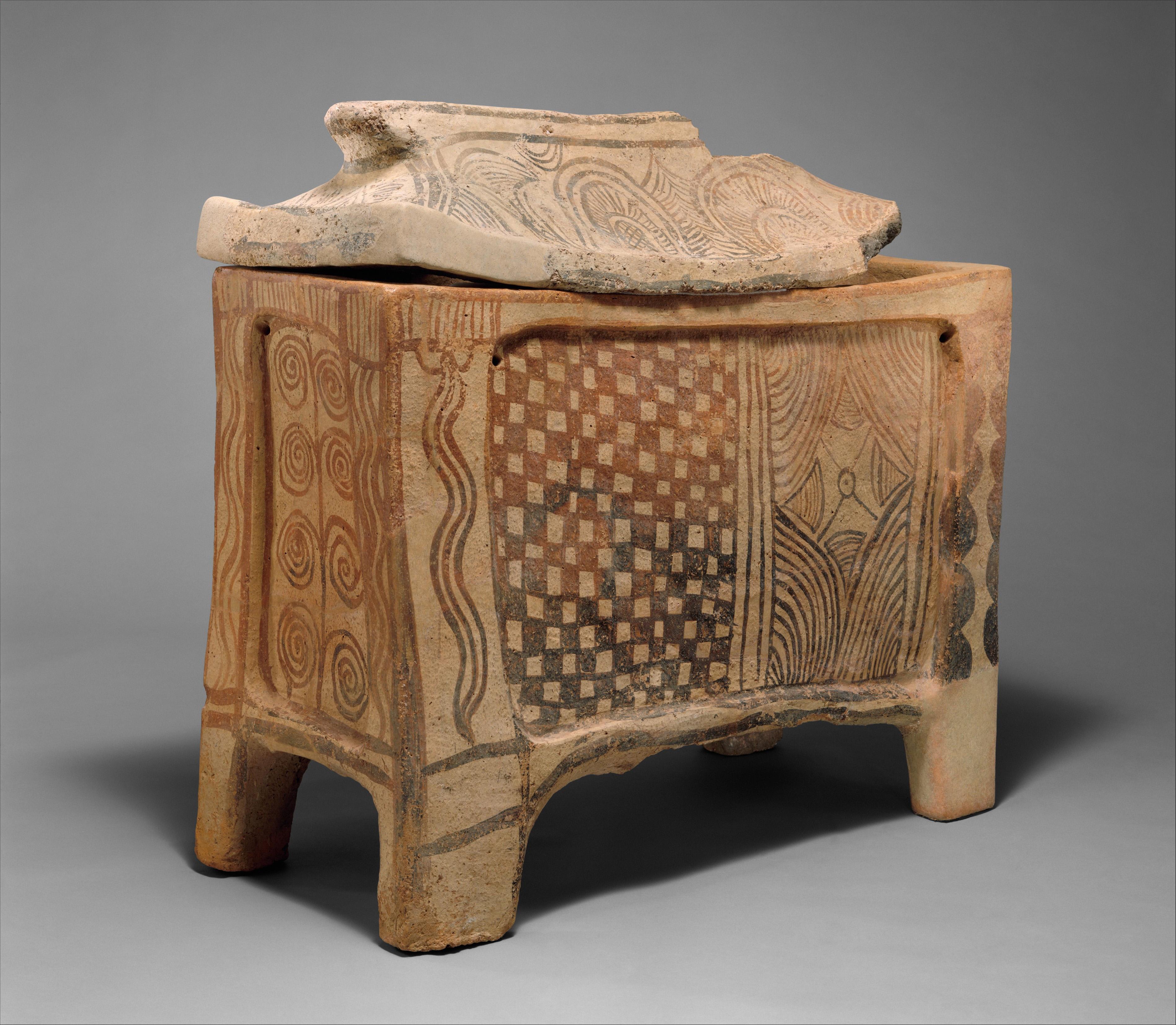
Terracotta larnax (chest-shaped coffin), mid-13th century BCE. Minoan. Terracotta, Overall with lid 40 x 18 x 42 1/4 in. (101.6 x 45.7 x 107.3 cm), H. of body 30 1/2 in. (77.5 cm), H. of lid 9 1/2 in. (24.1 cm). The Metropolitan Museum of Art, New York, Anonymous Gift, in memory of Nicolas and Mireille Koutoulakis, 1996 (996.521a, b)
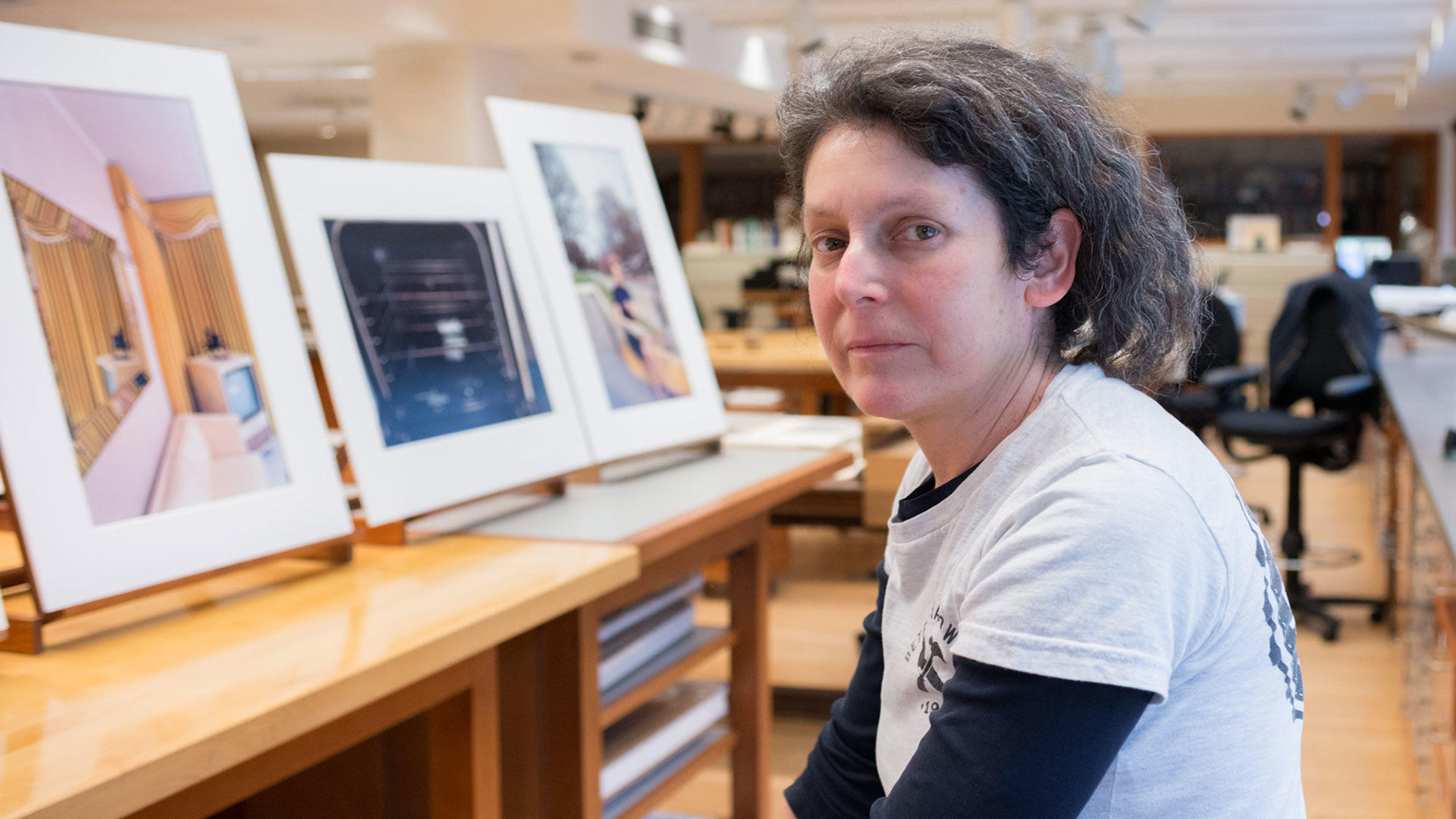
I'm Betty Woodman and I'm an artist.
I've been working with clay pretty passionately for over sixty years. There's so many different clays and it can be so many different things, you know: function, you can do non-function. I mean, it's a very rich material, but I think this piece is very full of things that I've learned from, but it's not what I was taught when I was a student. The interest was the purity of the form, not about painting, but I think there's a lot to be learned in that. I think it's this marriage of painting and form. When you paint on something you change your perception of what it is.
It's a sarcophagus. Its form is articulated by the way that it has been decorated. So why is it decorated anyway? It's in a tomb. It reminds me of Picasso's work. As you move around it there's just very different things happening to the articulation of the shape and to the kinds of marks that are made on it. It's very simple and it's very fresh and very sure.
I think it's very much about the experience of being fired and the way that the atmosphere in the kiln changes the color of what's going on, so that it goes from a red rust color to a black color.
The lid of this vessel: it's melted, and that's because the kiln got too hot and it warped it. And I think anybody who's done ceramics for any length of time has had all of these experiences, but this piece was made 13 centuries before Christ. For me, it's very moving as a human being to have a sense of belonging and being a continuum of something.
I don't think you can make this. You can't do it anymore. So it isn't contemporary. You can look at it and have a great deal of pleasure in it. What I feel you have to do is somehow capture something about it that brings it to mind but that isn't trying to reproduce it. Because I think you kill it if you reproduce it. You wish you could. This is so much about the essence of clay and, in a sense, answers my kind of love affair with it.