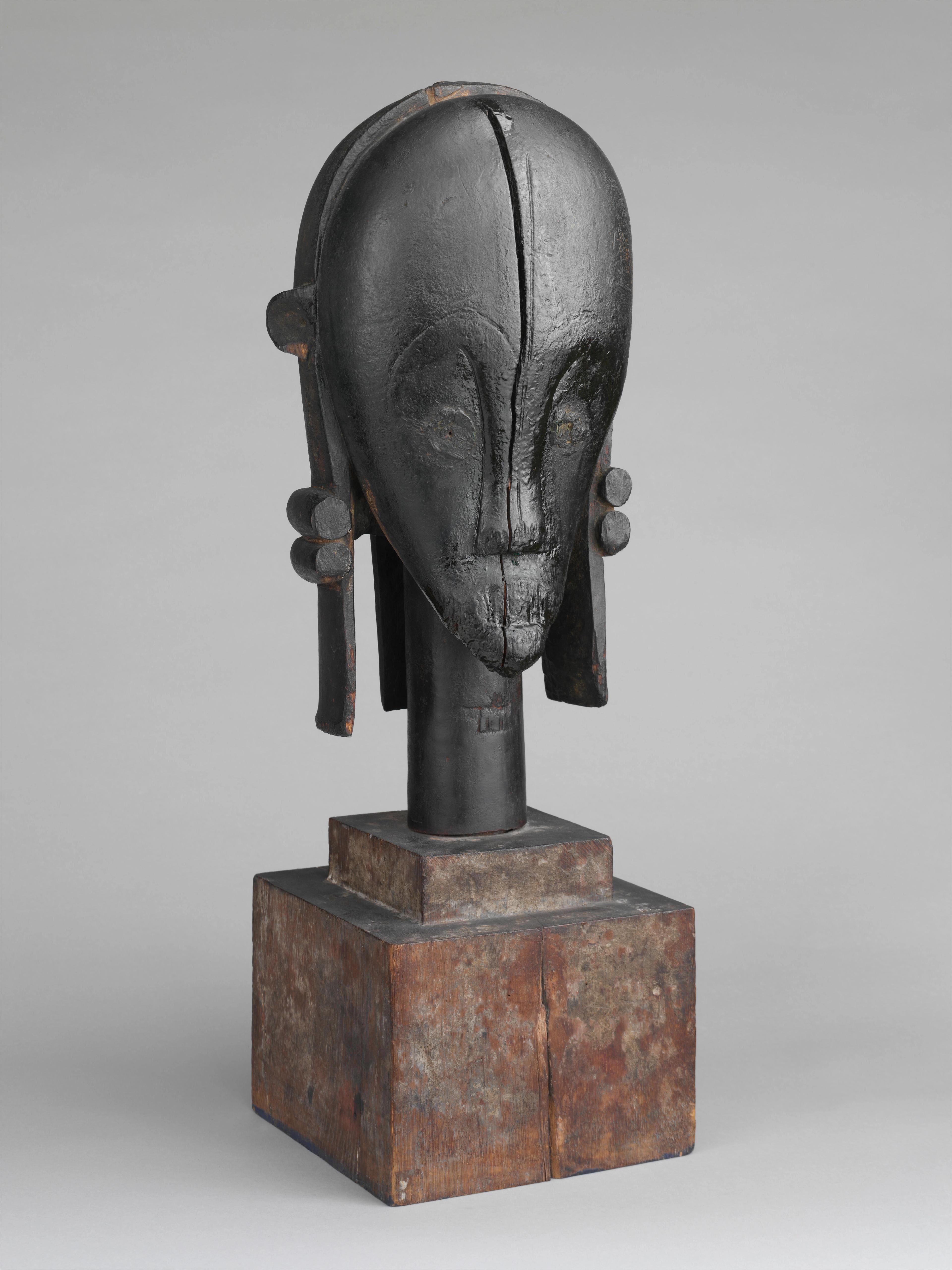
Nlô byeri (reliquary guardian head), 19th century. Betsi-Fang artist, Gabon. Wood, copper alloy, palm oil, 18 3/8 x 9 3/4 x 6 5/8 in. (46.5 x 24.8 x 16.8 cm). The Metropolitan Museum of Art, New York, The Michael C. Rockefeller Memorial Collection, Bequest of Nelson A. Rockefeller, 1979 (979.206.229)
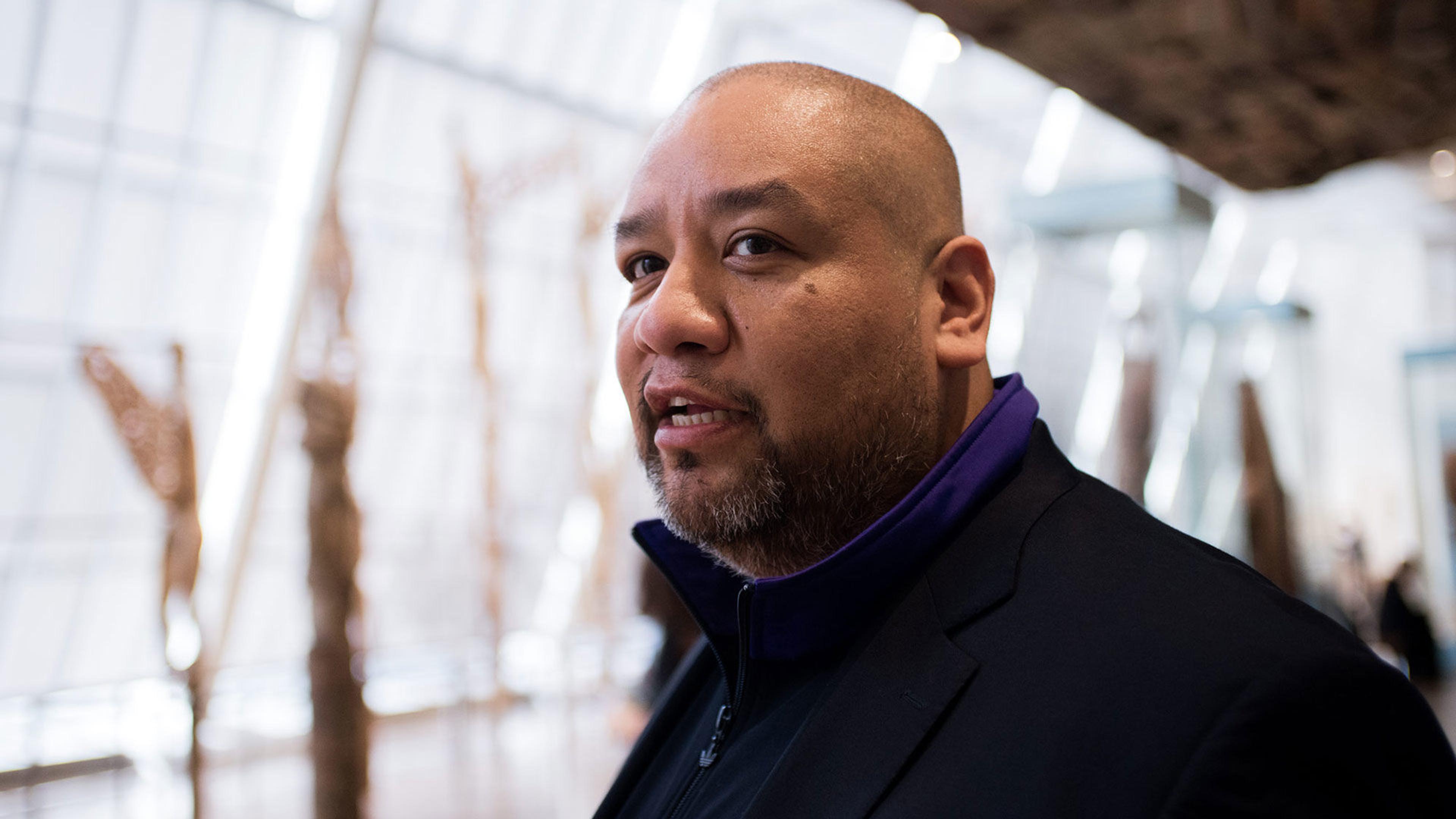
My name is Glenn Ligon.
So much of my work is painting. It's hung on a wall, you look at it, you know? I often say that I don't understand sculpture; what I mean is I don’t make it, so the problems of sculpture are foreign to me and surprising, so I have to kind of learn them. From African art, I’m learning how things operate in space.
It always amazes me that these things are carved out of one piece of wood. What’s interesting to me about this head is it’s quite stylized in terms of the features, these enormous eyes, the arch of the eyebrows, the mouth, the nose. They’re signs for a face, but it also seems very specific. It’s not a portrait in a direct sense, but it’s a representation of what you want someone to do. For instance, the ears stick out. This is a conduit to the ancestors. It speaks, but you also speak to it. The placement of the ears is about its receptiveness to one’s prayers. I love the idea that something so abstract can be so specific.
Any work of art, I guess, is an idealization. It's an idea about something; it's not the thing. Even though it doesn't fall for that community under the heading of "art" with a capital "A" or "sculpture" with a capital "S," it's beautifully proportioned. The oval shape of the head, the long straight neck—its aesthetic value enhances its spiritual value. It's a human trait: we worship beautiful things. It's part of what keeps us going back to these objects.
I don’t approach my work with the idea of making a beautiful object, but often that’s the thing that hooks people into the other issues in the work. We’re very interested now in contemporary art in what a viewer’s experience is, a viewer participating in a work of art. For me, these objects already did that. The relationship that people had to these objects was about activation. They didn’t just stand there and look at them; they did things with them.
You see the palm oil coming out if it from the libations that have been poured on it. This was made to sit on top of a container for relics, so it’s generations of engagement.
At some point the religion around it dissipates, and so it ends up in a space like this. Museums are often about objects that they want to conserve and not have change. And these objects change. The palm oil’s coming out. And I like that as a subtle reminder that they operate in a different system. Even though they’re in this system, they’re in display cases. They’re not fixed, in the same way that they’re not fixed in meaning. The meaning of them changes over time.