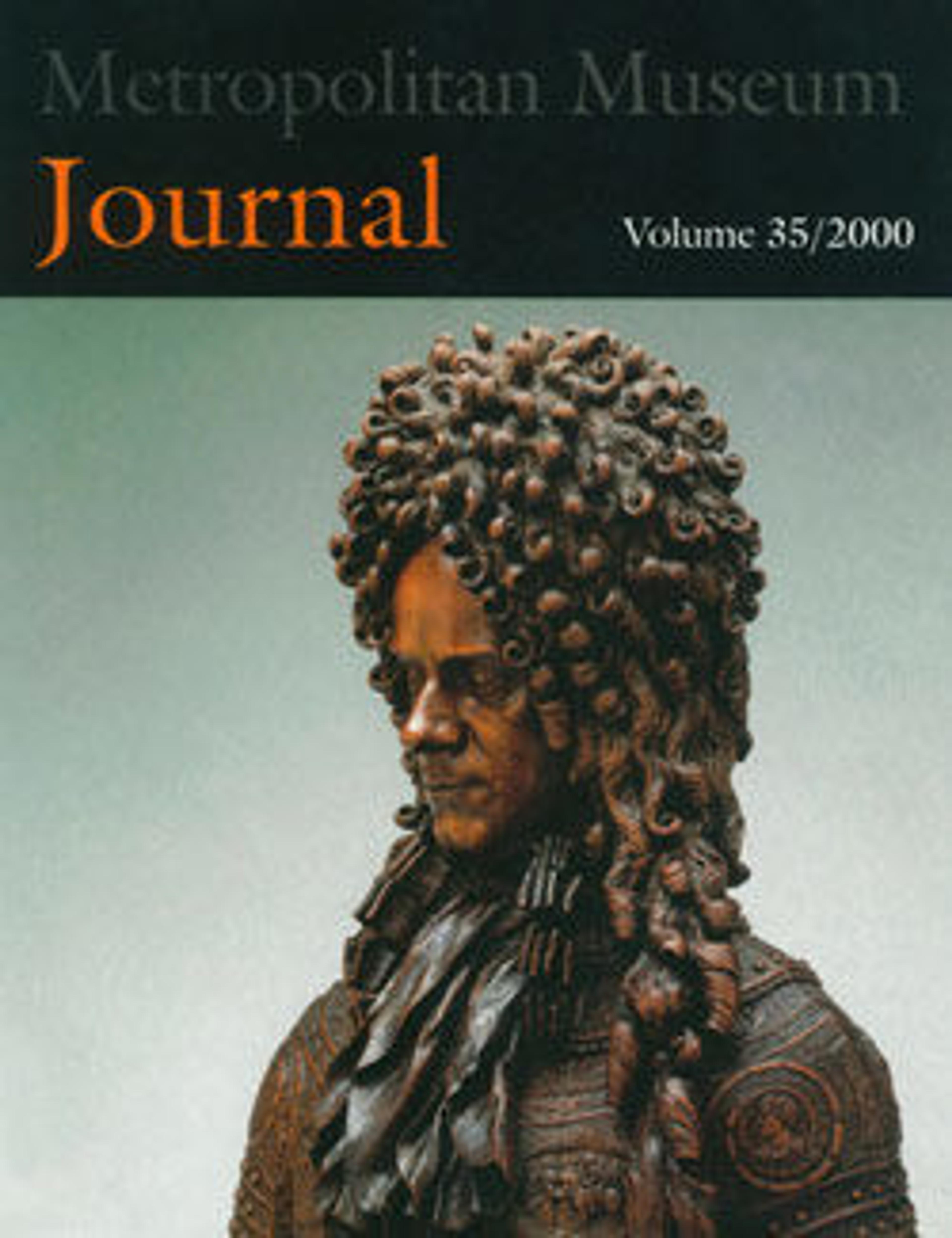
"The Kalkar School of Carving: Attribution of a Wooden Polychromed Sculpture"

Lucretia Kargère
Lucretia Kargère is Conservator for Medieval sculptures at The Metropolitan Museum of Art. She has been the principal conservator for The Met Cloisters since 2002. She came to The Met in 1996, when she was awarded the first of several fellowships for the technical study and treatment of medieval sculpture. Lucretia has published a significant study of French Romanesque sculptures from the Museum collection, and is the co-author of The Conservation of Medieval Polychrome Wood Sculpture (Getty Publications 2020). She holds a BA from Brown University, and an MA in art history and advanced certificate in conservation from the Institute of Fine Arts at New York University.
Lucretia Kargère. “Revisiting the Cloisters Fifteenth-century Predella from Zaragoza”, 8th Annual ARDS Conference Postprints. Alabaster as a Material for medieval art, Sophie Jugie, Marjan Debaene (eds). Brepols (2026): 174-190.
Lucretia Kargère, Shirin Fozi, Adriana Rizzo. “Reassessing The Met’s Medieval Marbles: Colorem and Polychromy in 14th-century Sculpture.” Chroma Symposium Proceedings. Ancient Sculpture in Color. Met publication (2025): 172-179.
Lucretia Kargère, “The Brummer Gallery and the Conservation of Medieval Sculptures in the Early Decades of the Twentieth Century,” in The Brummer Galleries, Paris and New York Defining Taste from Antiquities to the Avant-Garde, ed. Yaëlle Biro, Christine Brennan, and Christel Force, Studies in the History of Collecting & Art Markets 17, (Brills, 2023), pp. 356-377.