
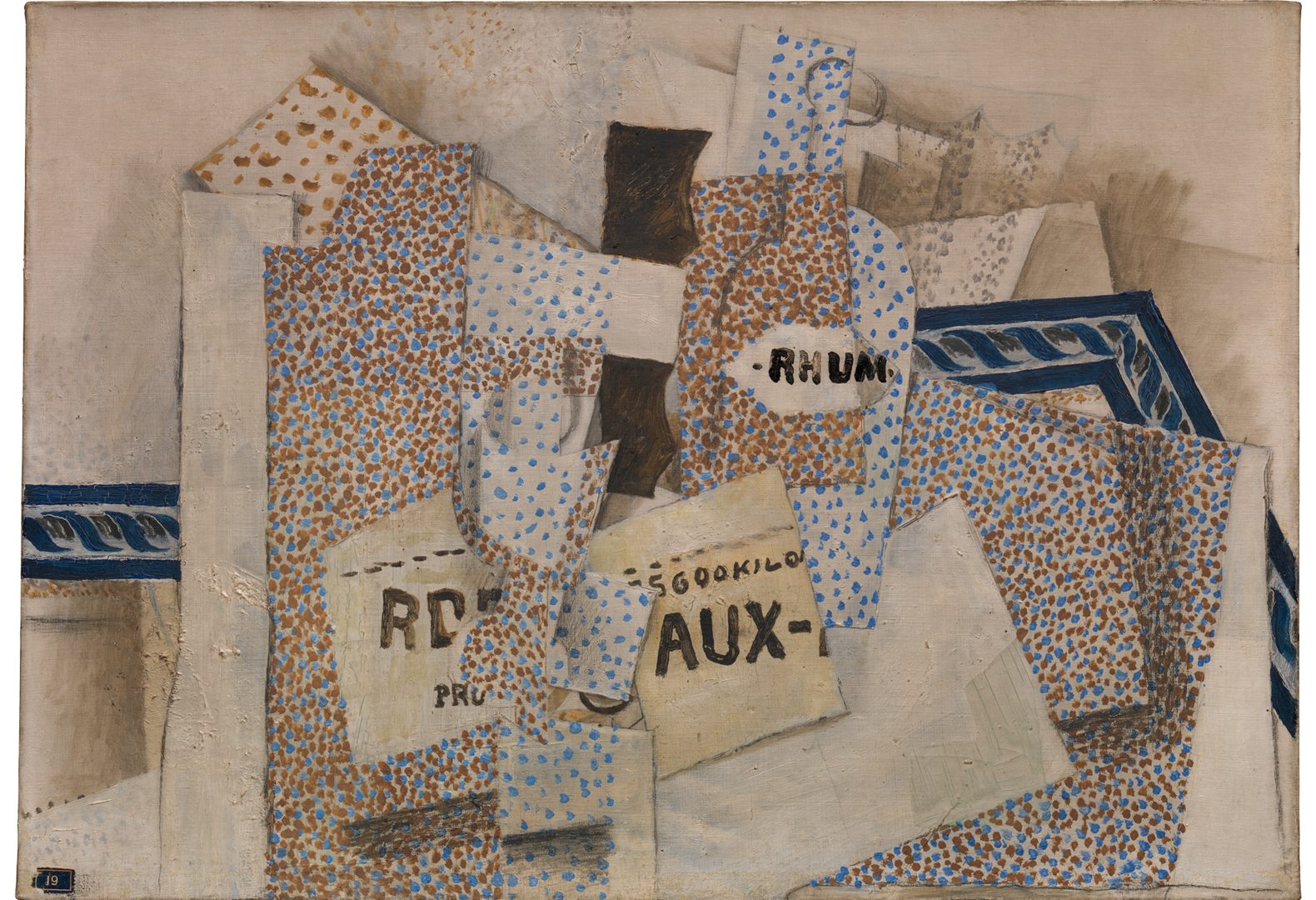
Georges Braque (French, 1882–1963). Bottle of Rum, 1914. Oil on canvas, 18 1/8 x 21 5/8 in. (46 x 54.9 cm). The Metropolitan Museum of Art, New York, Leonard A. Lauder Cubist Collection, Gift of Leonard A. Lauder, 2025 (2025.616.19) © 2026 Artists Rights Society (ARS), New York
Transmitted light—the practice by which a light source is placed behind a work of art—sometimes exposes changes in the density of the canvas and paint layers. Such an examination of Georges Braque's Bottle of Rum (1914) revealed major compositional changes, some of which are barely noticeable to the naked eye. The most dramatic example is in the area of the painted letters at bottom center. Braque initially depicted a newspaper masthead in serif font letters: "LE PET" (the first part of "Le Petit Provençal") in a different orientation.
Transmitted light also exposed numerous pinholes throughout the painting. Braque used cut-out paper shapes to plan the composition of Bottle of Rum, pinning them directly to the canvas. In certain areas, repeated pinholes indicate that Braque adjusted the shapes' placement. Some, but not all, of the holes appear at logical anchor points that correspond to the final placement of the painted forms. A number of holes are filled with paint, while others are open, indicating that Braque pinned papers on top of the final paint layer and thus may have contemplated further changes to the composition.
Additional examination with infrared reflectography showed that Braque initially depicted the elements of this still life on an oval table, a pictorial convention he used in other works from this period.
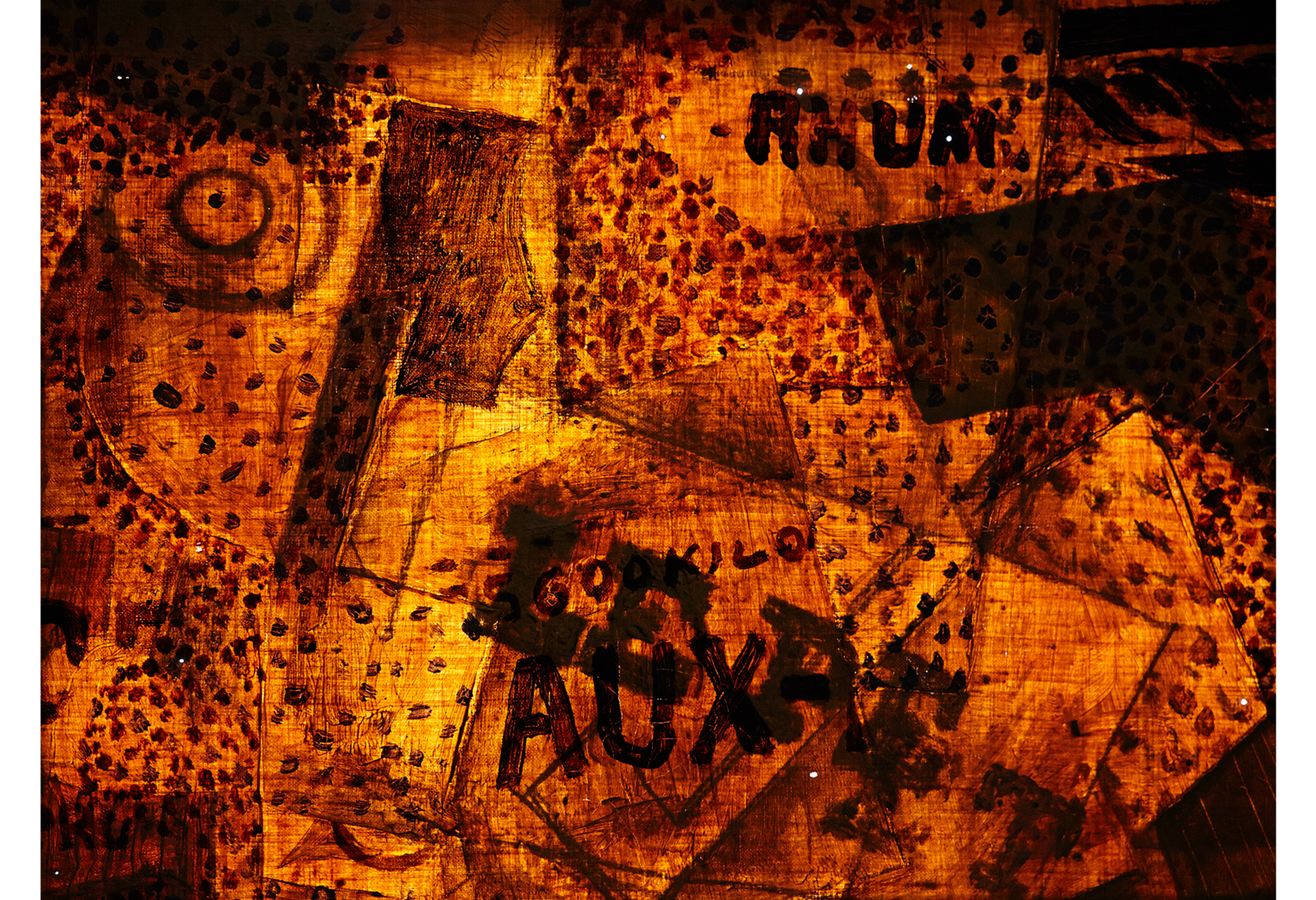
Center detail of Bottle of Rum, as viewed with transmitted light.


