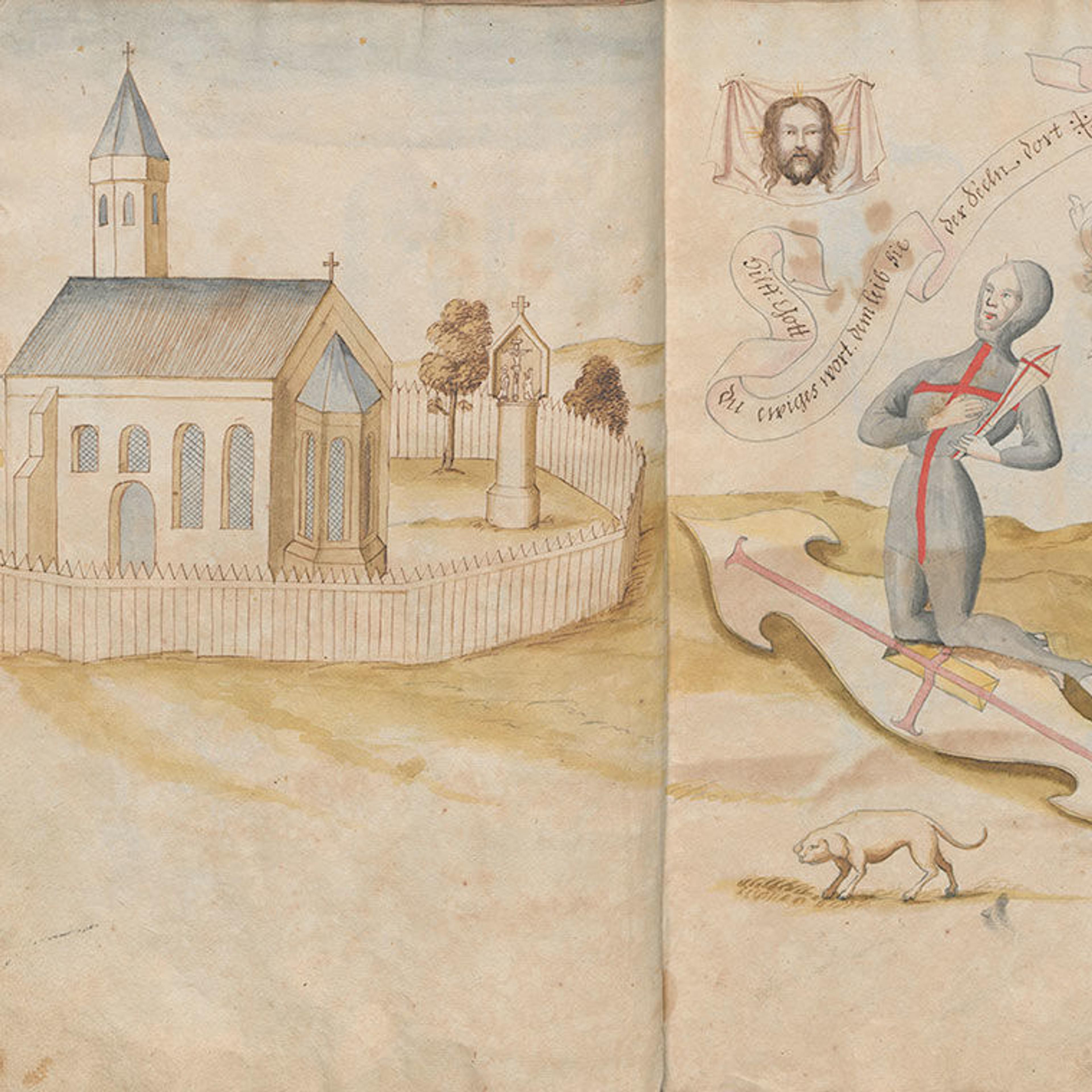
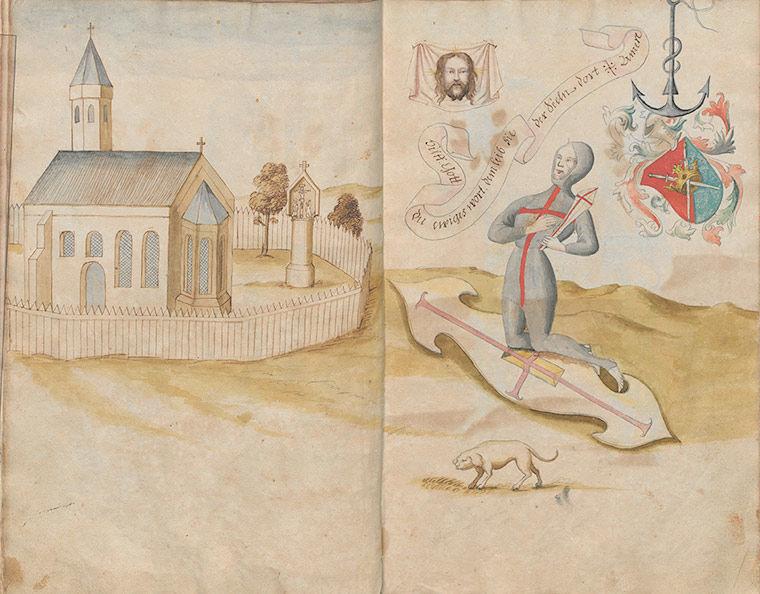
Hans Talhoffer (German, recorded 1435–1482). Fencing Book (Fechtbuch), sixteenth century copy of a mid-fifteenth century manuscript. German. Leather, brass, 12 7/8 x 8 1/8 in. (32.7 x 20.6 cm). The Metropolitan Museum of Art, New York, Gift of Miss Marguerite Keasbey, 1926 (26.236)
Wrestling, armored combat, fighting with pollaxes—these are just some of the topics covered in a rare sixteenth-century copy of a fight book in The Met collection that is attributed to Hans Talhoffer, a German combat expert who was active in the mid-fifteenth century.
As a servant to Holy Roman Empire aristocrats, and later the Duke of Württemberg, Talhoffer documented knowledge of martial arts through illustrations that later artists—such as the copyist who made The Met's example—innovated upon. For example, the Museum's edition includes a significant section by an unknown later artist on the training period preceding a duel, including illustrations of trainees eating, hunting, and bathing.
"The manuscript is a treasure trove for arms and armor scholars," as Daniel Jaquet of the Military Museum at the Castle of Morges writes in a new Timeline of Art History essay, in part because it includes "a rare treatise on onomancy, the art of foreseeing the outcome of a duel." As Jaquet notes: "This represents the Western reception of the magical art of divination from the Orient, documented in the East as early as the tenth century."
The entirety of Jaquet's essay, along with more than one thousand others spanning the full range of the Museum's collection, is available on our Heilbrunn Timeline of Art History.