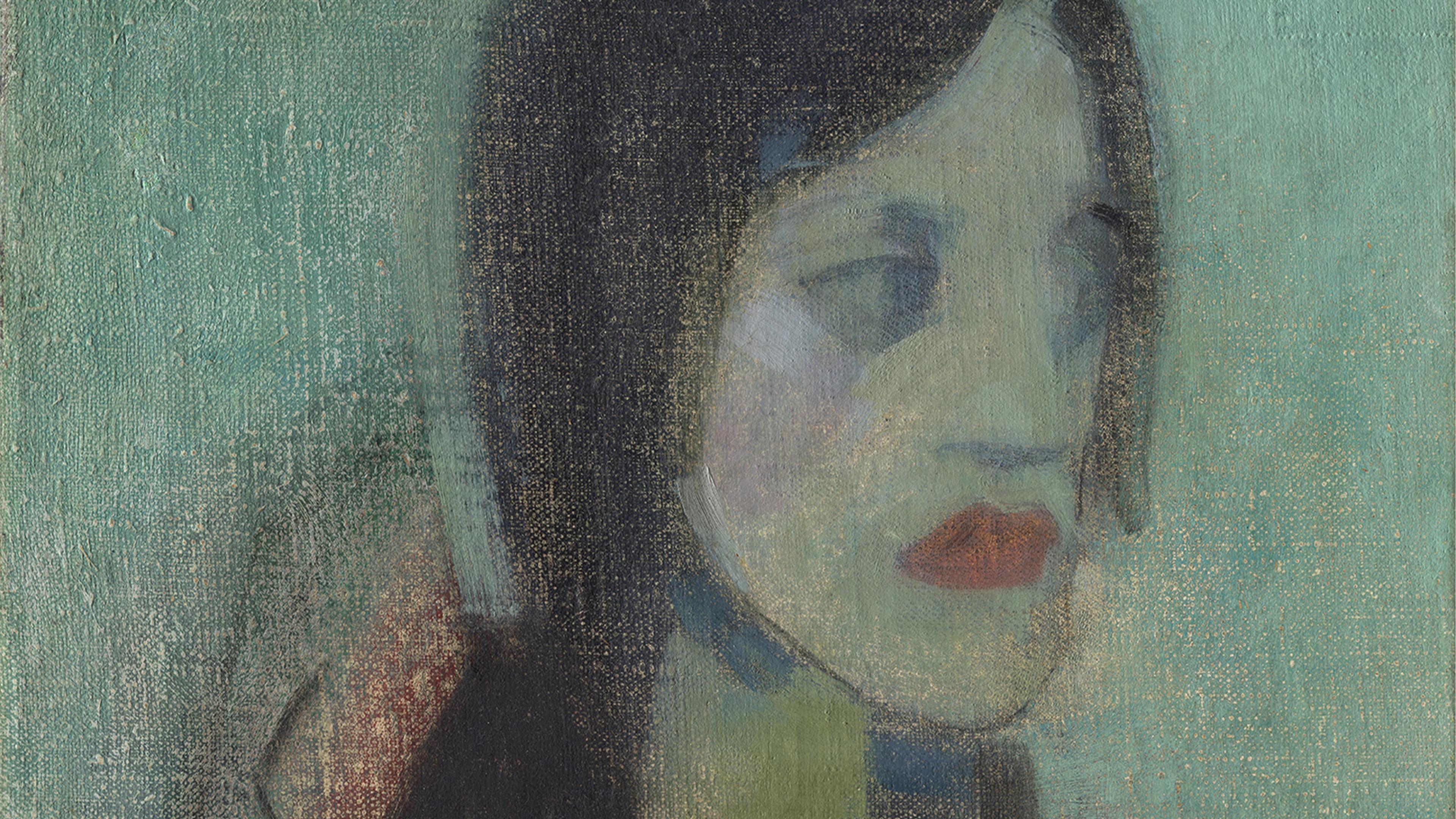
I gaze at this portrait of Sigrid Nyberg and reflect. I see a person I know almost nothing about, aside from her name, a person I’ve never met, a person who died ages ago. I see her from a distance, from another time and place. In front of me is that unknown entity, her face open, exposed to my—or anyone’s—scrutinizing, even intrusive gaze. I see with stunning precision through two pairs of eyes: mine and Helene Schjerfbeck's.
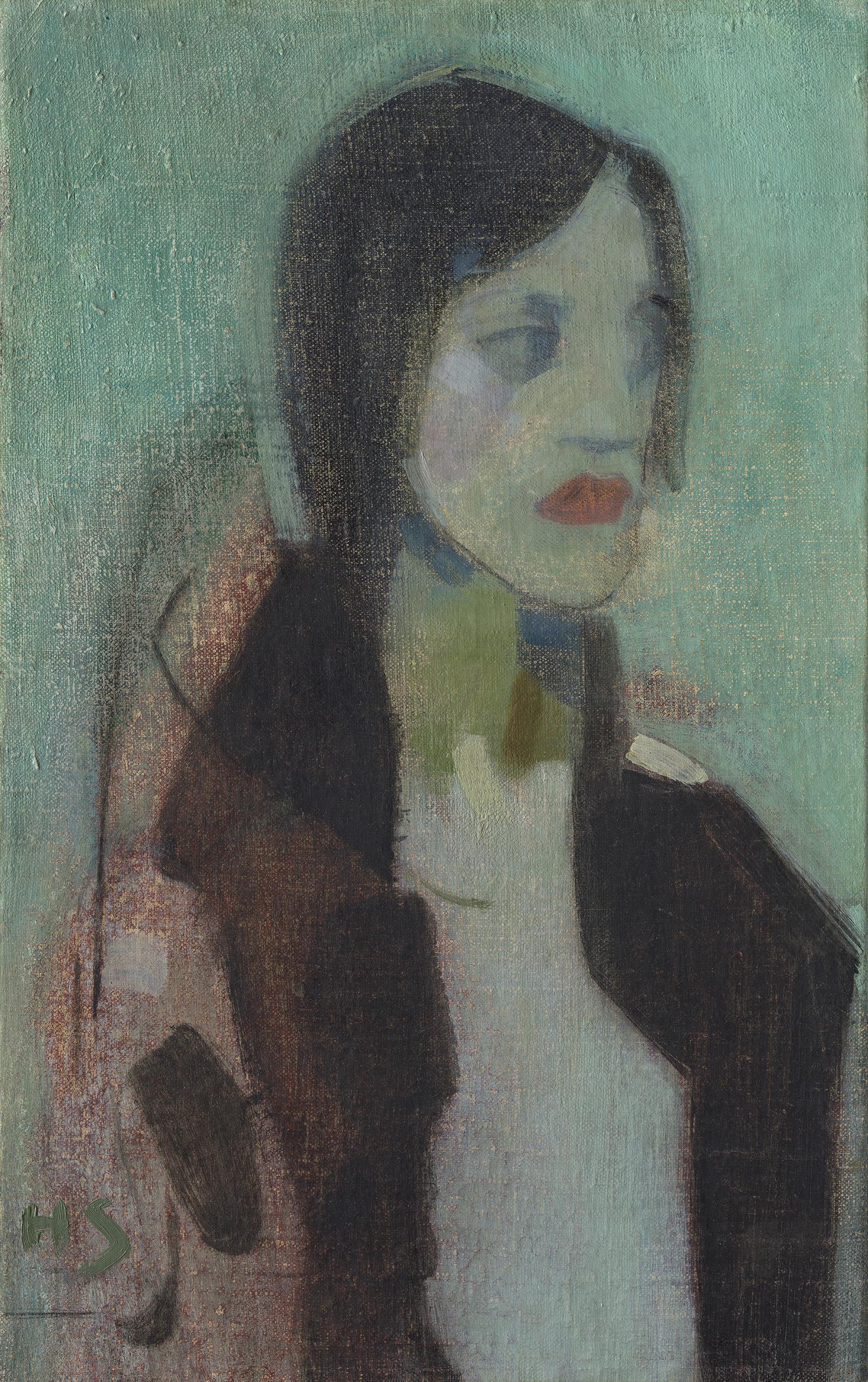
Helene Schjerfbeck (Finnish, Helsinki 1862–1946). The Lace Shawl, 1920. Oil on canvas, 22 13/16 × 14 3/8 in. (58 × 36.5 cm). The Metropolitan Museum of Art, New York, Mary Trumbull Adams and Rogers Funds, 2023, (2023.98)
The portrait invites my gaze to witness the isolation and inherent loneliness of this human being. I see her character, her mental state. I see a human whose vulnerability is so apparent that the image nearly vibrates with it. Sigrid Nyberg agreed to sit as a model, but she appears as if she doesn’t really want to be seen and rendered. Is she fully present? She avoids our eyes; she would prefer to keep her secrets, but cannot. She doesn't give us her gaze, or her soul. I don’t even know, I haven’t the slightest inkling about the correspondence between the image and reality, how representative of its model the image is. The so-called likeness of this portrait is to me less interesting.
Although I know very little about the model, Sigrid Nyberg was not only the artist's friend but also her landlady. Their relationship was, then, both emotional and financial. We do not know, nor is it necessary for us to know, which needed the other more, or how deep or superficial their friendship was, or the terms of their landlady-tenant relationship.
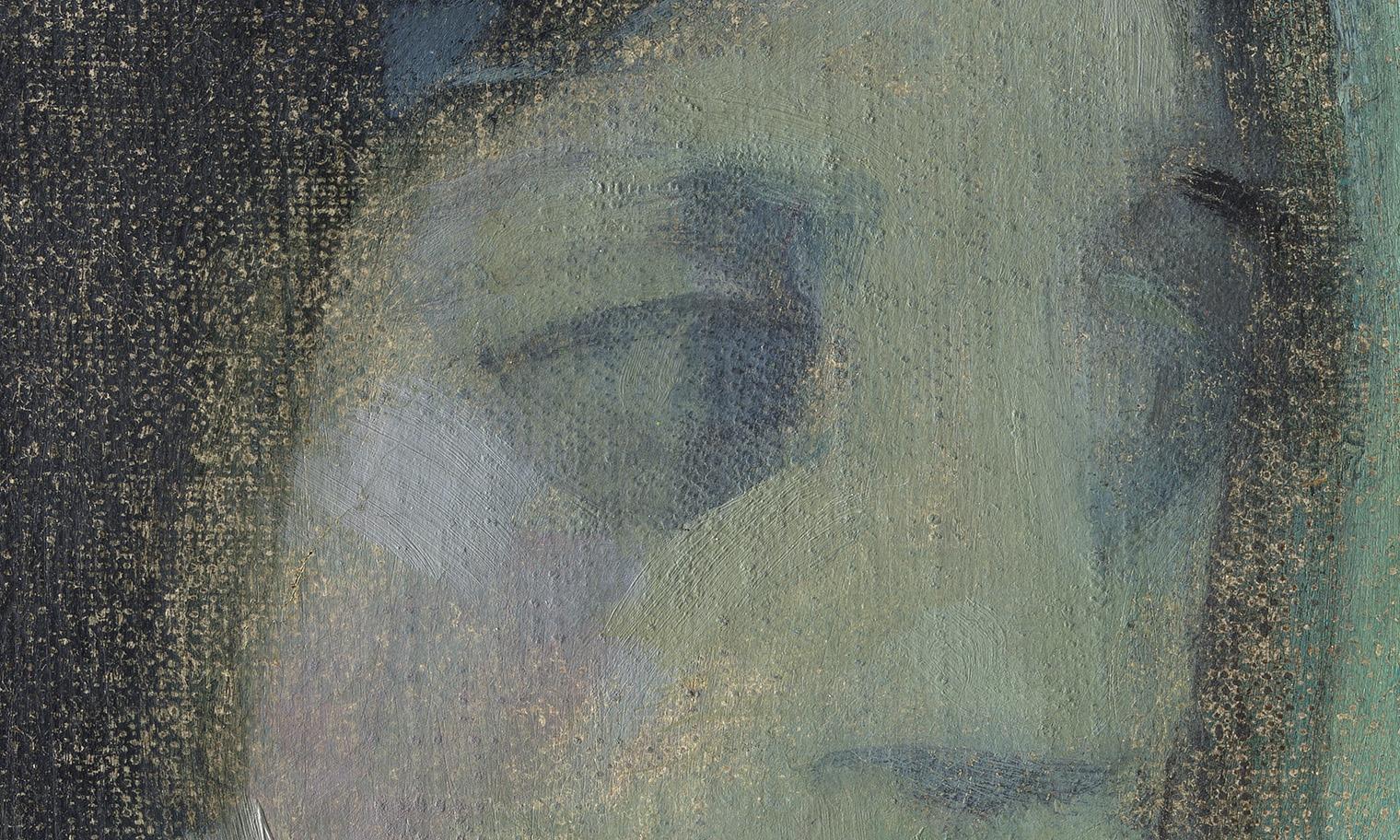
Helene Schjerfbeck (Finnish, Helsinki 1862–1946). The Lace Shawl (detail), 1920. Oil on canvas, 22 13/16 × 14 3/8 in. (58 × 36.5 cm). The Metropolitan Museum of Art, New York, Mary Trumbull Adams and Rogers Funds, 2023, (2023.98)
I see this portrait, in all its tenderness, as cruel too, as pitiless as Schjerfbeck’s self-portraits. The image has preyed upon and caught you, Sigrid Nyberg, and in the image you will remain, you’ve been, and are, seen. You are the prisoner of gazes, powerless to refuse publicity and its perpetuation. Your existence has been acknowledged. But as the model for this work of art, you have been granted a degree of immortality and must pay for it in this fashion. So understand and forgive, Sigrid, the gazes’ repeated violence.
What is before me now is surface, two-dimensional. The image has combined its elements, its abstract forms, brushstrokes, tones, and layers of tones, collating them into a figure that rises free of the canvas, of its background, of its time and its surroundings. What is the source of the image’s depth? Not time, because the image has no time. The depth arises from meaning, from the experience of truth. In this portrait of her contemporary, Helen Schjerfbeck has revealed a moment of truth, repelled and secreted away.
I gaze at this portrait of Sigrid Nyberg and reflect. Now I look at it as if it were any other image. It is surface lacking a temporal dimension, but it offers another perspective, a vertical one. As the portrait stops the arrow of time, it strikes at the heart of the moment. I gaze at this portrait of Sigrid Nyberg and reflect on its power, asking what quality is recognized as art. It’s not information, but something else. Another type of knowledge? The experience of meaning? Something that comes free of its material framework rises as emergently and inevitably, as inexplicably, as life.
The image does not move but is still an event, a guide, and a connection. The image is a journey that leads from the depiction to the depicted. It is here and there, in the real world. But the image is reality for us, too. Humanity does not exist without images and words, which are images too. Illusion is a human’s most inherent, most fundamental reality. Through it we understand.
This essay is published in conjunction with the exhibition Seeing Silence: The Paintings of Helene Schjerfbeck, on view through April 5, 2026.


