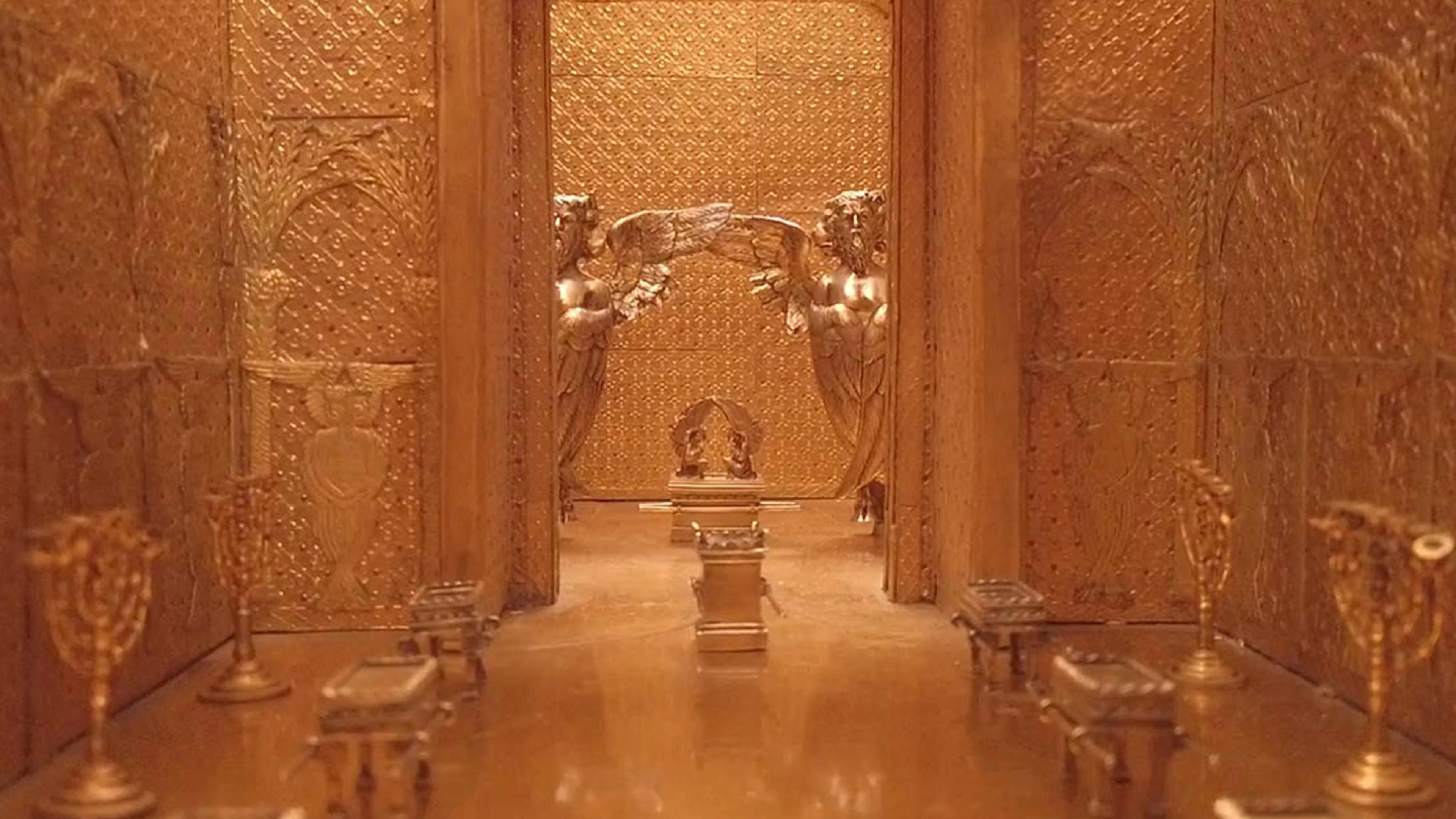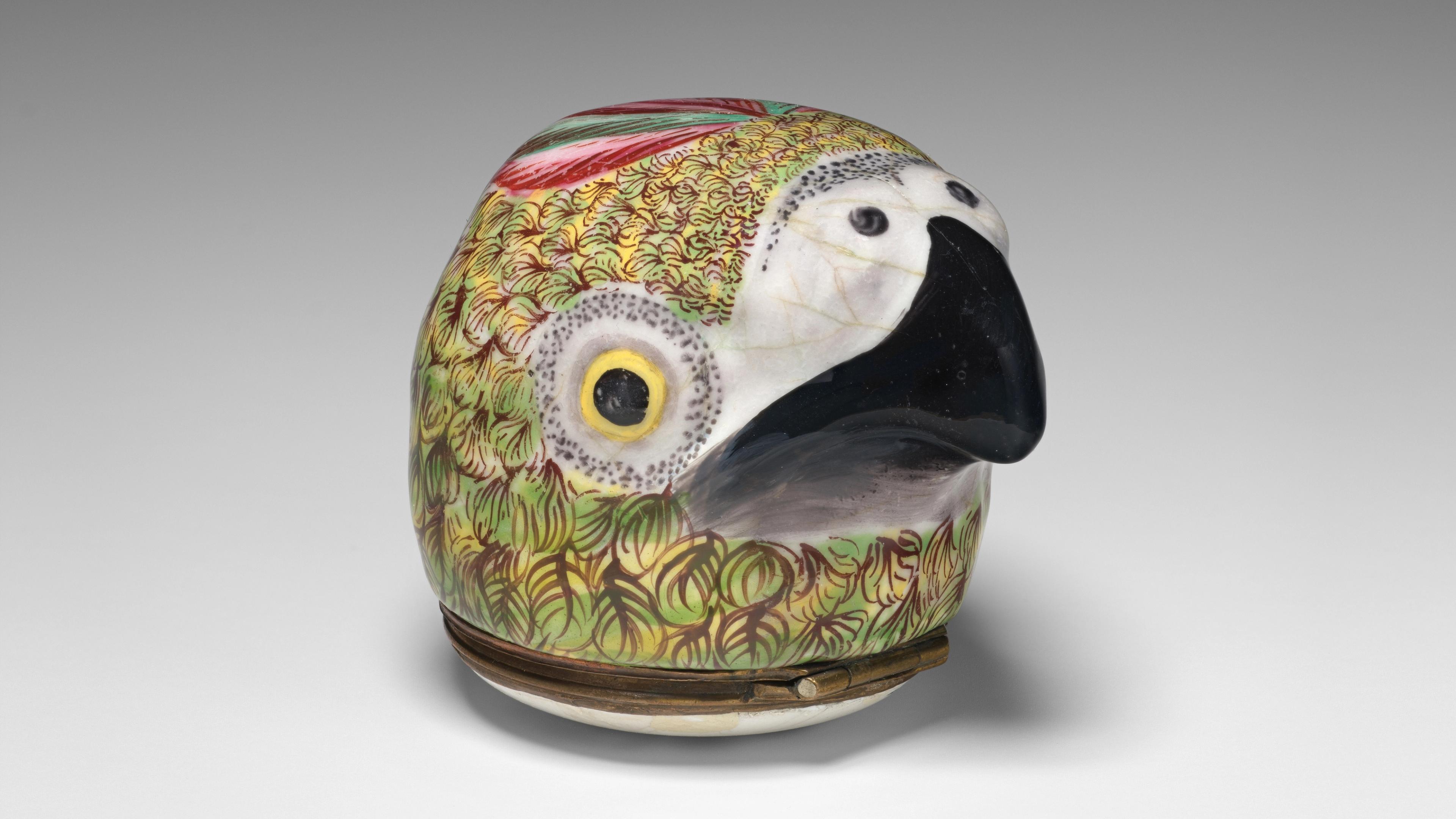
Tucked within the galleries of the Department of European Sculpture and Decorative Arts (ESDA) is a special display of new acquisitions and objects that have never been on view before. The seven works in this temporary installation are part of a rotating exhibit of case studies organized by the department’s curators, fellows, and researchers. The current selection—on view until March 3, 2026—highlights craftsmanship, materials, and community celebrations from the Jewish populations of Austria, Italy, France, and the Netherlands between the sixteenth and nineteenth centuries.
For over a decade, ESDA has been acquiring Judaica objects connected to Jewish life, culture, and religion. The selected items represent universal themes related to special days in the Jewish calendar, which follows a lunisolar cycle. This means that the days and months are based on the cycles of the moon, with each day beginning at sunset;[1] a leap month is added every few years to ensure that holidays are observed in their correct season. For example, Rosh Hashanah, associated with the new year, is celebrated in the fall, and Passover, associated with renewal, is in the spring.
Joyful holiday traditions and domestic milestones, such as the birth of a new baby or a wedding, kept communities together despite societal upheaval and economic fluctuations. Judaica produced in the Rococo or Baroque periods displayed extravagant decorative motifs typical of that era, with outstanding craftsmanship that evidences a material culture spanning metalwork, porcelain, leather, and enamel.
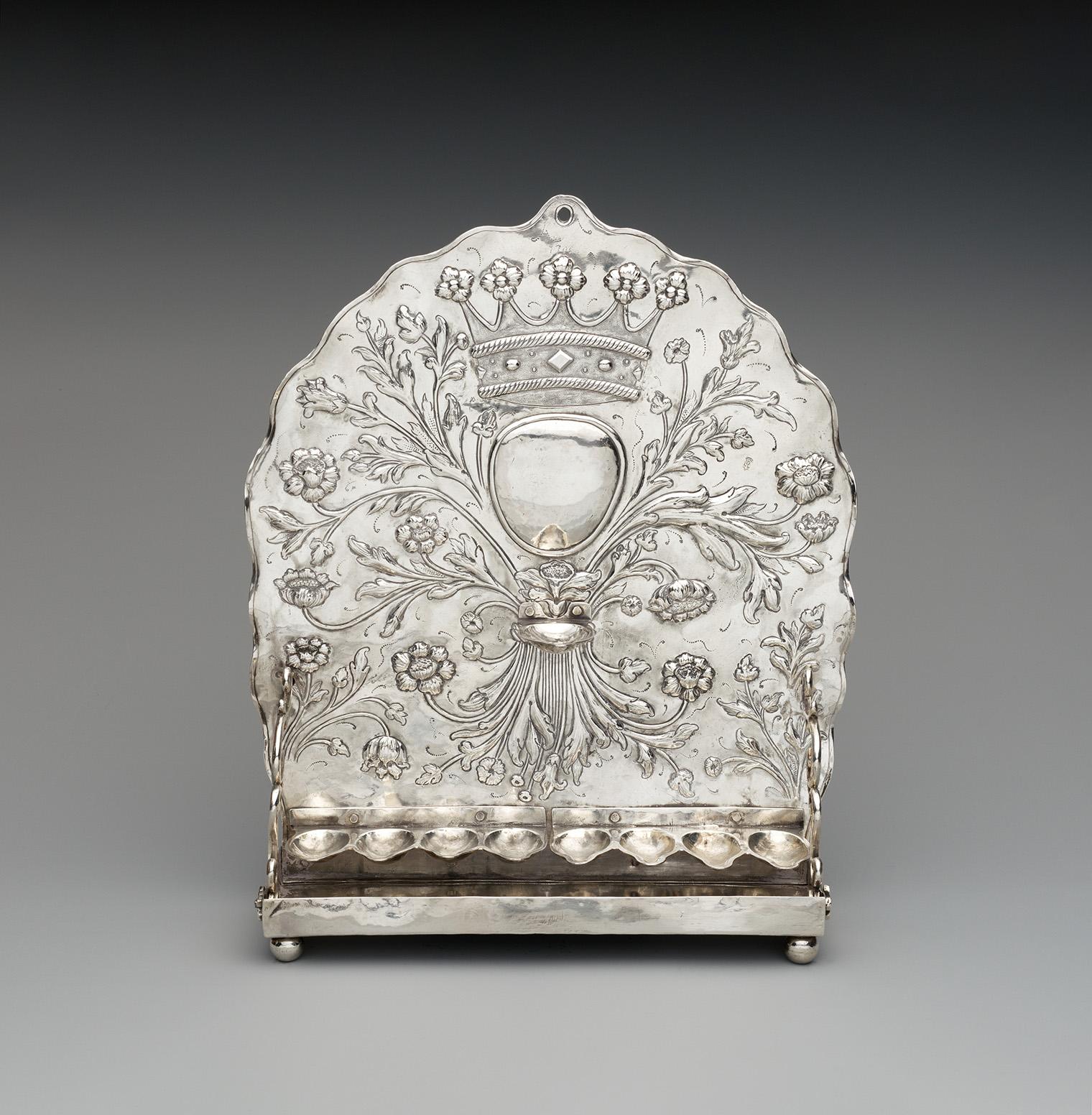
Hanukkah Lamp, 1706. Johannes van der Lely (Dutch, Leeuwarden 1674–1750). Dutch, Leeuwarden. Silver, 12 3/16 × 10 1/4 in. (31 × 26 cm). The Metropolitan Museum of Art, New York, Purchase, Manda and Albert Kalimian Gift, in honor of Sabrina and Daniel Kalimian, 2025 (2025.585)
Annual holiday celebrations like Hanukkah have been observed for centuries. It occurs in Kislev, the ninth month of the Jewish calendar, and celebrates the miracle of a small flask of oil that burned for eight nights. (The entire month, according to tradition, is associated with miracles.) Hanukkah lamps can take almost any shape, provided there are eight distinct flames, and a ninth candle, called a shamash (helper), to light the other wicks. A silver repoussé lamp made in 1706 has a scalloped backplate with an elaborate floral composition. The backplate is embossed with a floral crown above a blank cartouche, framed by scrolling tulips, anemones, roses, and acanthus leaves that form a cluster of flowers.
The work has the maker’s mark on the lower right edge of the backplate, a crown and fleur-de-lis for the silversmith Johannes van der Lely. The artisan came from a family of silversmiths in Leeuwarden, Friesland, one of the northern provinces in the Dutch Republic. Most of Johannes van der Lely's known works were domestic and some ecclesiastical objects, but this is his only known Judaica item. Silver Hanukkah lamps from the Netherlands are rare and identifiable by a scalloped or oval backplate with elaborate repoussé surfaces and floral ornamentation. This example is categorized as a bench type and was first developed in Germany and then in the Netherlands beginning in the mid-seventeenth century.[2] Ritual lamps used to celebrate the holiday of Hanukkah and other forms of Judaica were primarily made by Christian silversmiths since Jews were not allowed to join the local guilds, as they were considered a religious minority.
The first Jews to arrive in the Netherlands in the sixteenth century were Spanish and Portuguese in origin and, in their adopted country, initially had to practice Judaism in secret. These new émigrés from the Iberian Peninsula were a welcome economic addition and flourished financially by 1706, when this lamp was made. But its significance extends beyond its ritual use: it is an example from the early Dutch Jewish community.
The lamp is The Met's first Netherlandish Judaica acquisition, with an immaculate provenance from a private collection. Judaica with a pristine chronology of the ownership is very rare and can be particularly complicated. Therefore, it is imperative to know where an object was between 1933 and 1945 to enter the museum’s collection. With only twelve silver Dutch lamps known to exist post-World War II, these objects represent a complex Jewish history marked by rich artistic expression. The piece has close connections with secular decorative works featuring similar floral ornamentation: a wood cabinet on a stand attributed to Jan van Mekeren, with elaborate floral marquetry on the outer panels. Together, this lamp unites the broader stylistic influences of the Dutch bloemenstijl with its impact on works of Judaica.
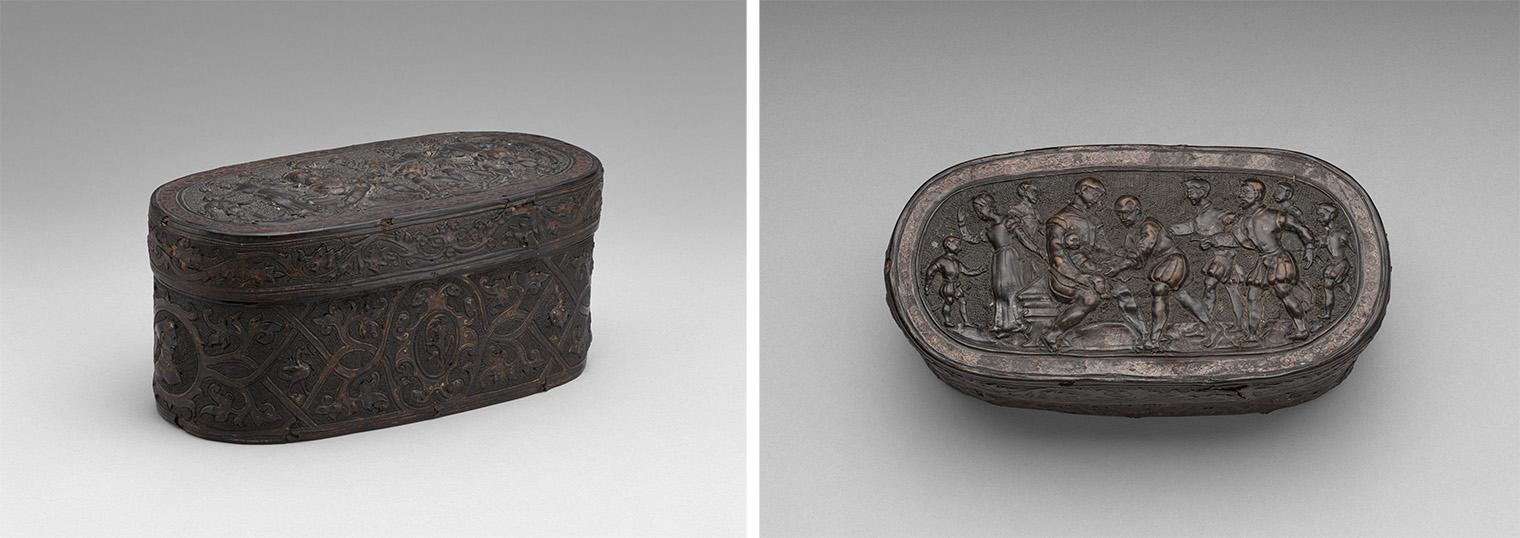
Box for circumcision instruments, 1520–1530. Northern Italian or Flemish. Leather (cuir bouilli), moulded and tooled, with traces of red polychromy and gilding, wooden carcass (conifer), painted interior, 4 7/8 × 10 1/8 × 5 in. (12.4 × 25.7 × 12.7 cm). The Metropolitan Museum of Art, New York, Purchase, Wrightsman Fellows, Dina Axelrad Perry, Keren Keshet - The Rainbow Foundation, and Susan and Ed Falk Gifts, 2024 (2024.358a, b)
Cuir bouilli is a method used to make leather boxes; the process involves submerging the leather in boiling water to soften it. These boxes are fabricated by special workshops and craftsmen known as Maestri di Corami (masters of stamped leather). The production of leather boxes was very complex and each aspect of construction was carried out by specialized workers, including gilders, painters, printers, and punchers.[3] One remarkable cuir bouilli example is a box used to store implements for circumcision ceremonies. A circumcision is performed on Jewish boy infants on the eighth day after their birth, surrounded by family and friends at home or in a synagogue.
The skill of the Maestri di Corami is evident in the bas-relief lid, which depicts a narrative scene from the Story of Abraham, specifically Genesis 16:1–16 and Genesis 21:4–21. The lid of the box depicts a circumcision scene at center, Sarah chasing Hagar and Ishmael on the left, and a group of male protagonists entering the scene on the right. This unique box was presumably made for a Mohel, a man who performs the circumcision ritual. Men commonly dedicated themselves to the volunteer position of a Mohel in Jewish confraternities. These special volunteer committees were established in Italy and elsewhere as Societa dei Membri del Patto di Abramo, or Members of Abraham’s Covenant. These community organizations ensured the religious and spiritual needs of families during the ghetto period for all levels of society.[4]
The box’s surface is ornamented with interlinking arabesques with sprouting leaf tendrils, flanked by two female busts in profile on either side. Additional motifs include birds and a rampant lion holding a palm frond. The motif of a rampant lion is among the most common on Jewish objects, yet its widespread use is not easily explained. While the lion is a symbol of the Biblical tribe of Judah, it was also used as a heraldic device for Jewish families. The lion is mentioned in the Hebrew bible more than a hundred times and has become a recurring motif since antiquity. Jewish-Italian heraldic devices were used to symbolize a family name or profession and are commonly found on marriage contracts, ritual textiles, manuscripts, and silver book covers.[5]
A Jewish wedding is also a deeply valued tradition in Jewish culture. The ceremony is usually held outdoors beneath a wedding canopy, or “chuppah,” and is rich in ritual, song, and prayer. The groom places the ring on the bride's right index finger, clearly visible to witnesses, thereby confirming the legality of the marriage. Afterward, this type of ring was typically not worn but most likely kept by the community.
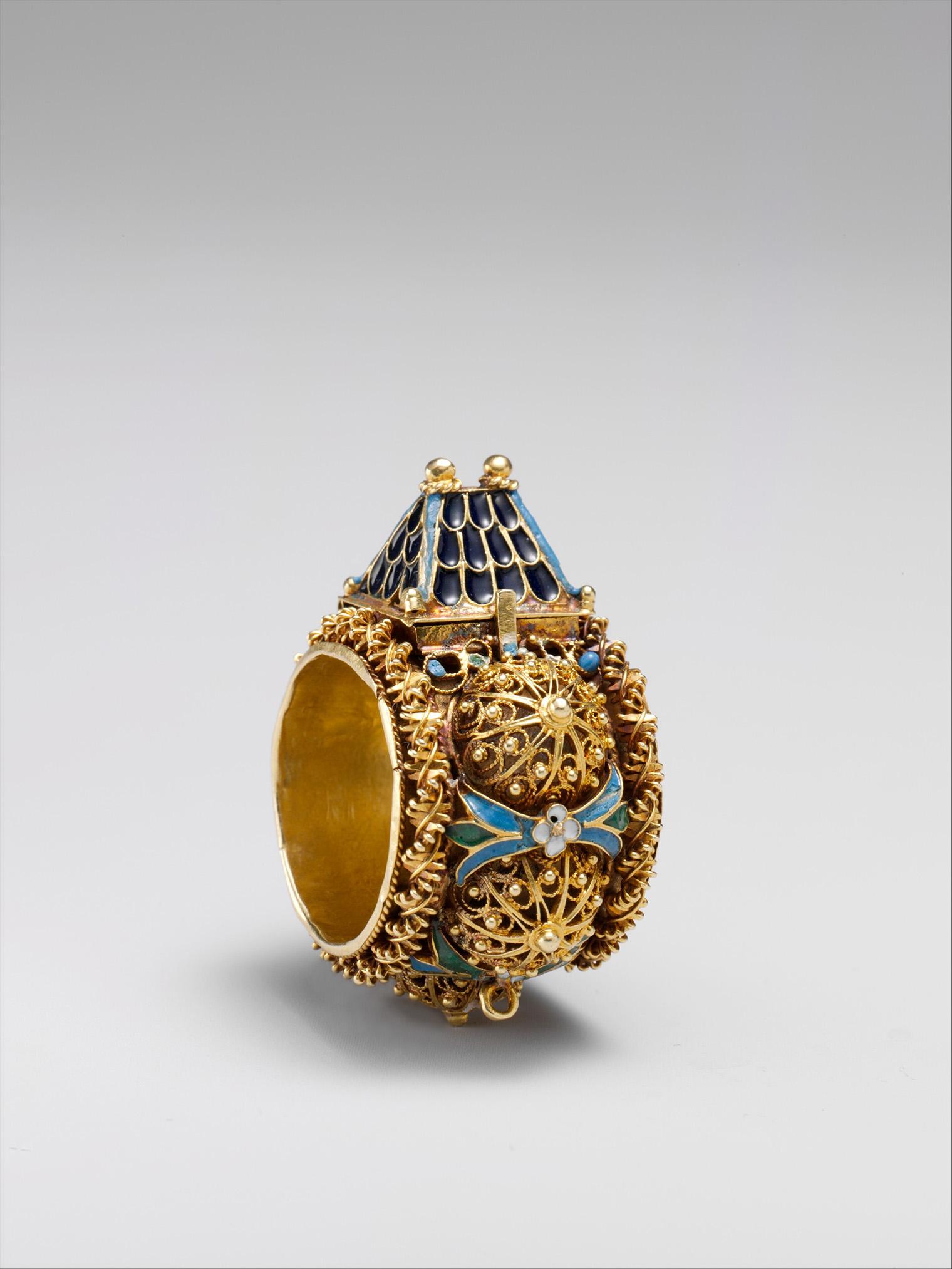
Jewish betrothal ring, 17th or 19th century. Eastern European or Italian. Gold, enamel, moulded and tooled, with traces of red polychromy and gilding, 7/8 × 1 3/4 in. (2.2 × 4.4 cm). The Metropolitan Museum of Art, New York, Gift of J. Pierpont Morgan, 1917t (17.190.996)
Like other forms of Judaica, Jewish wedding rings are not required to follow a specific design but are usually made of a solid material such as silver or gold. These rings may have served primarily as ceremonial objects, while simple metal bands were used for daily wear. Although it is difficult to precisely date or locate these rings geographically, some scholars suggest Italian or Hungarian origins. There is also a connection to Balkan jewelry traditions, which feature similarly bright enamels and intricate filigree work made from twisted or curled metal wires.[6] The hinged gable roof, possibly a symbol for the Temple of Jerusalem, opens to reveal the Hebrew acronym for “good luck.” While the origins of Jewish wedding rings in Europe remain ambiguous, they hold deep cultural and symbolic significance.
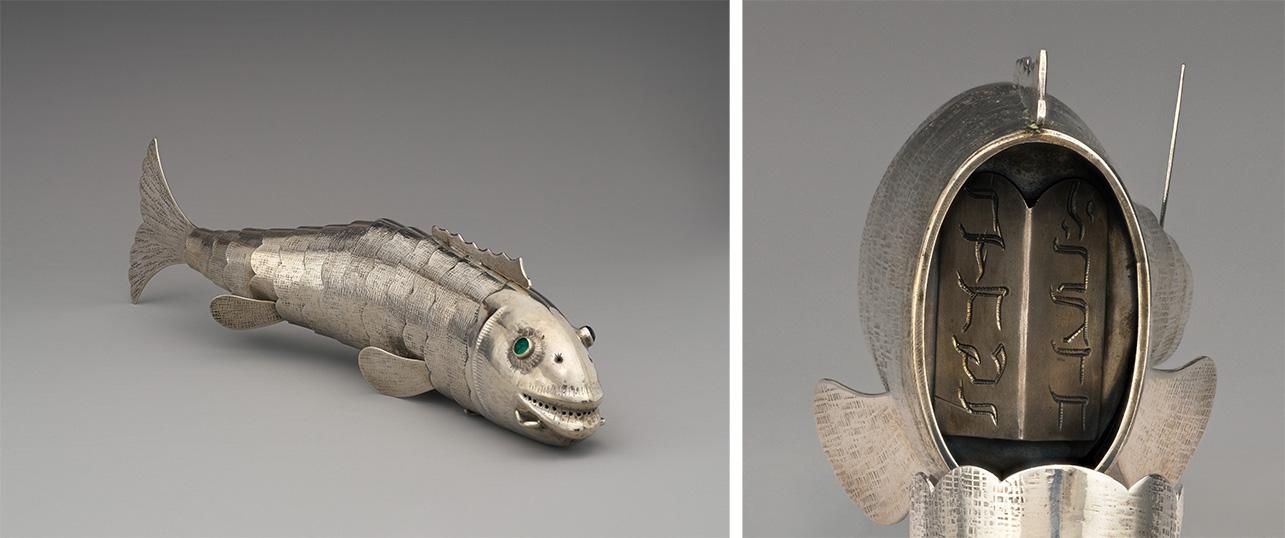
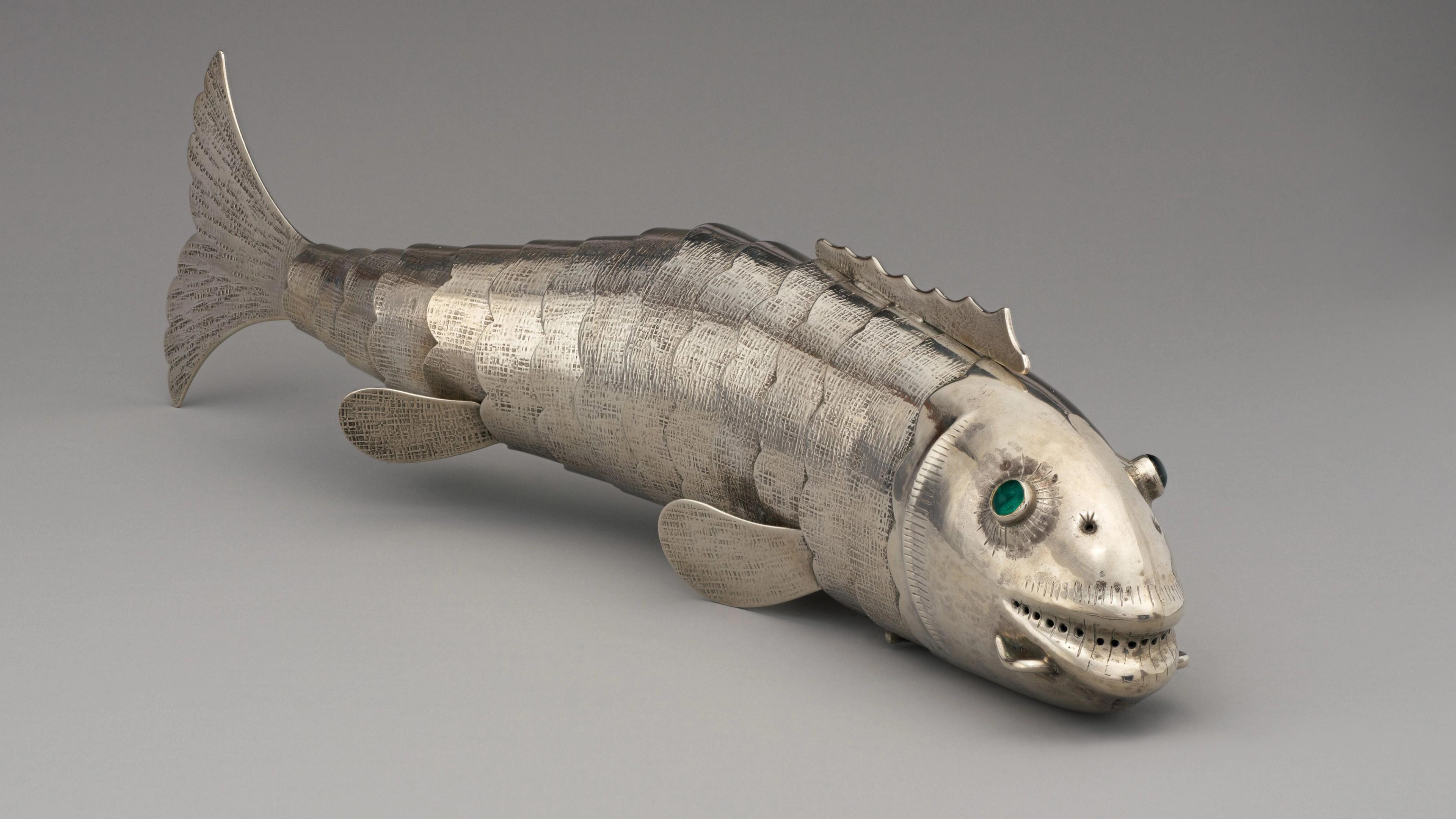
Fish-form spice container (Besamim), 1813. Austrian, Vienna. Silver, foil-backed glass, 3 1/8 × 13 3/8 × 3 in., 15.872oz. (8 × 34 × 7.6 cm, 450g). The Metropolitan Museum of Art, New York, Purchase, Manda and Albert Kalimian Gift, in honor of Sabrina and Daniel Kalimian, 2024 (2025.104)
The use of scents for ritual purposes has a long tradition across cultures and is evident in Judaica. A brief, special ceremony called Havdalah, which translates as "separation,” marks the end of the Sabbath. The short service includes special blessings, a braided candle, a cup of wine, and a container filled with aromatic spices such as cinnamon cloves. This distinctive spice container is shaped like a three-dimensional fish, whose hinged head lifts to reveal the Ten Commandments designated by Hebrew letters.
While this fish form is typical in the Jewish communities of Austria, Poland, Russia, and Germany, other spice container shapes include bell towers and blossoming flowers. The spice box is one of the most treasured items of domestic Judaica. Spice containers come in a variety of shapes: a tower form with a spire is even more common than a fish shape. The symbolism of a fish recurs in Jewish visual culture, not just on the Sabbath, and functions as both a symbol and staple of Jewish cuisine and calendrical tradition. The fish can be seen as a symbol of good fortune and fertility.[7]
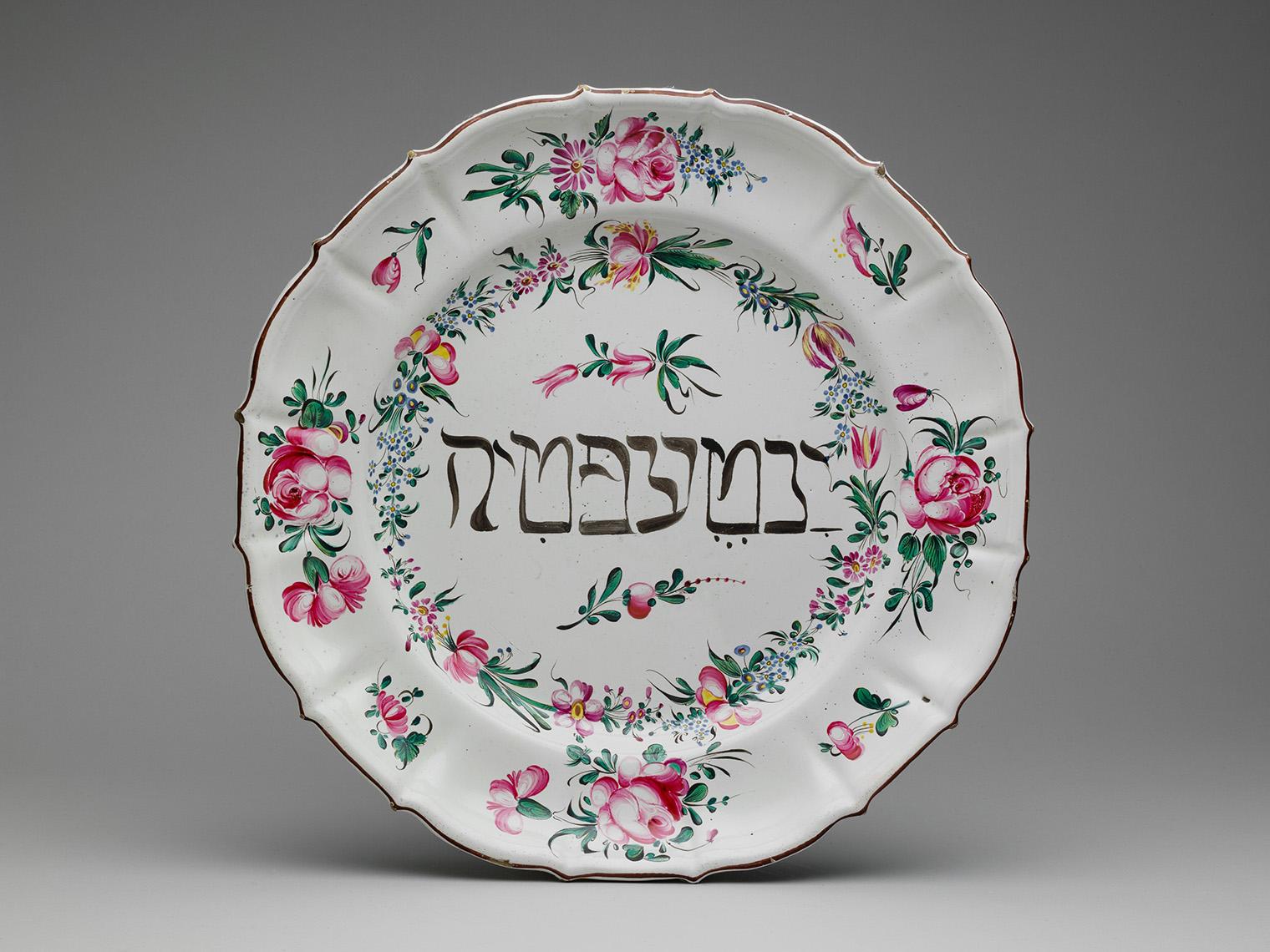
Holiday dish, ca. 1890. French, Lunéville region. Tin-glazed earthenware, Height: 1 3/4 in. (4.4 cm); Diameter: 13 1/2 in. (34.3 cm). The Metropolitan Museum of Art, New York, Purchase, Gift of R. Thornton Wilson, in memory of Florence Ellsworth Wilson, 1954 (54.147.38)
Previously unexhibited, two faience plates made in Lunéville in the Alsace region of France are on display. In 1936, Richard Thorton Wilson, a collector and benefactor of The Met, planned to leave his collection to the Museum because “as an old and very loyal New Yorker, I like to think that my hobby will eventually be a source of pleasure and interest to my fellow townsmen.”[8] (Over the course of the 1950s, Wilson gifted hundreds of objects from his collection in memory of his mother and his wife.) The gifted Wilson faience plates represent a different aspect of Jewish material culture. Although not intended for ritual use, special holiday plates were used to serve baked goods or sweets. During the sixteenth century, Louis XIV used faience for elaborate meals, and the dishware became popular in the seventeenth and early eighteenth centuries. These two plates highlight the depth to which faience was reinterpreted within Jewish communities across the Alsace region. The nineteenth-century holiday dish, called Yanteftikh, Yiddish for “holiday,” was intended for use on any Jewish festival.
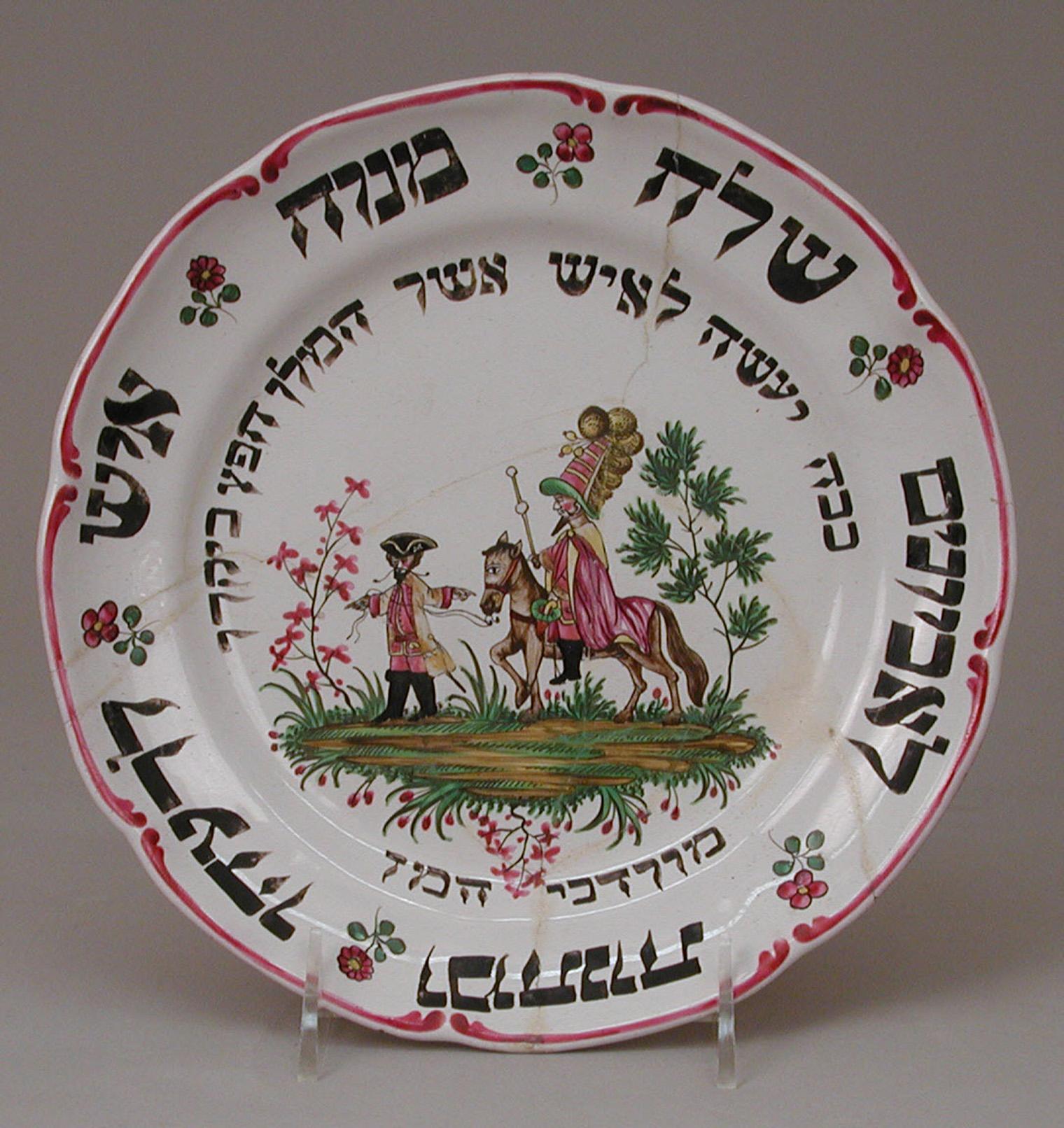
Purim plate, ca. 1760. French, Lunéville region. Tin-glazed earthenware, Diam. 8-7/8 in. (22.5 cm). The Metropolitan Museum of Art, New York, Purchase, Gift of R. Thornton Wilson, in memory of Florence Ellsworth Wilson, 1954 (54.147.39)
A second faience plate was intended for the holiday of Purim and was manufactured by the Charles Loyal factory in the eighteenth century. Historically, Jews lived in the Alsace region as early as the twelfth century and in Lunéville at the end of the fifteenth century. At the beginning of the eighteenth century, only a few hundred families were allowed to reside in the area, and Jews were only granted civil economic rights after the French Revolution (1789–99). A scene from the Book of Esther is in the center of the plate. The story of Esther is read on Purim, which falls on the Jewish calendar in the month of Adar—late February or March. The biblical story set in ancient Persia around the fourth or fifth century tells the tale of a young Jewish woman named Esther who becomes queen and the new bride of King Ahasuerus. She is known for her bravery, and in the story, Esther risks her life to save her people from the king’s wicked advisor Haman, an act that leads to the Jewish festival of Purim.
The narrative highlights themes of courage, survival, hidden wisdom, and good triumphing over evil. While there are many important scenes of the Book of Esther that have been depicted throughout art history, including paintings and decorative arts, this plate depicts Esther’s cousin Mordecai being honored by the king, paraded on the king’s horse, and fitted with royal clothing. Framing the scene is a Hebrew inscription that reads, “They were to observe them as days of feasting and merrymaking, and as an occasion for sending gifts to one another and presents to the poor,” which emphasizes Purim as a communal holiday to be celebrated across all levels of society.
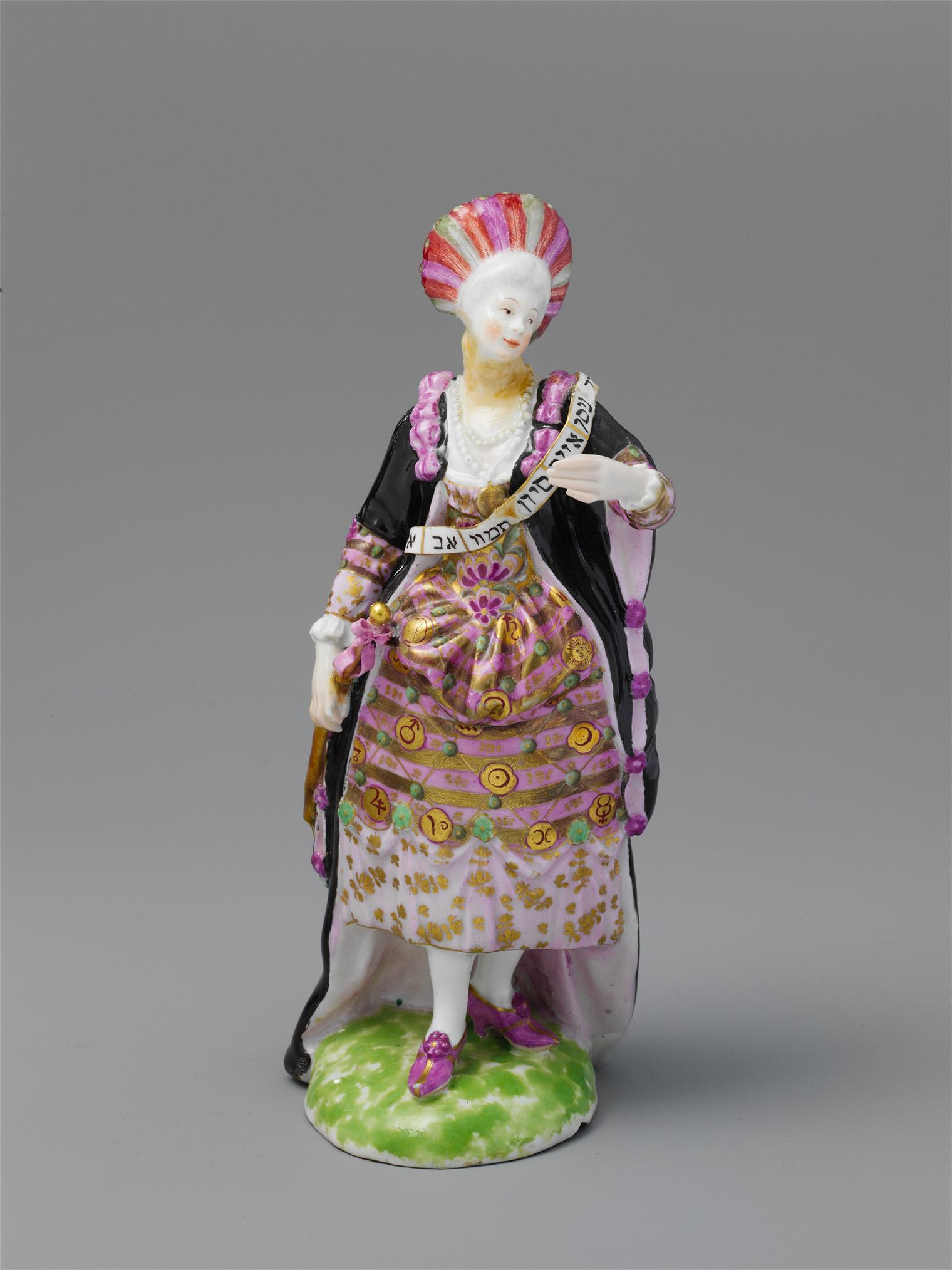
Woman, Allegory of the Year, ca. 1750–60. Austrian, Vienna. Hard-paste porcelain, Height: 7 5/8 in. (19.4 cm). The Metropolitan Museum of Art, New York, Purchase, Gift of R. Thornton Wilson, in memory of Florence Ellsworth Wilson, 1954 (54.147.95)
Also part of the Wilson gift, a small-scale porcelain statuette of a female figure made in Vienna, which lists the months of the Jewish calendar in Hebrew, stands in the middle of the current display. The woman looks away from the viewer, with her head tilted in a three-quarter view, with rounded eyebrows and a delicate face that remains something of an enigma. Figures like this were often used as table decoration to provide visual delight and perhaps an opportunity for conversation. Manufactured by the Vienna Imperial Porcelain Factory in the eighteenth century, her ornamented skirt is decorated with zodiac symbols and images of the sun and moon, which represent the complexities of time—how one might think of months and years both personally and communally. Across different religions, cultures, and calendar systems, these handcrafted objects and celebrations help us mark time, festivities, and life-cycle events.
Notes
[1] Solomon Gartenhaus and Arnold Tubis, “The Jewish Calendar—A Mix of Astronomy and Theology,” Shofar 25, no. 2 (2007): 104–24.
[2] Susan Braunstein, Five Centuries of Hanukkah Lamps from the Jewish Museum: A Catalogue Raisonné (New York: Jewish Museum, 2004), 43–70.
[3] Augusto Morari, Corami (Mantua: Antiquariato Baroni 2022), 10–41.
[4] Beginning in 1516 with Venice, Italian cities established ghettos for Jewish communities. These ghettos persisted until 1870, subjecting Jews to centuries of social and economic restriction. In the twentieth century, the term ghetto acquired a new meaning through its association with Nazi-occupied Europe.
[5] Ellen Frankel and Betsy Platkin Teutsch, The Encyclopedia of Jewish Symbols (Northvale, NJ: Jason Aronson, 1992), 98–100. For further reading, see: Ida Huberman, Living Symbols: Symbols in Jewish Art and Tradition (Jerusalem: Modan Publishing House, 1988), Mark Podwal, A Jewish Bestiary (University Park, PA: The Pennsylvania State University Press, 2021), and Rachel Wischnitzer-Bernstein, Symbols and Forms in Jewish Art (Krakow: Archeobooks, 2022).
[6] Vivian B. Mann, “The First English Collector of Jewish Wedding Rings and Their Dealers,” IMAGES: A Journal of Jewish Art and Visual Culture 11, no. 1 (December 2018): 179.
[7] Frankel and Teutsch, The Encyclopedia of Jewish Symbols, 55.
[8] Metropolitan Museum of Art, “Extensive Collection of European Porcelain and Pottery Given by R. Thornton Wilson to the Metropolitan Museum,” press release, January 4, 1951; Metropolitan Museum of Art, “R. Thornton Wilson of New York City Gives More Than 100 Examples of European Pottery and Porcelain to Metropolitan Museum of Art,” press release, November 5, 1954.