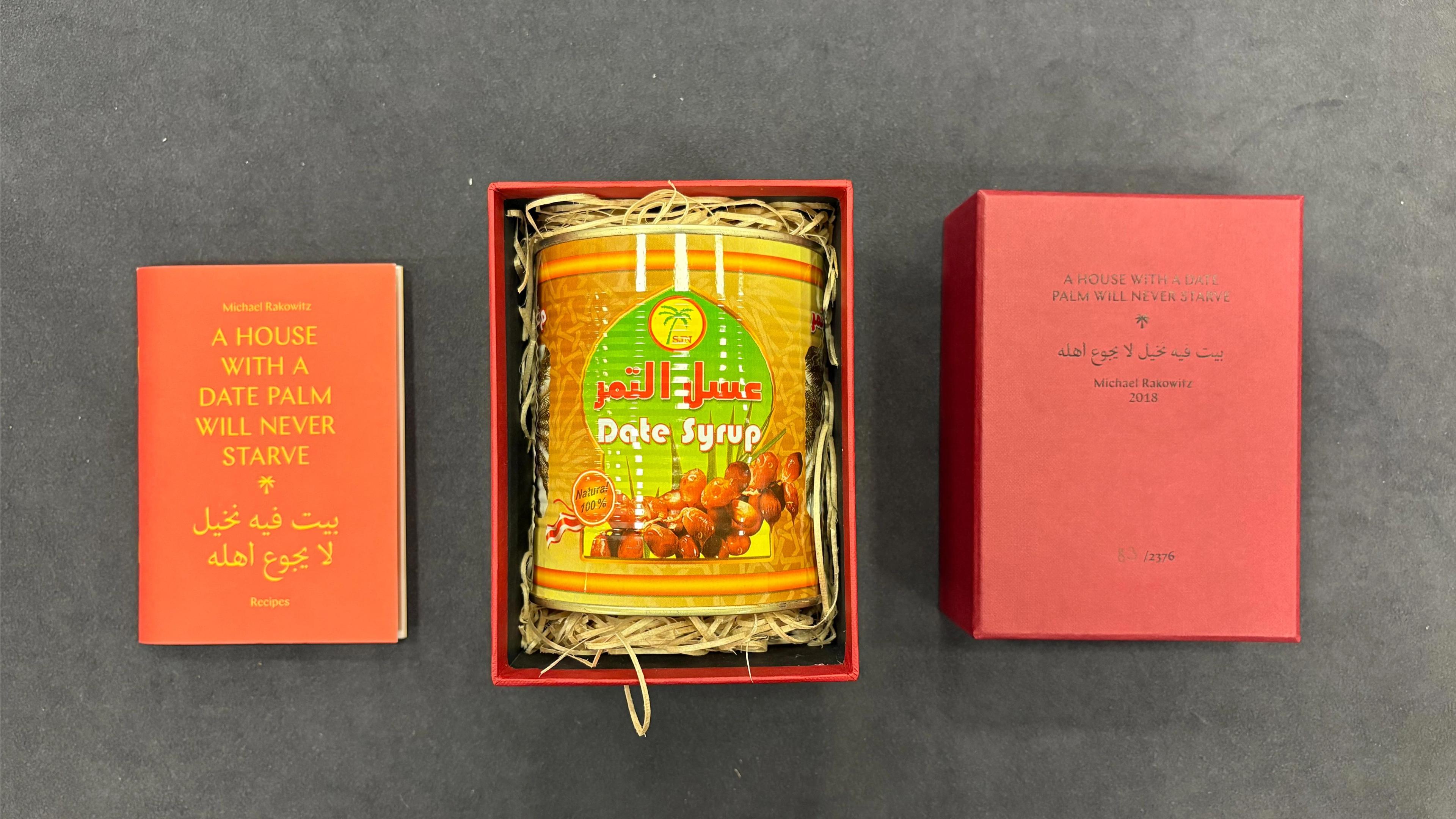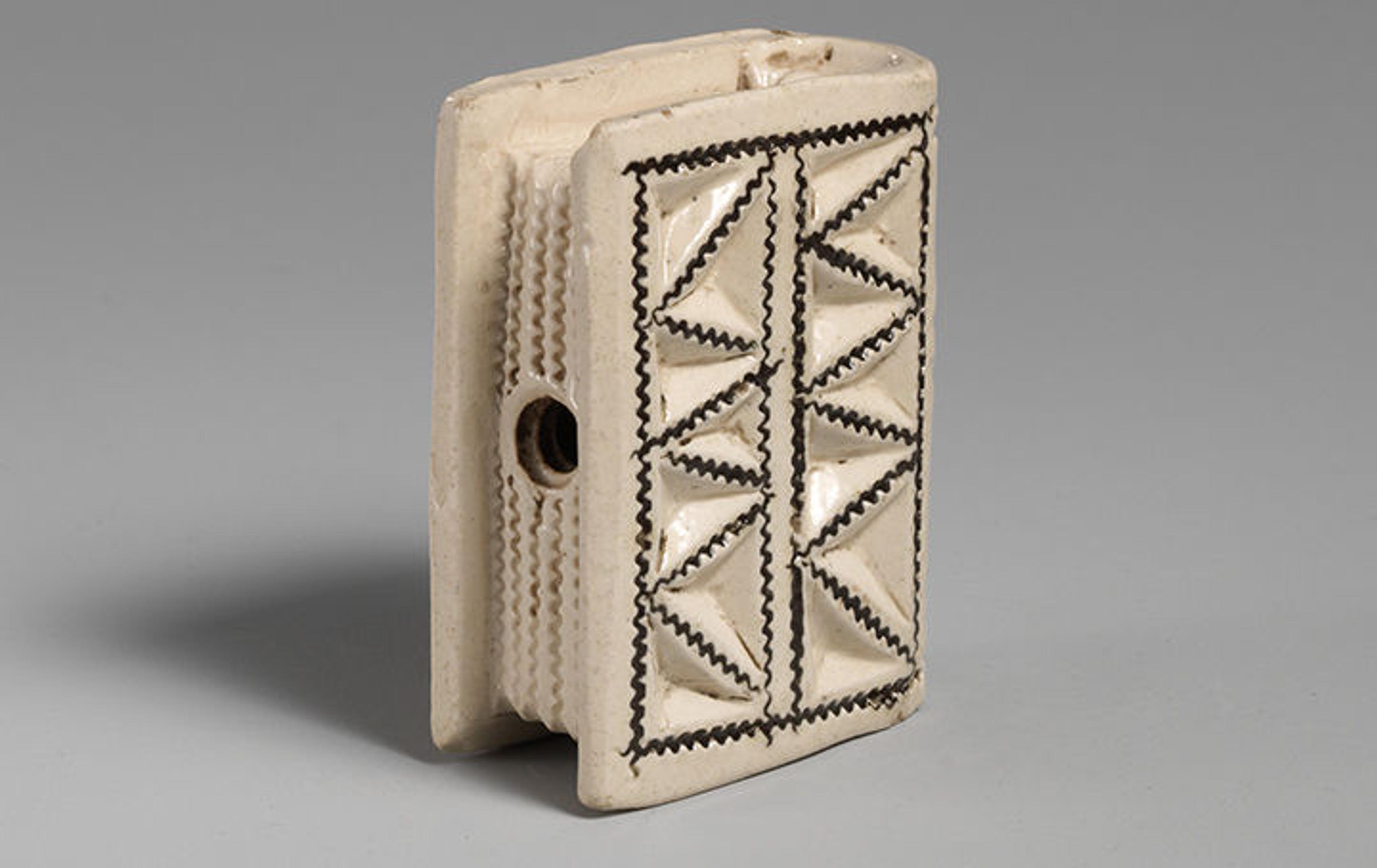
In May 2024, we presented a poster at the American Institute for Conservation’s 52nd annual conference in Salt Lake City. The theme was “Expect the Unexpected,” focusing on how conservators address the challenge of encountering unanticipated materials, adjust treatment methodologies, and respond to shifting priorities. To “expect the unexpected” resonates with us in Watson Library's Sherman Fairchild Center for Book Conservation. Across our growing collection of over ten thousand artist books, and in processing more than two thousand incoming materials per year, we often think we’ve seen it all: from elephant folios to tiny blooks (objects that look like books), thick portfolios to single sheets of decorated paper, and conventional fine bindings to works that only reference traditional books but come in the form of a shoe, a bottle, a can of soup, or even a sheet of pasta.
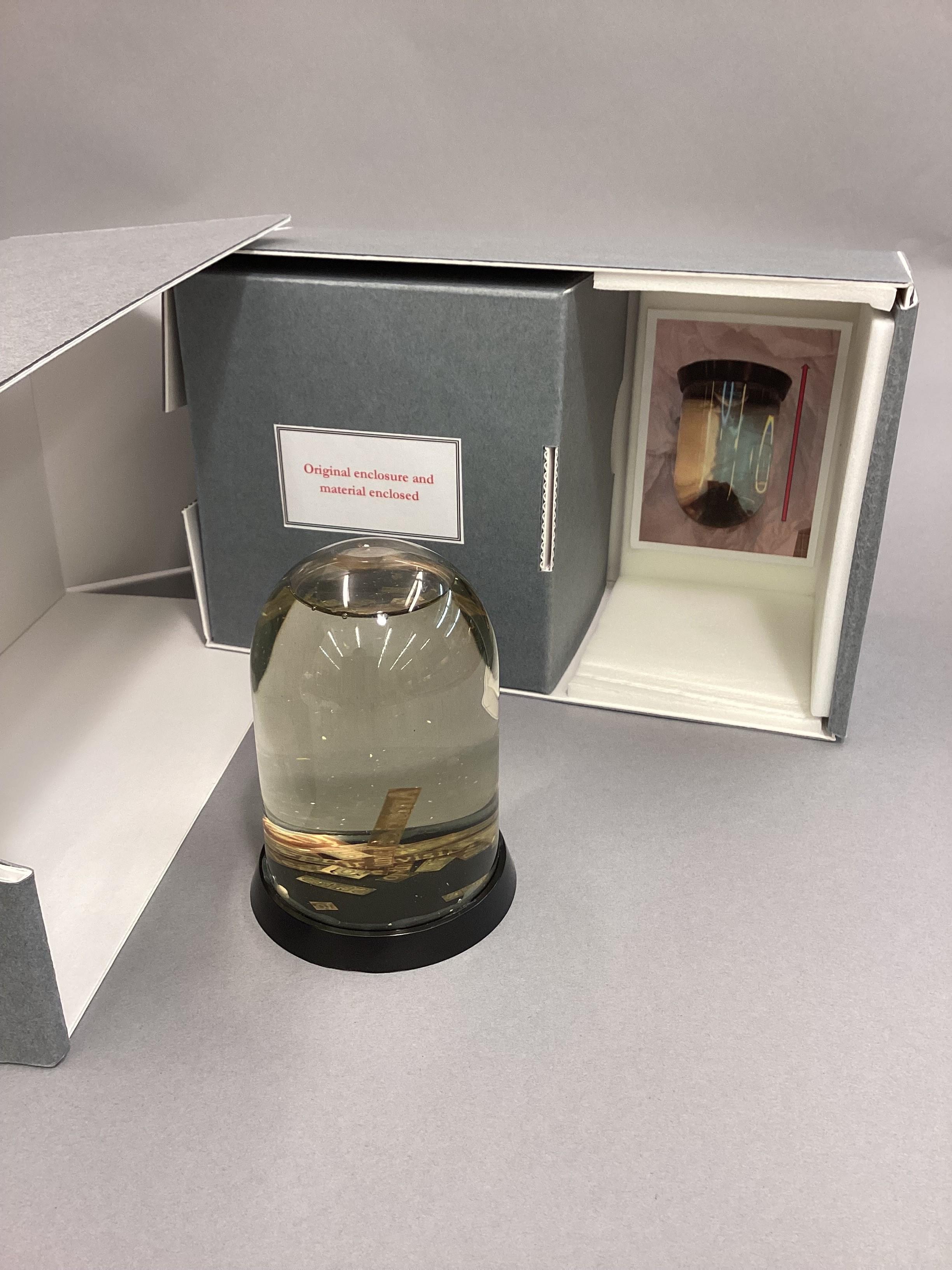
I Pledge by William Harroff (1994) is a book in the form of a liquid-filled snow globe. The book arrived at the lab with a leaky seal. After repair, it was housed in tissue with the dome facing down to prevent future leaks. All the components of the box are labeled to instruct the user on how to remove, replace, and store them.
There are many challenges in addressing the long-term preservation needs of these non-traditional book objects, from their structural weaknesses to their material sensitivities. We prioritize stabilization to ensure they remain accessible to our patrons with minimal staff intervention. We do this by putting them in protective housing that minimizes shelf space, ensures upright shelf storage, is time-efficient to make or alter, and is made from sustainable archival papers, boards, and adhesives. We purchase archival standard 4-flap enclosures or order custom measured boxes like the ones shown below, and we alter the interiors to accommodate books and objects of unusual size, shape, and/or materials.
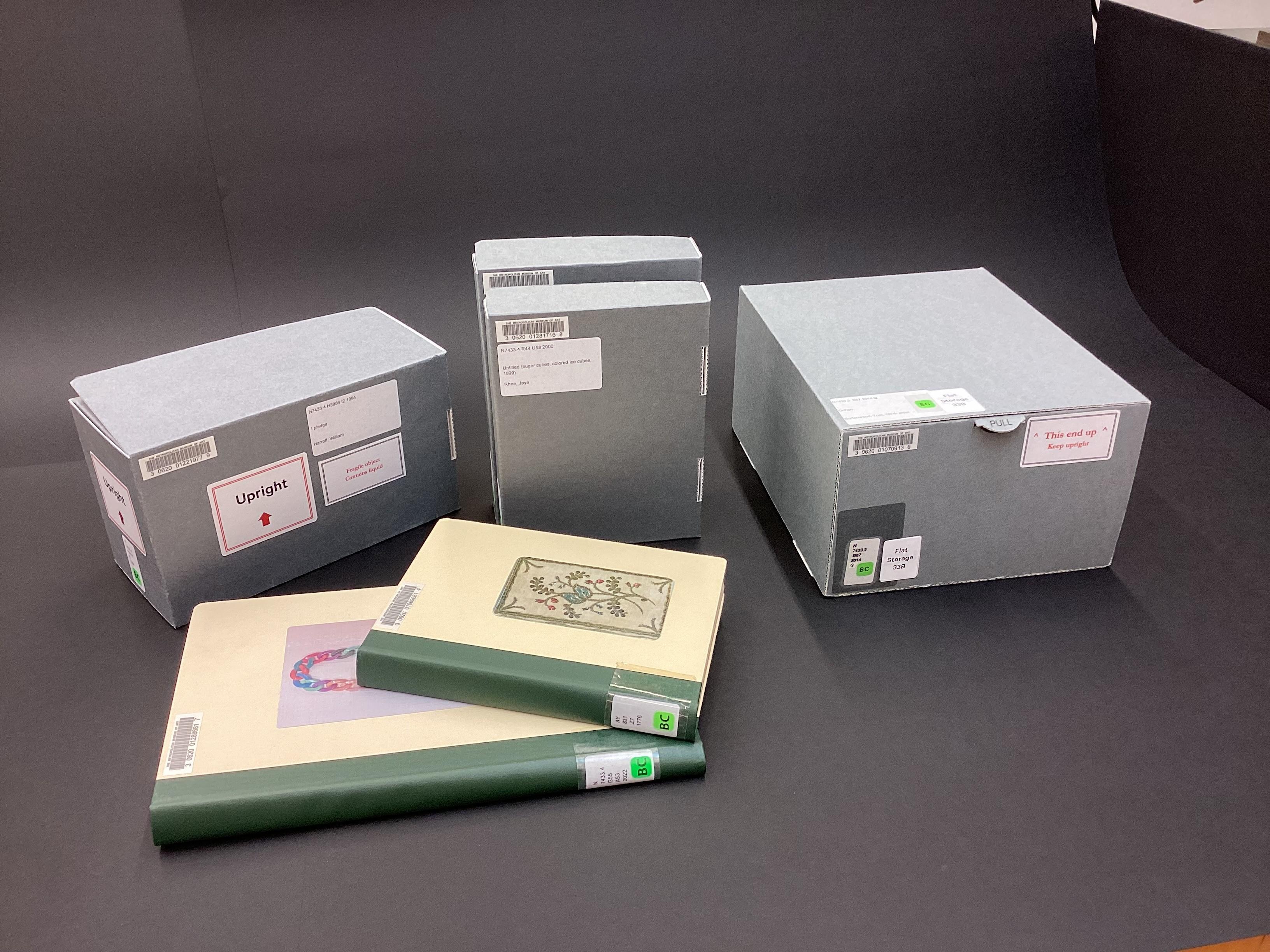
A selection of custom boxes (rear) and 4-flap enclosures (front) with shelf labels, identifying images, and user instructions to aid patrons and staff in the use and identification of the special collection materials stored inside.
As part of our effort to showcase our process in creating these alterations, the poster explained how we use a few specific designs to accommodate small books inside larger enclosures or boxes. We presented them in a problem/solution format with examples from our collection. We also included information about the materials we use and instructions for how to make those inserts. Below are the examples that we included in our presentation.
Small books thinner than 1 in.
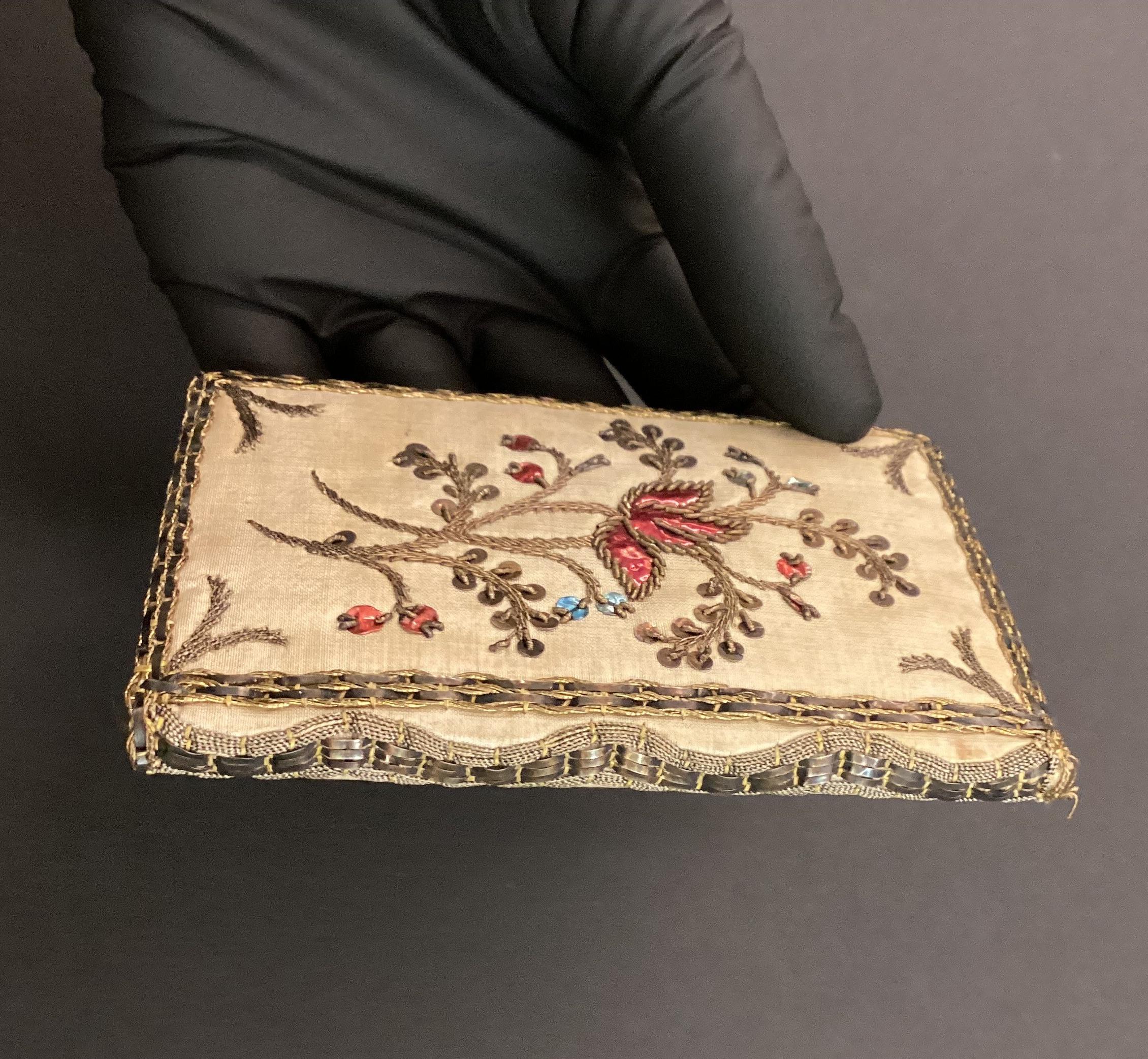
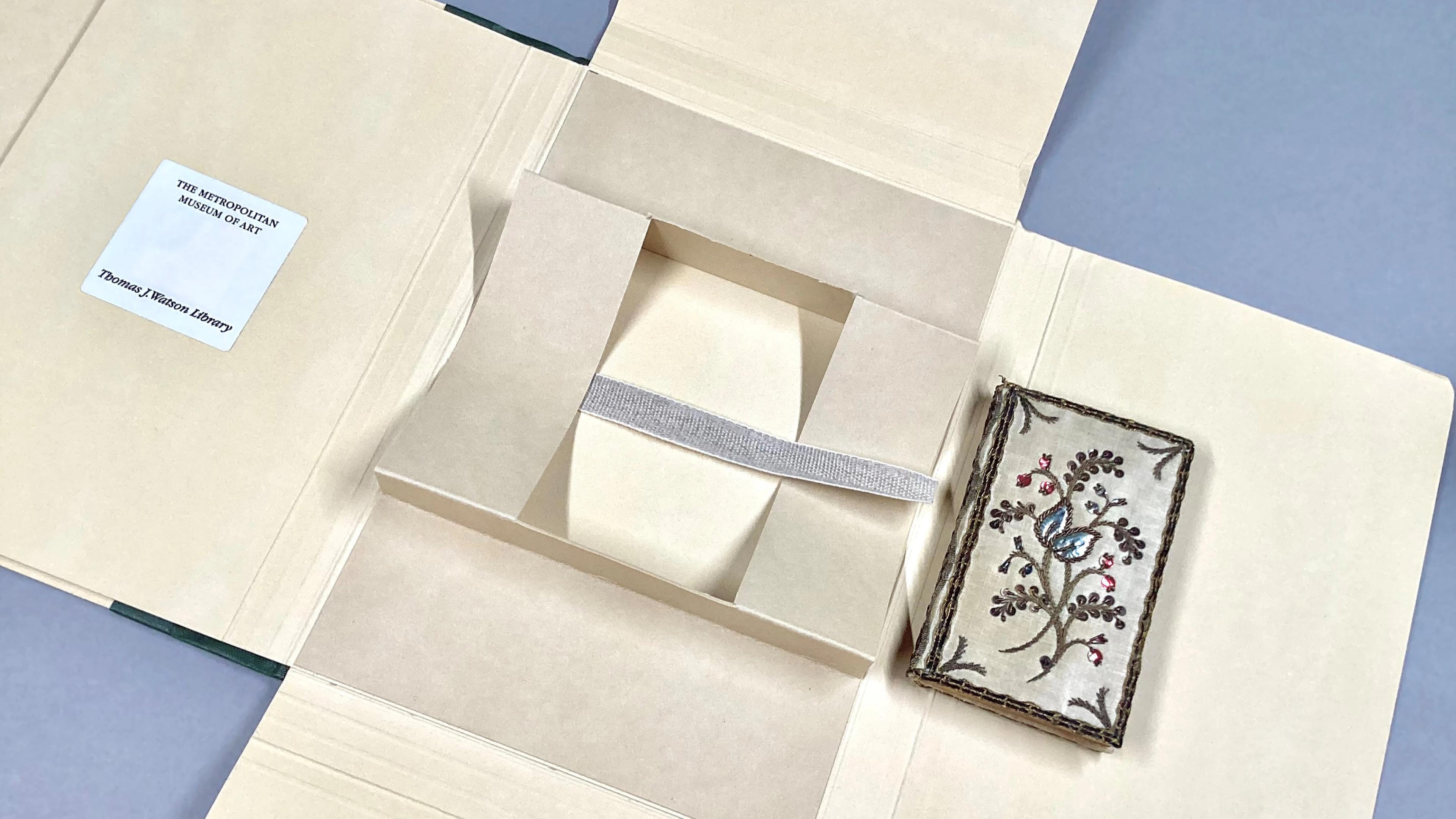
Le Nouvel Almanach Sans Titre: Mais Très-galant, et Chantant (ca. 1776), an almanac with expressions of beauty, is covered in cream colored satin, embroidered on the front, back, and spine with gilt silver thread and embellished with sequins and metallic foil.
Problem: This small, elegant book, Le Nouvel Almanach Sans Titre: Mais Très-galant, et Chantant, is only 3.5 in. tall, 2.5 in. wide, and 0.375 in. thick. Watson shelves its special collections in call number order and upright, with a few exceptions. Since there is no separate storage area for small or miniature items, it requires a larger, 6 by 8 in. housing to make it easier to find and so adjacent books won’t tip or warp.
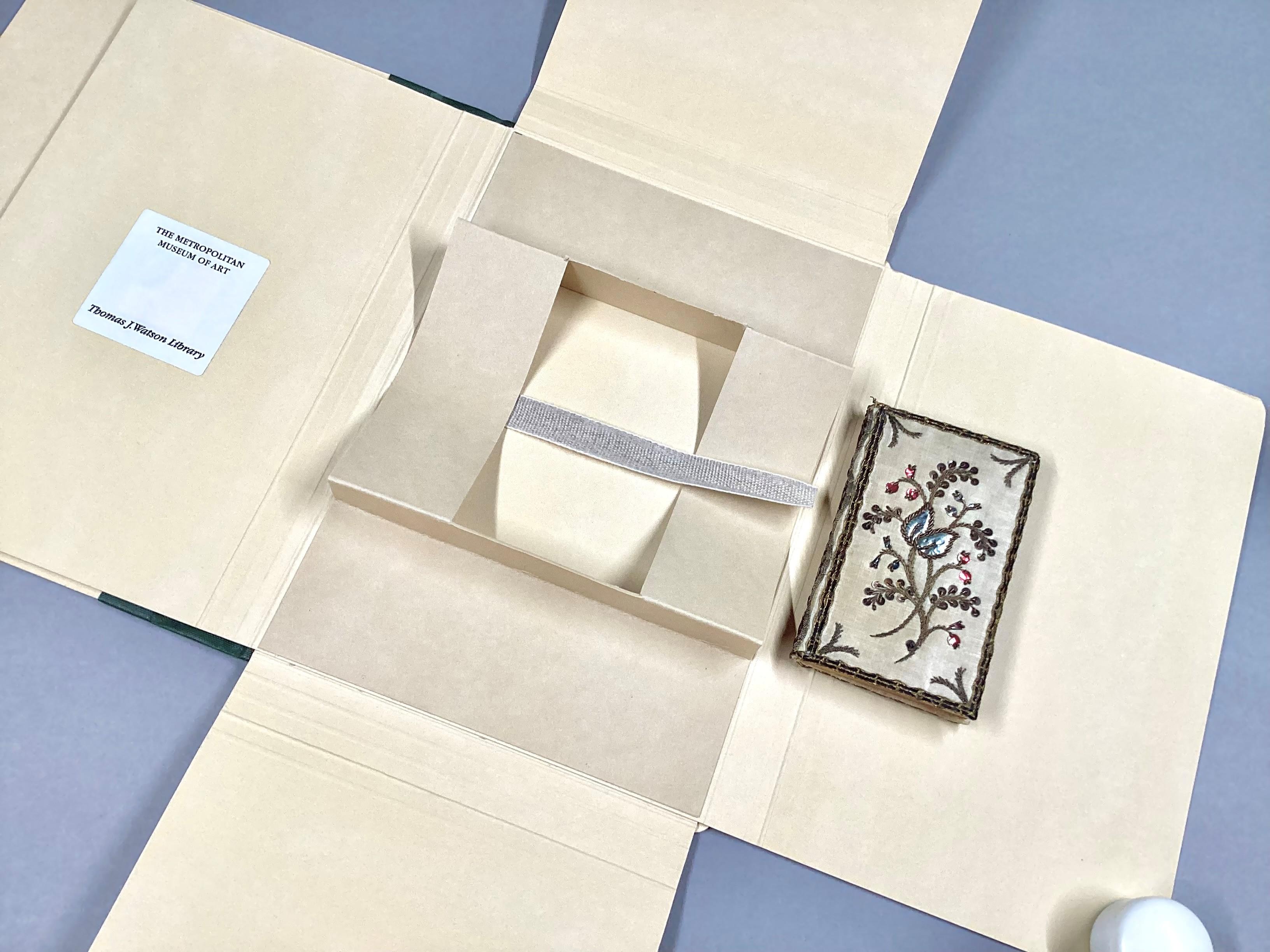
The 4-flap that houses Le Nouvel Almanach Sans Titre: Mais Très-galant, et Chantant (ca. 1776). The “Kyle Insert” supports the book within the larger housing.
Solution: A custom .20 bristol insert for a standard sized 4-flap enclosure. Books under 1 in. thick are stored in a housing with stiff exterior boards, a flexible cloth spine, and an interior enclosure with flaps on all four sides that fold inwards to hold the book in place. To fill the extra space inside the 4-flap, Kyle Olmon, a paper engineer and former intern at Watson, designed the “Kyle Insert” which can be produced in a few minutes using common lab materials. It utilizes one strip of archival bristol-board that is cut and folded to allow the bottom edge of the book to sit on a flat surface within a space that fits the book exactly. We purchase our 4-flaps from Archival Products.
Materials: 4-flap enclosure, .20 bristol board, double-sided tape, 1/2 in. linen tape.
Instructions: See “Enclosed Within: A Big Innovation for Small Books.”
Small books thicker than 1 in.
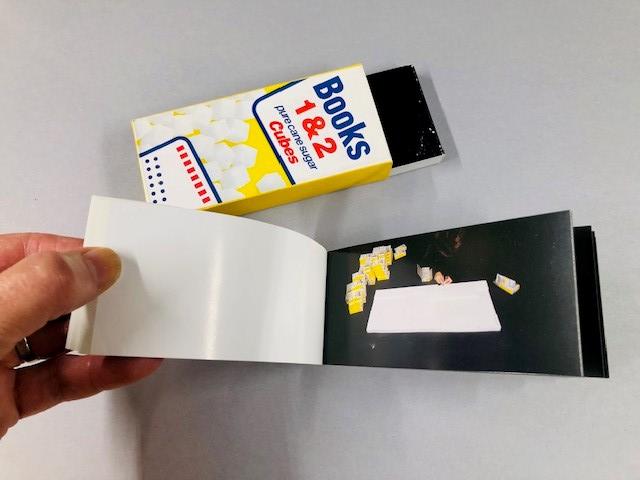
Untitled by Jaye Rhee (2000). Two oblong flip-books are housed inside the illustrated slipcase-style box.
Problem: The artist’s book Untitled by Jaye Rhee (2000) is only 4 by 2 1/4 by 1 1/8 in. This work does not contain actual sugar cubes, but does contain two mini flipbooks inside a small box. The books present the artist’s construction of artworks made of sugar- and ice cubes. We do have other books that contain actual sugar—see below for how we handle those.
Solution: A custom two-piece insert for a standard-sized corrugated storage box. The larger box makes the small book suitable for upright shelf storage. The insert fills the extra vertical and horizontal space and can be made in about five minutes. It’s made in two pieces: a long, folded strip with an opening cut from the middle, secured with a small flat sheet that fits together to support the book. The insert is secured in the box with little to no adhesive. We purchase our corrugated boxes from Talas.
Materials: The primary housing, a corrugated E-Flute box, 1/16 in. E-flute blue archival corrugate or Heritage corrugate board, .20 bristol board (for a lifting tray, if needed), 3m double stick tape or 3M 3792 LM AE Clear hot-melt adhesive.
Instructions: Box insert for small books thicker than 1 in. (PDF)
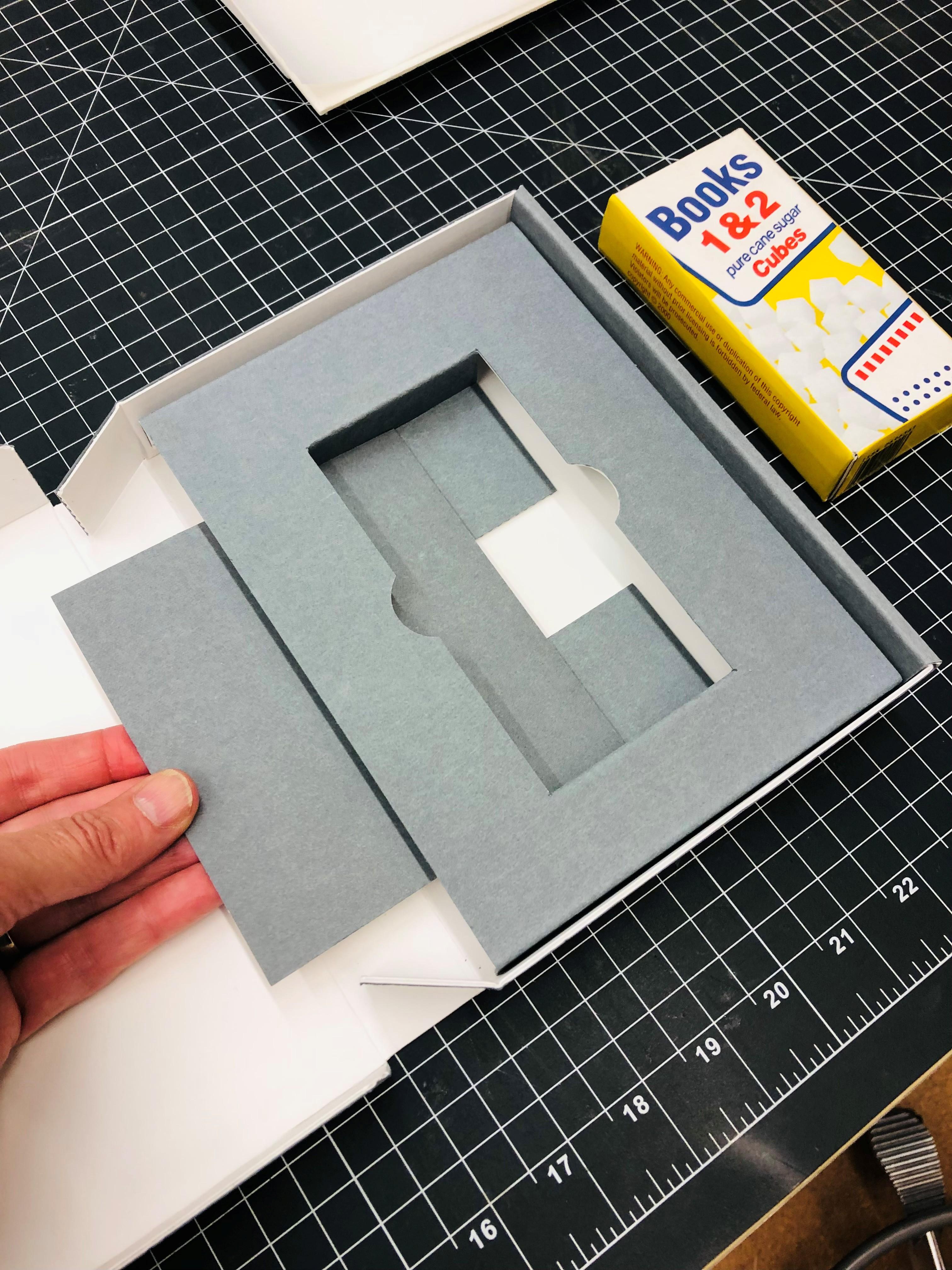
The box insert for books thicker than 1 in.
Food components, like the jellybeans inside Terrence Koh’s Such Things I Do to Make Myself More Attractive to You (2006), must be contained in a sealed, non-permeable envelope to keep pests and ambient moisture away. To make custom packages for food, we use either an ultrasonic welder, which uses high frequency sonic vibrations to bond plastic mylar sheets, or a Co-Libri machine, which uses heat to bond polyethylene sheets. These devices allow us to make envelopes or bags of almost any size.
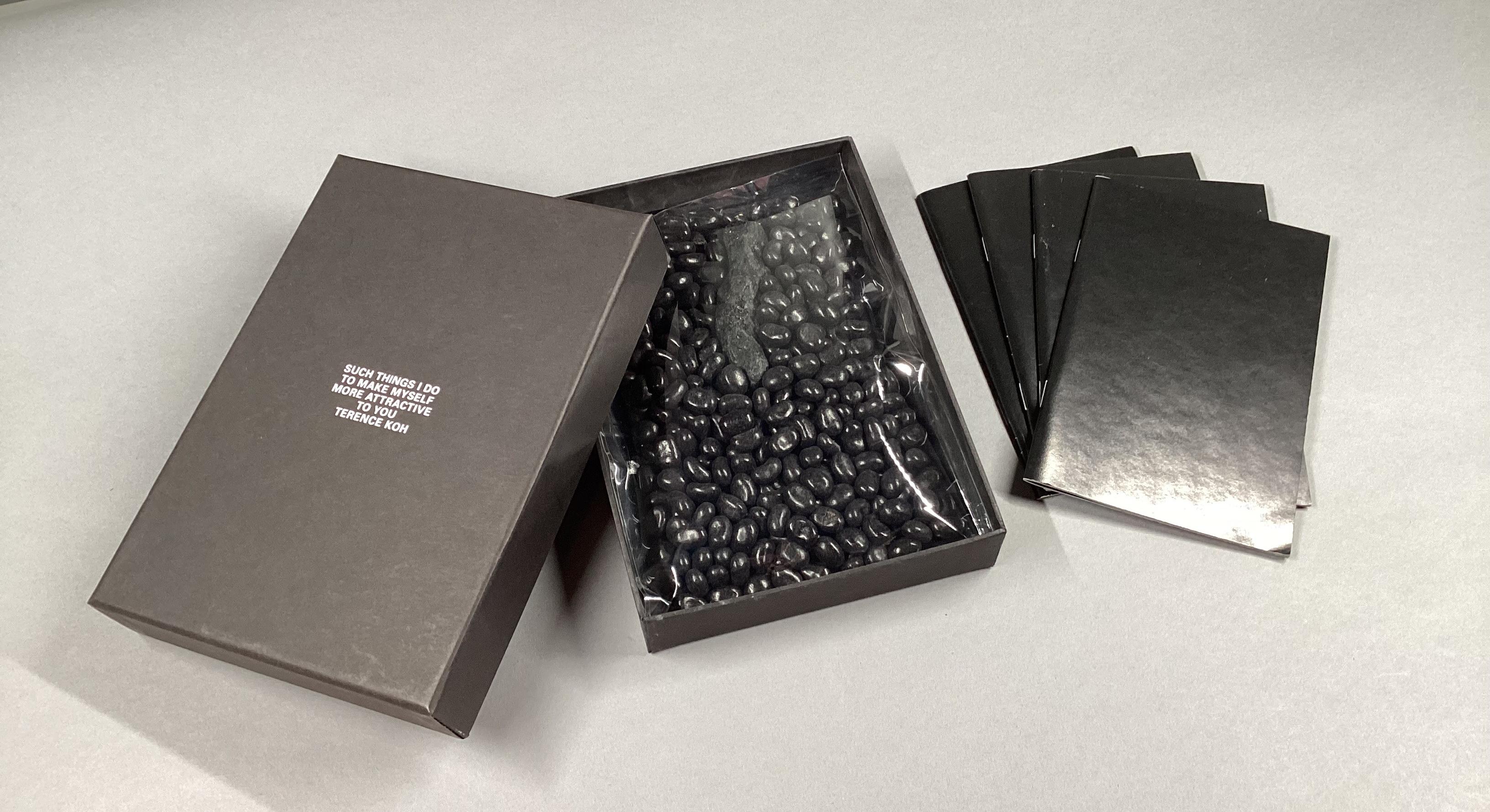
This artist’s book, Such Things I Do to Make Myself More Attractive to You by Terence Koh (2006), includes four printed booklets, approximately one pound of jellybeans, and a small plaster sculpture covered in black glitter, all housed inside a black paper-covered box.
Irregularly-shaped, non-traditional book formats
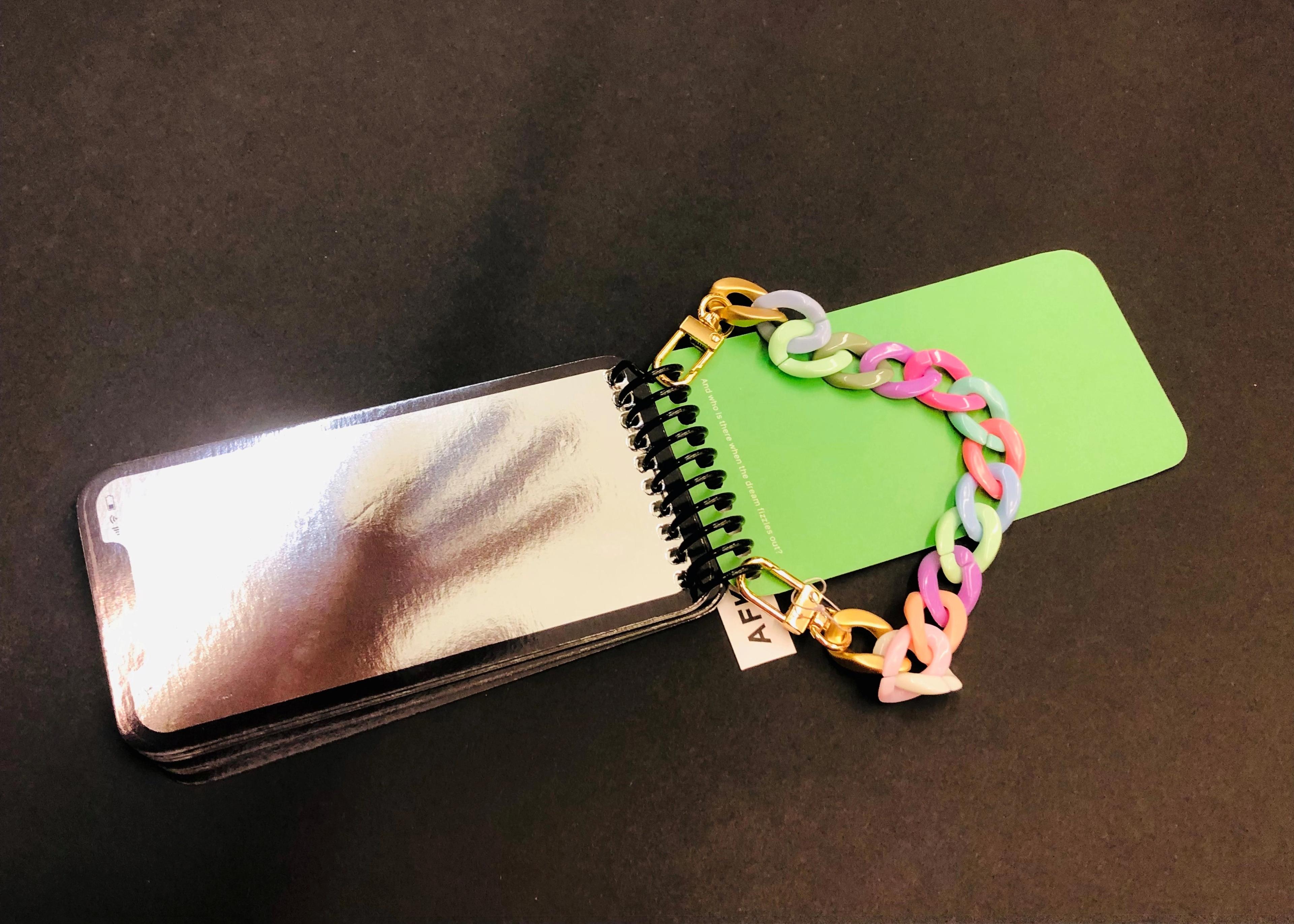
And Who is There When the Dream Fizzles Out, published by Gloria Glitzer (2022), is made using heavy foil-coated paper for a reflective effect that resembles a smartphone screen on one side of each page, while the other side is printed in green.
Problem: The artist’s book And Who is There When the Dream Fizzles Out, published by Gloria Glitzer (2022), has the added element of a plastic chain. Since the chain will hang down if the book is stored upright, the housing should accommodate the chain to minimize the space it takes on the shelf and so it doesn’t crush the book from the side. To make the insert look pleasing, a clean, rounded shape would accent the “purse strap” design of the chain and fulfill the need for support.
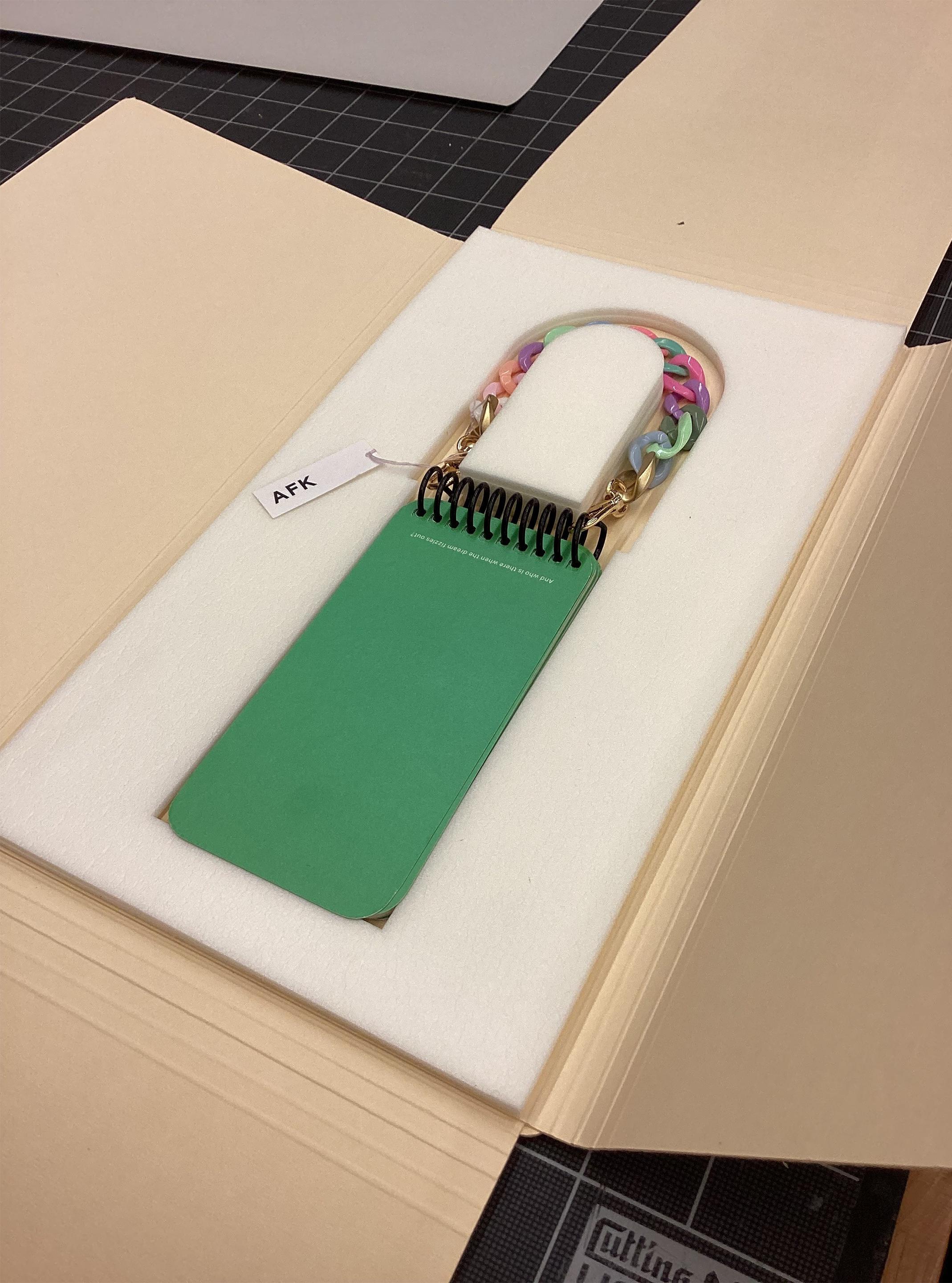
Custom-cut foam inserts for And Who is There When the Dream Fizzles Out.
Solution: The Cricut Maker 3 is a small home-studio custom cutting machine. Cutting round or irregular shapes, especially in multiples, is particularly difficult to do by hand. At 21 in. wide and 7 in. tall, the Cricut is small enough to sit on a counter, tucked away until needed. The software allows you to draw any shape imaginable to then cut from a variety of sheet materials like 1/8 in. thick Volara foam, 1/8 in. thick archival corrugated blue board, paper, or fabric. The Cricut can cut multiples of any shape in exactly the same size for layering into thicker supports.
Video demonstration:
Other solutions for upright storage
We keep a variety of pre-printed labels to instruct readers on how to safely remove a non-traditional or fragile book from its housing. For example, Tom Burtonwood’s Orihon (2014), is fully 3D-printed and made of brittle plastic. A mylar drawer and wrapper were constructed to slide the book safely in and out of a foam-lined box. In this case, labels instruct the reader on how to use the drawer and to use gloves when handling the plastic.
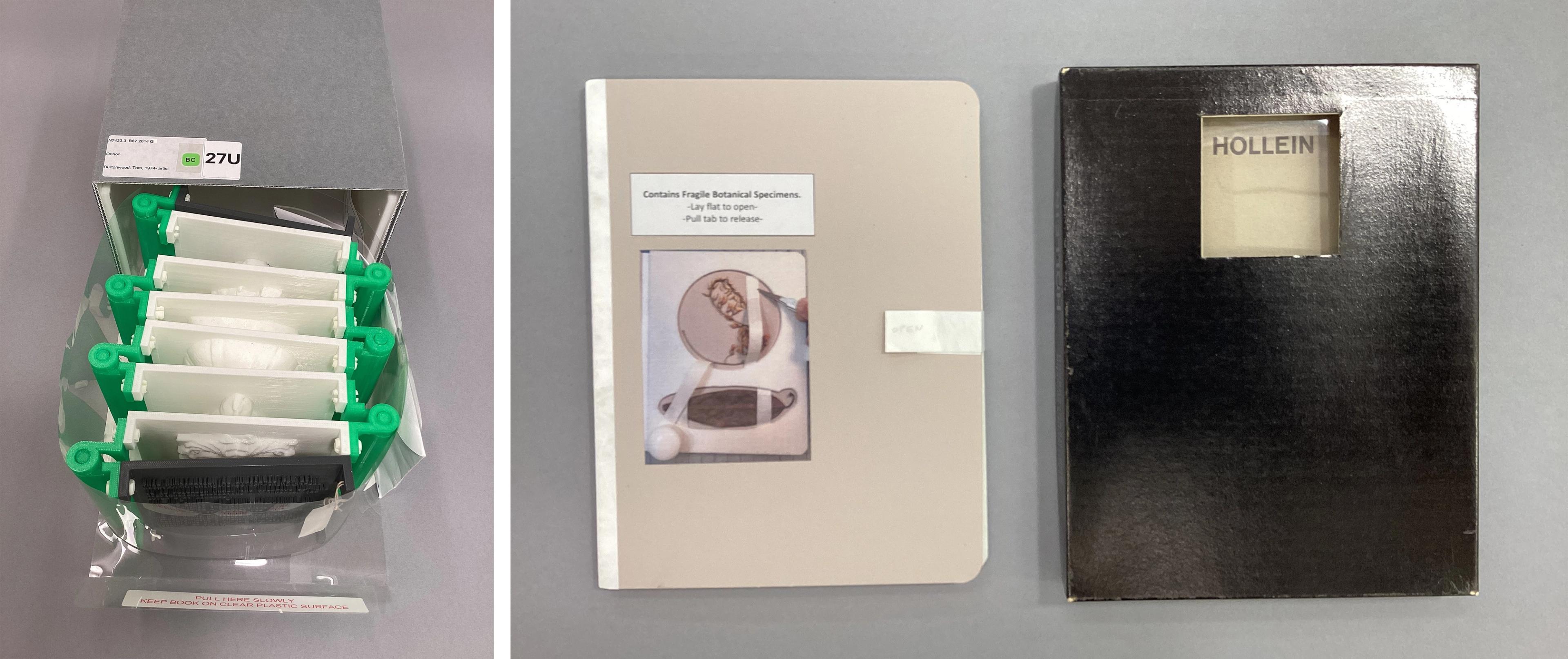
Left: Orihon by Tom Burtonwood (2014). Right: Hans Hollein: Alles ist Architektur, Städtisches Museum Mönchengladbach (1970)
The gallery exhibition catalogue Hans Hollein: Alles ist Architektur arrived with two botanical specimens inside. The dry plant material cannot be left to float freely in the box, although how it survived as long as it did is a wonder. To keep the specimens intact, but also available for inspection or exhibition, a system of removable tabs was used to hold each one in a separate cut-out space within a folder. An image placed on the front of the folder instructs the user on how to remove the specimens.
We’ve primarily highlighted here the streamlined housing solutions used in our lab, but the unusual and varied books that are collected by Watson consistently challenge our preservation and housing problem-solving efforts. To see more of the surprising structures that can be encountered here, check out the Watson Library Instagram @metlibrary and In Circulation articles.