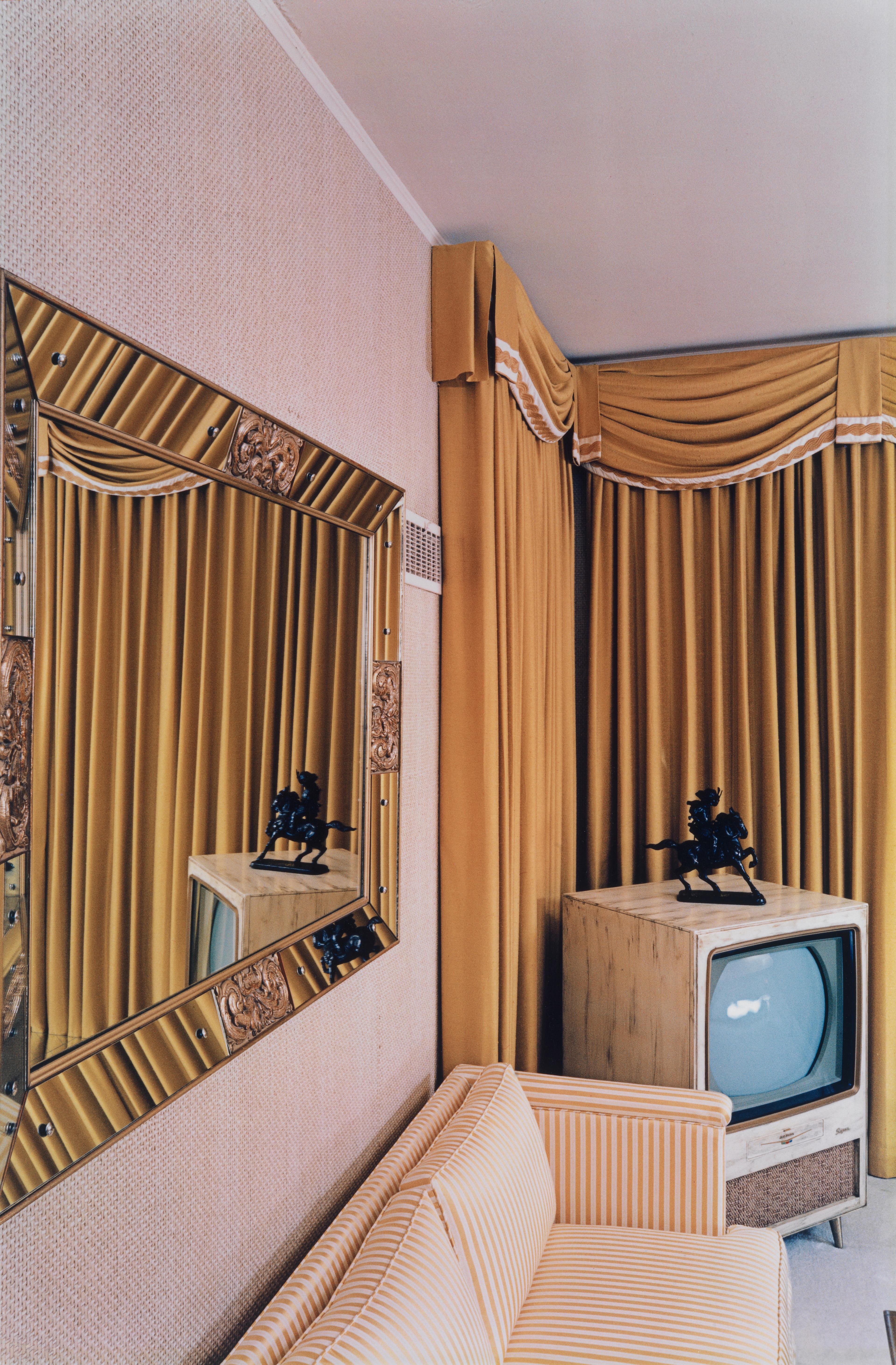
William Eggleston (American, born Memphis, Tennessee, 1939). Untitled, 1984. Dye transfer print, image: 22 x 14 5/8 in. (55.9 x 37.1 cm), sheet: 23 7/8 x 20 in. (60.6 x 50.8 cm). The Metropolitan Museum of Art, New York, Purchase, Louis V. Bell, Harris Brisbane Dick, Fletcher, and Rogers Funds and Joseph Pulitzer Bequest, and Elizabeth S. and Robert J. Fisher Gift, 2012 (2012.298). © Eggleston Artistic Trust
My name's Eve Sussman and I'm an artist.
I think I've been amazed by this photography since I was in college. Sometimes when you like a certain artist or a certain work when you're younger, after a while you mature out of it. With the Eggleston, it's the opposite. I'm more enamored with it than I was in my twenties.
The main thing for me is that it's this mix of banality and ominousness, and it's so full of mystery, like, you just don't know if he was looking for that ominousness. You know, they're so everyday and they're all about the daily. I mean, there couldn't be something more daily than the oven or the shower or the television in the corner or this incredibly coiffed, well-put-together woman who looks like she's got a set of legal briefs, but sitting on this kind of crappy curb. It's, to me, just incredibly poetic and kind of genius. And the way inanimate things become almost anthropomorphized. The architecture takes on personality. The shades on the windows almost become like gigantic eyelashes or something. A lot of the time when you see really beautiful formal photography it also feels slightly over-considered, but this has got a mix of this weird spontaneity.
These are shot in natural light without anything set up. I think he does it by noticing, you know? It's about being aware. It's about seeing what's in front of you. He frames things quite tight. He's sort of captured things in a way. You feel this capturing and you feel this framing where you know there's something... stuff beyond the frame that you're not allowed to see, and that's part of also what makes you take more interest in it. And I think that's part of what makes you say, "oh, I've seen this a million times but I've never seen it like this."
And that's something I'm very interested in: treating a still image as a frame and imagining what happened in the frame before and the frame after. And he's kind of insinuating that, like, well, what's going on in the rest of that hotel room? You see he's got a suitcase there, but then there's got to be stuff off to the left and to the right that we're not allowed to know what it is. There's sort of an anxiety in all of them. You know, you don't look at that oven and not think of Sylvia Plath. You feel this emptiness that's just pervasive.
To me, they catch your ability to sort of empathize with them and that's a human thing that defies any sort of moving forward or moving backward. It's the things that defy history and defy technology that I think are the most powerful. He keeps you questioning. He's not telling you what any of this stuff is. You know, it's just a house—yeah, right, it's just a house, okay—but you kind of know it's not. You sort of have to assume that you can figure it out.