English
DonateMembershipTickets

Inlays

ca. 9th–7th century BCE
Not on view
These three pieces of carved shell take the form of a slightly curved disk decorated with a cutout crescent and smaller disk. Traces of a silver band are visible around the outer rim of one piece. Found in a royal building at Nimrud that was used to store luxury goods, these disks may have been inlaid as decoration into elaborately decorated furniture made of carved ivory. Ivory plaques, strips, and other furniture elements were often inlaid into a wooden frame using joinery techniques and glue, and could be overlaid with gold foil or inlaid with pieces such as these disks to create dazzling contrasts in color and luster. When the royal buildings at Nimrud were sacked during the fall of Assyria in 614 and 612 B.C., looters stripped the gold inlay from the ivory furniture and left the broken pieces behind, so how these disks were originally used is not known.

Artwork Details

Object Information
  • Title: Inlays
  • Period: Neo-Assyrian
  • Date: ca. 9th–7th century BCE
  • Geography: Mesopotamia, Nimrud (ancient Kalhu)
  • Culture: Assyrian
  • Medium: Shell
  • Dimensions: 0.67 x 0.67 x 0.55 in. (1.7 x 1.7 x 1.4 cm)
  • Credit Line: Rogers Fund, 1962
  • Object Number: 62.269.17a–c
  • Curatorial Department: Ancient West Asian Art
More Artwork
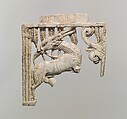
Openwork furniture plaque with a grazing oryx in a forest of fronds, Ivory, Assyrian
Assyrian
ca. 9th–8th century BCE
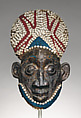
Helmet crest from a nja masquerade, Grassfields artists, Wood, copper, glass beads, raffia palm, cowrie shells, Bamum kingdom
Grassfields artists
ca. 1800–80
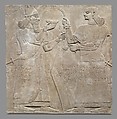
Relief panel, Gypsum alabaster, Assyrian
Assyrian
ca. 883–859 BCE
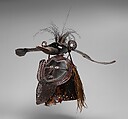
Krar (mask), Mabuiag Island artist, Turtle shell, wood, cassowary feathers, fiber, resin, shell, paint, Torres Strait Islander
Mabuiag Island artist
mid to late 19th century
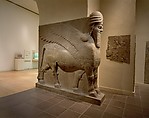
Human-headed winged bull (lamassu), Gypsum alabaster, Assyrian
Assyrian
ca. 883–859 BCE

Research Resources

The Met provides unparalleled resources for research and welcomes an international community of students and scholars. The Met's Open Access API is where creators and researchers can connect to the The Met collection. Open Access data and public domain images are available for unrestricted commercial and noncommercial use without permission or fee.

To request images under copyright and other restrictions, please use this Image Request form.

Feedback

We continue to research and examine historical and cultural context for objects in The Met collection. If you have comments or questions about this object record, please contact us using the form below. The Museum looks forward to receiving your comments.

Send feedback

Content Notice

The Metropolitan Museum of Art presents over 5,000 years of art from around the world, and our online collection reflects ongoing work conducted over the course of our more than 150-year history. You may encounter objects or images that may be inappropriate for some viewers or information that may be outdated.