Wondertooneel der Nature
Textile merchant, Levinus Vincent and his wife Joanna van Breda amassed a significant collection of naturalia and art in the late seventeenth century. Vincent received the collection in 1698 from Joanna’s brother, and over several years expanded it. The collection was publicly accessible in Amsterdam from 1698 to 1706, before being moved outside the city[1]. Vincent coordinated the publication of two books, bound together in the Met’s copy, to document and further increase the visibility of his collection.
The first foldout, which opens the second volume depicts a grand hall that is likely imagined. The objects shown within the space are likely real, giving us a sense of the breadth of Vincent’s collection. As in many early modern collections, naturalia — fossils, corals, shells, insects, birds, minerals — reside next to manmade artefacts — printed books, albums of drawings, and what appears to be featherworks, baskets, and other creations from the Americas. Many of the items were exotic, brought to the Netherlands through systems of global trade and colonialism that expanded over the seventeenth century.
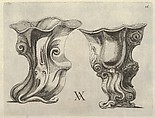
Vincent took pride not only in the contents of his collection but also in their ordering and artful arrangement. The text of the volume details the dimensions and arrangement of the boxes and the cabinets that housed the collection and the sumptuously etched foldouts, with which the volume concludes, depict these containers and the placement of naturalia within them. Shells, insects, and other objects were often laid in drawers in elaborately orchestrated patterns. On plate 6 we see the most elaborate of these arrangements: butterflies arranged in intricate patterns and sewn into their boxes by Joanna van Breda.
Olivia Dill 8/20/24
[1] Jorink, Eric. Reading the Book of Nature in the Dutch Golden Age, 1575-1715. Brill’s Studies in Intellectual History; v. 191. Leiden; Boston: Brill, 2010, 337–341.
Artwork Details
- Title: Wondertooneel der Nature
- Author: Written by Levinus Vincent
- Publisher: Published by François Halma , Amsterdam
- Illustrator: Romeyn de Hooghe (Dutch, Amsterdam 1645–1708 Haarlem)
- Date: 1706, 1715
- Medium: Vellum spine
- Dimensions: 9-1/4" high
- Classification: Books
- Credit Line: The Elisha Whittelsey Collection, The Elisha Whittelsey Fund, 1958
- Object Number: 58.589
- Curatorial Department: Drawings and Prints
More Artwork
Research Resources
The Met provides unparalleled resources for research and welcomes an international community of students and scholars. The Met's Open Access API is where creators and researchers can connect to the The Met collection. Open Access data and public domain images are available for unrestricted commercial and noncommercial use without permission or fee.
To request images under copyright and other restrictions, please use this Image Request form.
Feedback
We continue to research and examine historical and cultural context for objects in The Met collection. If you have comments or questions about this object record, please contact us using the form below. The Museum looks forward to receiving your comments.
Content Notice
The Metropolitan Museum of Art presents over 5,000 years of art from around the world, and our online collection reflects ongoing work conducted over the course of our more than 150-year history. You may encounter objects or images that may be inappropriate for some viewers or information that may be outdated.