English
DonateMembershipTickets

Welcoming Descent of Amida and Bodhisattvas

late 14th century
Not on view
Like many of the works of art created to represent the Pure Land belief in salvation through faith, raigō ("welcoming descent") paintings like this one were indispensable religious furnishings at the time of death. Such raigo paintings depict the scene in which Amida (Sanskrit: Amitabha) and his attendants descend from heaven to take a believer back to the Western Paradise on a lotus throne. The scrolls were often hung by the bedside of the dying to ensure the prospect of rebirth in paradise. Since traditionally the dying lay with their heads to the north and their faces turned west, raigō paintings usually depict the Buddha and his entourage coming from the upper left down toward the lower right so as to meet the gaze of the dying. Sometimes silken cords were attached to Buddha's hand, offering the dying physical assistance during the journey to paradise.

Artwork Details

Object Information
  • 阿弥陀聖衆来迎図
  • Title: Welcoming Descent of Amida and Bodhisattvas
  • Artist: Unidentified artist
  • Period: Nanbokuchō period (1336–92)
  • Date: late 14th century
  • Culture: Japan
  • Medium: Hanging scroll; ink, color, and gold on silk
  • Dimensions: Image: 65 3/4 × 33 1/2 in. (167 × 85.1 cm)
    Overall with mounting: 8 ft. 3 1/2 in. × 39 1/2 in. (252.7 × 100.3 cm)
    Overall with knobs: 8 ft. 3 1/2 in. × 42 1/4 in. (252.7 × 107.3 cm)
  • Classification: Paintings
  • Credit Line: Gift of Abby Aldrich Rockefeller, 1942
  • Object Number: 42.25.37
  • Curatorial Department: Asian Art

Audio

Cover Image for 8845. Welcoming Descent of Amida and Bodhisattvas

8845. Welcoming Descent of Amida and Bodhisattvas

0:00
0:00
We're sorry, the transcript for this audio track is not available at this time. Please email info@metmuseum.org to request a transcript for this track.
More Artwork
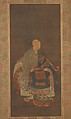
Portrait of Shun'oku Myōha, Unidentified artist Japanese, Hanging scroll; ink, color, and gold on silk, Japan
Unidentified artist
ca. 1383
Armor (<i>Yoroi</i>) of Ashikaga Takauji (1305–1358), Iron, lacquer, leather, silk, gilt copper, Japanese
Japanese
early 14th century
Bamboo in the Wind, Yi Jeong (artist name: Taneun)  Korean, Hanging scroll; ink on silk with gold on colophon, Korea
Yi Jeong (artist name: Taneun)
early 17th century
Grapevine and Squirrels, Unidentified artist, Hanging scroll; ink and color on paper, Korea
Unidentified artist
early 19th century
Blade for a Dagger (Tantō), Rai Kunitoshi  Japanese, Steel, Japanese
Swordsmith Blade inscribed by Rai Kunitoshi
ca. 1315–16

Research Resources

The Met provides unparalleled resources for research and welcomes an international community of students and scholars. The Met's Open Access API is where creators and researchers can connect to the The Met collection. Open Access data and public domain images are available for unrestricted commercial and noncommercial use without permission or fee.

To request images under copyright and other restrictions, please use this Image Request form.

Feedback

We continue to research and examine historical and cultural context for objects in The Met collection. If you have comments or questions about this object record, please contact us using the form below. The Museum looks forward to receiving your comments.

Send feedback

Content Notice

The Metropolitan Museum of Art presents over 5,000 years of art from around the world, and our online collection reflects ongoing work conducted over the course of our more than 150-year history. You may encounter objects or images that may be inappropriate for some viewers or information that may be outdated.