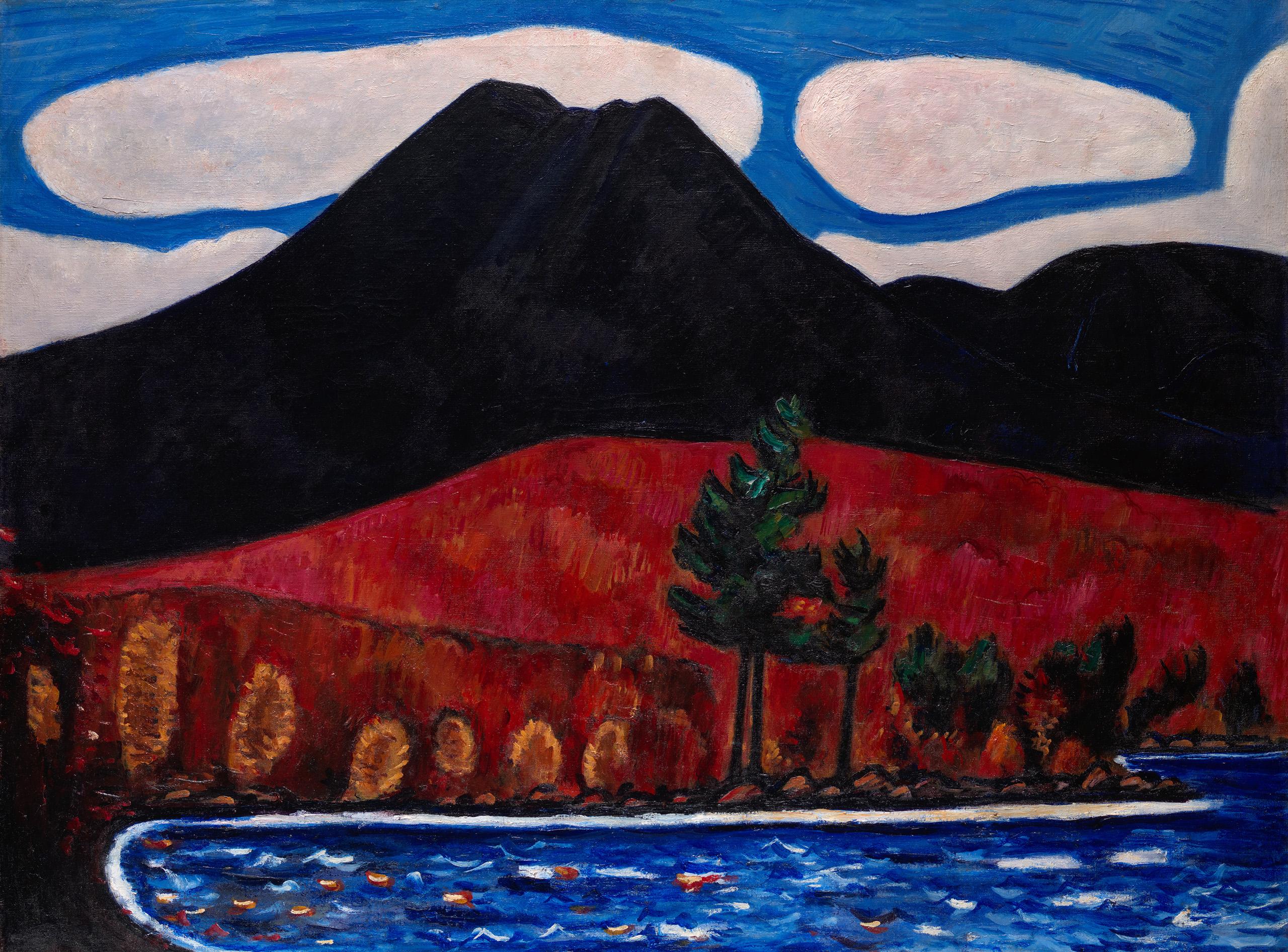
Marsden Hartley (American, Lewiston, Maine 1877–1943 Ellsworth, Maine). Mount Katahdin, Autumn, No. 2, 1939–40. Oil on canvas, 30 1/4 × 40 1/4 in. (76.8 × 102.2 cm). The Metropolitan Museum of Art, New York, Edith and Milton Lowenthal Collection, Bequest of Edith Abrahamson Lowenthal, 1991 (1992.24.3)
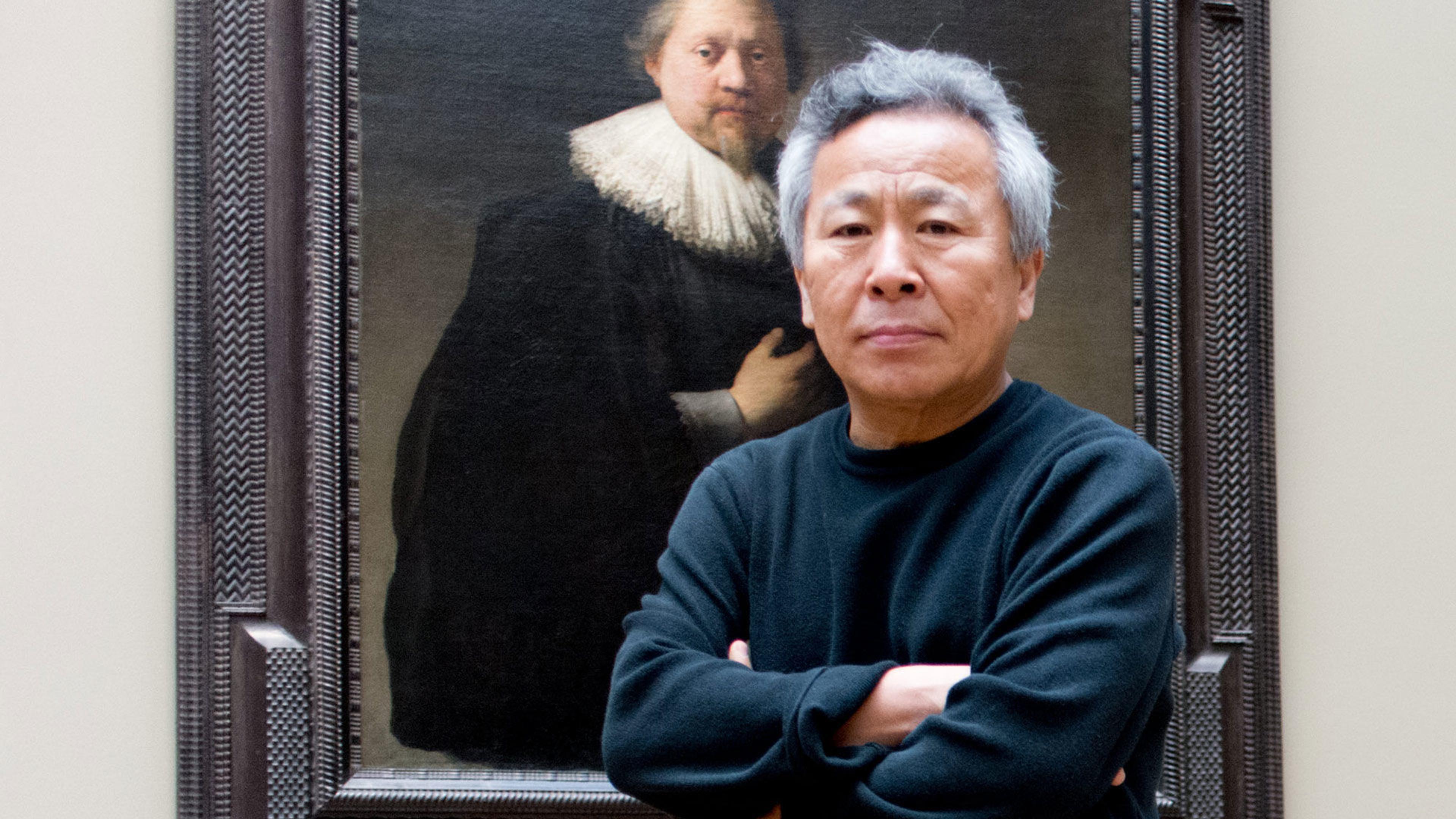
My name is David Salle. I'm a painter.
It's always a great mystery how a painter conveys feeling. How does that work? How does that feeling arise?
I think that Hartley in a way is an enigma because it's hard to put your finger on exactly why his paintings have such an emotional force behind them. The work resists any kind of sentimentality or easy, kind of illustrative relationship to narrative. Hartley approaches the world with a pictorial imagination in a particular alignment with his subject matter. The one is brought to bear on the other in a way which is almost consistently fruitful.
The mountain in Maine is a very massive black form, which is in itself a wonderful anchor, but what’s really interesting is that the clouds and sky behind the mountain seem to be hacked out of the same material as the mountain itself. They look as though they could have been cut out with a jigsaw.
The other paintings, the Maine lobstermen and New Mexico cemetery, operate in a similar way: these massed forms weighing heavily on the center of the painting reinforced by the black outline, which is simultaneously fluid and also choppy. Hartley internalized some kind of sense of painting as armature.
On top of that, he's all in coloristically. The intense red that happens when the setting sun hits the side of the mountain—it seems to catch fire, it looks like flames. The red shirt of the lobsterman is just heartbreaking in its redness and its pinkness, and understanding that when light hits red it turns pink—the incongruity of that within its setting gives the picture an almost operatic feeling.
Hartley has an enormous sense of empathy with what he's painting, whether it's a portrait or a rock. There's some sense of that being a conduit for a larger feeling about awesomeness of life but also the suffering that life entails. These are paintings that only could have been painted by someone hardened to the working-class New England life: the harsh weather, the taciturnity, the acceptance of life in environments in which someone could very easily perish.
One of the paradoxes about art is that it can express a deeply tragic sense of life and do so in a way which results in something which is so upliftingly beautiful. It's American painting. It feels so much of its time and place, and at the same time is incredibly interesting in the present tense.