English
DonateMembershipTickets

Winter Landscape

second quarter of the 17th century
Not on view
Wintry Chinese landscapes were a favorite subject of Kano Sansetsu, fitting for a painter whose name literally means “Mountain Snow.” Second-generation head of the Kyoto branch of the Kano school of painters (Kyōgano-ke), Sansetsu is perhaps best known for his beguiling, large-scale paintings in rich color and gold, exemplified by The Met’s Old Plum (1975.268.48a–d), one of his masterworks in this mode. But he was equally at home working in ink monochrome at a smaller scale. In this narrow hanging scroll composition, a lone man wearing a wide-brimmed hat rides his donkey along a riverbank, past a bridge and old tree. Perhaps his destination is the large pavilion seen between the snowy mountains above. Or maybe he is just passing through this desolate snowscape. Both primary motifs—the lone donkey rider with wide-brimmed hat near an old tree and the three snowy peaks—can be found in a number of other paintings by Sansetsu, either as individual compositions or worked into larger scale compositions on folding screens or panels. They are thought to have been inspired by a well-known landscape of the same subject by the thirteenth-century Chinese painter Liang Kai 梁楷 (ca. 1140–ca. 1210) that has been in Japan since at least the fifteenth century.

Artwork Details

Object Information
  • 雪中山水図
  • Title: Winter Landscape
  • Artist: Kano Sansetsu 狩野山雪 (Japanese, 1590–1651)
  • Period: Edo period (1615–1868)
  • Date: second quarter of the 17th century
  • Culture: Japan
  • Medium: Hanging scroll; ink on paper
  • Dimensions: Image: 29 3/16 × 9 7/16 in. (74.1 × 24 cm)
    Overall with mounting: 55 11/16 × 10 1/16 in. (141.5 × 25.5 cm)
    Overall with knobs: 55 11/16 × 11 5/8 in. (141.5 × 29.6 cm)
  • Classification: Paintings
  • Credit Line: The Howard Mansfield Collection, Purchase, Rogers Fund, 1936
  • Object Number: 36.100.61
  • Curatorial Department: Asian Art
More Artwork
Armor (<i>Gusoku</i>), Saotome Ietada  Japanese, Iron, lacquer, silk, gilt copper, Japanese
Armorer Helmet bowl signed Saotome Ietada
Armorer Breastplate inscribed inside, Myōchin Munesuke
16th and 18th centuries
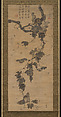
Grapevine and Squirrels, Unidentified artist, Hanging scroll; ink and color on paper, Korea
Unidentified artist
early 19th century
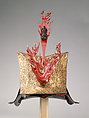
Helmet (<i>Zukinnari Kabuto</i>), Iron, lacquer, Japanese
Japanese
16th century
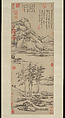
Woods and Valleys of Mount Yu, Ni Zan  Chinese, Hanging scroll; ink on paper, China
Ni Zan
dated 1372
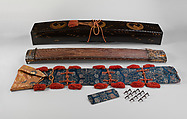
Koto (箏), Metalwork by Goto Teijo, 9th generation Goto master, Japan  Japanese, Various woods, ivory and tortoiseshell inlays, gold and silver inlays, metalwork, cloth, laquer, paper,, Japanese
Metalwork by Goto Teijo, 9th generation Goto master, Japan
Workshop of Gotō Yūjō
early 17th century

Research Resources

The Met provides unparalleled resources for research and welcomes an international community of students and scholars. The Met's Open Access API is where creators and researchers can connect to the The Met collection. Open Access data and public domain images are available for unrestricted commercial and noncommercial use without permission or fee.

To request images under copyright and other restrictions, please use this Image Request form.

Feedback

We continue to research and examine historical and cultural context for objects in The Met collection. If you have comments or questions about this object record, please contact us using the form below. The Museum looks forward to receiving your comments.

Send feedback

Content Notice

The Metropolitan Museum of Art presents over 5,000 years of art from around the world, and our online collection reflects ongoing work conducted over the course of our more than 150-year history. You may encounter objects or images that may be inappropriate for some viewers or information that may be outdated.