
Holy stond in the hall
Faire to behold:
Ivy stond without the dore—
She is ful sore acold.
Holy and his mery men
They daunsen and they sing;
Ivy and her maidenes
They wepen and they wring.
A group of English carols set down in the fifteenth century preserves evidence of a ritual contest between boys bearing branches of holly and girls bearing ivy. The red-berried holly, symbolizing light, warmth, and light, was meant to prevail over the black-fruited ivy, which signified the dark and cold of winter. Thus, ivy remained outside the door while holly was carried triumphantly into the hall.
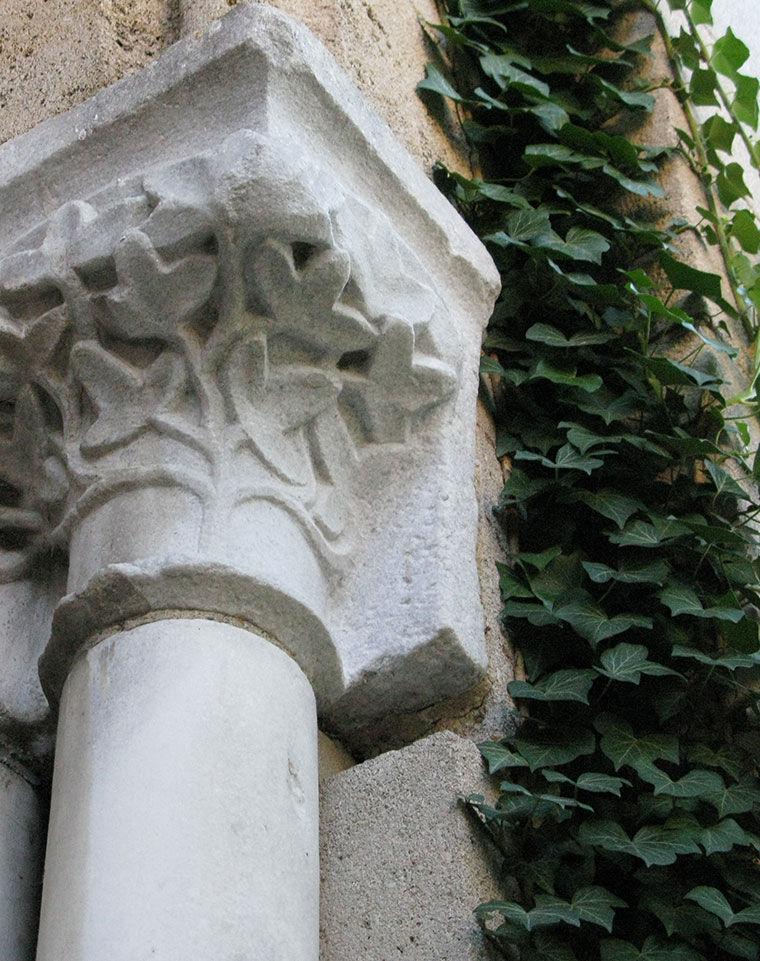
Once the non-flowering juvenile form of ivy, which is familiar as a groundcover, climbs upward on a tree or a wall and establishes itself, it changes to its shrubby arboreal form, becoming sexually mature and setting umbels of greenish-yellow flowers that ripen to black fruit. This transformation also entails a change in the form of the leaves, from lobed to cordate, i.e. heart-shaped. Photograph by Barbara Bell
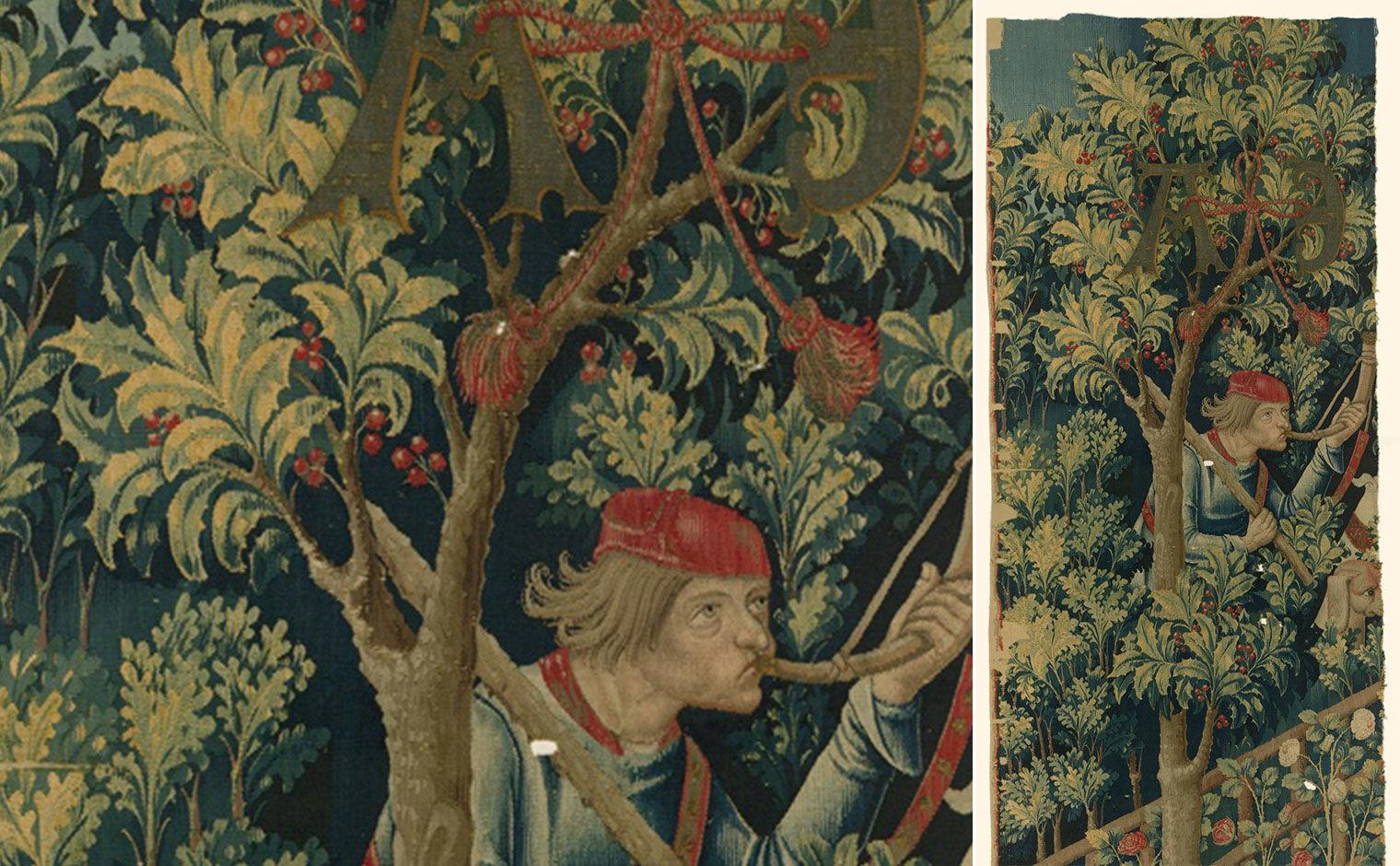
Holly is a dominant tree in the wooded landscapes of the Unicorn Tapestries and appears in all but the first and last of the seven in the set.
Of all the plants associated with the medieval celebration of Christmastide, holly (Ilex aquifolium) and ivy (Hedera helix) are arguably the most beautiful and the most significant. Both plants had been invested with extraordinary powers in pagan tradition. Holly, native to most parts of south and central Europe, was credited by the Roman natural historian Pliny with the power to protect and defend against witchcraft, lightning, and poison. Ivy was dedicated to Bacchus and was believed to prevent intoxication and confer the power to prophesy. (Maude Grieve, A Modern Herbal, 1971.) By the Middle Ages, holly and ivy had been thoroughly Christianized, although mistletoe remained suspect. Ivy was identified with the Virgin, and the red berries of the holly with the blood of Christ. The holly and ivy carols still sung today spell out the meanings the paired plants bore in the Middle Ages, while maintaining older associations derived from pre-Christian winter festivals.
More on plants in medieval life and art to come in the New Year.


