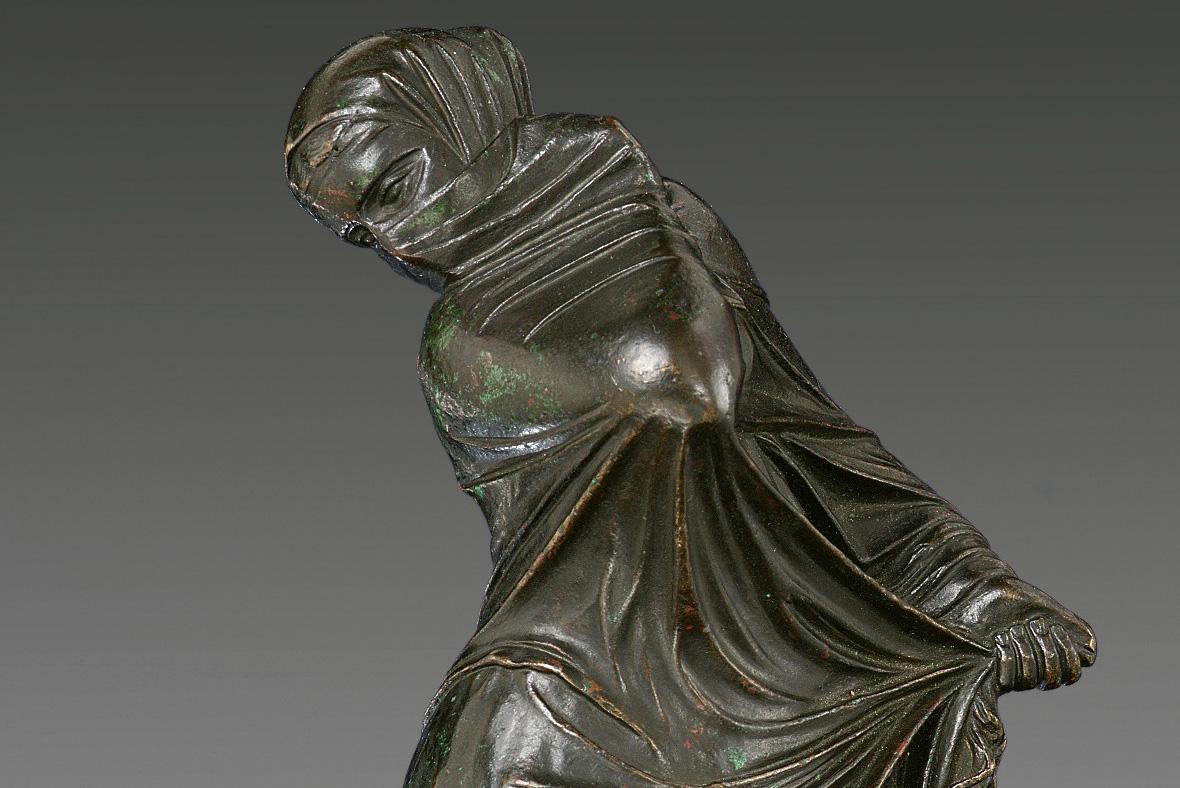
Bronze statuette of a veiled and masked dancer (detail), 3rd–2nd century BCE. Greek, Hellenistic period. Bronze, 8 1/16 × 3 1/2 × 4 1/2 in., 65.6oz. (20.5 × 8.9 × 11.4 cm, 4.1 lb.). The Metropolitan Museum of Art, New York, Bequest of Walter C. Baker, 1971 (1972.118.95)
When an artist is in love with the piece, that communicates very well over time. So thousands of years later, we're still feeling it.
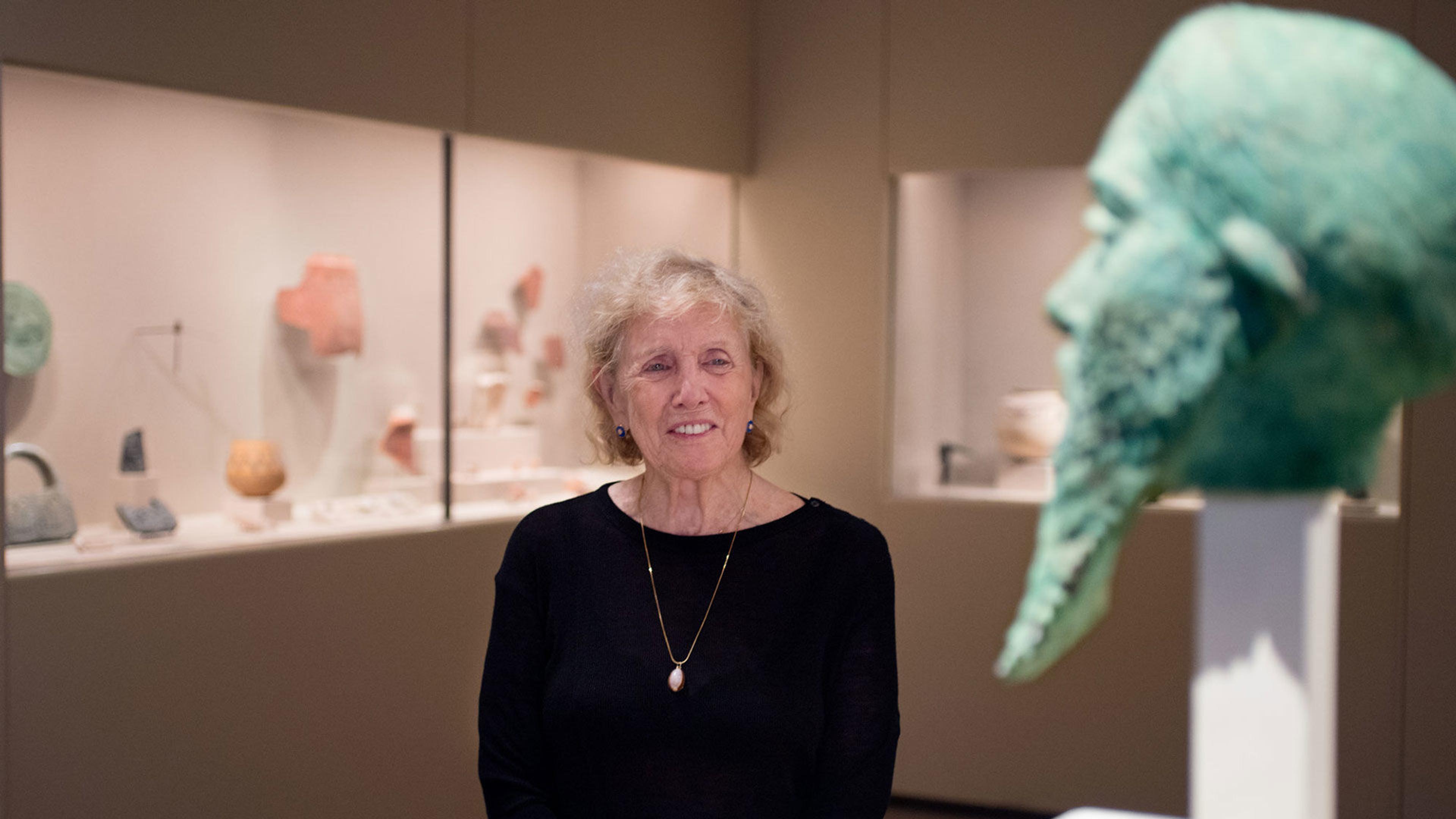
My name is Arlene Shechet. Primarily I’m a sculptor.
When I was in art school I used to go to the library and read books that happened to be left out on the table instead of choosing. So my favorite thing is to wander undirected at The Met. It’s like being in nature: it’s just a wild field, and every once in a while I can bend down and smell the flower.
I’ve come back to this piece over and over again for fifteen or twenty years. The first time I saw it, it struck me as a perfect small sculpture. It’s harder to make a small sculpture than it is to make a large one because it’s completely unforgiving. Every little gesture, every little crease matters enormously.
I feel that sculpture and dance are aligned practices. Sculpture is all about body-to-body. A sculptor is also a choreographer. The sculpture might be leaning, and the viewer will feel that in their own body. This piece is turning and making you walk around. As you move, you see those lines that are created by the textiles evolve. There’s no hierarchy in terms of the front and the back. There is no side that’s better. And yet, somehow we will still understand this as a single form.
The weight is going in a single direction at the bottom of the skirt. But then, that pointed foot does not touch the ground. From a geeky sculpture point of view, that’s such a great device. It’s brilliant! It has emotional availability that it wouldn’t have if it were settled. If it wasn’t for the drapery it would be less tantalizing.
It is a come-hither posture, but it’s also a don’t-get-near-me-I’m-doing-my-thing posture. She is in control, flaunting her female power, not just her availability. She functions in her eight inches with the power of the eight-foot-tall marble guys wearing their flayed lion skin. And this woman is just wearing her clothing.
It was probably carved in plaster or clay first, and then it was cast. That extra process of bronzing gives us a message of preciousness. Here is this thing that is celebrated and it’s a woman.
It gives me chills because it’s so felt, and when an artist is in love with the piece that communicates very well over time. So thousands of years later, we’re still feeling it.