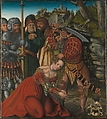
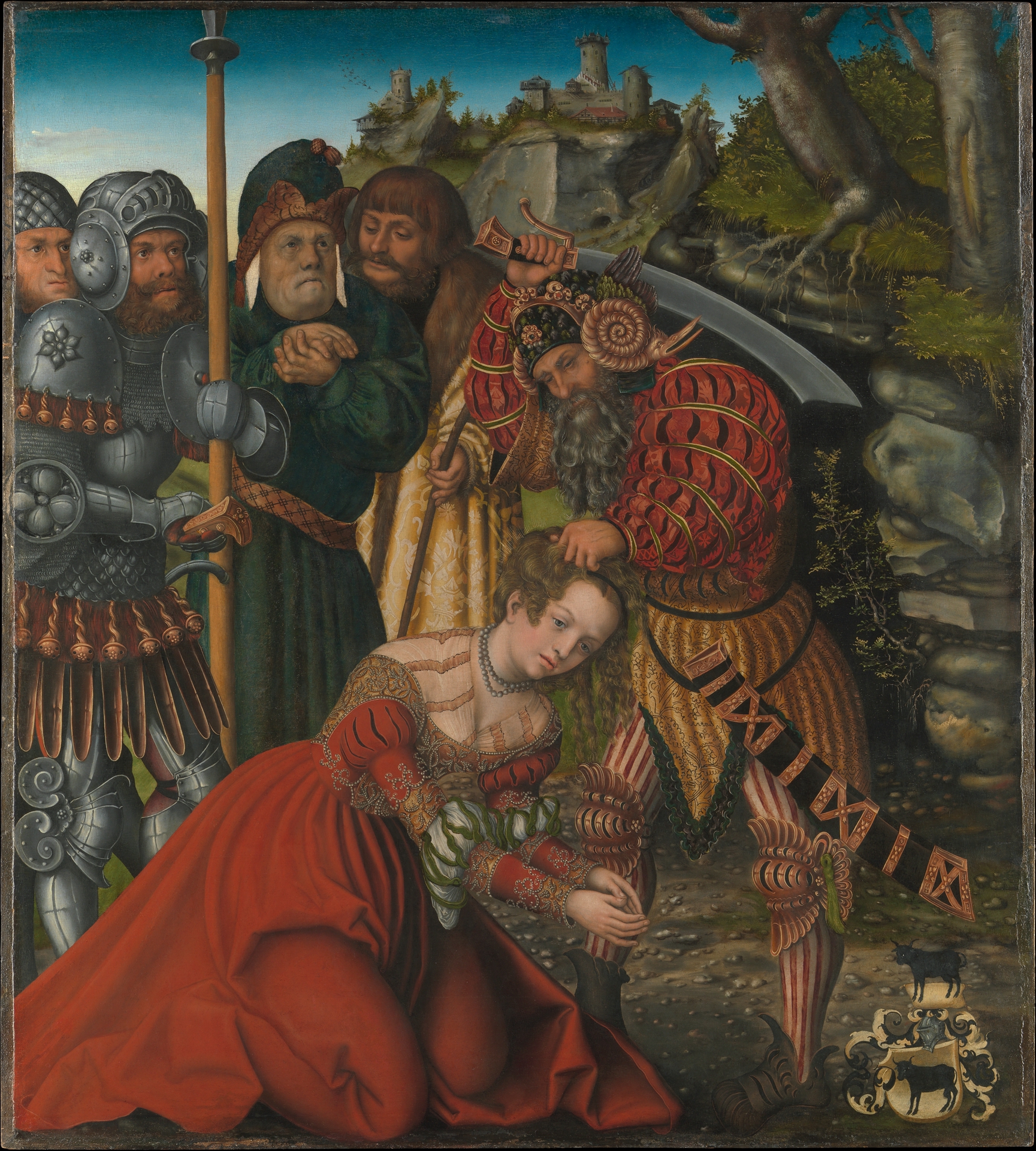
According to legend, Saint Barbara was executed by her pagan father, Dioscorus, when she refused to recant her Christian faith. Luxuriously dressed, she seems here to calmly accept her fate as she kneels before Dioscorus, who raises his sword to behead her. The four sinister-looking witnesses may be the Roman authorities who had tortured her in an attempt to persuade her to sacrifice to pagan gods, and who later sentenced her to death. The coat of arms indicates that Cranach painted this panel for a member of the Rem family, who were wealthy merchants in Augsburg.
This artwork is meant to be viewed from right to left. Scroll left to view more.
Fig. 1. X-radiograph
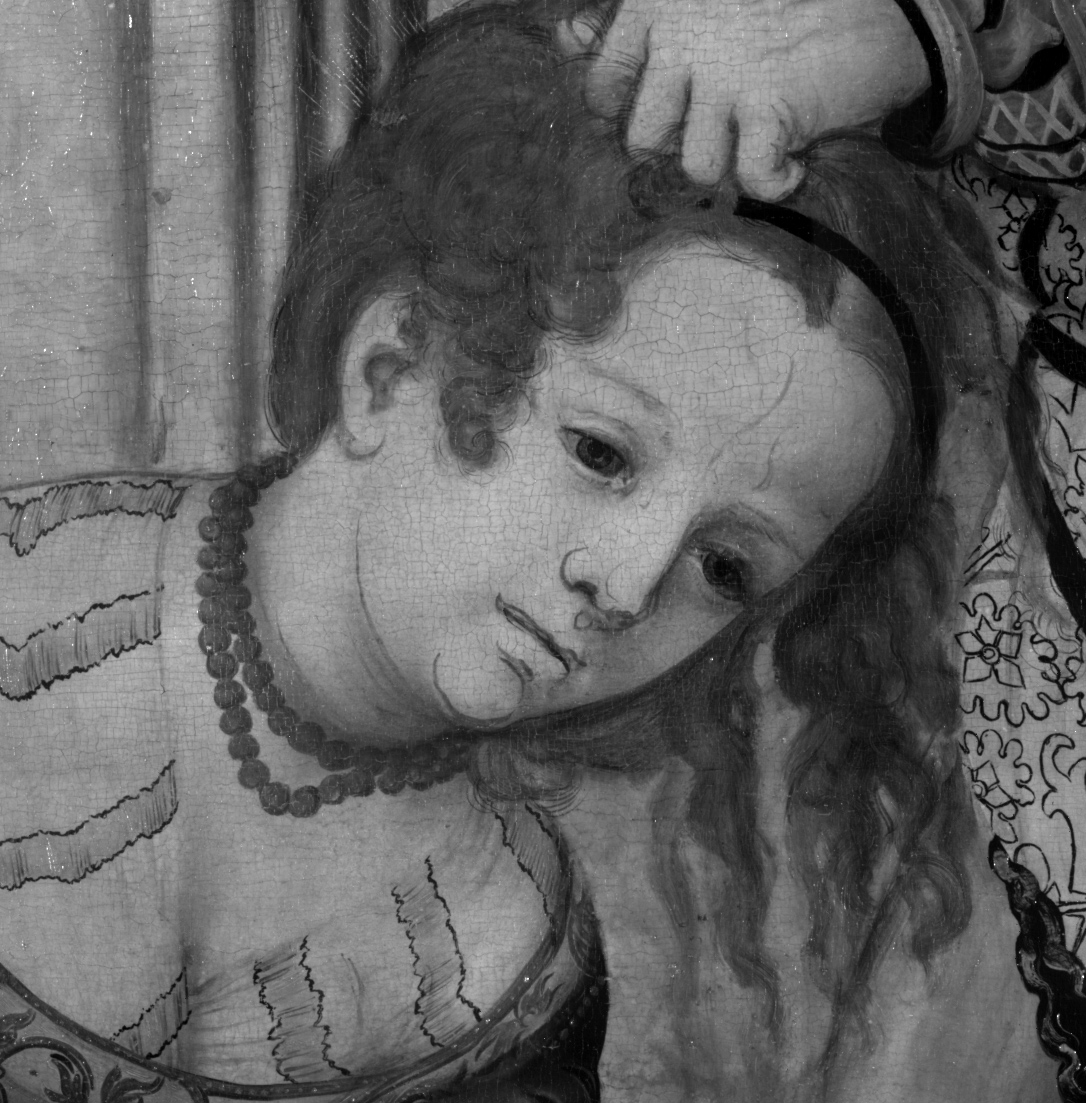
Fig. 2. Infrared Reflectogram, detail of Saint Barbara
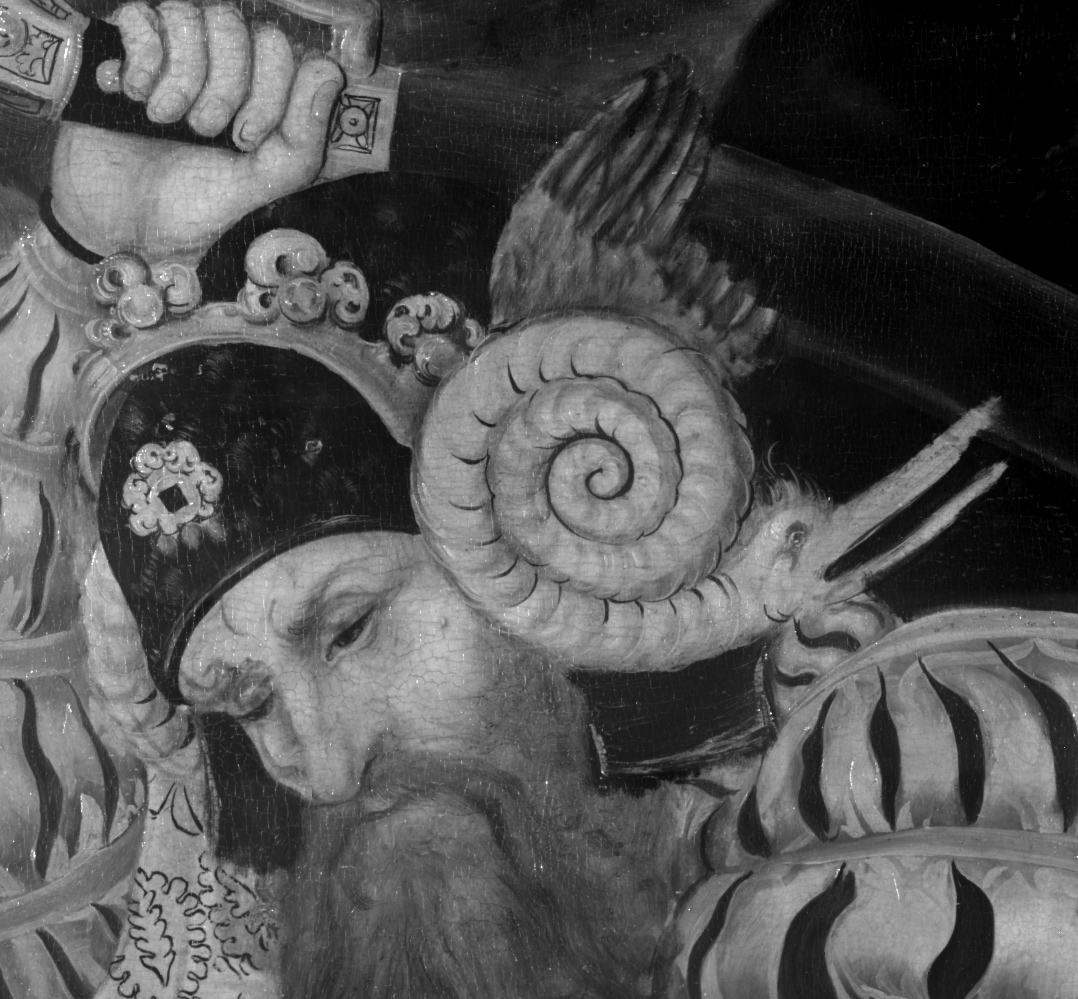
Fig. 3. Infrared Reflectogram, detail of Dioscorus
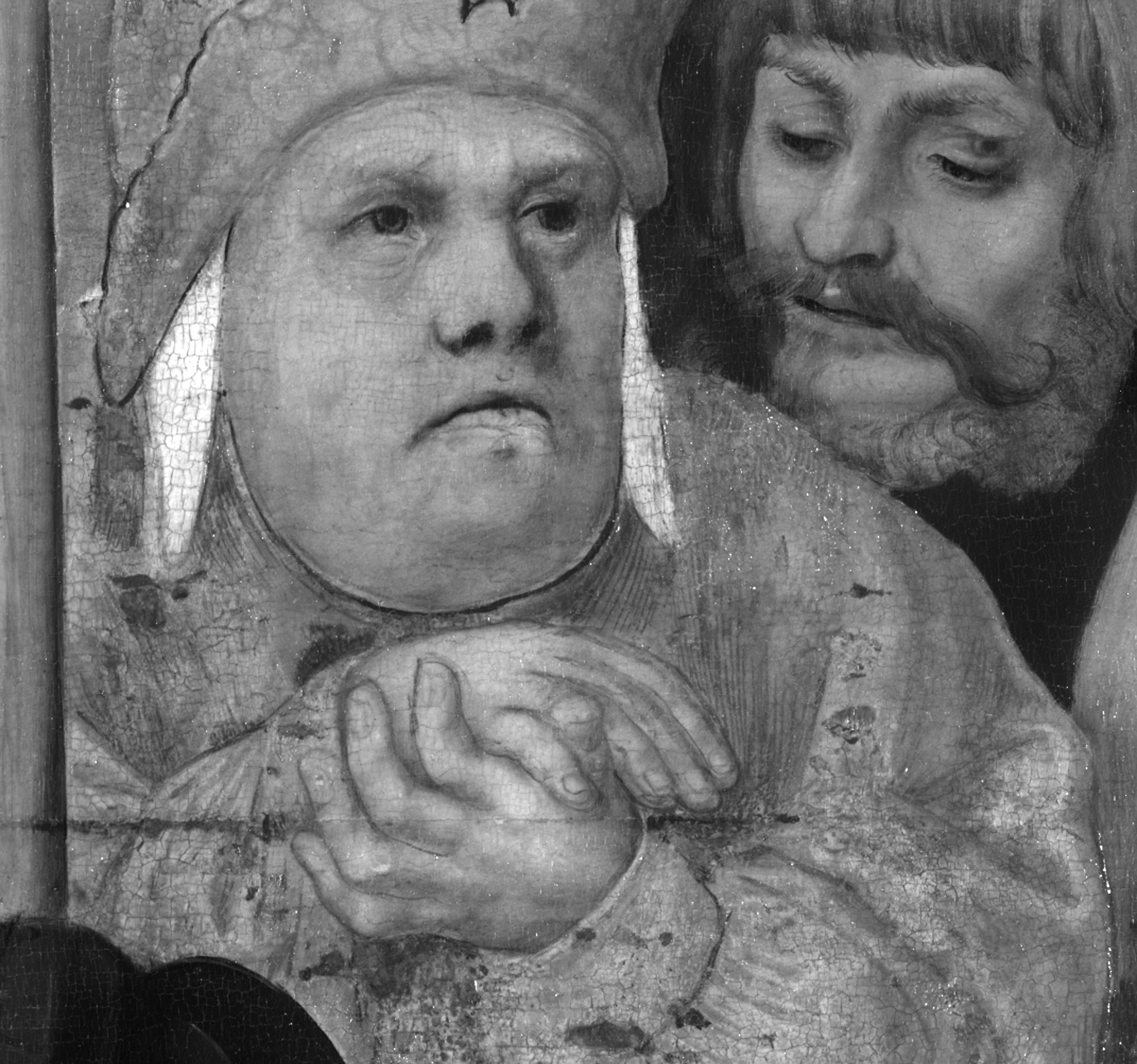
Fig. 4. Infrared Reflectogram, detail of judge
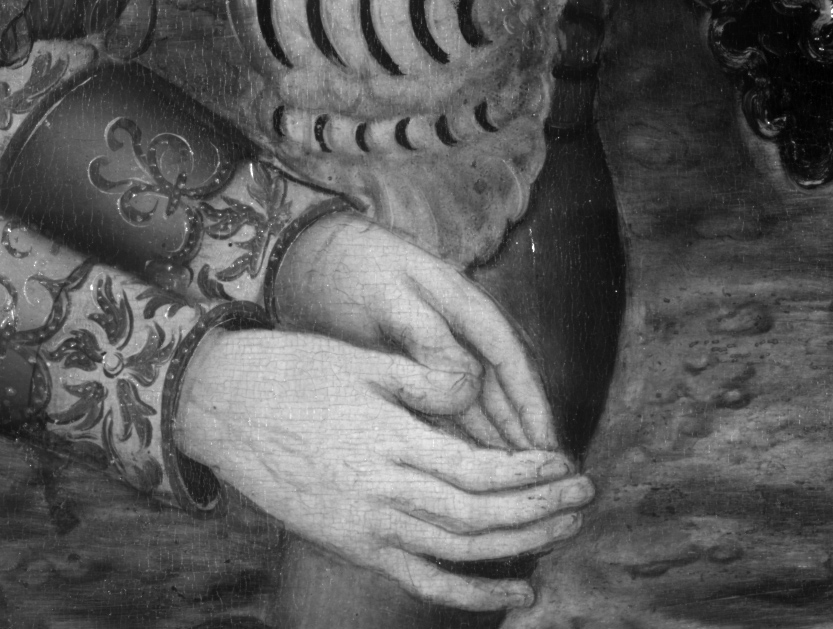
Fig. 5. Infrared Reflectogram, detail of Saint Barbara's hands
Artwork Details
Use your arrow keys to navigate the tabs below, and your tab key to choose an item
Title:The Martyrdom of Saint Barbara
Artist:Lucas Cranach the Elder (German, Kronach 1472–1553 Weimar)
Date:ca. 1510
Medium:Oil on linden
Dimensions:Overall 60 3/8 x 54 1/4 in. (153.4 x 137.8 cm); painted surface 59 3/8 x 53 1/8 in. (150.8 x 134.9 cm)
Classification:Paintings
Credit Line:Rogers Fund, 1957
Object Number:57.22
Der Heiligen Leben (Lives of the Saints) tells the story of Barbara, who was locked away in a tower by her heathen father, Dioscorus, to protect her from avid suitors. During her father’s absence, Barbara had a third window installed in the tower and was baptized. When she later explained to her father that the three windows represented the Trinity, Dioscorus flew into a rage and with sword drawn prepared to kill her. Barbara fled to a cave in a mountain, but was betrayed by a shepherd and, subsequently, delivered by her father to a judge, who had her tortured for refusing to recant her Christianity, and, finally, sentenced her to decapitation. Dioscorus led her up a mountain and cut off her head; on his way back down, he was struck by lightning and burned to death. Barbara became the patron saint of those threatened by sudden death, especially miners (because of her refuge in a cave) and artillerymen (referring to the lightning episode). Because of the tower where she was confined, Barbara is also the patron saint of architects and masons.
The original coat of arms in the lower right hand corner is that of the Rem family, who were merchants in Augsburg and worked in the Welser-Vöhlin, Höchstetter, and Fugger Gesellschaften. This was a large family of whom the best known is Lucas Rem (1481–1541), due to the fact that he left a diary covering the years 1494–1541. Although it is tempting to identify Lucas Rem as the one who commissioned this work, this cannot be established with certainty. The other works that were commissioned by him, including one painting by Quentin Metsys and three by Joachim Patinir, all carry Lucas’s personal motto—"Istz gvot so gebs Got" (All good things come from God)—which is absent in The Met's painting. Equally uncertain is why Lucas Rem would have commissioned a Martyrdom of Saint Barbara, although he was related to two Barbaras by marriage through his wife Anna Ehem (1500–1575). If the painting originally had wings, forming a triptych, these might offer further clues about the commission, but no clear candidates have survived. Two smaller workshop copies of The Met's painting testify to the popularity of the image.
The painting was first mentioned in 1844 by Karl August Gottlob Sturm when it was in the Schlosskirche at Goseck (southwest of Leipzig), but the subject matter was misidentified as the Sacrifice of Jephthah’s Daughter. In 1851 Christian Schuchardt correctly identified the episode from the legend of Saint Barbara, and considered it a product of the Cranach workshop, based on the artist’s woodcut of the same subject dating from around 1509. In the first lengthy discussion of the panel, Lepsius (1855) revealed that it had been attached to the ceiling (or high up on the wall) of the Goseck parish church, after which it was bought by Count von Zech-Burkersrode and transferred to the Goseck Schlosskirche. Based on the identification of the Rem coat of arms at the lower right, Lepsius supposed that the painting originally hung in the Rem home in Augsburg and that it was likely painted by a Swabian rather than a Saxon artist. Thereafter, there continued to be varied opinions about the attribution as well as the subject matter of the painting, until in 1956 Ernst Buchner affirmed the attribution to Lucas Cranach the Elder himself and dated it around 1509–15, proposing that Cranach received the commission from Lucas Rem during his trip to the Netherlands in 1508. Modern scholarship concerning the work has vacillated between those who consider it by a talented student (Schade 1980 and Erichsen 1994) and those who support the attribution to Lucas Cranach the Elder (Koepplin 1976 and Friedlӓnder and Rosenberg 1978). Friedlӓnder and Rosenberg dated the painting to about 1510, pointing out the similarity to Cranach's Fourteen Helpers in Need (Marienkirche, Torgau), generally dated between 1505 and 1509.
The comparison of the underdrawing of heads in the Met and Torgau paintings shows a reliance on short, curved strokes—sometimes seemingly randomly applied—to express facial features and folds of garments. These characteristics are also evident in the drawings attributed to Cranach of around the same time, especially the Beheading of Saint Barbara of about 1513 (Nasjonalgalleriet, Oslo), Saint Anthony in a Niche of about 1509–10 (Fogg Art Museum, Cambridge, Mass.), and Samson Fighting the Lion of about 1509–10 (Kupferstichkabinett, Dresden). This suggests that the Saint Barbara can be dated around 1510, at a moment when Cranach was both looking to further streamline his methods of painting—in particular the patterns of draperies and armor—and was influenced by the painting practices elsewhere in developing the facial types and expressions in his paintings.
[adapted from Ainsworth in Ainsworth and Waterman 2013]
The linden panel is composed of ten horizontally oriented boards. It has been thinned to 1.1 centimeters and cradled. Thinning exposed insect channels on the reverse. The left, right, and bottom edges have unpainted borders, approximately 1.2 centimeters wide, that have been filled and overpainted. Along the top, the paint extends to the edge of the panel, and a black border, approximately 1 centimeter wide, has been painted over the image. The panel was prepared with a white ground followed by a thin white priming that likely contains lead white, the application of which resulted in an uneven, patchy radio-opacity consistent with patterns seen in x-radiographs of many paintings produced in Cranach’s workshop. The painting is generally in very good condition. There are tiny losses along the wood grain over much of the surface. Losses throughout the dark green garment worn by the figure with hands clasped in front of his chest have been considerably restored; the lighter passages, in particular, appear quite broken up. Judging from the patchy appearance of the garment, a final green glaze may have been partially removed in this passage and may remain in a fragmentarystate, primarily in the deepest shadows. The green tassel hanging from Dioscorus’s knee armor, however, remains in good condition. Infrared reflectography revealed bold contours and parallel hatching executed with a brush in a liquid medium. Some facial features were shifted slightly in the final painted image: the profile of Dioscorus’s right cheek and forehead was moved to the left, the gaze of the bare-headed man was shifted away from Barbara, and the nose of the figure at the far left was elongated. The painting does not rely heavily on the shorthand techniques formalized in Cranach’s later works. Although details are built up in an economical fashion, forms are created with blending and transitional tones. Generally, the image is begun with a flat or slightly modulated midtone that is then enhanced with blended darks and more graphic highlights in one to three colors. One of the most skillfully painted passages, in which the fluency of application is clearly apparent, is the skirt of Dioscorus’s armor. Translucent ocher establishes the base tone of the garment, with opaque gray shadows blended in to create volume. Arcing wet-in-wet brushstrokes in pink and yellow form the highlights. The black overlaid pattern is not altered to follow the folds of the garment, but relies instead on shading in the underlying layers to describe volume. Unlike most areas of the painting, the rocky ledge at the right is executed in a fairly loose manner, with brushy scumbles laid over brown and gray translucent tones. Thickly applied stippled paint was used for the lichen growing on the rocks and trees. [2013; adapted from German Paintings catalogue]
parish church, Goseck, near Naumburg (sold to Zech-Burkersroda); Grafen von Zech-Burkersroda, chapel of Schloß Goseck, Goseck (possibly from 1840, definitely by 1844); by descent in the Zech-Burkersroda family, Schloß Goseck, later Munich (until 1956; sold by Margarethe Gräfin von Zech-Burkersroda or her sister-in-law, Baronin Elisabeth Gräfin von Zech-Burkersroda, to Böhler); [Böhler, Munich, from 1956]; [Hougershofer, Zurich; sold to Rosenberg & Stiebel]; [Rosenberg & Stiebel, New York, until 1957; sold to The Met]
E. A. Sturm. Goseck und seine Umgebungen. Naumburg, 1844, p. ? [see Ref. Lepsius 1855], as "The Sacrifice of Jephtha's Daughter," in the Schlosskirche; describes it as being seven feet high and about the same width.
Christian Schuchardt. Lucas Cranach des Aeltern: Leben und Werke. Vol. 2, Leipzig, 1851, p. 68, no. 314, lists it in the Schlosskirche of Goseck as "The Beheading of Saint Barbara," but does not mention a coat of arms; compares it with Cranach's woodcut of the subject [see Notes], and tentatively ascribes it to Cranach's workshop or to a follower, finding that the handling is not accomplished enough for the master; mentions that the picture had been damaged and was restored.
Friedrich Eduard Keller. Der Regierungsbezirk Merseburg. Magdeburg, 1853, p. 361, as "The Sacrifice of Jephtha's Daughter," probably by Michael Wolgemut, in the Goseck Schlosskirche; notes that it was recently restored.
Karl Peter Lepsius. Kleine Schriften: Beiträge zur thüringisch-sächsischen Geschichte und deutschen Kunst- und Altertumskunde. Ed. A. Schulz. Vol. 3, Magdeburg, 1855, pp. 149–57, comments on its recently cleaned and restored state, identifying the subject as the beheading of Saint Barbara; finds the work in the character of the school of Cranach, ascribing it to an unknown Swabian, not Saxon, master; identifies the arms at lower right as those of the Rehm family of Augsburg and, based on this, invents a possible early provenance for the picture; notes that the painting was transferred by the Graf von Zech-Burkersroda from the Dorfkirche of Goseck to its Schlosskirche.
Karl August Gottlob Sturm. Geschichte und Beschreibung der ehemaligen Grafschaft und Benediktinerabtei Goseck. Weissenfels, 1861, p. 113, again identifies the subject as the sacrifice of Jephtha's daughter and calls it probably by Wolgemut; notes that the Graf von Zech-Burkersroda bought it for 100 Taler twenty years ago and had it restored in Dresden.
M. B. Lindau. Lucas Cranach: Ein Lebensbild aus dem Zeitalter der Reformation. Leipzig, 1883, p. 242, calls the woodcut a study for the painting, which he considers a production of Cranach's workshop or possibly of a follower; finds the painting similar in style to the wings of the altarpiece in the east choir of Naumburg cathedral.
Heinrich Bergner. Beschreibende Darstellung der älteren Bau- und Kunstdenkmäler der Provinz Sachsen. Vol. 27, Kreis Querfurt. Halle, 1909, pp. 125–26, no. 2, lists it in the Schlosskirche as "The Execution of Saint Catherine" by Lucas Cranach, repeating Lepsius's identification of the Rehm arms [see Ref. 1855]; states that it was purchased for the Schlosskirche by Zech-Burkersroda in about 1840.
Friedrich Hoppe. "Goseck." Heimatkalender für die Stadt- und Landkreise Weissenfels und Zeitz 6 (1930), p. 99, mentions it as a large painting of an Old Testament scene in the Sclosskirche, formerly in the Dorfkirche, which had come from a patrician family in Augsburg.
"Additions to the Collections." Metropolitan Museum of Art Bulletin 16 (October 1957), p. 63, ill. p. 42, as "The Martyrdom of Saint Barbara," by Lucas Cranach the Elder.
Jakob Rosenberg. Die Zeichnungen Lucas Cranachs D. Ä. Berlin, 1960, p. 35, under no. A7, mentions it in connection with the drawing of the same subject in the Städelsches Kunstinstitut, Frankfurt, which he calls a copy by a student of Cranach.
Werner Schade. "Maler aus dem Umkreis Cranachs." Lucas Cranach, 1472–1553: Ein grosser Maler in bewegter Zeit. Exh. cat., Schloßmuseum. Weimar, 1972, pp. 149–50, states that it seems to be an outstanding work by an older Cranach student.
Dieter Koepplin and Tilman Falk. Lukas Cranach: Gemälde, Zeichnungen, Druckgraphik. Exh. cat., Kunstmuseum Basel. Vol. 2, Basel, 1976, pp. 550, 552, under no. 413, Koepplin describes it as similar in character to Cranach's woodcut of the subject and is inclined to ascribe it to Cranach himself, noting that the original wings (lost) would have better framed the composition; sees the drawing in Frankfurt as a copy after a compositional sketch by Cranach; suggests that Schuchardt [see Ref. 1851] may have been looking at the smaller copy after the MMA picture [see Notes].
Max J. Friedländer and Jakob Rosenberg. The Paintings of Lucas Cranach. rev. ed. Ithaca, N.Y., 1978, p. 72, no. 21, ill., date it about 1510 and ascribe it to Cranach; state that it belongs to the stylistic phase of the artist's "Fourteen Helpers in Need" (Marienkirche, Torgau, Germany), which they date about 1507; mistakenly call the family whose coat of arms appears in the lower right Rehn rather than Rehm.
Werner Schade. Cranach: A Family of Master Painters. New York, 1980, pp. 46, 382 n. 274 [German ed., "Die Malerfamilie Cranach," Dresden, 1974, pp. 46, 382 n. 274], calls it a good school work.
Introduction by James Snyder inThe Metropolitan Museum of Art: The Renaissance in the North. New York, 1987, pp. 15, 106, colorpl. 74, as by Cranach; dates it about 1510–15.
Élie Faure et al. Lukas Cranach: "le corps divinisé," le début du maniérisme, 1472–1553. Paris, 1993, p. 95, ill. p. 77 (color detail), dates it about 1510.
Johannes Erichsen inLucas Cranach: Eine Maler-Unternehmer aus Franken. Exh. cat., Festung Rosenberg, Kronach. Augsburg, 1994, pp. 181, 185 n. 8, refers to it as a product of Cranach's workshop; suggests that an engraving (fig. A122) of the same subject by Master MZ served as a model for the MMA painting.
Katharine Baetjer. European Paintings in The Metropolitan Museum of Art by Artists Born Before 1865: A Summary Catalogue. New York, 1995, p. 219, ill.
Portraits and Other Recent Acquisitions. Exh. cat., New York Lawrence Steigrad Fine Arts. [New York], [2009], unpaginated, under no. 1, discuss our painting in relation to the workshop copy in the Guccione collection until 2007 [see Notes].
Karen E. Thomas in Maryan W. Ainsworth and Joshua P. Waterman. German Paintings in The Metropolitan Museum of Art, 1350–1600. New Haven, 2013, p. 12.
Maryan W. Ainsworth in Maryan W. Ainsworth and Joshua P. Waterman. German Paintings in The Metropolitan Museum of Art, 1350–1600. New Haven, 2013, pp. 5, 47–51, 284–85, no. 9, ill. (color) and fig. 44 (infrared reflectogram detail).
Maryan Ainsworth, Sandra Hindriks, and Pierre Terjanian. "Lucas Cranach's 'Saint Maurice'." Metropolitan Museum of Art Bulletin 72 (Spring 2015), pp. 14, 17, figs. 11 (infrared reflectogram detail), 12 (color).
Lucas Cranach the Elder (German, Kronach 1472–1553 Weimar)
Resources for Research
The Met's Libraries and Research Centers provide unparalleled resources for research and welcome an international community of students and scholars.
The Met Collection API is where all makers, creators, researchers, and dreamers can connect to the most up-to-date data and public domain images for The Met collection. Open Access data and public domain images are available for unrestricted commercial and noncommercial use without permission or fee.
Feedback
We continue to research and examine historical and cultural context for objects in The Met collection. If you have comments or questions about this object record, please complete and submit this form. The Museum looks forward to receiving your comments.