Baccante con piccolo fauno
Artwork Details
- Titolo: Baccante con piccolo fauno
- Artista: Frederick William MacMonnies, Americano, 1863-1937
- Data: 1893-94, fuso nel 1894
- Materiale e tecnica: Bronzo
- Dimensioni: 213,4 x 75,6 x 80 cm
- Crediti: Dono di Charles F. McKim, 1897
- Numero d'inventario: 97.19
- Curatorial Department: The American Wing
Audio
3803. Bacchante and Infant Faun, Part 1
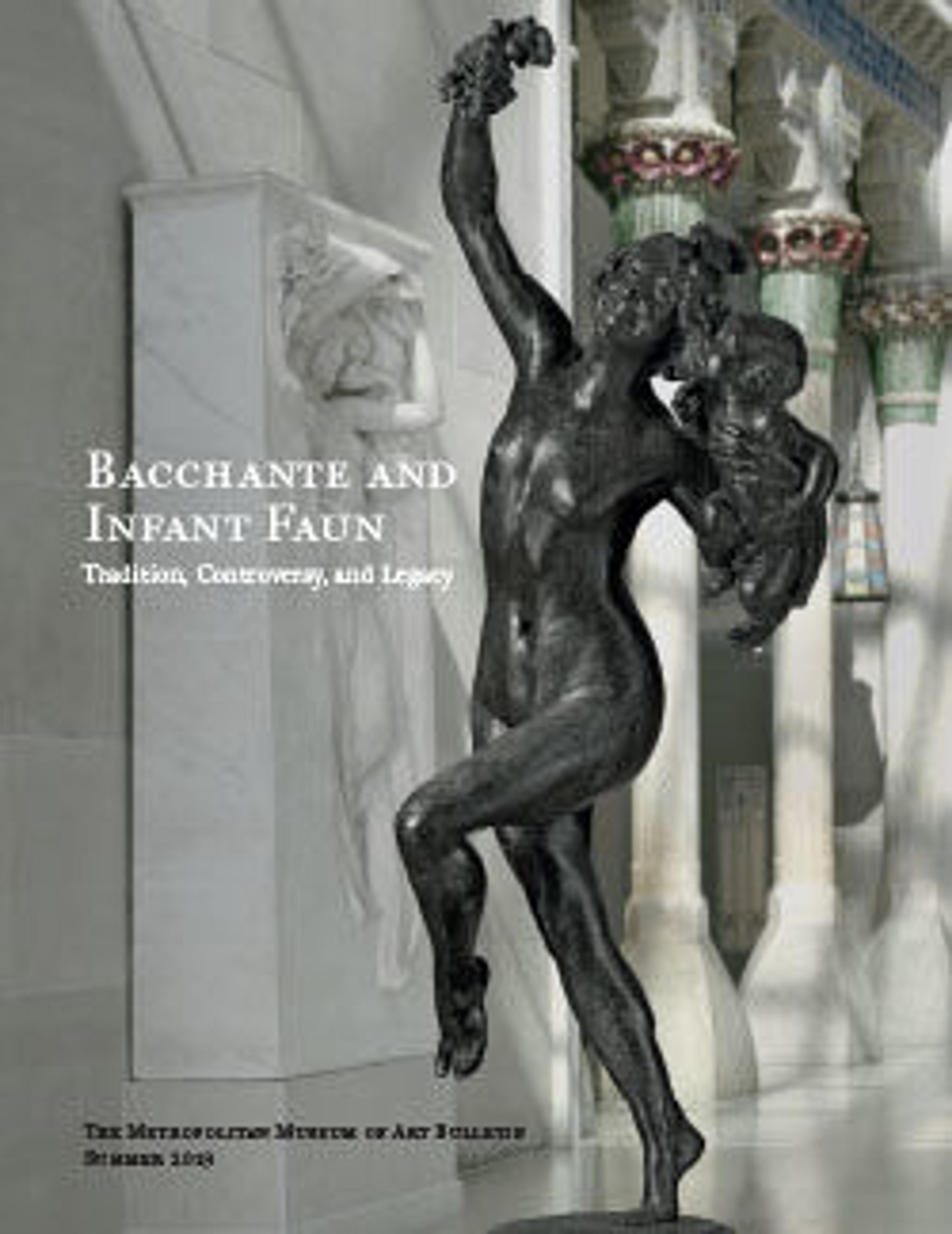
A nude female figure becomes a spiraling corkscrew in this dynamic sculpture by Frederick MacMonnies. With a skip to her step, and a wide smile, this young woman dangles a bunch of grapes over her head, as the small child in her arms looks up with evident delight.
Consider for a moment the sculptor’s choice of bronze for this figure. Bronze is the ideal medium to capture animated poses and twisting forms—in contrast to the stoic expressions and timeless poses often struck in marble. The title of the work is Bacchante and Infant Faun. Bacchante refers to the followers of Bacchus, the ancient god of wine—symbolized here by the cluster of grapes.
MacMonnies modeled this sculpture in the 1890s as a gift to architect Charles Follen McKim, of the great architectural firm, McKim, Mead, and White. The firm was designing the Boston Public Library, and McKim thought the bronze would provide an appealing centerpiece to the library’s outdoor courtyard. Little did either man anticipate what a backlash this idea would instigate. If you’d like to hear about how this sculpture became the biggest art controversy of the decade, press the green play button.
Listen to more about this artwork
More Artwork
Related Content
Perspectives
Articles, audio, and video from The Met's online magazine.
 Video
Video
Timeline of Art History
Entries and chronologies from The Met's art encyclopedia.
Publications
Books, guides, and catalogues published by The Met.
Research Resources
The Met provides unparalleled resources for research and welcomes an international community of students and scholars. The Met's Open Access API is where creators and researchers can connect to the The Met collection. Open Access data and public domain images are available for unrestricted commercial and noncommercial use without permission or fee.
To request images under copyright and other restrictions, please use this Image Request form.
Feedback
We continue to research and examine historical and cultural context for objects in The Met collection. If you have comments or questions about this object record, please contact us using the form below. The Museum looks forward to receiving your comments.
Content Notice
The Metropolitan Museum of Art presents over 5,000 years of art from around the world, and our online collection reflects ongoing work conducted over the course of our more than 150-year history. You may encounter objects or images that may be inappropriate for some viewers or information that may be outdated.