Terracotta two-handled vase
Four such vases were in the burial. This one belongs with the same group as the loutrophoroi 06.1021.245 and 06.1021.249; the pyxis 06.1021.253a, b; and the funnel-jar 06.1021.248a, b.
Artwork Details
- Title: Terracotta two-handled vase
- Period: Early Hellenistic
- Date: late 4th–early 3rd century BCE
- Culture: Greek, South Italian, Apulian, Canosan
- Medium: Terracotta
- Dimensions: H. 30 3/4 in. (78.1 cm)
diameter 17 5/16 in. (44 cm) - Classification: Vases
- Credit Line: Rogers Fund, 1906
- Object Number: 06.1021.246a, b
- Curatorial Department: Greek and Roman Art
Audio
1233. Terracotta two-handled vase
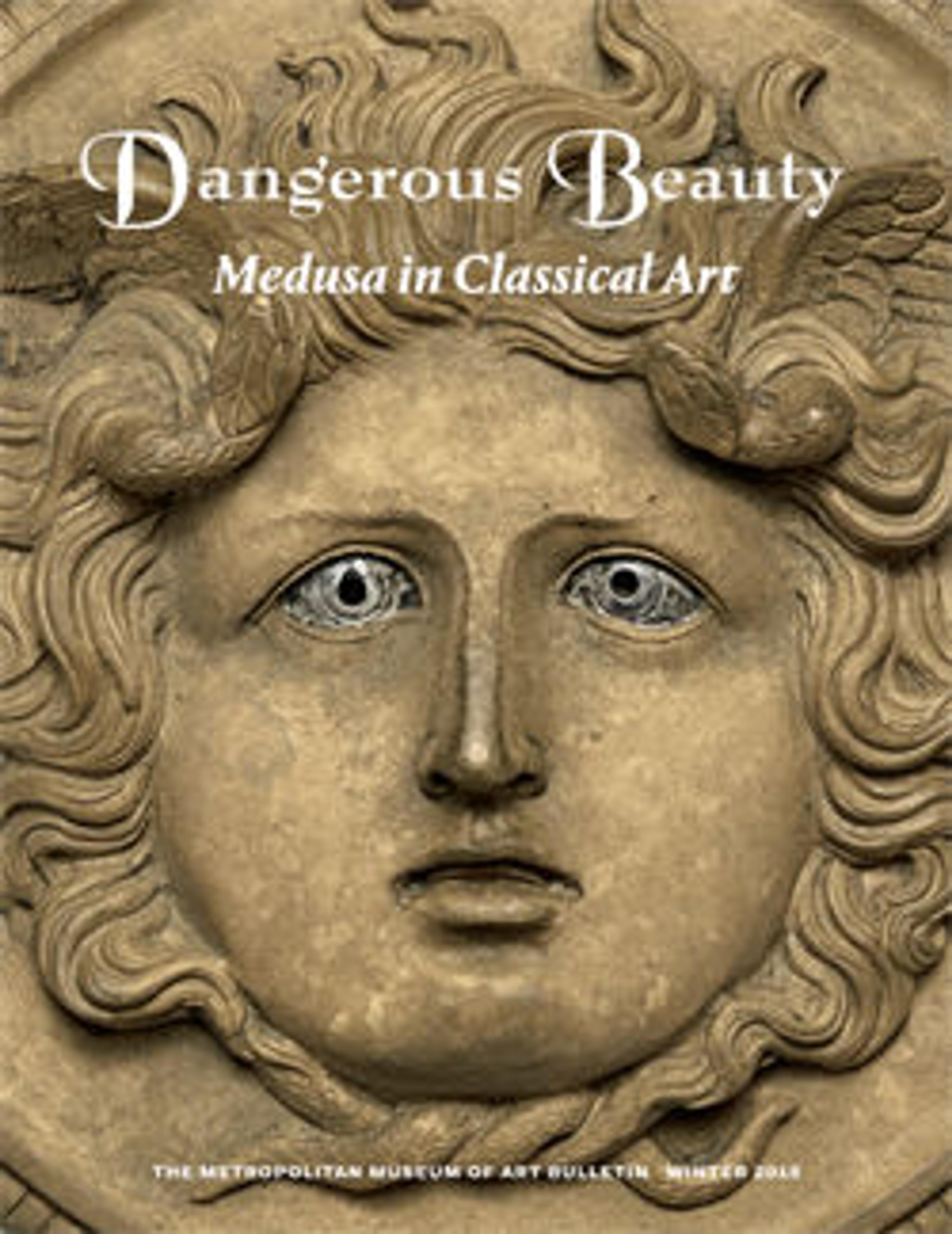
Before you is a terracotta vase decorated with a magnificent head of Medusa—a mythological creature known to have fangs, wings, and hair made of venomous snakes. Here wings sprout from her head and two serpents surround her face. Notice how the serpents’ tails are tied beneath her chin, and how their heads support a small platform between Medusa’s wings.
Originally, a small terracotta statuette surmounted this ledge. Likewise the small plinths atop the handles of the vase once supported statuettes. These have been restored as small figures of love, in other words, Erotes. The sculptural decoration reads exceptionally well against the pristine form of the vase itself. Clean lines define a globular body rising up to meet a narrow neck and wide funnel mouth. Notice how the entire vase is covered with a white lime wash that gives it the impression of crisply, carved stone.
This vase was found in a tomb at Canosa, an Apulian town in southeastern Italy. Medusa’s time-honored function as guardian and averter of evil would serve quite well its owner’s final resting place.
More Artwork
Related Content

 Free to download
Research Resources
The Met provides unparalleled resources for research and welcomes an international community of students and scholars. The Met's Open Access API is where creators and researchers can connect to the The Met collection. Open Access data and public domain images are available for unrestricted commercial and noncommercial use without permission or fee.
To request images under copyright and other restrictions, please use this Image Request form.
Feedback
We continue to research and examine historical and cultural context for objects in The Met collection. If you have comments or questions about this object record, please contact us using the form below. The Museum looks forward to receiving your comments.
Content Notice
The Metropolitan Museum of Art presents over 5,000 years of art from around the world, and our online collection reflects ongoing work conducted over the course of our more than 150-year history. You may encounter objects or images that may be inappropriate for some viewers or information that may be outdated.