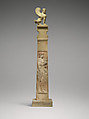
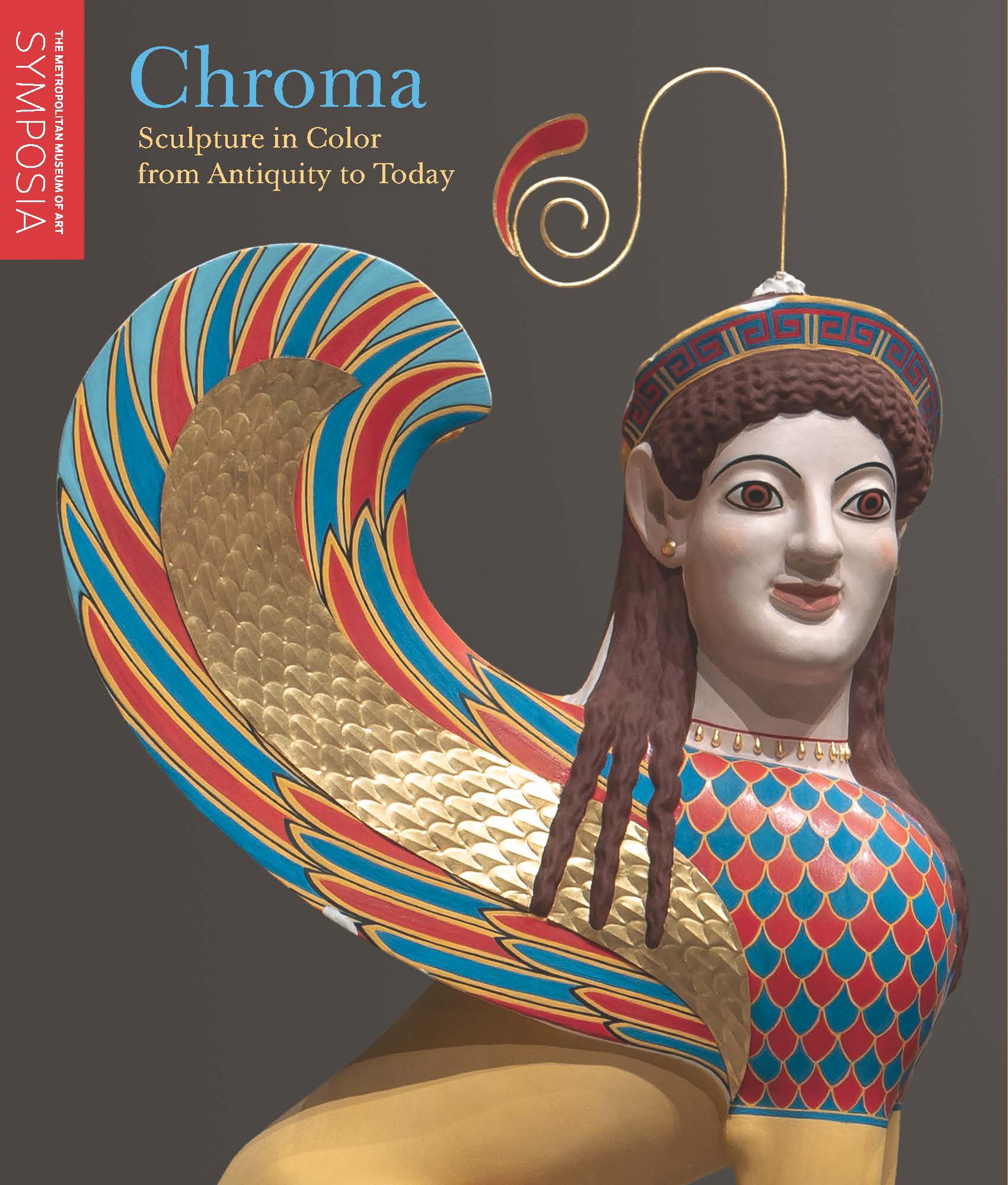
Marble capital and finial in the form of a sphinx
The sphinx, a mythological creature with a lion's body and a human head, was known in various forms throughout the eastern Mediterranean region from the Bronze Age onward. The Greeks represented it as a winged female and often placed its image on grave monuments as guardian of the dead. This sphinx, which retains abundant traces of red, black, and blue pigment, was carved separately from the capital on which it stands. Its plinth was let into a socket at the top of the capital and secured by a metal dowel and a bed of molten lead. The capital is in the form of two double volutes (spiral scrolls) designed like a lyre. The front face of the capital also had a painted design of palmettes and volutes.
Artwork Details
- Title: Marble capital and finial in the form of a sphinx
- Period: Archaic
- Date: ca. 530 BCE
- Culture: Greek, Attic
- Medium: Marble, Parian
- Dimensions: H. with akroterion 56 1/8 in. (142.6 cm)
- Classification: Stone Sculpture
- Credit Line: Munsey Fund, 1936, 1938
- Object Number: 11.185d, x
- Curatorial Department: Greek and Roman Art
Audio
834. Marble Capital and Finial in the Form of a Sphinx
More Artwork
Related Content
Research Resources
The Met provides unparalleled resources for research and welcomes an international community of students and scholars. The Met's Open Access API is where creators and researchers can connect to the The Met collection. Open Access data and public domain images are available for unrestricted commercial and noncommercial use without permission or fee.
To request images under copyright and other restrictions, please use this Image Request form.
Feedback
We continue to research and examine historical and cultural context for objects in The Met collection. If you have comments or questions about this object record, please contact us using the form below. The Museum looks forward to receiving your comments.
Content Notice
The Metropolitan Museum of Art presents over 5,000 years of art from around the world, and our online collection reflects ongoing work conducted over the course of our more than 150-year history. You may encounter objects or images that may be inappropriate for some viewers or information that may be outdated.