Terracotta neck-amphora (jar) with lid and knob (27.16)
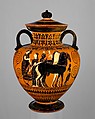
On the shoulder, combat of foot soldiers and horsemen
Black-figure was a cumbersome, restricted, and quite artificial technique. The vases in this room testify to the variety of effect and the forcefulness of expression that is nonetheless permitted. Probably the greatest single black-figure artist was Exekias, who was both potter and painter. Although the essential ingredients of this work are traditional, its particular character is evident in the robust shape, the extraordinary precision and vitality in the figures and ornament, and the perfect relation of the decorative elements to the body beneath.
Artwork Details
- Title: Terracotta neck-amphora (jar) with lid and knob (27.16)
- Artist: Attributed to Exekias
- Period: Archaic
- Date: ca. 540 BCE
- Culture: Greek, Attic
- Medium: Terracotta; black-figure
- Dimensions: H. 18 1/2 in. (47 cm)
diameter 9 3/4 in. (24.8 cm) - Classification: Vases
- Credit Line: Rogers Fund, 1917
- Object Number: 17.230.14a, b
- Curatorial Department: Greek and Roman Art
Audio
1024. Terracotta neck-amphora (jar)
This is a consummate example of black-figure vase-painting. In this technique, the painter applies glaze in silhouettes and then incises details like the patterns on the clothing. When the pot is fired, the glazed areas turn black and the unglazed areas show a rich orange color. The artist Exekias was both potter and painter of this vase.
The piece is exceptionally well preserved, complete with its lid. It is hard to imagine a more perfect harmony between shape and decoration. A chariot appears on each side of the vase, and a noble-looking couple is riding in each, a bearded man and a white-skinned woman holding the reins. Another female figure turns to face them, and a young man with wavy hair walks behind the horses, playing music on the kithara. Exekias has placed the figures at just the right height; imagine the distortions they would suffer if they were shifted one inch higher on the vase's surface.
The figures have such dignity that it is impossible to say whether they are gods or human beings, whether this is an earthly procession or a divine one. This is often the case in Greek art. The Greeks envisioned their gods as human in appearance, and subject to every human passion. By the same token, human beings look and act like gods in every aspect of their humanity.
Listen to more about this artwork
More Artwork
Related Content
Research Resources
The Met provides unparalleled resources for research and welcomes an international community of students and scholars. The Met's Open Access API is where creators and researchers can connect to the The Met collection. Open Access data and public domain images are available for unrestricted commercial and noncommercial use without permission or fee.
To request images under copyright and other restrictions, please use this Image Request form.
Feedback
We continue to research and examine historical and cultural context for objects in The Met collection. If you have comments or questions about this object record, please contact us using the form below. The Museum looks forward to receiving your comments.
Content Notice
The Metropolitan Museum of Art presents over 5,000 years of art from around the world, and our online collection reflects ongoing work conducted over the course of our more than 150-year history. You may encounter objects or images that may be inappropriate for some viewers or information that may be outdated.